



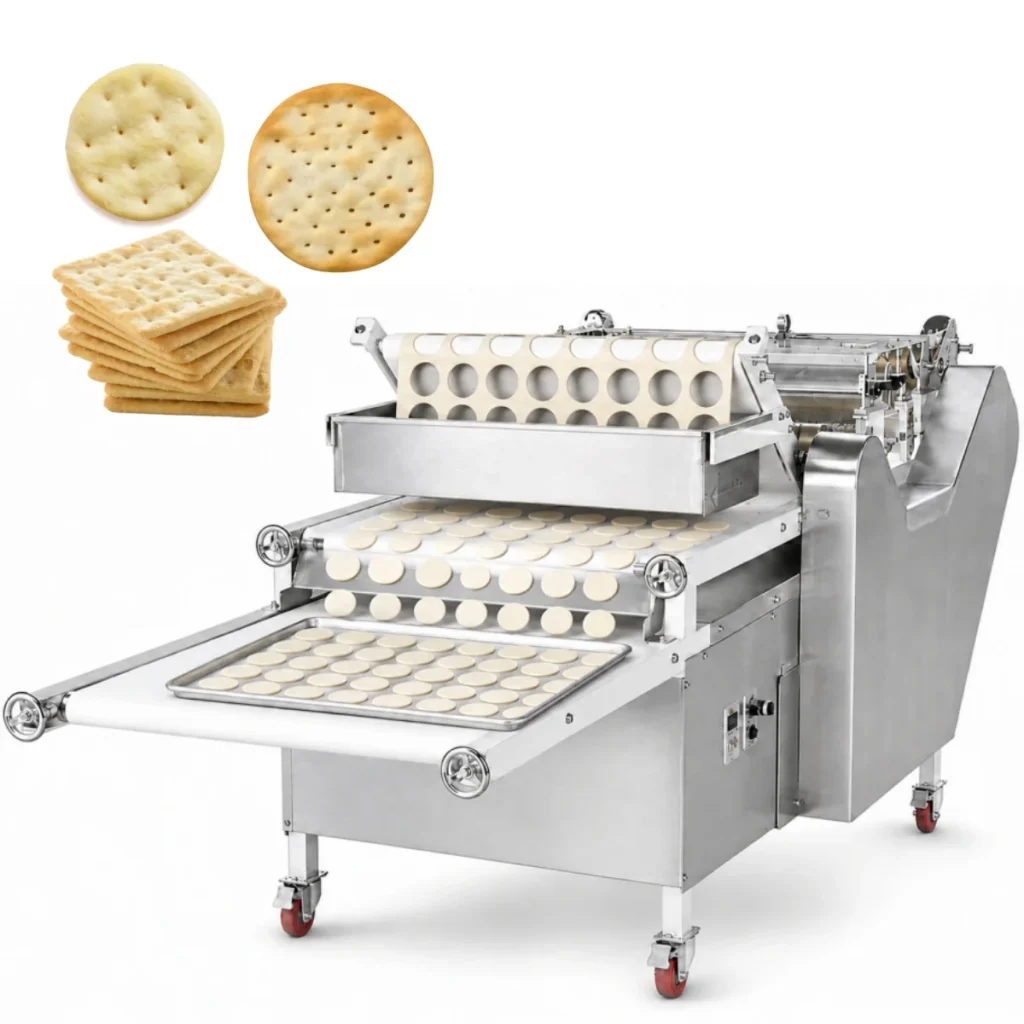
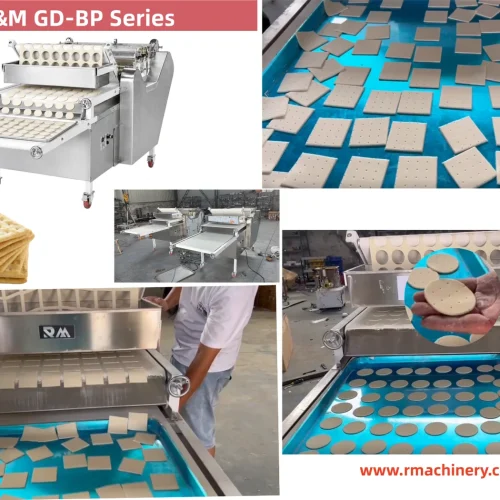
GD-BP Cracker Forming Biscuit Machine Maker Equipment
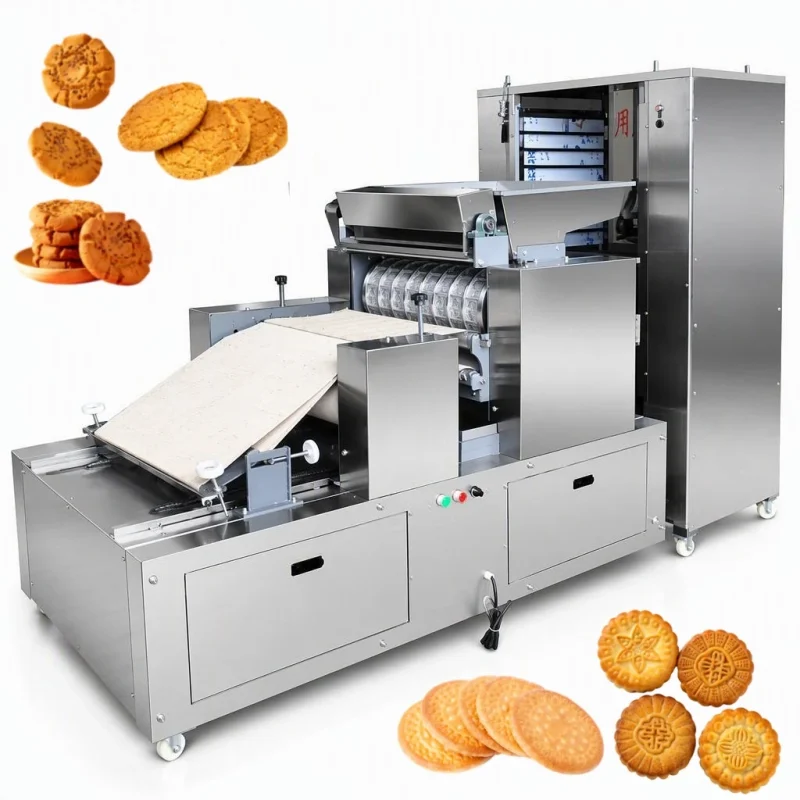
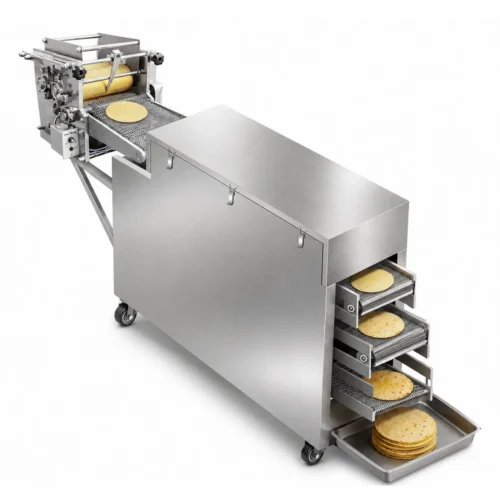
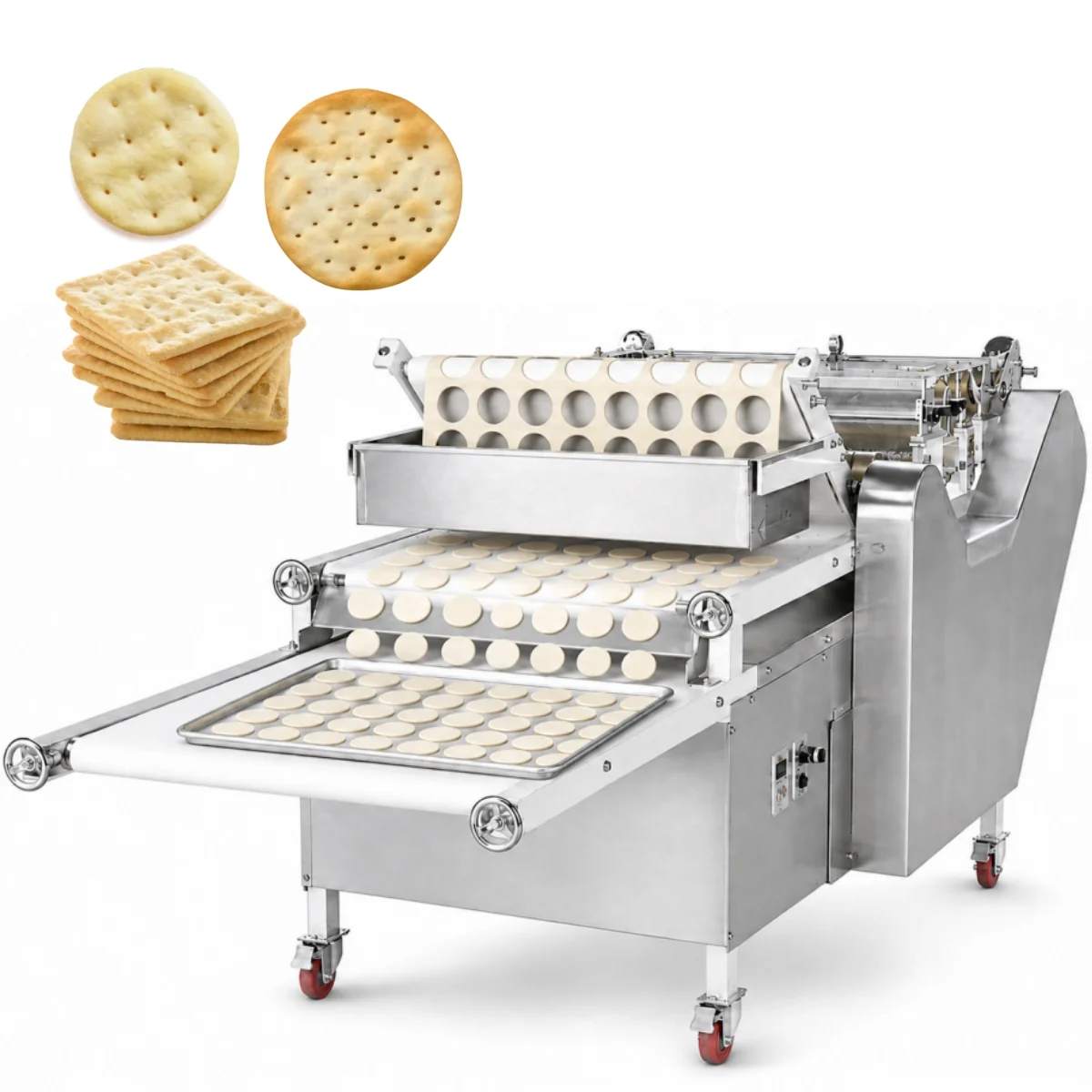
A GD-BP cracker forming machine built by a biscuit machine maker that works to your product. Gauge rollers set the sheet thickness, the cutting roller docks and shapes each piece in one pass, trim returns automatically and the conveyor loads trays.
Request a Quote
Enter the quantity you need and add to your quote list for pricing inquiries.
Specifications
Description
The GD-BP is cracker forming equipment built by a biscuit machine maker that works to your product rather than to a catalogue. Three stages sit in one frame: the dough is sheeted, the sheet is rolled to a set thickness, and a rotary cutting roller stamps the pieces out. Trim feeds back into the process and the conveyor discharges formed pieces onto trays. It replaces the sheeting bench, the hand cutter and the tray loading position with one machine. Unlike an automatic biscuit machine that works by moulding or depositing, everything here depends on a sheet that holds its shape. The machine is designed for firm, low-fat wheat-flour dough — the dough used for soda crackers, saltines, cream crackers, water crackers, Marie biscuits, hard sweet biscuits and tea biscuits. This is a hard dough biscuit machine, not a short-dough machine. If your product is a high-fat butter cookie or a crumbly short dough, the rotary moulder is the correct machine instead. As a biscuit forming and tray loading machine it covers the stage between mixing and baking that most bakeries still run by hand.
What the GD-BP Cracker Forming Machine Does
The machine does three jobs in one pass, and they are the three that normally need three separate operators or three separate machines. In equipment from most biscuit machine makers these sit as separate stations; here they are built into one frame.
Sheeting and Thickness Gauging
Dough is fed into the hopper and passes through the first set of rollers, which press it into a continuous sheet. A second roller set then reduces the sheet to the set thickness, adjusted with chrome handwheels on the side of the frame. Thickness is therefore controlled by the roller setting rather than by operator judgement, which is what keeps the finished biscuit weight steady from the start of a run to the end.
Rotary Cutting with Docking
The engraved cutting roller presses against the sheet and separates the pieces — a rotary biscuit cutting machine stage that also docks. The docking pins and the outline are cut into the same roller, so the biscuit cutter machine leaves each piece shaped and pricked in one rotation rather than passing it through a second station.
Automatic Scrap Return and Tray Loading
The trim web lifts clear of the conveyor and returns to the feed side automatically, so it goes back into the sheet instead of being collected by hand and re-worked at the end of the shift. The conveyor then carries the formed pieces forward and delivers them onto trays in order, ready for the oven. Taken together, the scrap return and the tray discharge make this a biscuit forming and tray loading machine rather than a former that still needs somebody standing at the end. Because the sheet runs continuously, the unit works as a biscuit sheeting and cutting machine rather than a batch press. Where the sheet is produced upstream and only the cutting stage is needed, the same unit runs as a biscuit cutter machine or an automatic biscuit cutting machine on the line.
A Cracker Machine for Hard, Sheetable Dough
The forming method sets the limit on what any cracker machine can run. A hard biscuit forming machine has to release the piece cleanly from the cutting roller, so the right dough is firm, low in fat and high in wheat flour. Two descriptions are used for machines in this class. A wheat flour biscuit forming machine is expected to cope with flour-based dough across a range of absorption rates; a sheeted dough biscuit forming machine is judged on how cleanly the sheet releases and how evenly the thickness holds along the run. This unit is built for both expectations — the gauge rollers set the thickness, and the cutting roller is shaped to release without distorting the piece.
Doughs It Runs
- Firm, low-fat, sheetable wheat-flour dough
- Soda cracker, saltine, cream cracker and water cracker dough
- Hard sweet biscuit, Marie biscuit and tea biscuit dough
- Thin biscuit and wafer-thin doughs
Doughs It Does Not Run
- Soft, sticky dough that flows rather than holds a sheet
- High-fat short dough that needs a surface pattern — a rotary moulder is the right machine
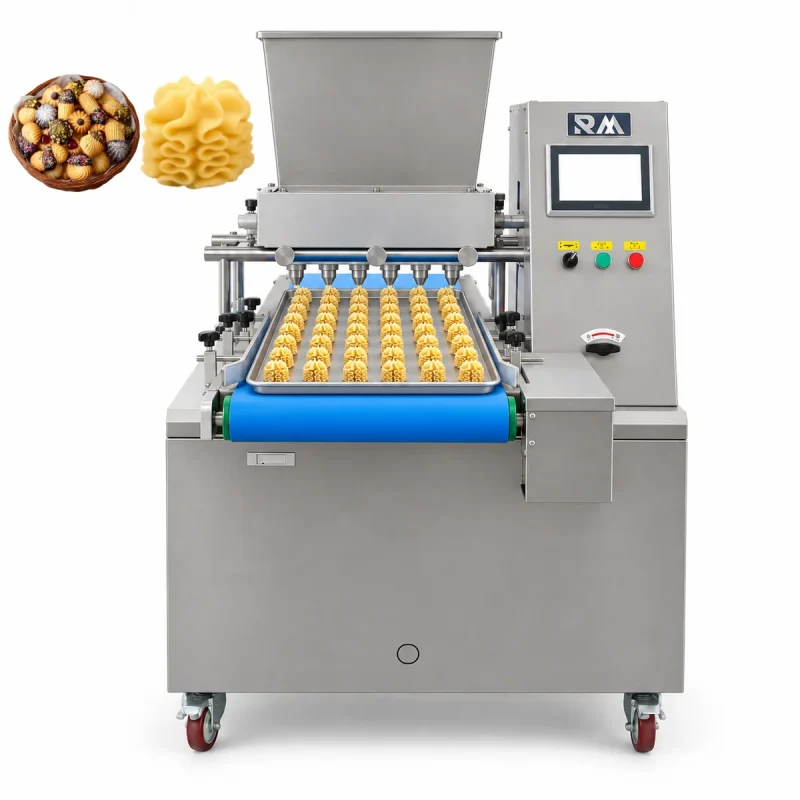
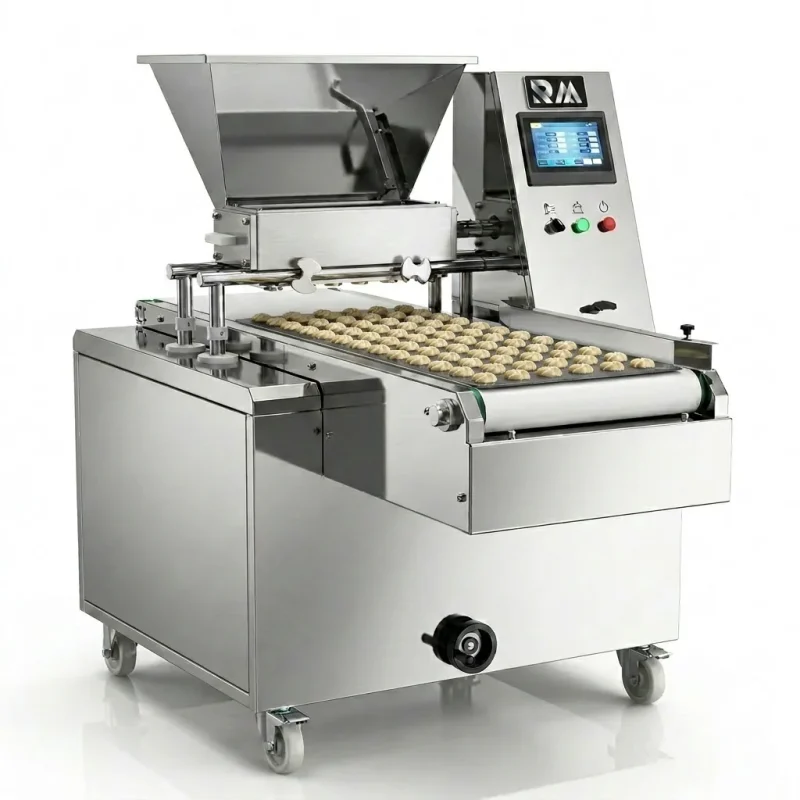
- Dough that is piped or deposited into shapes — a cookie depositor is the right machine
Three machines in our range cover three different dough types, and choosing between them is a dough question rather than a budget question:
| Your dough | Machine |
|---|---|
| Firm, low-fat, sheetable wheat-flour dough | GD-BP cracker forming equipment (this page) |
| Short, high-fat or crumbly dough that needs a surface pattern | Biscuit press machine (rotary moulder) / fully automatic biscuit making machine |
| Soft dough that is piped or deposited into shapes | Cookie depositor machine |
| Dough already formed into a log that needs slicing | Cookie cutter machine |
Send us the formula or a dough photo and we will tell you which forming method works before you order. If you are comparing a biscuit press machine against this machine, the difference is not quality or price but dough type — one presses short dough into a mould, the other cuts pieces out of a sheet.
Cutting Rollers — The Part That Decides the Product
The roller is the part that defines the finished biscuit, and it is interchangeable. A roller change switches the machine from one product to another, so one machine covers a product range instead of one shape.
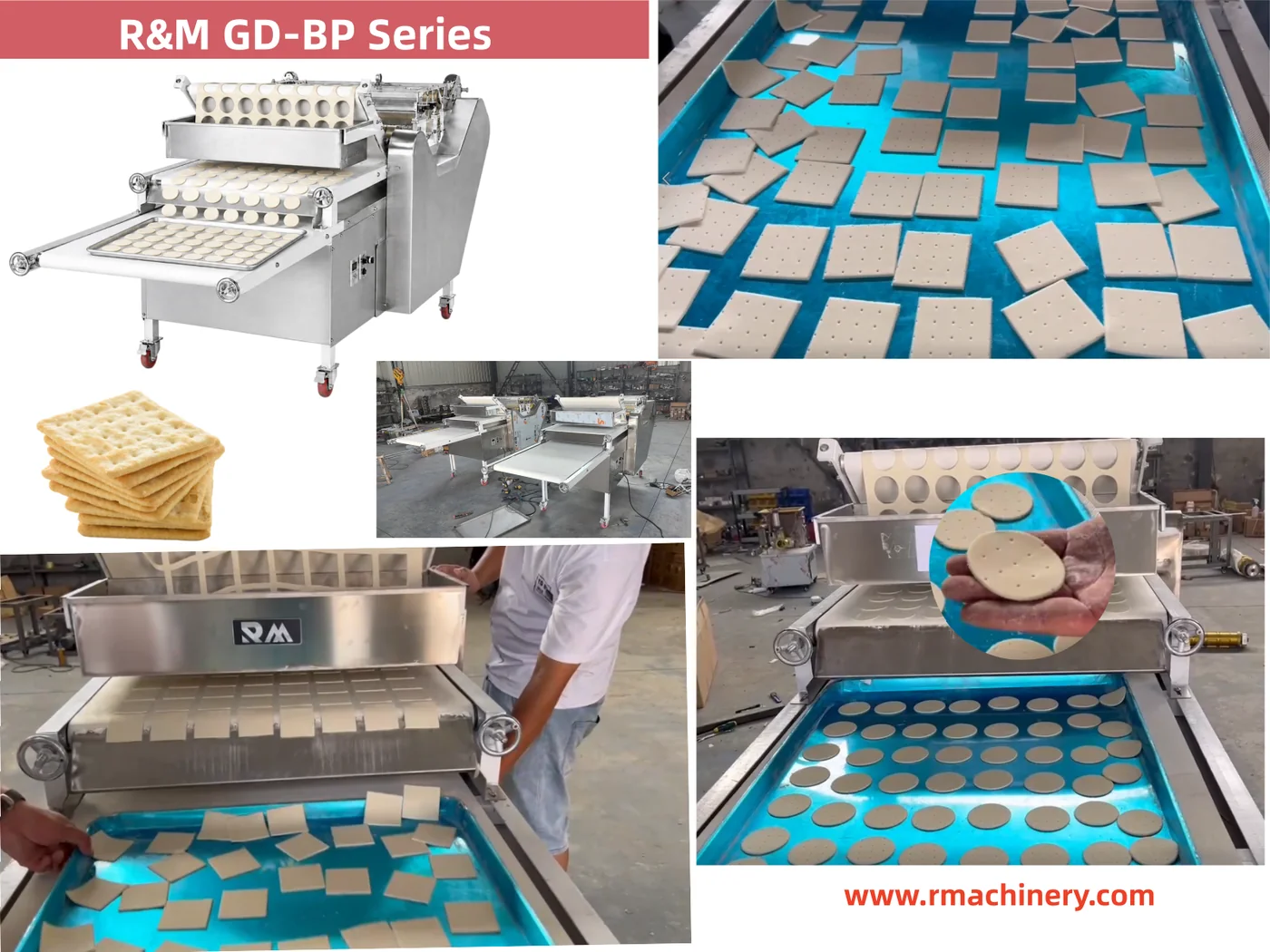
What can be built into a roller:
- Piece outline and size — round, square, rectangular, oval, scalloped, stick or custom profile
- Rows across the roller — several pieces formed side by side in each revolution to raise output
- Docking pins — venting holes formed at the same time as the outline, which is what crackers and hard sweet biscuits normally need
- Edge forming — the outer edge is trimmed and shaped by the same roller
- Engraved detail — surface pattern, lettering or a logo where the recipe and size allow
Rollers are made to your drawing or to a product sample. This is the part most buyers compare between biscuit machine makers, because the roller drawing is where the product is actually defined — a machine is only as flexible as the rollers that come with it. Additional rollers are a separate purchase, so most bakeries order the shapes they run today and add further rollers through the year rather than buying everything at once. Send the finished piece dimension and the dough description and we will confirm what the roller can reproduce.
Products It Forms
- Soda crackers and saltines, including docked and layered cracker-style products
- Cream crackers and water crackers
- Marie biscuits and tea biscuits
- Hard sweet biscuits
- Thin biscuits and wafer-thin formats
- Round, square and rectangular hard biscuits for private label and export packs
- Selected cracker-style products where the dough suits sheeting
Different markets expect different piece weights from the same shape. Tell us the weight the biscuit is sold at and we will set the roller depth and the row count to match, rather than copying a size that sells somewhere else.
Cracker and Hard Sweet Biscuit Production
Crackers and hard sweet biscuits are the two families this machine was designed around, and the vocabulary buyers use for them changes from market to market. On a cracker line the unit is usually called the cracker forming machine: it takes the sheet from the mixer and the sheeter, sets the thickness, cuts the pieces and returns the trim. Where the sheeting stage is discussed on its own it is the cracker dough sheeting machine; where the cutting roller is discussed it is the rotary cutter for crackers. Larger plants often say cracker cutting machine for the same station, and describe the whole project as a cracker making machine line once the laminator, oven, cooling conveyor and packing equipment are added. Hard sweet biscuits and thin biscuits run on the same principle. In hard sweet biscuit making machine projects the forming station is unchanged — what varies is the roller profile, the biscuit weight and the baking curve, not the way the dough is formed. If you need one description that covers both, the honest term for this machine is a biscuit and cracker forming machine. It forms biscuits and cracker-style products; it does not include laminating, baking, cooling or packing. Which stages you already own decides what to buy: a soda cracker forming machine bought on its own is a sensible start if you have baking capacity already, while a bakery building from the mixer up is better served by a configured line in which the forming stage is sized to match the oven and the handling equipment rather than being specified twice.
A Custom Order Example
One recent order was a GD-BP3, built for 220V / 60Hz single-phase power, with four cutting rollers and a docking unit:
| Item supplied | Detail |
|---|---|
| Roller 1 | 5.5 cm round, 5 pieces across |
| Roller 2 | 5.5 cm square, 5 pieces across |
| Roller 3 | 15 cm round |
| Roller 4 | 27 cm round |
| Docking | Pricking unit fitted for vented products |
The order shows what the roller system is for. The buyer ran two small sizes for volume production and two large rounds for a different product line, on the same machine, without buying a second former. The 5-across rollers are the multi-row arrangement at work — five pieces formed in each revolution instead of one. If your product list mixes sizes, tell us the range and the expected volume split. We will propose a roller set and confirm the row count for each size.
Choosing a Biscuit Machine Maker
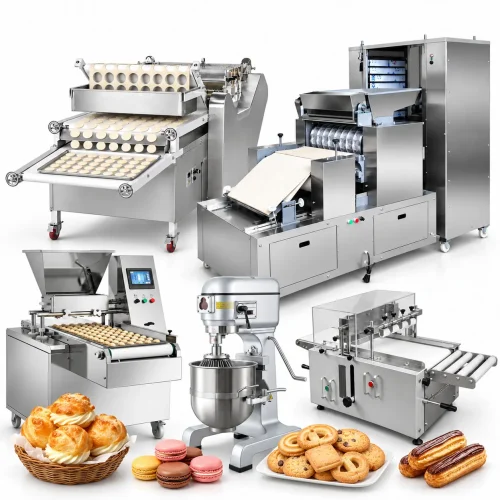
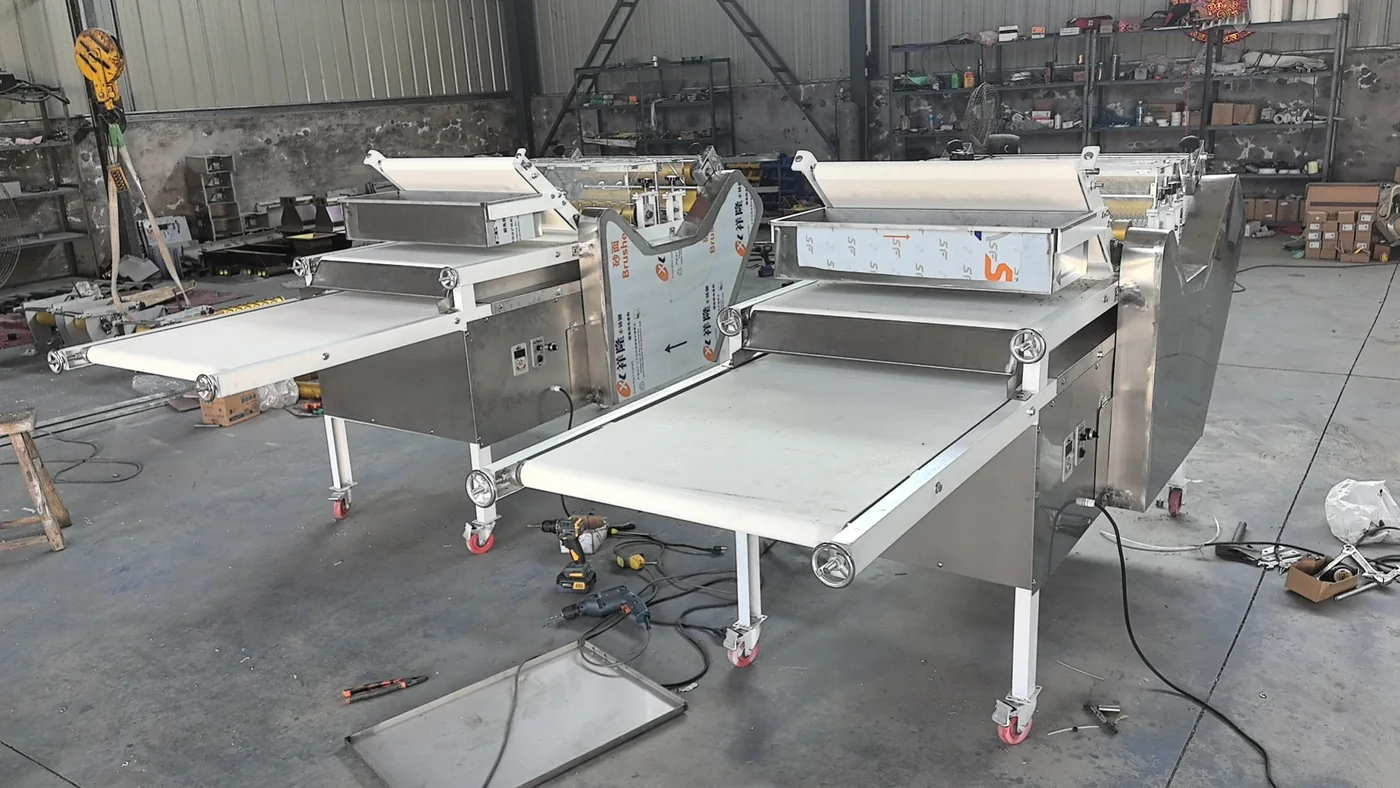
A biscuit machine maker is judged on two things: whether the machine suits your dough, and whether the tooling is built for your product. R&M supplies biscuit making equipment as single units or as a configured line from mixer to packing, so the roller drawing and the machine specification are settled together rather than in sequence. For a bakery buying its first automatic biscuit making machine, the forming stage is the right place to start, because everything downstream has to handle the shape and weight it produces. This unit is the biscuit manufacturing machine that fixes the product specification for the line, so it is worth settling the roller design before the oven is specified. You can also review the wider cookies and biscuit machine range before confirming the configuration.
Biscuit Maker Machine Configurations for Small and Mid-Size Bakeries
A biscuit maker machine for a small or mid-size bakery is usually bought for one of three reasons: hand sheeting has become the bottleneck, biscuit weight has started to drift between operators, or the shop has taken on a private-label order that needs a repeatable shape. This machine often fills that gap — it is a small biscuit making machine by footprint compared with a full cracker line, and as a biscuit making machine for small business use the limiting factors are floor space and roller count rather than machine speed.
Specifications
| Item | Value |
|---|---|
| Forming method | Dough sheeting, thickness gauging and rotary die cutting in one frame |
| Suitable dough | Firm, low-fat, high wheat-flour, sheetable dough |
| Cutting roller | Interchangeable; docking and edge forming in the same pass |
| Scrap handling | Automatic return of trim to the feed side |
| Tray loading | Conveyor discharges formed pieces onto trays |
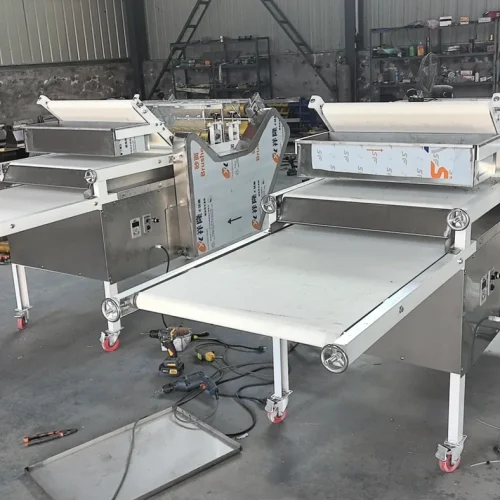
| Body | Stainless steel |
| Mobility | Castors with brakes |
| Model | GD-BP series (GD-BP3 shown in the custom order example) |
| Power supply | Configured to your market (220V / 60Hz single-phase on the order above) |
| Export packing dimensions | 2,850 × 1,000 × 1,450 mm |
Machine output, motor power, machine dimensions and net weight are confirmed with your roller set and product, because piece size and row count change the figures. Send your product details and we will return the full specification with the quotation.
Where It Fits in a Biscuit Production Line
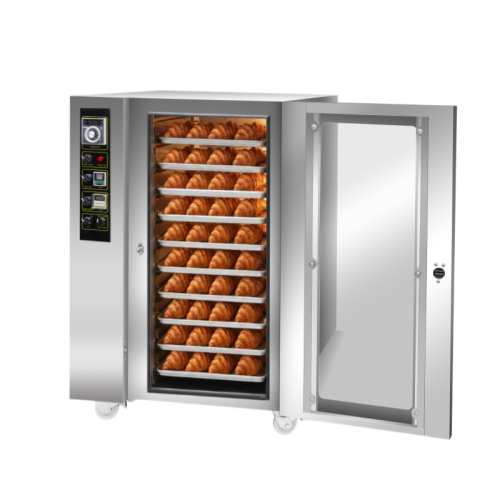
This cracker forming machine is one stage of a biscuit production line, and it is the stage that decides the biscuit shape and weight. A typical layout runs: Mixer → GD-BP forming machine → tunnel oven → cooling conveyor or cooling racks → sandwiching or packing The forming machine feeds a tunnel oven directly for continuous production; where the line is planned around a continuous baking stage, the baking unit is specified as an industrial tunnel oven. Trays can also be transferred to a rack oven for batch work. Baking, cooling and packing are separate equipment and are not included with the forming machine unless quoted as part of a project.
Frequently Asked Questions
What dough does this machine suit? Firm, low-fat wheat-flour dough that can be rolled into a stable sheet — cracker and hard sweet biscuit dough. High-fat short dough and very soft dropped dough should be formed by a rotary moulder or a depositor instead. A cracker machine can only work with what the dough allows, so the recipe is settled before the machine is chosen. How is this different from a rotary moulder or a cookie depositor? A depositor pushes soft dough through nozzles, so the piece shape comes from the nozzle. A rotary moulder — also sold as a biscuit press machine — presses short dough into the cavities of an engraved roller, which is what produces deep patterns and embossed detail. This machine rolls the dough into a sheet and cuts pieces out of it with a cutting roller, so it suits firm dough and produces flat, docked biscuits such as crackers and hard sweet biscuits. Can the machine cut my own shape and size? Yes. The cutting roller is made to your drawing or sample, and it determines the outline, size, edge profile and row count. Docking pins can be included in the same roller when the product needs venting holes. Send the finished dimensions and a product photo or sample for confirmation. Can I add more sizes later? Yes. Rollers are interchangeable and quoted as separate items, so a bakery can start with the products it runs today and add rollers as the range grows. This is the normal way buyers build up a roller set rather than ordering everything upfront. Ask any biscuit machine maker for the roller list before you buy — a machine with no route to further rollers ends up as a single-product machine. Does the machine dock and cut in one pass? Yes. The docking pins and the outline are both part of the cutting roller, so the piece is shaped and pricked in the same rotation rather than in a separate station. What happens to the trim between pieces? It is lifted clear of the conveyor and returned to the feed side automatically. It is not collected by hand, and it does not have to be re-rolled at the end of the shift. Does it load trays automatically? The forming conveyor carries the pieces forward and discharges them onto trays. Trays are supplied by the operator; the machine handles the sequence. This removes the manual tray arrangement step between forming and baking. Can it run soda crackers and other cracker-style products? It can form docked, thin, sheet-based biscuits including soda cracker style products, where the dough suits sheeting. If your requirement is a complete cracker line with laminating, or a fully integrated line including oven, cooling and packing, send us the product specification — a rotary dough cutter handles the forming stage, and the rest of the line is configured around it. What power supply does it need? The machine is built for the destination market. One recent order was supplied at 220V / 60Hz single-phase. Tell us the voltage, frequency and phase at your site and we will confirm the configuration. What is the export packing size? 2,850 × 1,000 × 1,450 mm for the machine as packed for export. Use this for container planning; send us the destination port and quantity and we will confirm loading. What information do you need for a quotation? Dough type and condition, the finished biscuit size and weight for each product, shapes required, rows per roller, target output per shift, power supply at your site, and the destination country. Those details are what any biscuit machine maker needs in order to quote a roller accurately, so a product sample or a clear photo of the biscuit with its dimensions gets you the firmest figure.
About Price
Because the roller set drives the cost, a biscuit machine price is quoted against your product rather than taken from a list. A fully automatic biscuit making machine price given without your piece dimensions would not be meaningful, and it makes supplier comparison harder than it needs to be. Send your product details and we will set out the biscuit making machine price with each item separated — cutting rollers, docking unit, power configuration and spares — so you can see where the cost of biscuit making machine options actually sits. If you are reviewing a biscuit machine for sale from more than one biscuit machine maker, compare the roller specification and the packing dimensions first: those two figures usually explain most of the difference.
Request a Quotation
Send your biscuit dimensions, dough description and target output. Tell us what you produce and we will confirm the machine for biscuit making that suits your dough and output, then return a quotation with the specification sheet, packing details and lead time. Request a quote →