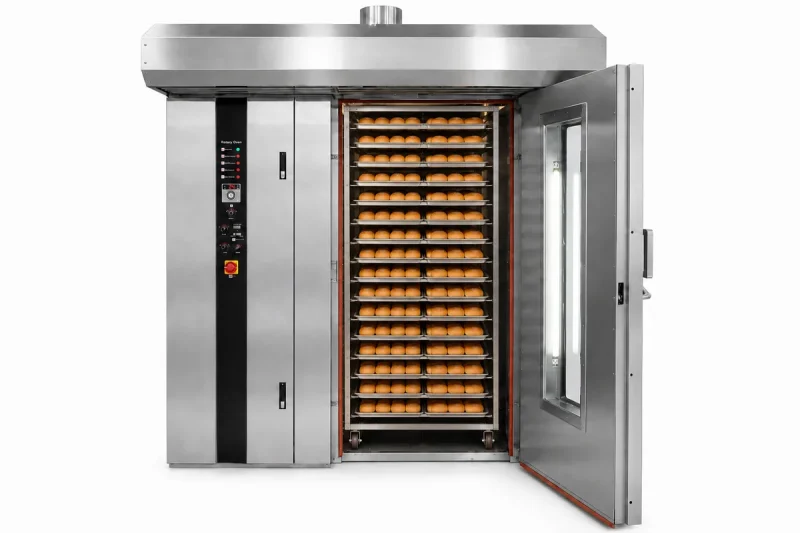
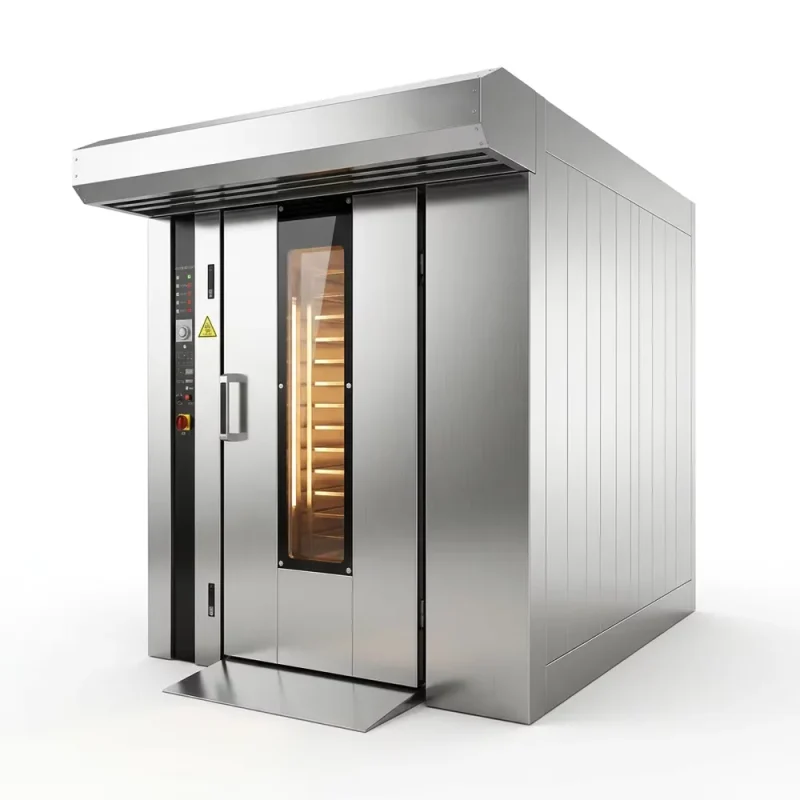
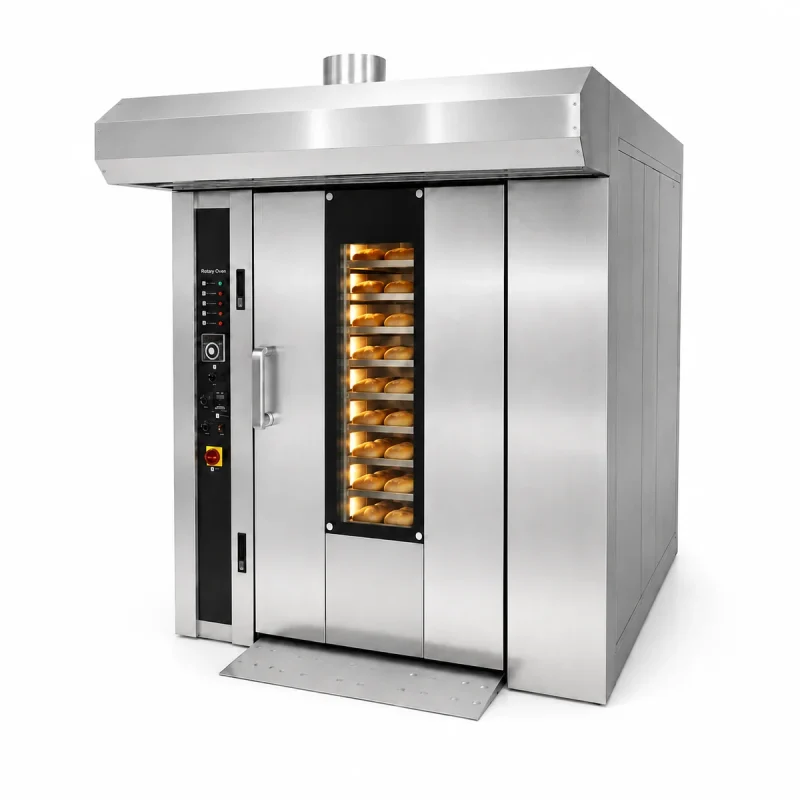
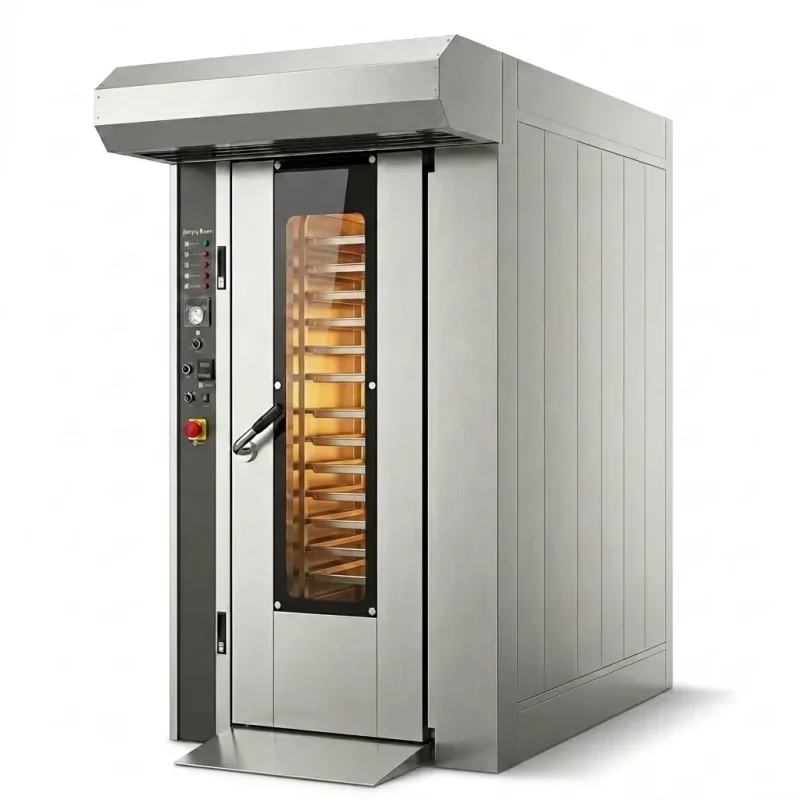
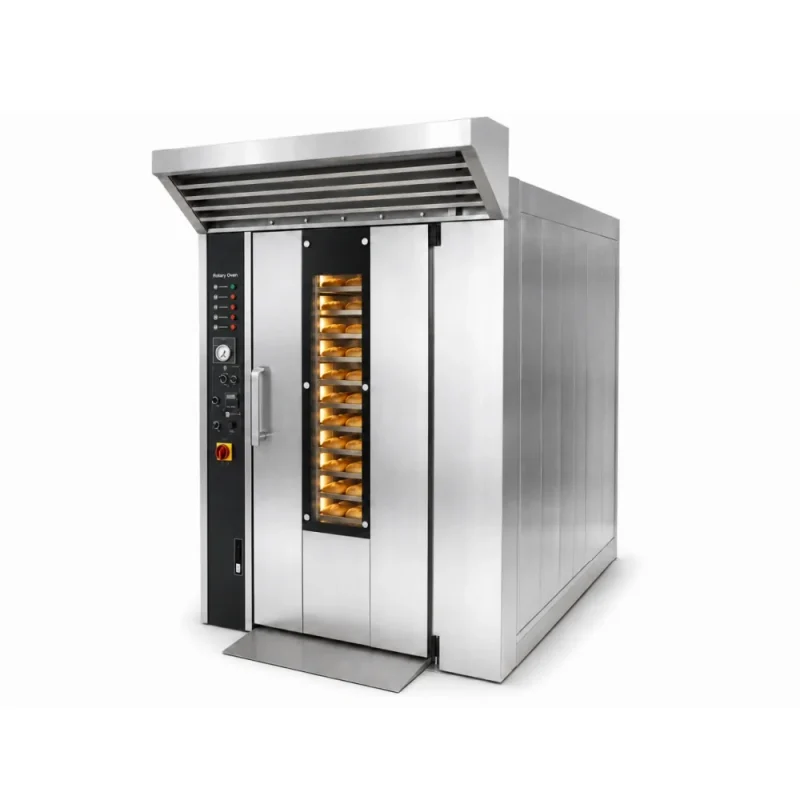
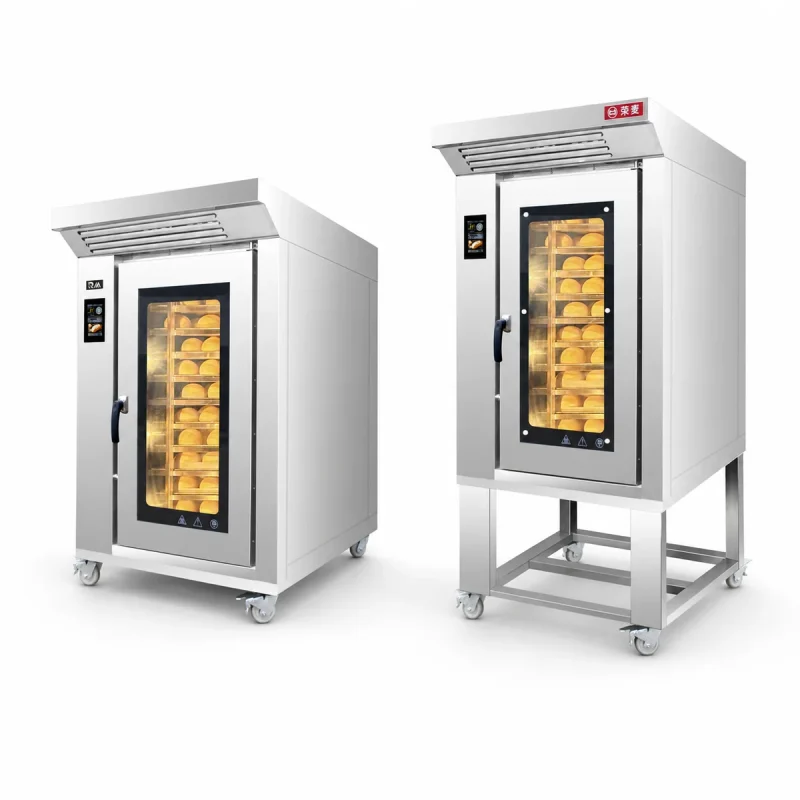
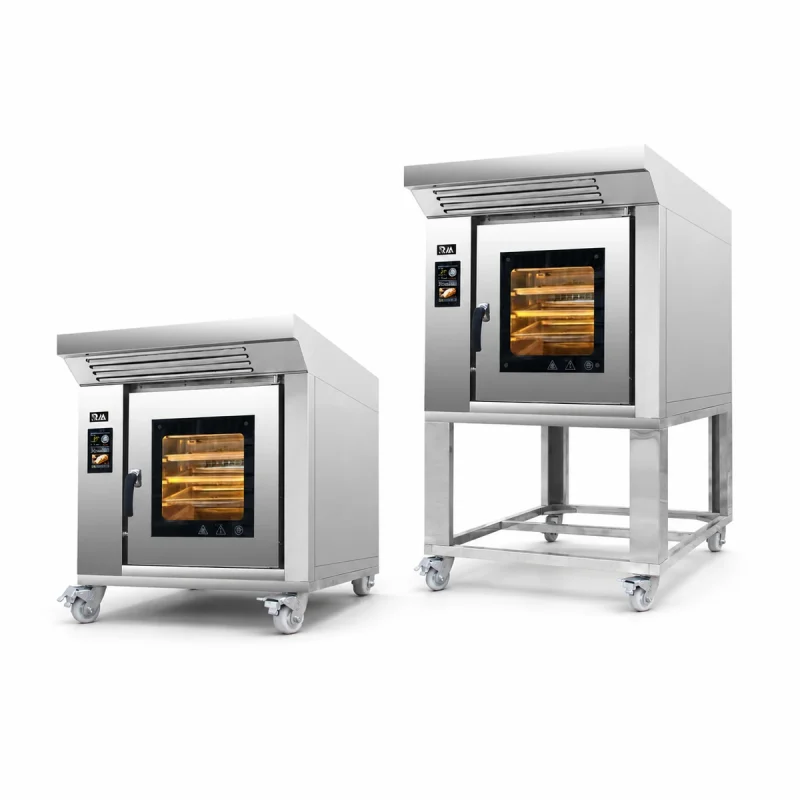
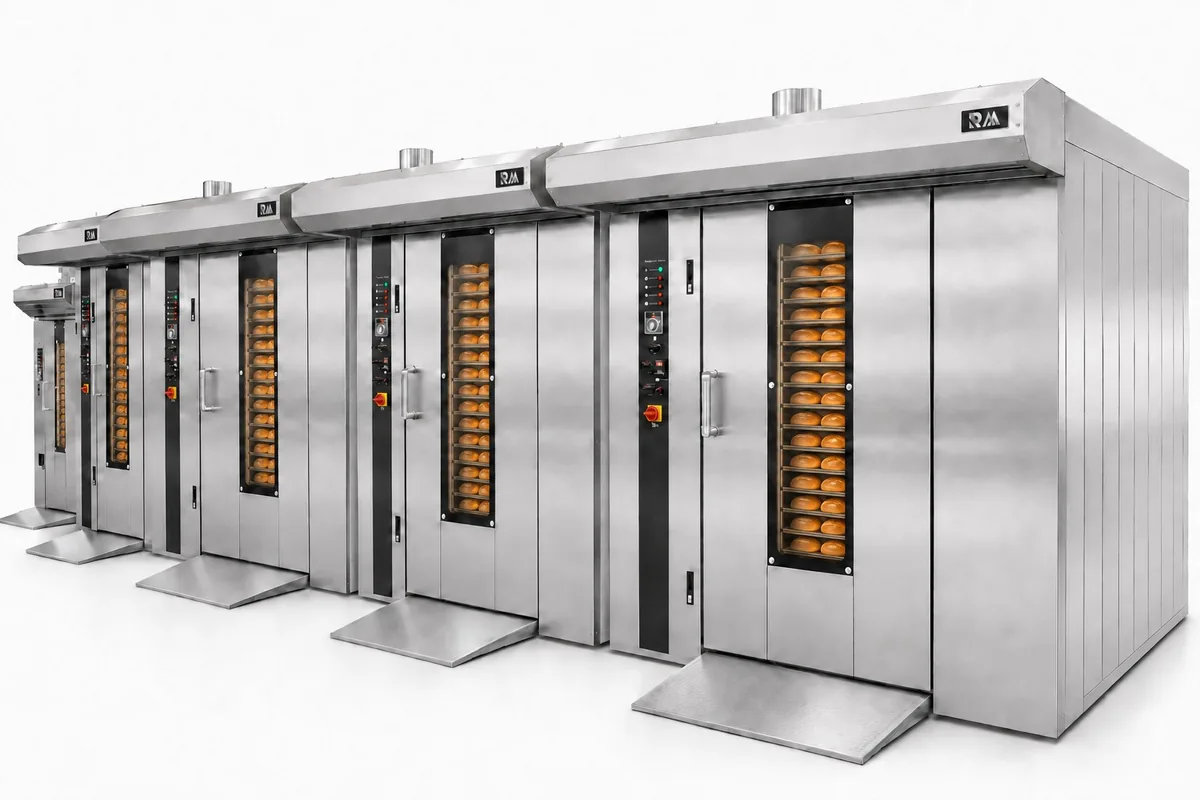
Not sure which rotary oven model fits your output?
Send us your tray size, daily batch count and available energy — full factory quotation within 12 hours.
Choose a Rotary Oven by Capacity and Energy Supply
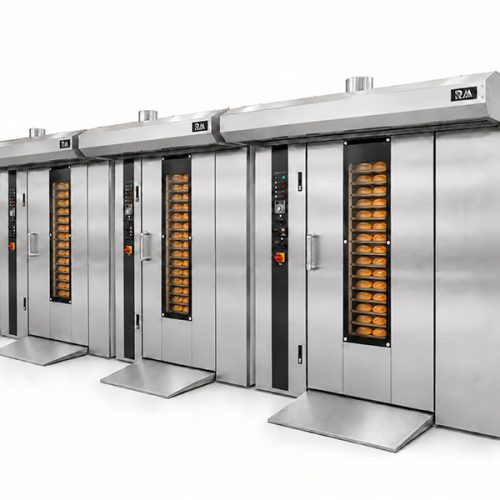
The right rotary oven depends on required tray capacity, baked product, available utilities and local operating conditions. R&M offers electric, gas, diesel and dual-energy configurations to support different bakery projects and export markets.
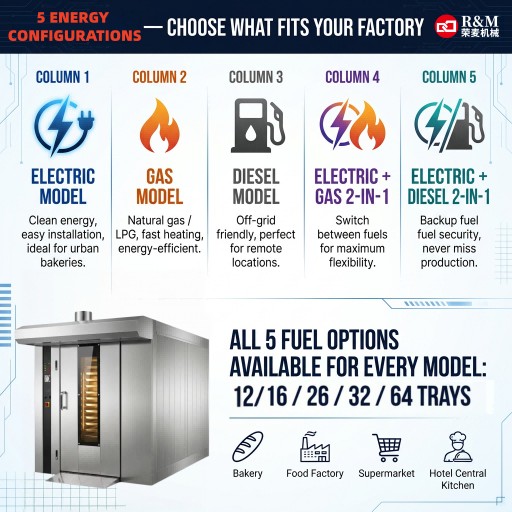
Available energy configurations vary by model, voltage, local fuel conditions and project requirements. Confirm the final configuration with R&M before ordering.
Electric Rotary Oven
Suitable for locations with stable electrical capacity. SUS304 tubular heating elements provide stable heat output working with three-row hot-air circulation for consistent full-rack baking.
- Clean operation, no fuel storage
- Stable electric heating
- SUS304 heating elements
Gas Rotary Oven
A gas rotary oven is suitable for bakeries with access to natural gas or LPG. Selected models use Ecoflam burners with controlled combustion to support stable heating and temperature recovery.
- Natural gas or LPG
- Ecoflam burner option
- Fast temperature recovery
Diesel Rotary Oven
A diesel rotary oven is practical where gas is unavailable or electrical capacity is limited. Selected models use Riello burners for stable ignition and controlled combustion.
- Suitable for remote locations
- Riello burner option
- No gas connection required
Electric + Gas Dual-Energy
An electric and gas dual-energy configuration gives bakeries greater flexibility when energy availability or operating costs change. Operating mode is model-dependent.
- Two available energy sources
- Greater utility flexibility
- Configured for local conditions
Electric + Diesel Dual-Energy
Available for selected projects requiring greater energy flexibility. Suitable for markets where utility supply may vary between locations or production periods.
- Flexible energy planning
- Suitable for export markets
- Model-dependent operation
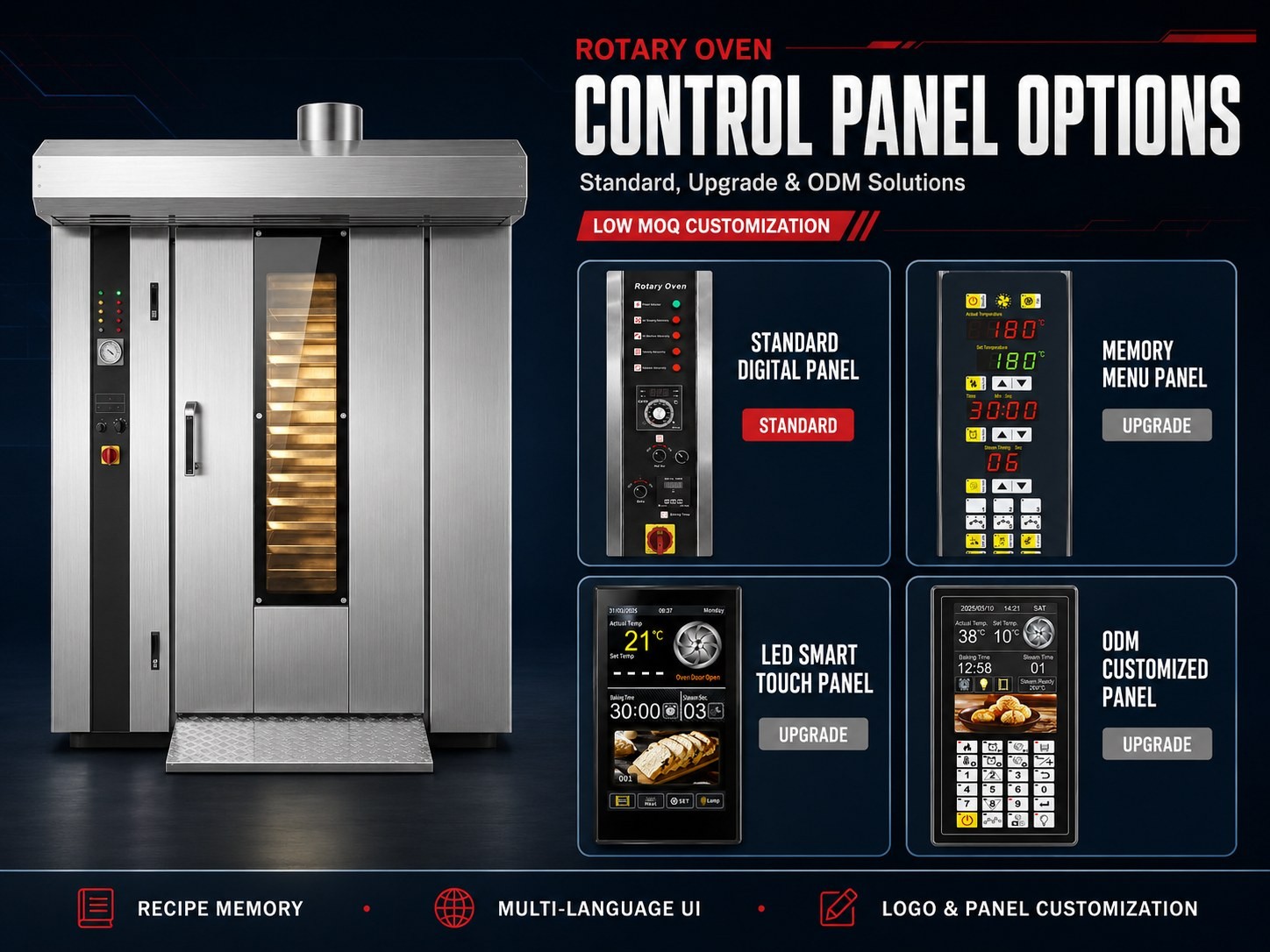
OEM & ODM Rotary Oven Controller Options
How R&M Rotary Rack Ovens Maintain Consistent Baking Results
Consistent color across a full trolley depends on more than rack rotation. Air volume, outlet adjustment, trolley movement and temperature recovery must work together. R&M combines these systems to improve baking consistency from the upper trays to the lower trays.
Three-Row Adjustable Hot-Air Outlets
Three rows of adjustable hot-air outlets help distribute heat across the full trolley height. Airflow can be balanced according to the baked product and loading pattern, helping reduce color differences between upper, middle and lower trays.
- Three adjustable air-outlet rows
- More balanced vertical airflow
- Adjustable for different products
- Improved full-rack color consistency
Powerful Hot-Air Circulation
A hot-air circulation fan works with the adjustable outlets and rotating rack oven turntable to provide balanced heat exposure across the full rack. Stable circulation supports more repeatable baking between production batches.
- Strong hot-air circulation
- Stable chamber airflow
- Consistent rack-to-rack baking
- Suitable for continuous commercial use
Stable Trolley Rotation
The heavy-duty rotating turntable and double-cycloidal gear reducer provide stable and accurate trolley movement in this revolving rack oven design. The transmission is engineered for lower noise, compact installation and long-term commercial operation.
- Stable trolley rotation
- Accurate transmission
- Lower operating noise
- Heavy-duty rotating structure
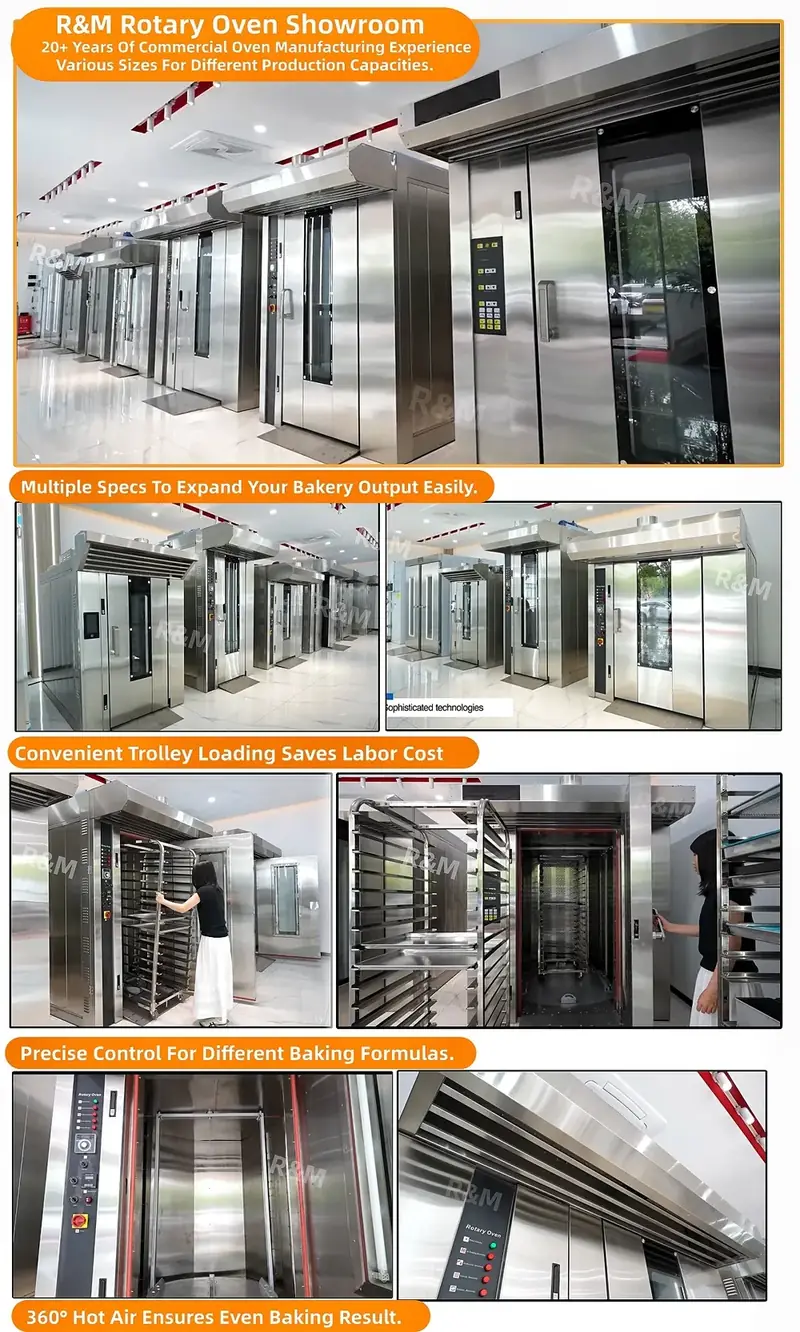
Heavy-Gauge Construction for Long-Term Bakery Production
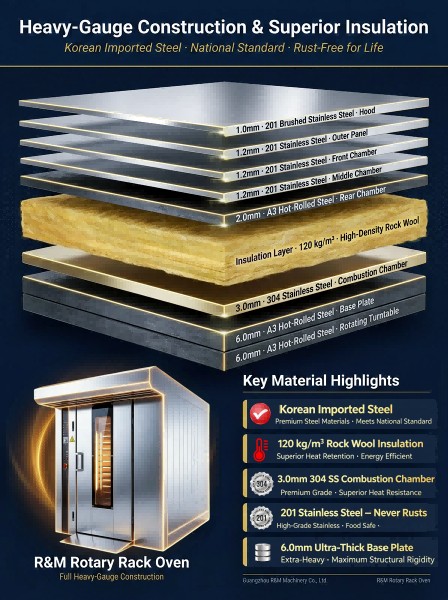
A commercial rotary oven must withstand repeated heating cycles, full trolley loads and long production hours. R&M uses specified stainless steel, structural steel and high-density insulation according to the function of each oven section.
| Component |
Material |
Specification |
| Air Hood | 201 Brushed Stainless Steel | 1.0 mm |
| Outer Panel | 201 Stainless Steel | 1.0 mm |
| Front Chamber | 201 Stainless Steel | 1.2 mm |
| Middle Chamber | 201 Stainless Steel | 1.2 mm |
| Rear Chamber | A3/Q235 Hot-Rolled Steel | 2.0 mm |
| Combustion Chamber | SUS304 Stainless Steel | 3.0 mm — fuel-fired models |
| Insulation | High-Density Insulation | 120 kg/m³ |
| Insulated Wall Assembly | Multi-Layer Structure | Approximately 135 mm |
| Base Plate | A3/Q235 Hot-Rolled Steel | 6.0 mm |
| Rotating Turntable | A3/Q235 Hot-Rolled Steel | 6.0 mm |
Heating Systems Engineered for Different Energy Sources
SUS304 Electric Heating Elements
Electric models use SUS304 tubular heating elements for corrosion resistance, oxidation resistance and stable heat output, working with three-row hot-air circulation for consistent baking.
Ecoflam Gas Burner
Selected gas models use an Ecoflam MAX GAS burner. Controlled air-fuel combustion supports stable operation, efficient heat release and consistent temperature recovery during commercial production.
Riello Diesel Burner
Selected diesel rotary oven models use a Riello G10 LG burner for controlled ignition, stable combustion and long-term operation. Alternative burner brands can be discussed according to local service availability.
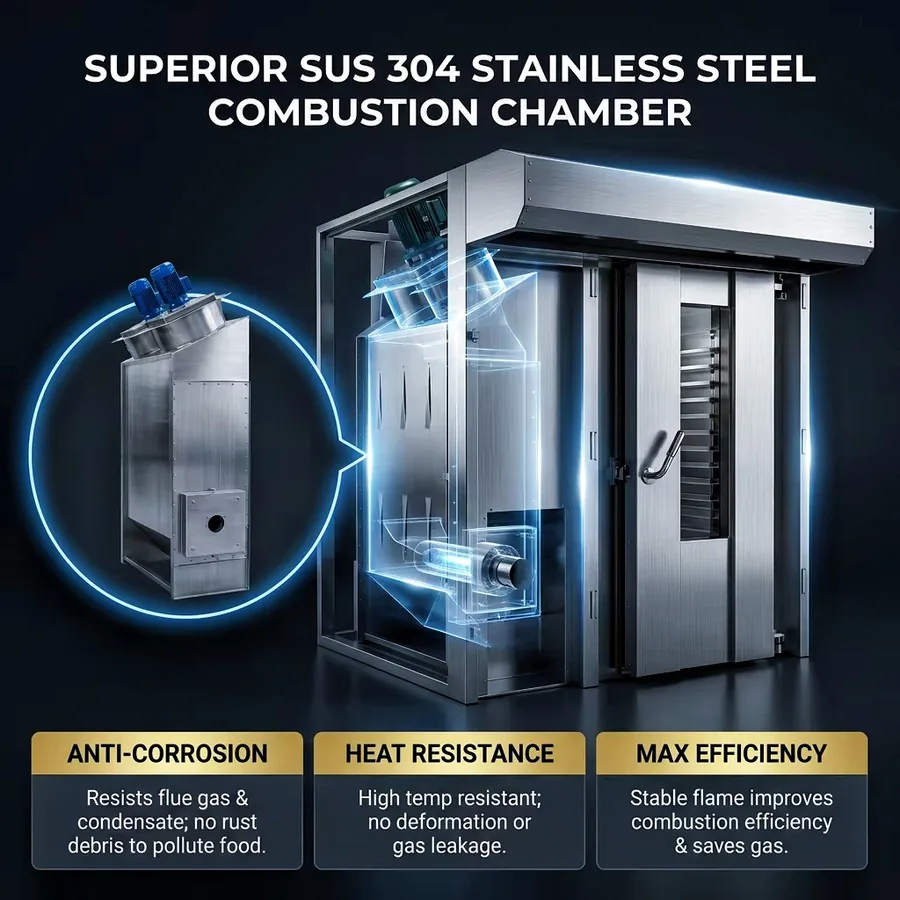
3.0 mm SUS304 Combustion Chamber
Fuel-fired models use a combustion chamber made from 3.0 mm SUS304 stainless steel. The heavy-gauge construction improves resistance to high-temperature combustion gases and supports stable heat transfer. Fuel-fired models only.
What Can You Bake in a Commercial Rotary Oven?
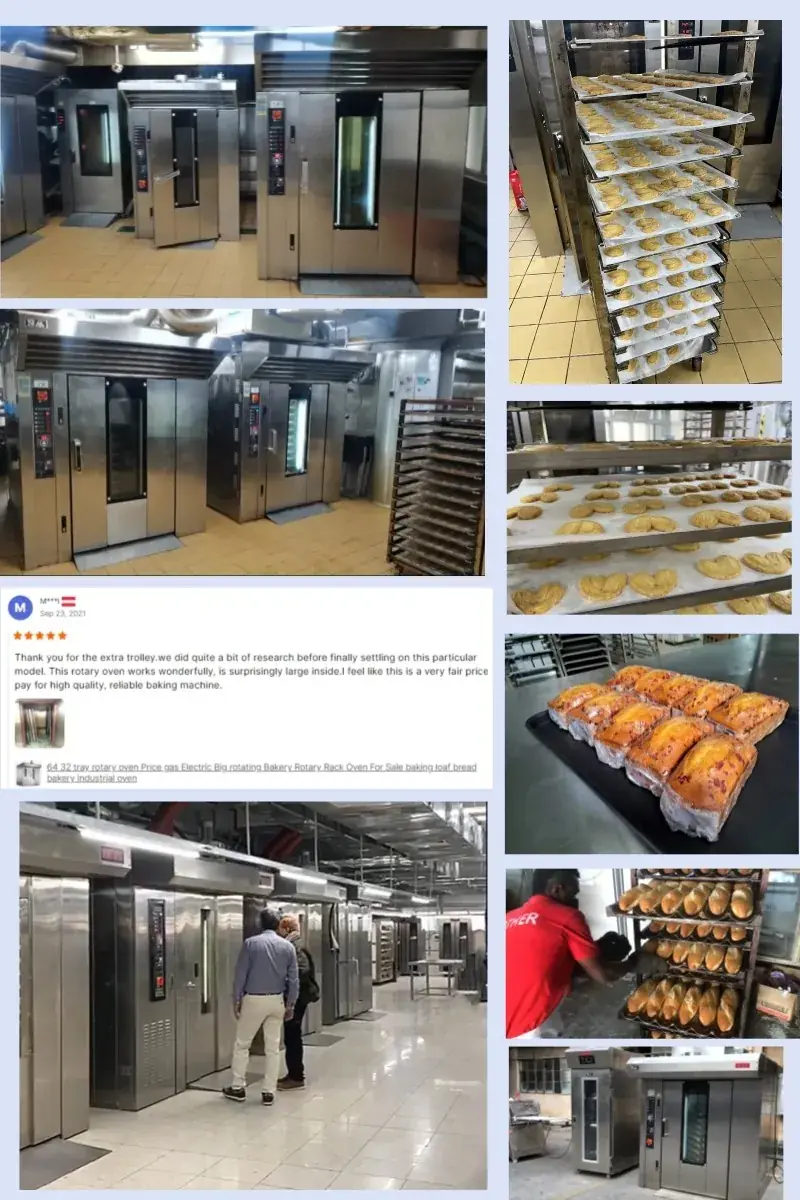
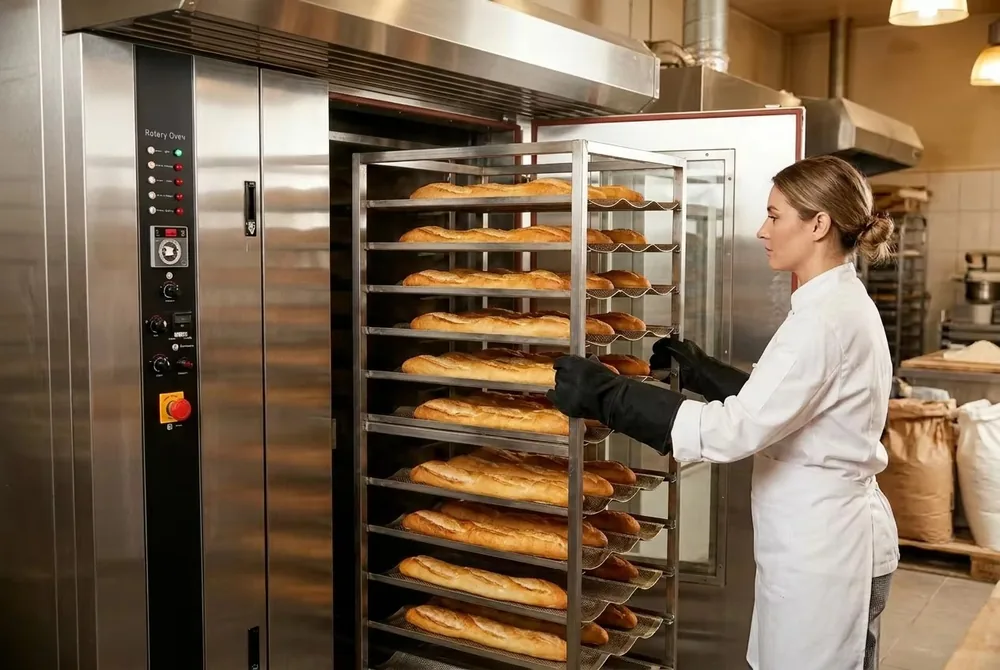
A rotary rack oven functions as a high-capacity commercial bread oven for products that benefit from controlled hot-air circulation, trolley rotation and optional steam. Baking programs, airflow and steam settings should be adjusted according to the product and loading pattern.
Loaf Bread & Toast
Stable full-rack airflow supports consistent volume, crust and color across multiple bread tins.
Buns & Rolls
High-volume production of burger buns, dinner rolls and uniformly sized products.
Baguettes
Optional steam and adjustable airflow help support crust formation and color consistency.
Croissants & Pastries
Controlled circulation and recipe-based operation support repeatable pastry production.
Cakes & Cookies
Balanced airflow adjusted for cake products requiring controlled heat distribution.
Retail Bakery
Wholesale Bakery
Bread Factory
Food Factory
Supermarket Bakery
Hotel Central Kitchen
Restaurant Central Kitchen
Bakery Chain
How to Choose the Right Rotary Oven
1. Confirm Your Product and Daily Output
Start with the products you plan to bake, batch size, operating hours and expected daily output. Bread, pastries, cakes and cookies may require different airflow, steam and control configurations.
2. Confirm Tray and Trolley Capacity
Choose tray size, number of tray levels, total tray quantity and trolley configuration. Do not select a rack oven based only on model name or external dimensions.
3. Compare Local Energy Conditions
Check local voltage, phase, frequency, natural-gas pressure, LPG availability and diesel supply. Installation and maintenance conditions matter alongside energy price.
4. Check Steam Requirements
Steam is important for baguettes and European-style bread. Confirm whether the steam system is standard, optional or unnecessary for the intended product range.
5. Plan Installation Space
Confirm machine dimensions, door and corridor width, trolley movement area, exhaust requirements, fuel or electrical connection, water supply for steam and maintenance access.
6. Select the Control System
Options may include standard digital control, touchscreen control, microcomputer memory control, recipe storage or a customized control panel depending on the selected rotary oven machine.
FAQ — Commercial Rotary Rack Oven
What is the difference between a rotary oven and a rotary rack oven?
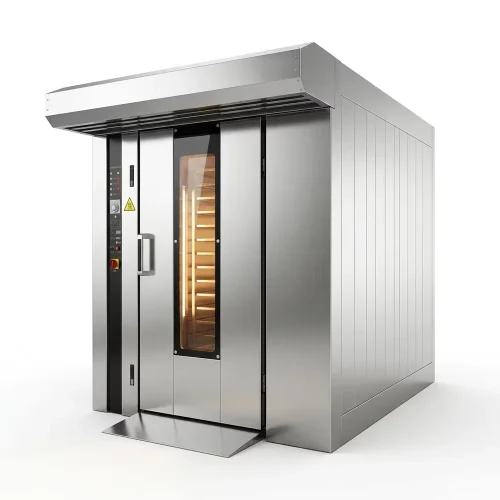
In commercial bakery equipment, the terms are used for the same oven type. A rotary rack oven bakes products on a trolley that rotates inside a hot-air chamber. It may also be called a rotating rack oven, trolley oven, roll-in oven or revolving rack oven depending on the market.
Which capacity should I choose: 16, 26, 32 or 64 trays?
The correct capacity depends on tray size, batch quantity, operating hours and daily output. A small rotary oven may suit retail production, while 32 or 64-tray configurations are generally selected for higher-volume bakeries and food factories. Final capacity must be calculated from actual product and baking cycle data.
Should I choose an electric, gas or diesel rotary oven?
Choose according to local utility availability, installation conditions and operating requirements. Electric rotary oven models require sufficient electrical capacity. Gas models suit locations where natural gas or LPG is available. Diesel rotary oven for bakery use is practical where gas supply is unavailable or electrical capacity is limited.
How does the three-row airflow system improve baking?
Three adjustable rows of hot-air outlets distribute heat across the full trolley height. Together with rack rotation and the circulation fan, the system helps reduce color differences between trays and supports more consistent batch results in a commercial rack oven.
Is the combustion chamber made from SUS304 stainless steel?
Selected fuel-fired models use a 3.0 mm SUS304 stainless steel combustion chamber. Electric models use tubular heating elements and do not use the same fuel-combustion structure.
Can steam and recipe-memory controls be added?
Yes. Steam, touchscreen control and microcomputer memory control are available for selected models. The appropriate configuration depends on the baked product, oven capacity and destination market.
How much does a commercial rotary oven cost?
Rotary oven price depends on tray capacity, heating type, steam system, controller, burner, voltage, trolley configuration and export requirements. A diesel rotary oven price may also vary according to burner brand and local fuel specifications. Send your required capacity and utilities to receive an accurate factory quotation.
What is the difference between a rotary oven and a deck oven?
A
rotating oven uses trolley loading and circulated hot air for high-volume full-rack production. A
deck oven uses fixed baking chambers and transfers more heat through the baking deck. The correct choice depends on bread type, crust requirement, batch workflow and production plan.
What must be prepared before installation?
The site may require sufficient floor space, trolley access, electrical supply, fuel connection, exhaust, water supply for steam and maintenance clearance. R&M should review the site information before shipment to avoid installation issues.
Get a Rotary Oven Recommendation and Factory Quote
Tell us what you bake, how many trays you need per batch and which energy sources are available. R&M will recommend a suitable rack oven for sale configuration for your production plan.
Your information will only be used to prepare the requested equipment recommendation and quotation.
Commercial Bakery Ovens
Deck Oven
Convection Oven
Commercial Oven
Request a Factory Quotation