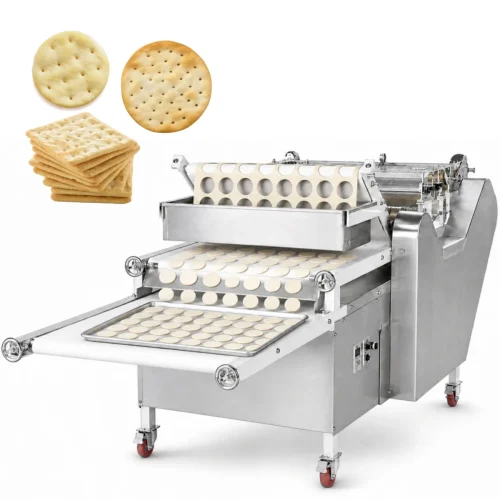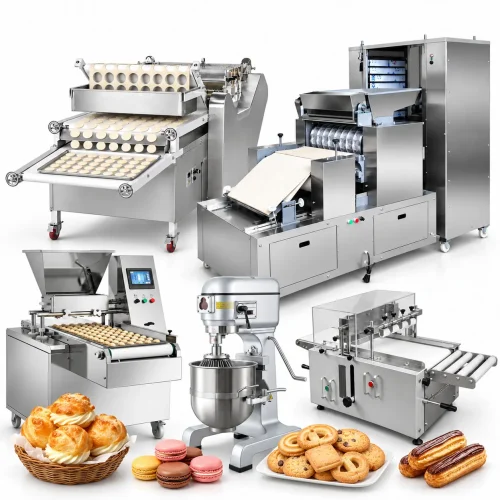




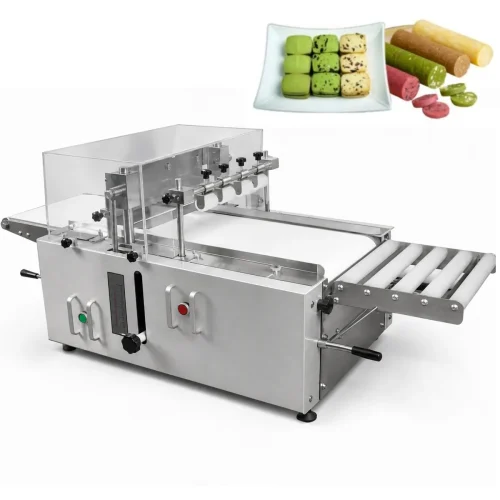
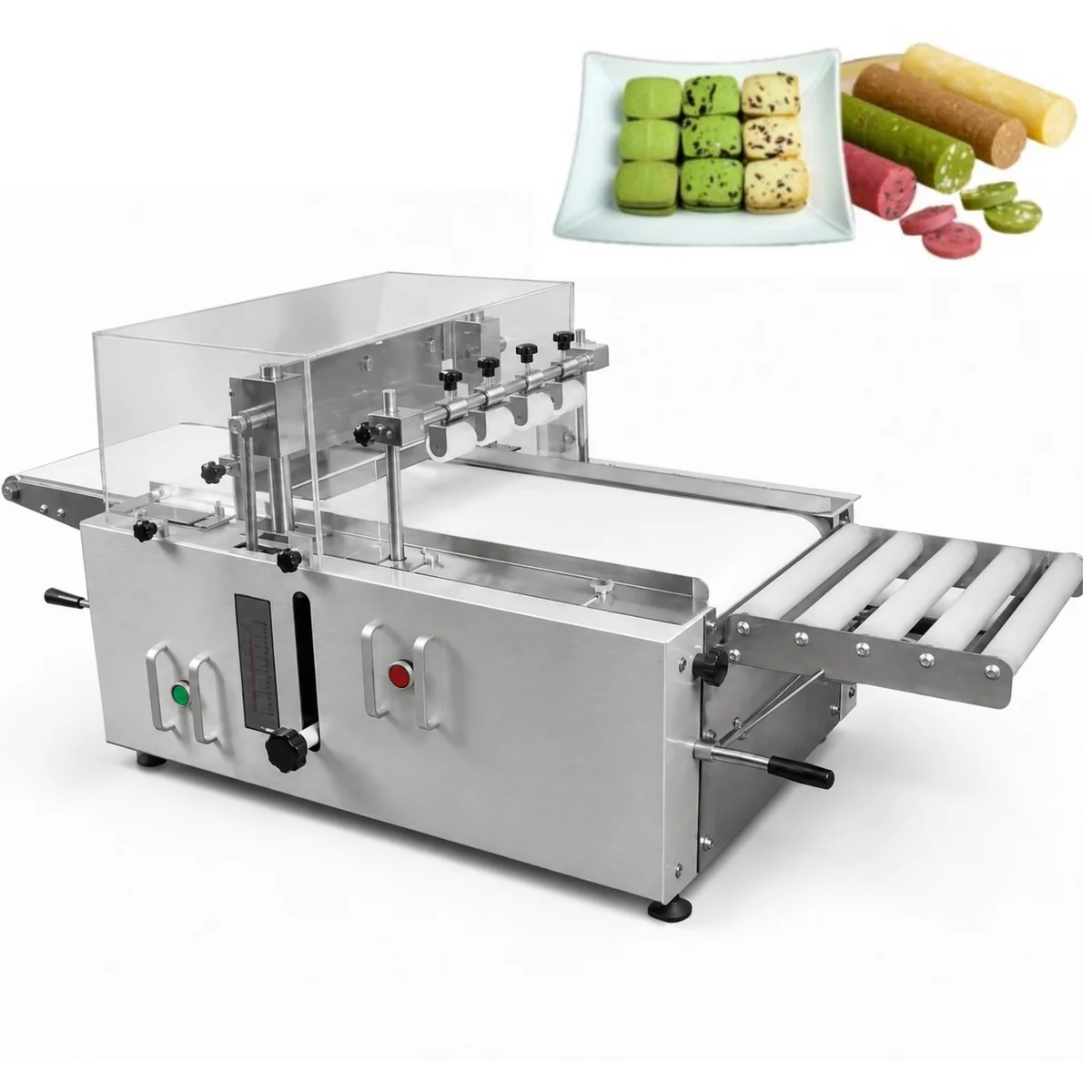
Automatic Cookie Cutter Machine RMCC400 Biscuit Slicer
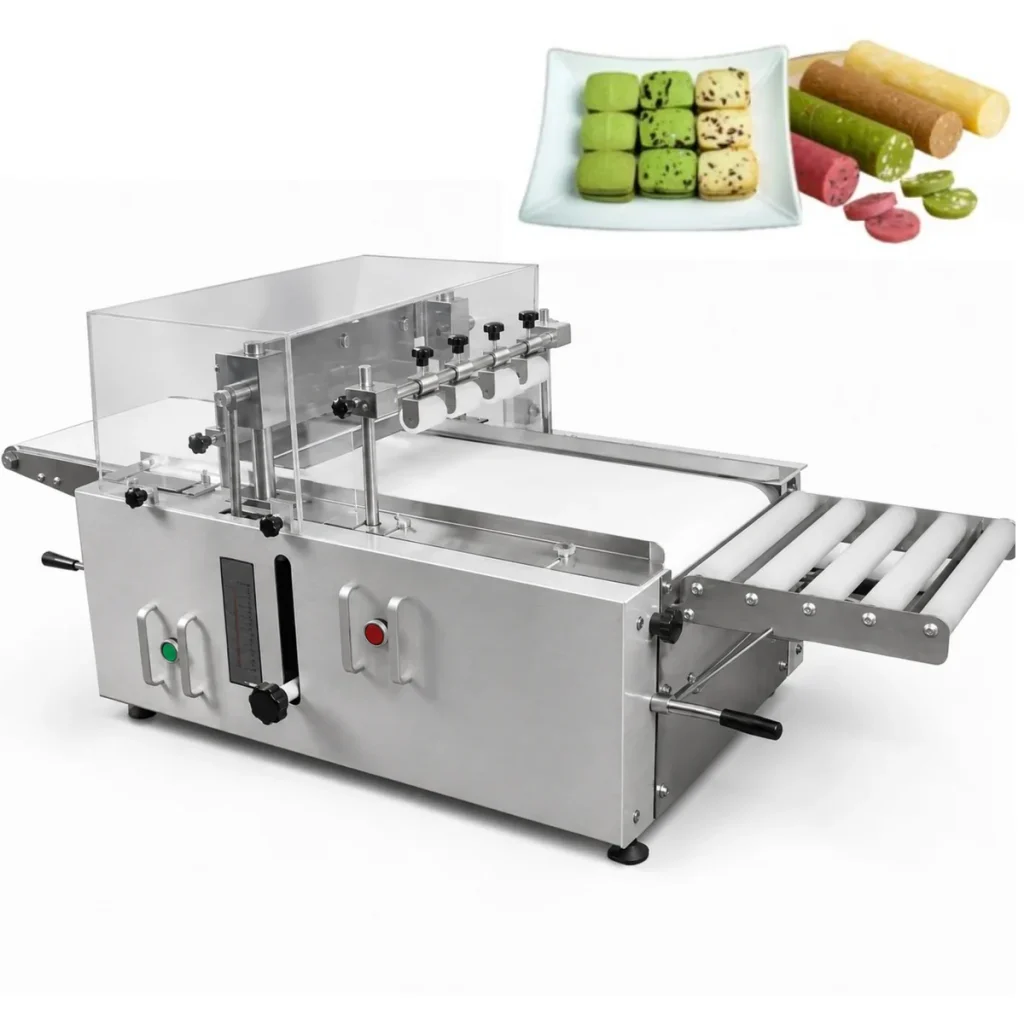
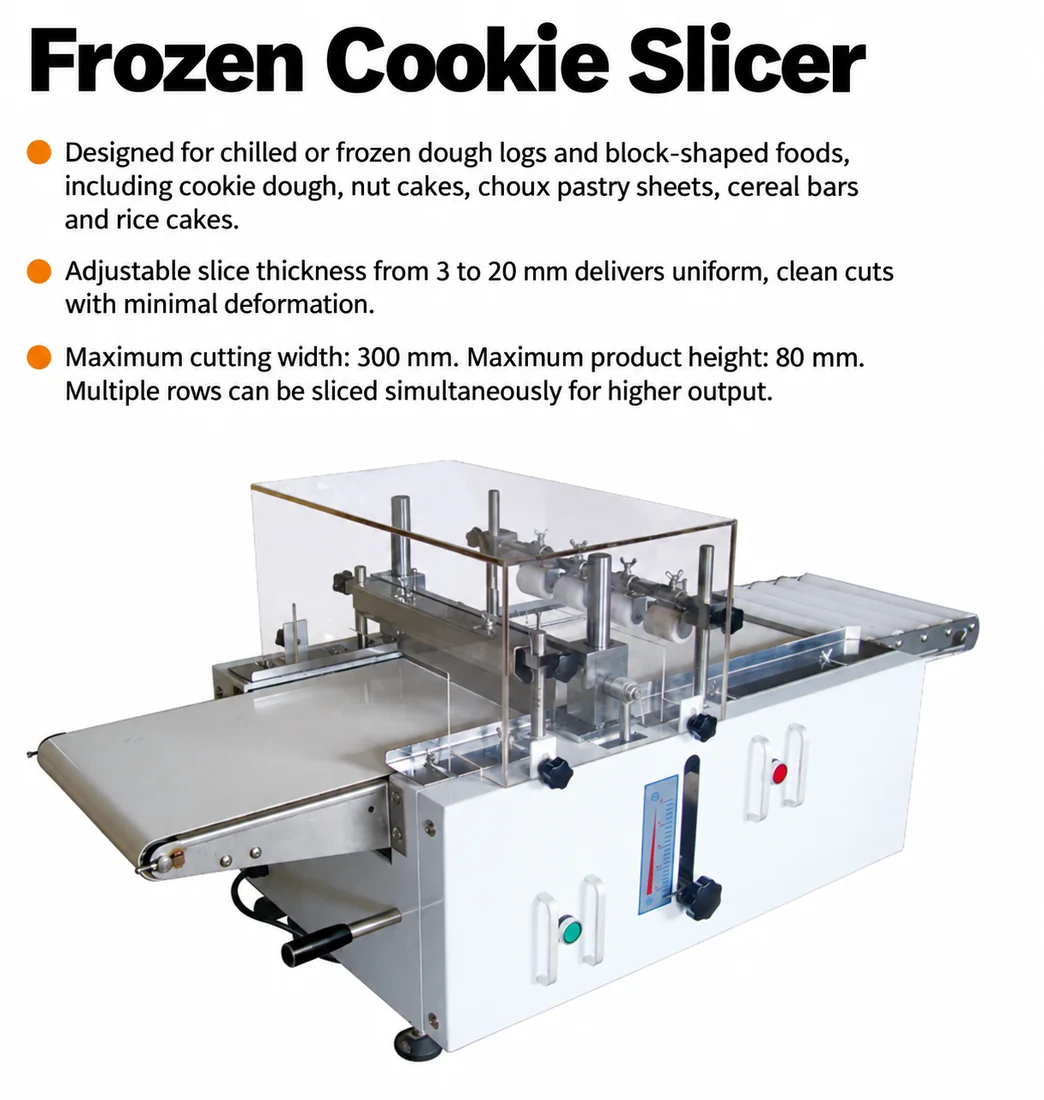
The RMCC400 is an automatic cookie cutter for chilled or frozen dough logs — 1-20 mm slices at 55 cuts per minute, up to 300 mm wide, in an 80 kg tabletop frame. 220V/50Hz; 110V built to order.
Request a Quote
Enter the quantity you need and add to your quote list for pricing inquiries.
Specifications
Description
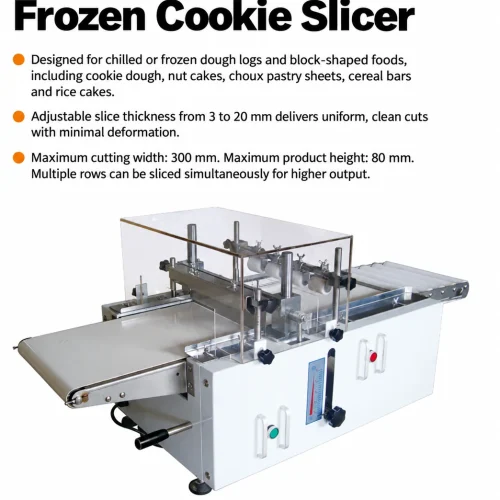
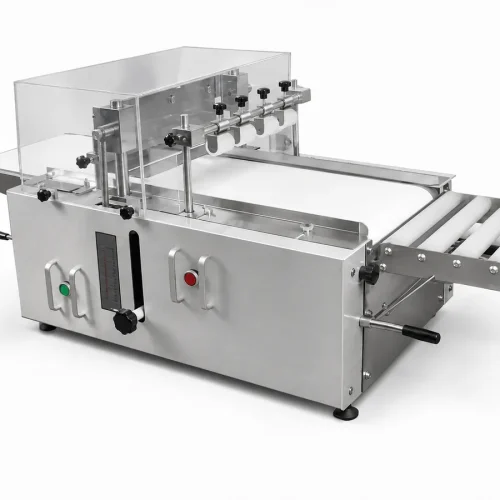
The RMCC400 is an automatic cookie cutter for bakeries that form cookies as logs and cut them to thickness before baking. It slices chilled or frozen dough from 1 mm to 20 mm at 55 cuts per minute, across a working width of 300 mm. The frame is compact — 1,100 × 620 × 550 mm, 80 kg — so it fits a bench or a short line without a dedicated room.
If you already roll dough into logs, an automatic cookie cutter replaces hand slicing with a repeatable cut. Every piece leaves the blade at the same thickness, with a flat face and no crushing at the edge, which is what keeps bake time and pack weight consistent across a shift.
What the Automatic Cookie Cutter Machine Does
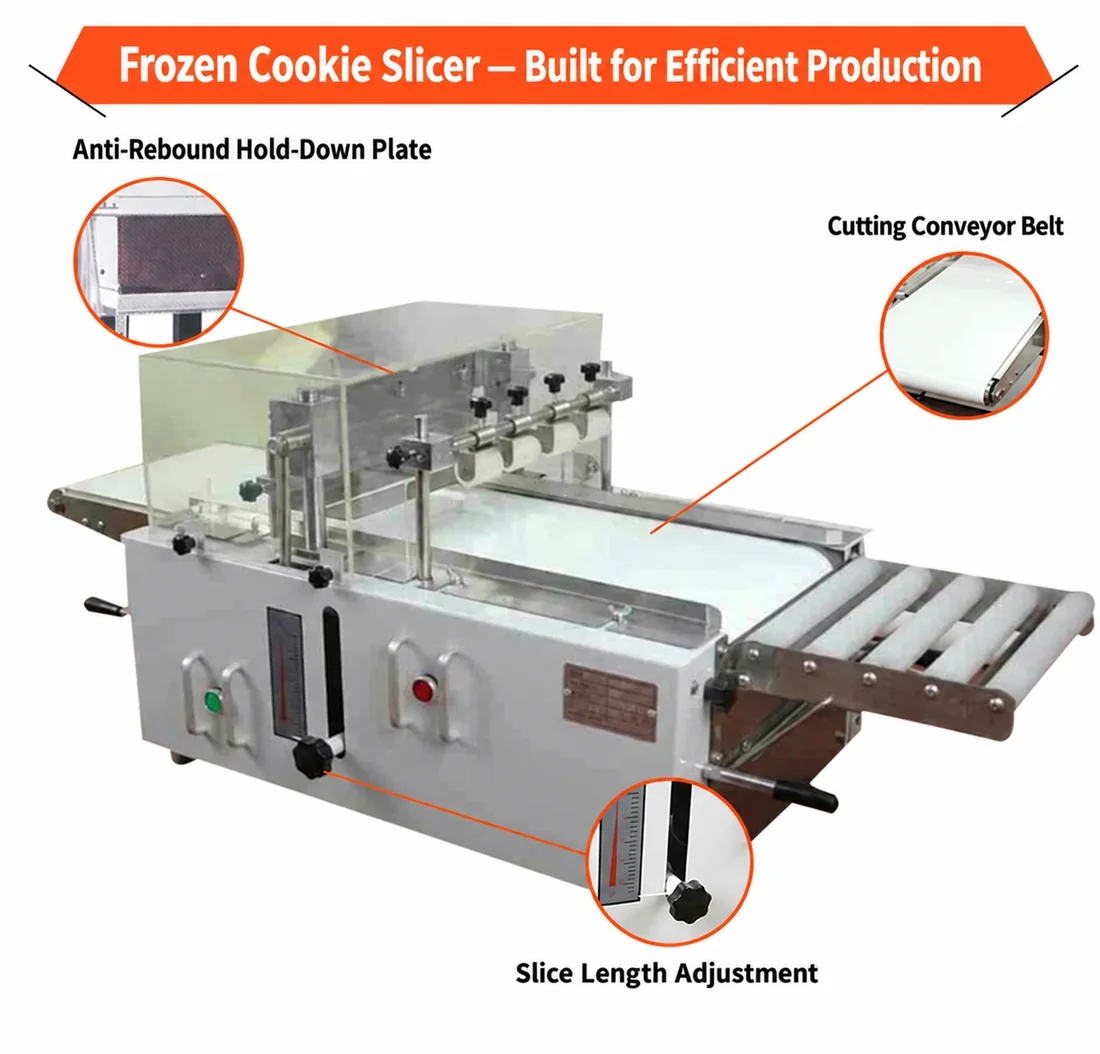
An automatic cookie cutter does one job, and it does it at the point in the process where consistency is usually lost. A conveyor carries the log under a blade; the blade cuts through the section in one pass; the slices drop onto the outfeed side ready for the oven. There is no second operator measuring thickness, and no drift between the first tray of the shift and the last.
Bakeries buying a cookies cutting machine for slice-and-bake production are usually describing this setup: logs in, uniform slices out, trays to the oven.
Built for Chilled and Frozen Dough Logs
The blade works on dough that holds its shape when cold, so both chilled and frozen logs run on the same machine. Frozen dough straight from the freezer is common in slice-and-bake production; chilled dough is used where the log is cut shortly after forming. Very soft or warm dough will smear rather than cut cleanly, so it should be chilled or frozen first. If you cut at freezer temperature, tell us the dough temperature and the product so we can confirm the blade setting.
Cutting Thickness from 1 mm to 20 mm
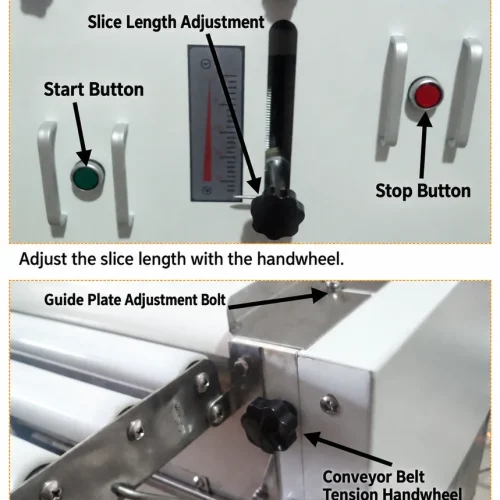
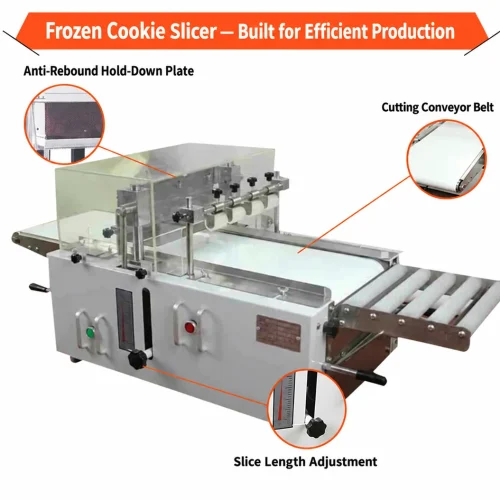
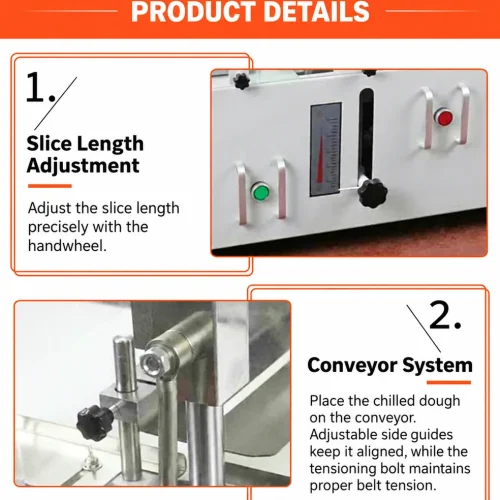
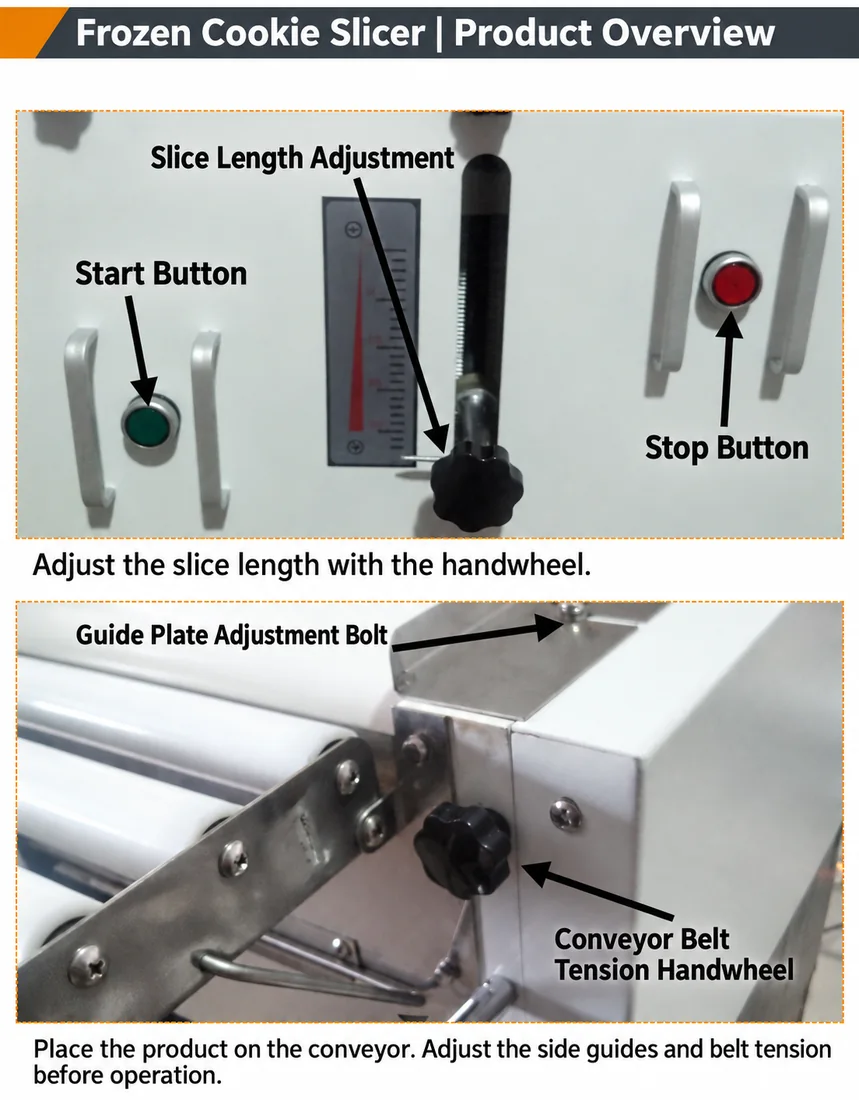
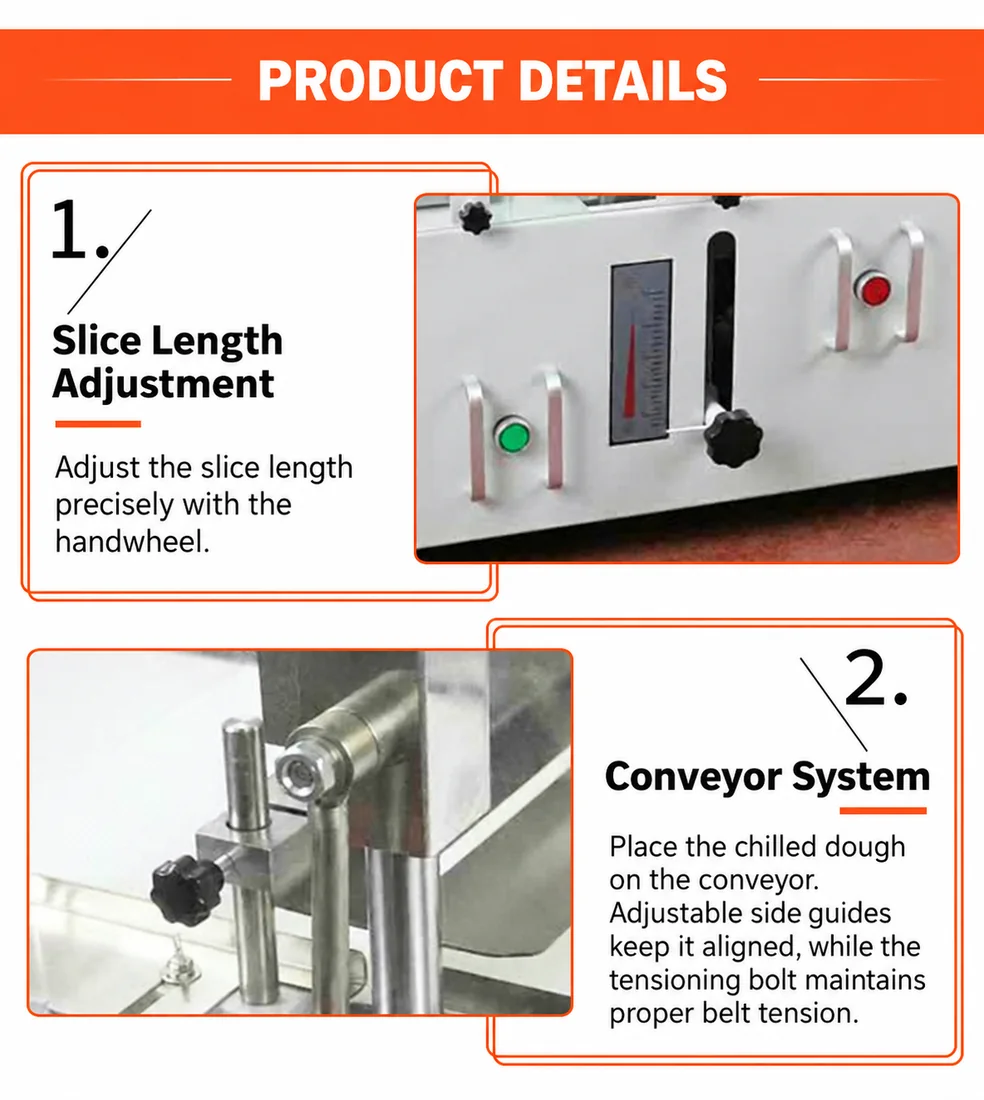
One dial sets the slice thickness anywhere from 1 mm to 20 mm. Thin settings suit crisp wafer-style biscuits and sandwich bases; thicker settings suit chunkier cookies and checkerboard pieces. Cutting height reaches 86 mm, so taller logs can be sliced in one pass rather than split first.
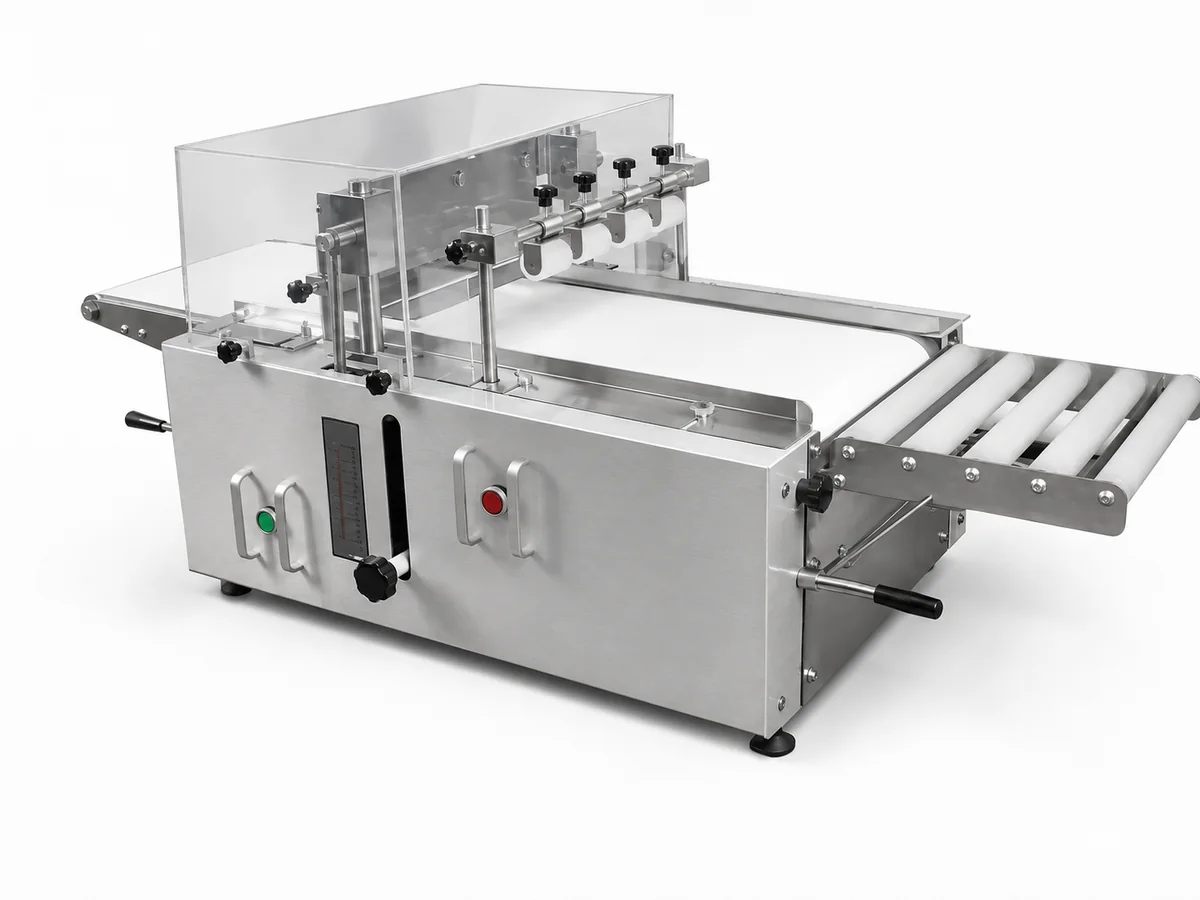
How the Automatic Cookie Cutter Works
- Load — chilled or frozen logs are placed on the infeed side of the conveyor, one behind another or side by side.
- Convey — the belt carries each log forward to the blade at a steady rate, so timing does not depend on the operator.
- Cut — the blade passes through the full log section in a single stroke. Thickness is set by the dial, not by hand pressure.
- Discharge — slices leave the blade with a flat face and no crushing at the edge, ready for the tray or the oven belt.
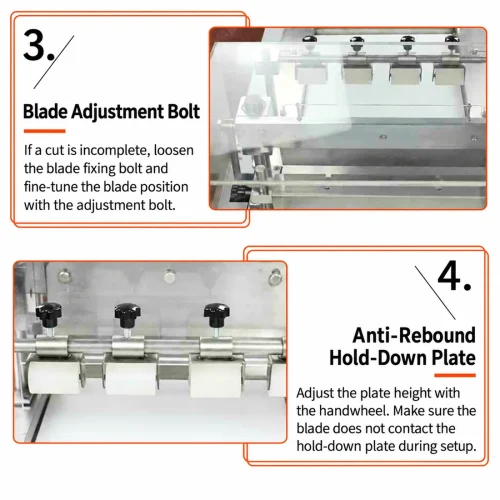
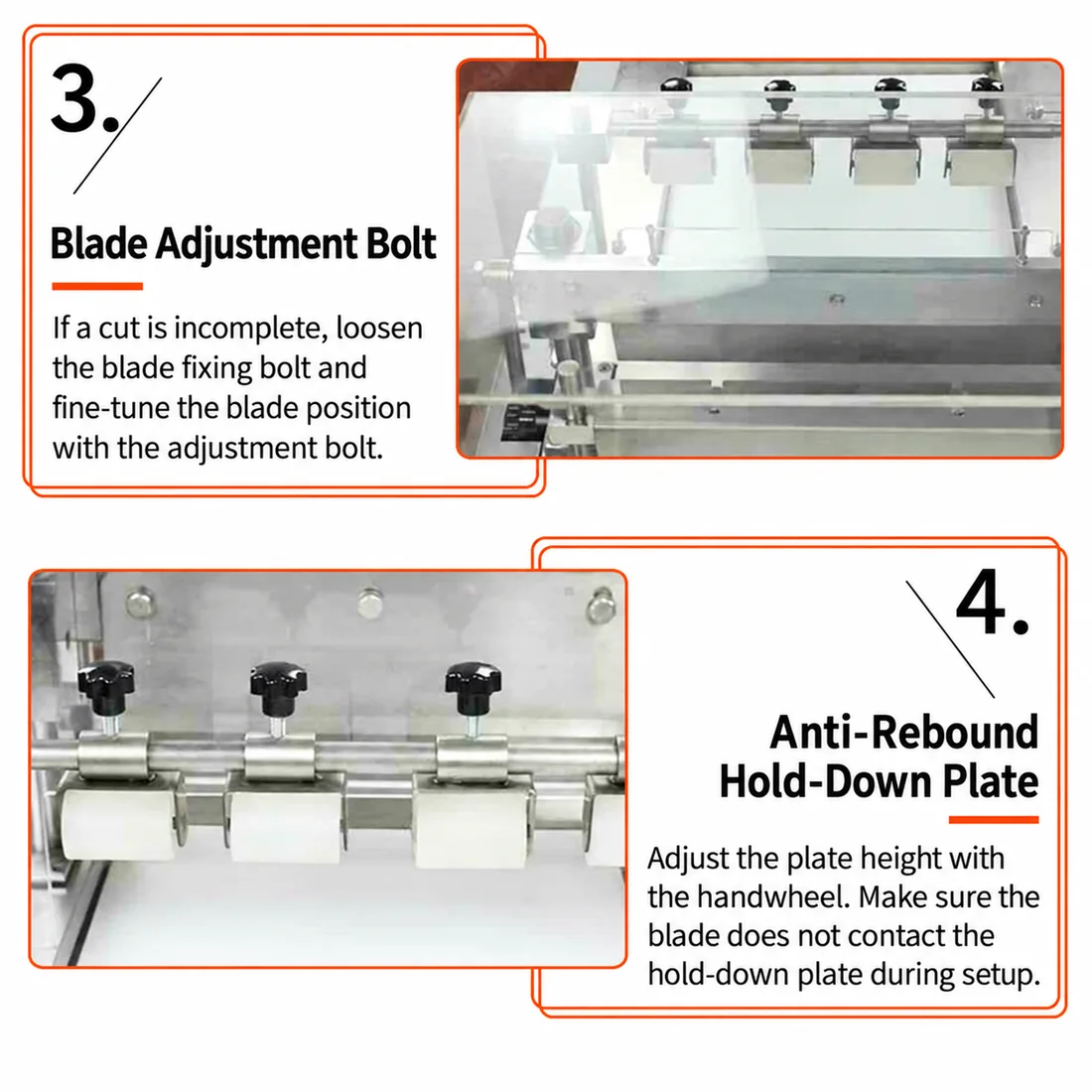
The blade guard is a transparent cover, so an operator can watch the cut without removing anything. Dough contact points are arranged so the blade clears the log with minimal drag — this is what reduces the sticking and smearing that hand slicing leaves on warm dough. Cleaning is a wipe-down of the conveyor and blade area rather than a strip-down.
The frame is a low, stable tabletop unit at 80 kg, with a 0.3 kW drive. Power draw is light enough for a standard single-phase supply: 220V / 50Hz as standard, with 110V built to order for markets that use it.
A Biscuit Cutter Machine for Log and Frozen Dough Production
As a biscuit cutter machine, the RMCC400 covers the formats that are formed as a log rather than moulded or deposited. Cutting happens before baking, so the machine does not include an oven, cooler or packaging equipment. In equipment catalogues a unit of this type sometimes appears as a cookies cutting machine; on the bakery floor it is the station between the dough log and the oven.
What It Cuts
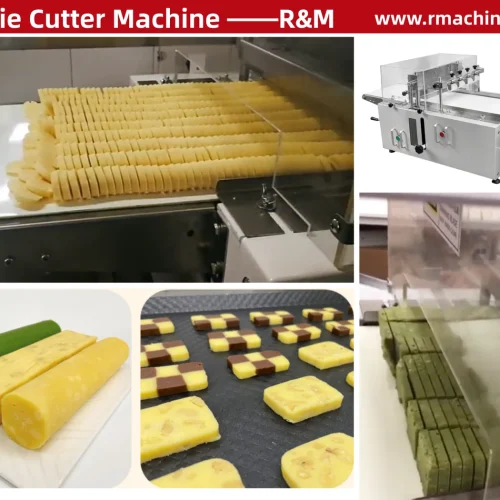
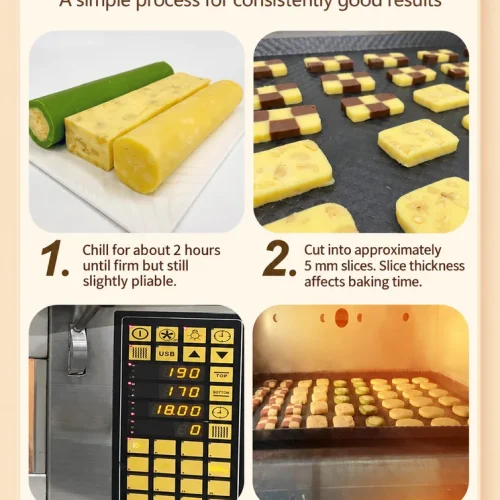
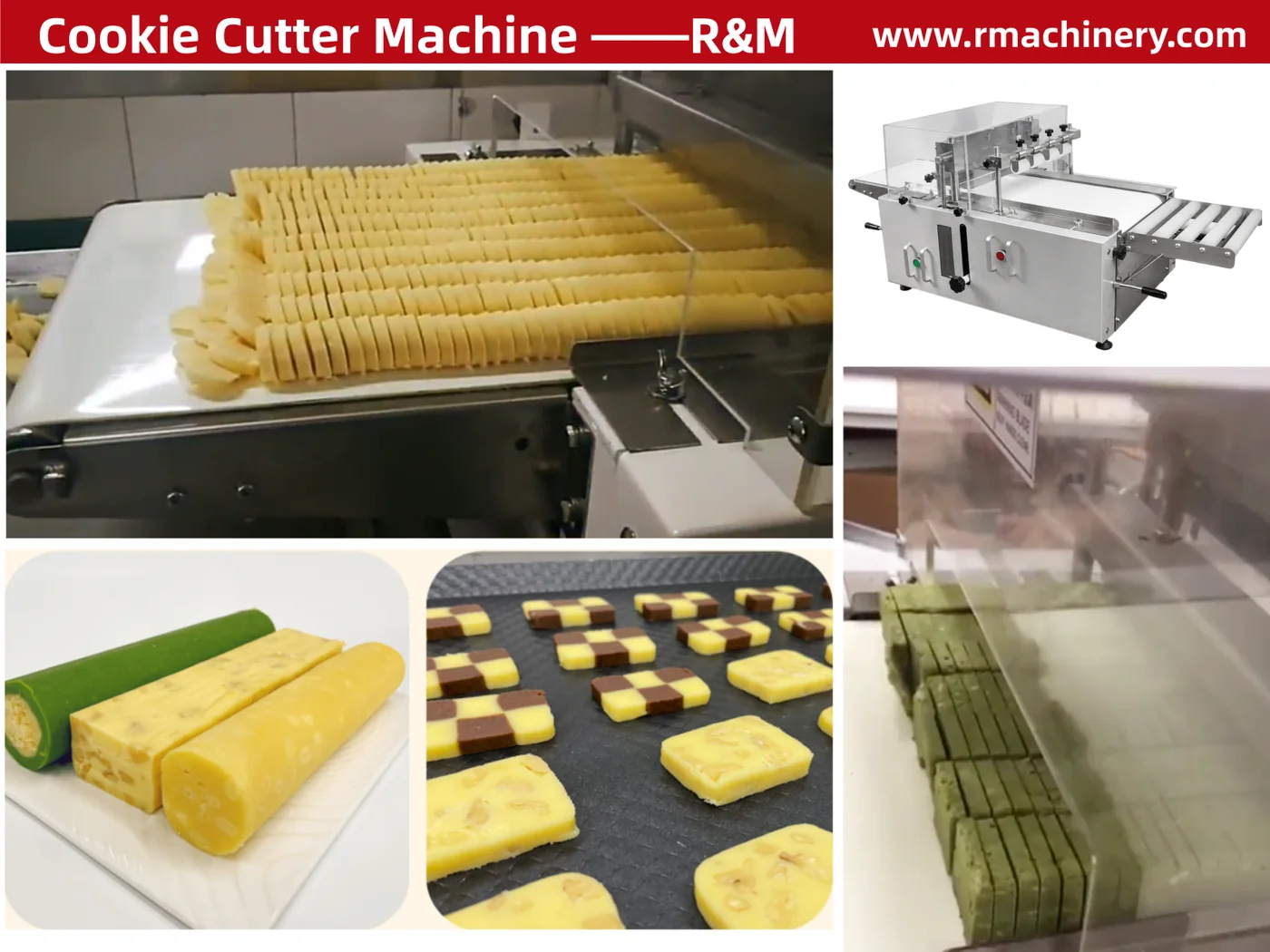
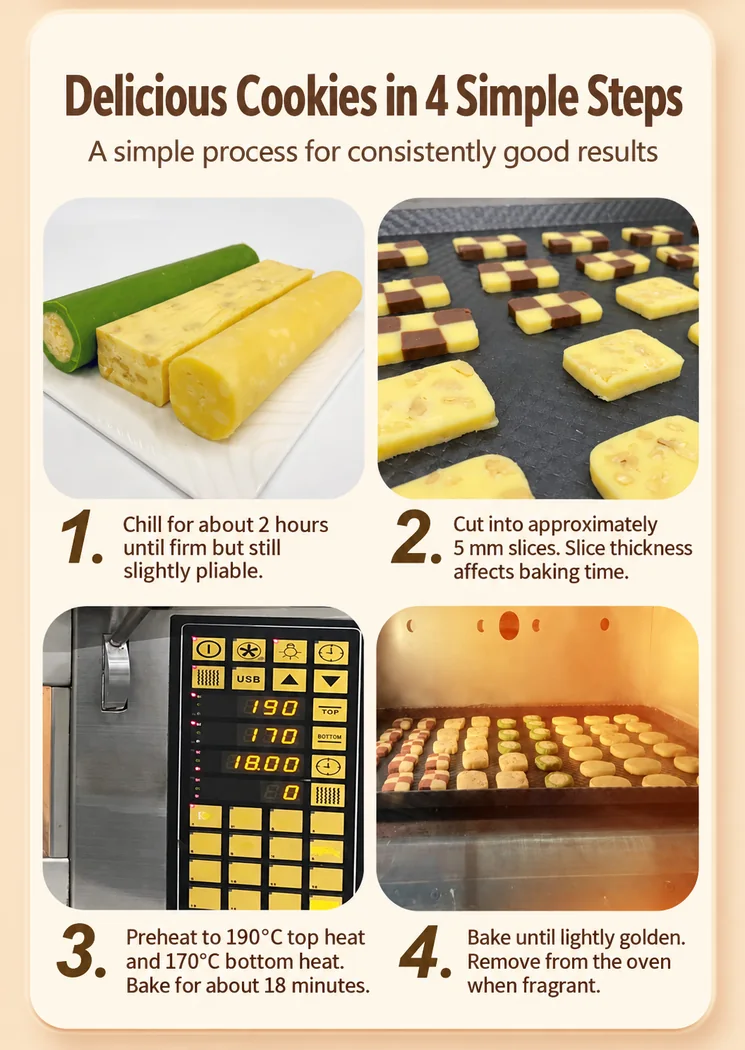
- Cookie and biscuit dough logs — round, square or rectangular, including two-colour checkerboard logs
- Frozen dough — slice-and-bake cookie formats cut straight from the freezer
- Egg tart sticks (frozen Portuguese tart dough)
- Walnut cake and fruit cake blocks
- Puff pastry and pastry blocks
- Kara stick and rice cake (nian gao) blocks
Multi-Row Cutting Across the 300 mm Width
The conveyor runs under the blade, so several logs are placed side by side across the 300 mm width and cut in the same pass. Three logs of 90 mm across, for example, are cut in a single cycle instead of three. This is where the volume gain comes from — not from blade speed alone.
Specifications
| Item | RMCC400 |
|---|---|
| Cutting thickness | 1–20 mm, adjustable |
| Cutting width | Max. 300 mm |
| Cutting height | Max. 86 mm |
| Conveyor belt width | Max. 300 mm |
| Rated output | 55 cuts/min (50 Hz) |
| Motor power | 0.3 kW |
| Overall dimensions | 1,100 × 620 × 550 mm |
| Net weight | 80 kg |
| Voltage | 220V / 50Hz (110V built to order) |
| Machine type | Tabletop |
Output is rated in cuts per minute, not pieces per minute. A single cut across a 300 mm width can produce several pieces if two or three logs are loaded side by side, so daily volume depends on log count, log size and the thickness setting.
Where It Fits in a Cookie Line
In a typical slice-and-bake setup the automatic cookie cutter sits after mixing and dough forming:
Planetary mixer → dough log forming → RMCC400 slicing → baking (deck, convection or rack oven) → cooling racks → packing
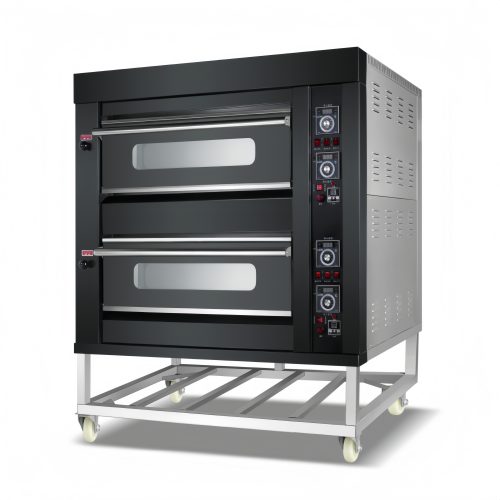
The baking stage can be a deck oven, a convection oven or a rack oven.
It also works as a standalone unit where dough logs arrive from a separate rolling process, or where frozen logs are bought in.
Cookie Cutter Price — What Determines the Figure
The price of an automatic cookie cutter depends on the configuration rather than on the model alone: the thickness range you need, whether logs are fed chilled or frozen, the voltage for your market, spare blades and the packing method for export. Because log width and height change the infeed arrangement, a quotation built around your actual log dimensions is more useful than a list cookie cutter price. Send your log size and target output and we will set out the price item by item, so you can compare it against other suppliers on the same basis.
A Tabletop Cookie Cutter Machine for Small and Mid-Size Bakeries
Bakeries usually look at a machine like this for one of three reasons: hand slicing has become the bottleneck, piece thickness has started to drift between operators, or the shop has moved into slice-and-bake cookies and needs a repeatable cut. Because the RMCC400 is a cookie cutter machine by footprint — under 1.2 m long and light enough for a bench — it suits shops that are not ready for a full conveyor line but have outgrown a knife and a ruler.
For buyers comparing equipment, the practical questions are how wide your logs are, how thin you need to cut, and whether your dough goes in chilled or frozen. Send us those three answers with a photo of the log and we will confirm the machine suits your product before you order. You can also review the wider cookies and biscuit machine range for the rest of the line.
Frequently Asked Questions
Does the machine cut frozen dough or only chilled dough?
It is used for both, and it is commonly bought as a frozen cookie cutting machine for slice-and-bake production. What matters is that the log is firm enough to hold its shape. Very soft dough straight from mixing will smear; chill or freeze it first. If you are cutting at freezer temperature, tell us the dough temperature and the product so we can confirm the setup.
What is the thinnest slice it can make?
1 mm, with the thickness adjustable up to 20 mm on the same machine. Thin settings are used for crisp biscuits and sandwich bases; thicker settings for chunkier cookies.
How is this different from a wire cut cookie machine?
They work on opposite dough conditions. A wire cut cookie machine pushes soft dough through a die and cuts the extruded rope with a wire, so the dough has to be soft enough to flow — that route suits drop-style cookies, shortbread fingers and dough with inclusions. This machine works the other way round: the dough is already formed into a firm log, chilled or frozen, and a blade slices it to thickness, so the cut face is flat and the piece holds its section. Both are sometimes listed under the same name, which is why it is worth checking the dough condition before choosing — if your dough flows, you need a wire cut machine; if it holds its shape when cold, you need a slicer.
Can I cut more than one log at a time?
Yes. The working width is 300 mm, so logs are placed side by side and cut in one pass. This is the main reason the machine outperforms hand slicing on volume — the saving comes from multi-row cutting, not from blade speed alone.
How many pieces per hour will I get?
The automatic cookie cutter is rated at 55 cuts per minute. Piece output depends on how many logs you load per cut and the thickness you set. As a rough guide, one log cut at 5 mm produces far more pieces per minute than the same log cut at 20 mm. Send your log dimensions and target daily output and we will work the number through with you.
Do I need a separate conveyor or table?
No. The cutting conveyor is built into the machine. You need a stable bench or stand, a single-phase power point and enough space to feed logs in and take trays out. Overall footprint is 1,100 × 620 × 550 mm.
What voltage does it need?
220V / 50Hz as standard. A 110V version is built to order — specify your destination voltage when you request the quotation.
How do I clean it?
The blade area has a transparent guard that lifts away; the conveyor and blade are wiped down after production. There is no need to dismantle the frame. We supply the cleaning and blade-change guidance with the machine.
Are the blades replaceable, and how long do they last?
The blade is a replaceable part. Life depends on the dough — frozen dough with inclusions such as nuts or dried fruit dulls a blade faster than plain short dough. We recommend keeping a spare blade for production continuity; ask for the blade part number with your order.
Can it cut shapes, or only straight slices?
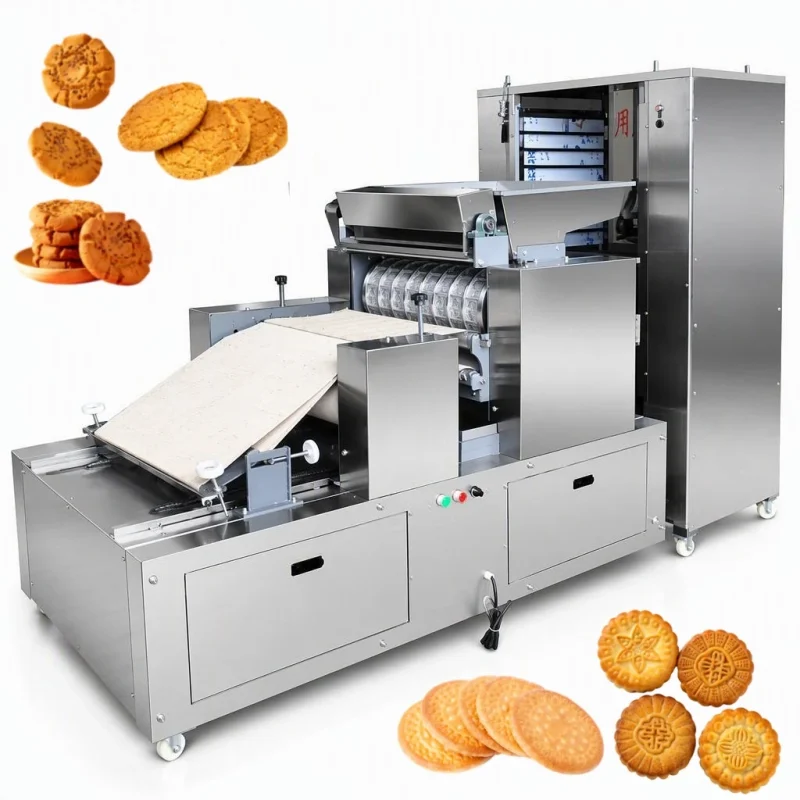
It cuts straight sections. The shape of the finished cookie comes from the log’s cross-section — round logs give round cookies, square logs give square cookies, and a two-colour log gives a checkerboard pattern. If you need embossed or shaped cookies formed from a mould, the rotary moulder is the right machine instead. For shaped output, see our fully automatic biscuit making machine.
How does this compare with a rotary moulder or a depositor?
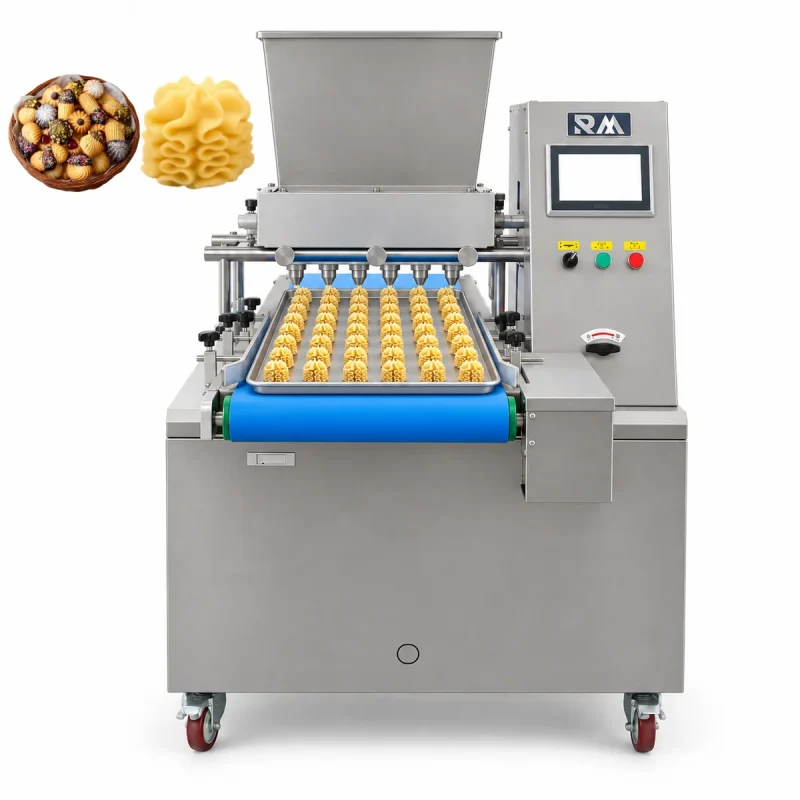
They do different jobs. A depositor portions soft dough through nozzles; a rotary moulder presses short dough into an engraved roller; this machine cuts dough that has already been formed into a log. Bakeries frequently run a moulder or depositor for shaped products and the RMCC400 for log-based and frozen formats. Soft-dough depositing is handled by our automatic cookie depositor machine.
What information do you need to quote?
Product type, log dimensions (width and height), chilled or frozen, thickness range required, target output per shift, destination voltage and delivery country. Photos of the dough or an existing log help us confirm the setting before shipment.
Request a Cookie Cutter Machine Quote
Send us your log size, target thickness and daily output. We will confirm the RMCC400 configuration, blade setup and voltage for your market, and return a quotation with packing and lead time.