



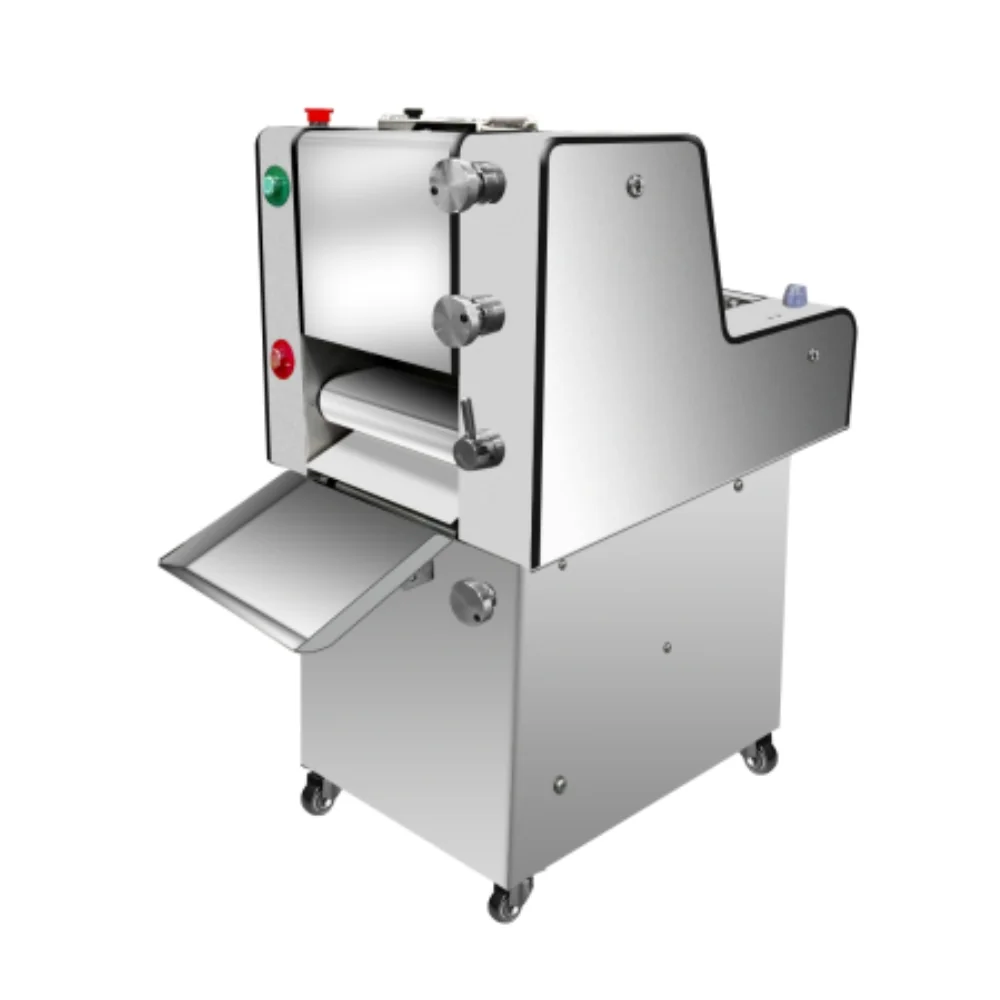
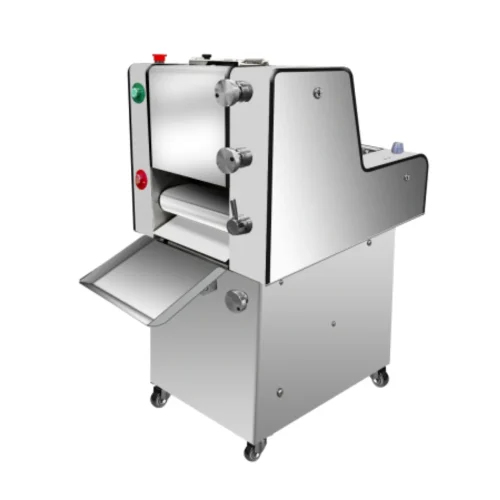
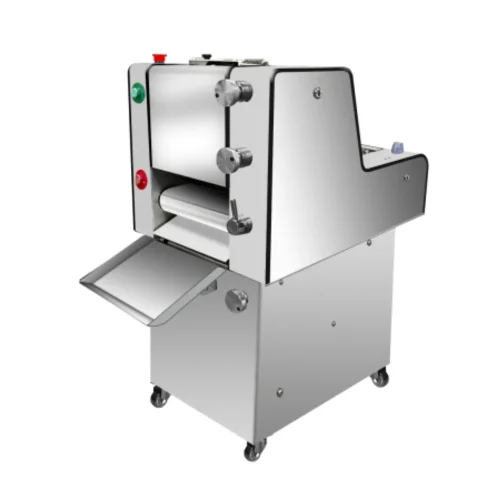
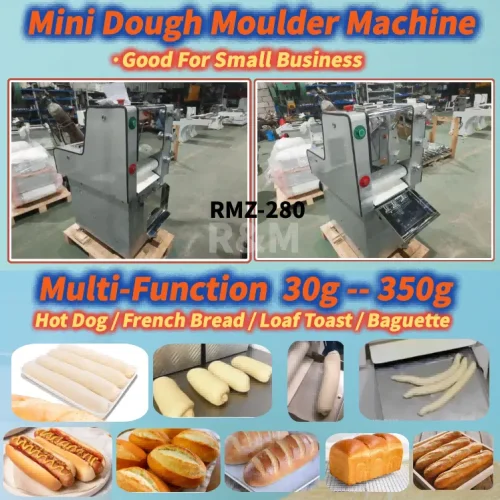
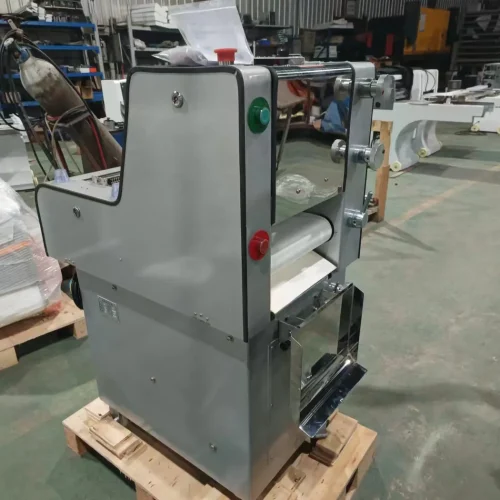
Mini Dough Moulder RMZ-280 — Compact Dual-Function, 30 to 350g
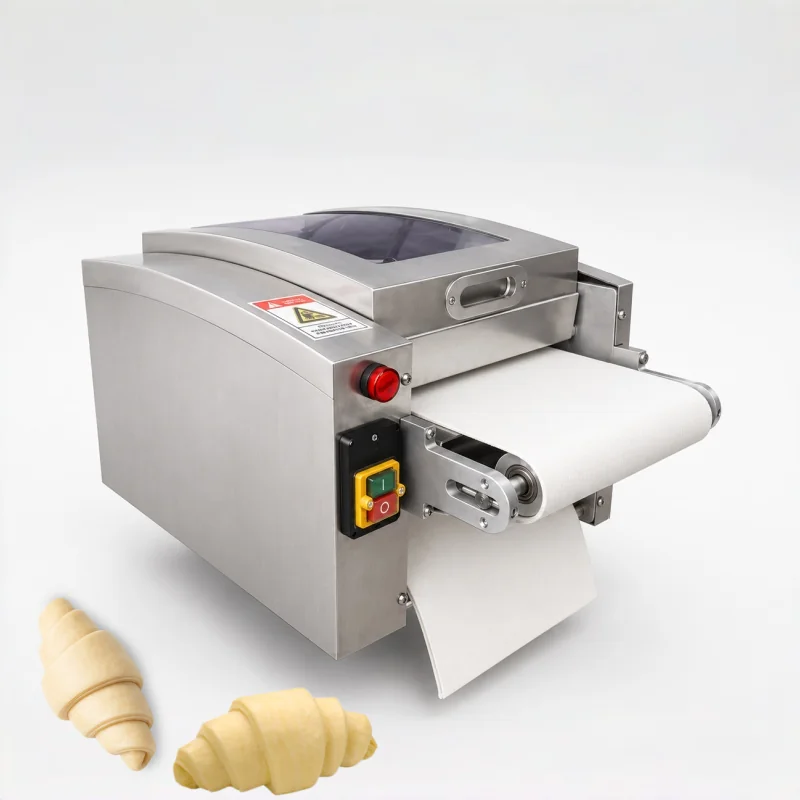
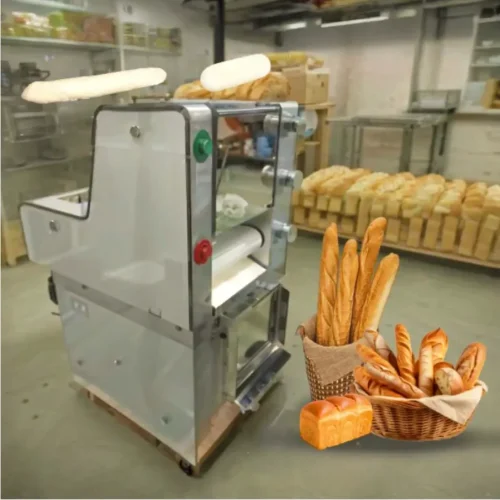
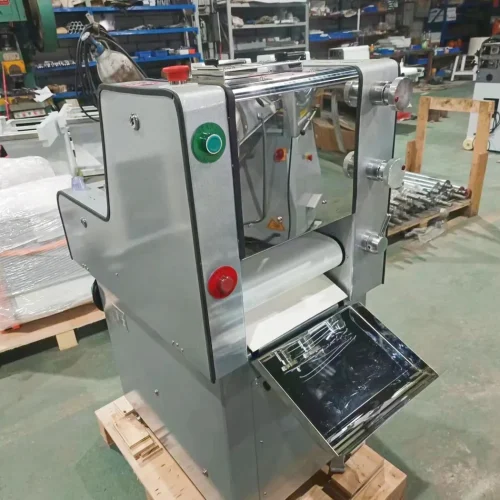
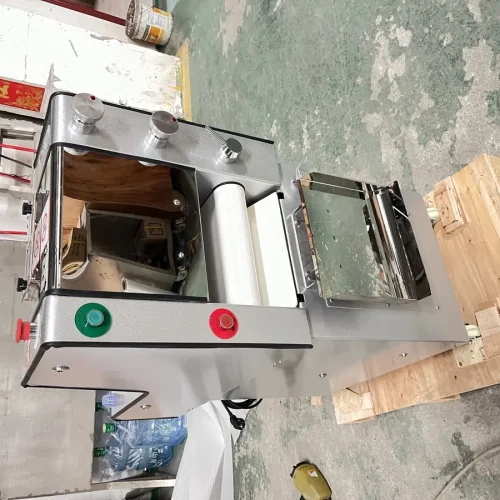
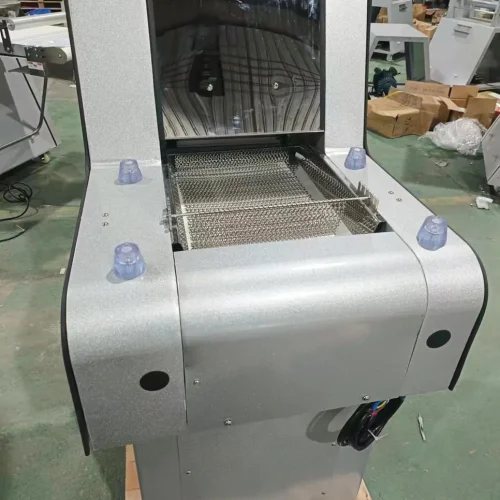
The RMZ-280 is R&M’s compact mini dough moulder for small to medium bakeries. It handles dough from 30 to 350g, combines dough rolling and elongation in a single machine, and produces finished pieces up to approximately 250mm long. At 145kg and 0.37KW, it is the lightest and most affordable moulding machine in the R&M range — the right entry point for an independent bakery, café kitchen, or new bakery business setup.
Demander un devis
Indiquez la quantité souhaitée et ajoutez-la à votre liste de devis pour obtenir un devis.
Détails du produit
Mini Dough Moulder RMZ-280 — Compact Dual-Function, 30 to 350g
The RMZ-280 is R&M’s compact mini dough moulder for small to medium bakeries. It handles dough from 30 to 350g, combines dough rolling and elongation in a single machine, and produces finished pieces up to approximately 250mm long. At 145kg and 0.37KW, it is the lightest and most affordable moulding machine in the R&M range — the right entry point for an independent bakery, café kitchen, or new bakery business setup.
Mini Dough Moulder Specifications
| Parameter | Value |
|---|---|
| Modèle | RMZ-280 |
| Dimensions | 1,000 × 530 × 1,060mm |
| Dough weight range | 30–350g |
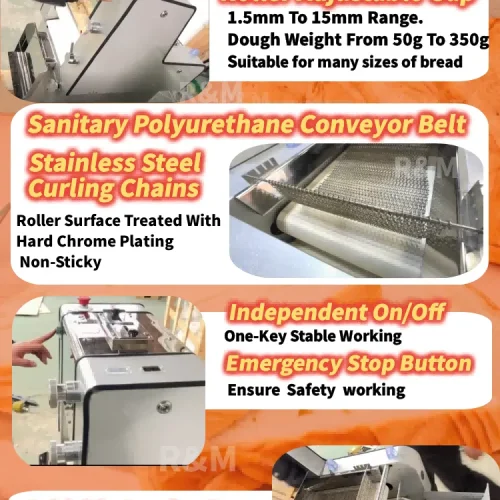
| Wool thickness (roller gap) | 1.5–15mm |
| Output length | Approx. 250mm |
| Power | 0.37 KW |
| Net weight | 145 kg |
| Tension | 220V/50Hz or 380V/50Hz (110V/60Hz optional) |
| Packaging | 670 × 970 × 1,350mm, 196kg gross |
Contact us for current pricing and OEM options.
Two Functions in One Compact Machine
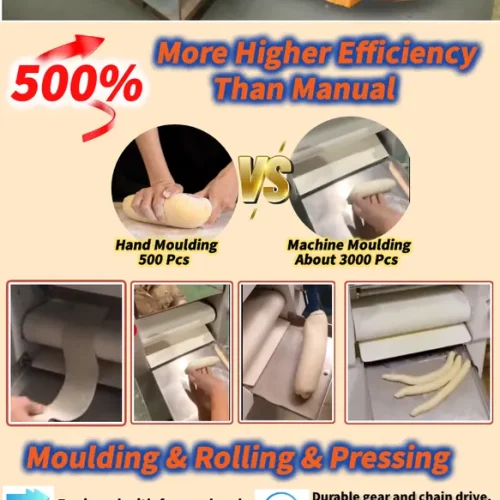
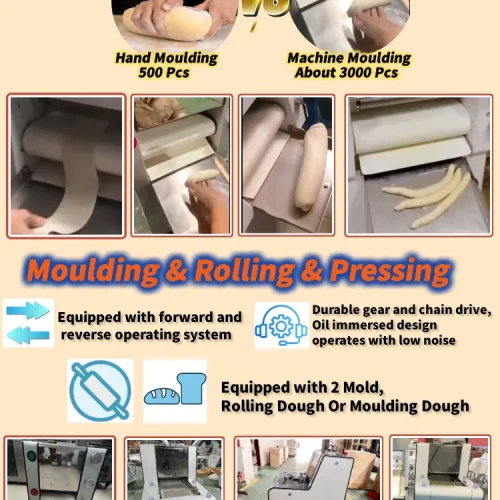
The mini dough moulder integrates two operations that most larger moulding machines keep separate: rolling (initial flattening and degassing with the adjustable pressure roller) and elongation (forming the dough piece into a stick or roll shape). In a full production line setup, these are often two separate machines or two operator steps. In the RMZ-280, both happen in one pass through the machine.
Why this matters for a small bakery: Small operations rarely have the floor space or capital for dedicated machines per function. The dual-function design gives a bakery with limited space a single machine that covers the core shaping requirement for baguettes, short rolls, and small loaves.
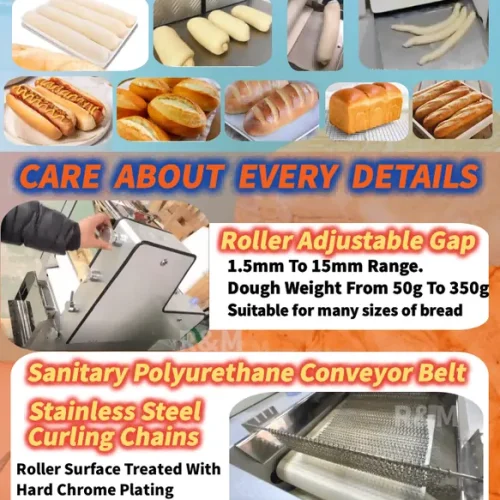
The roller gap (1.5–15mm): This adjustable gap controls the initial thickness of the dough strip before it is formed into the final shape. A wider gap (12–15mm) suits heavier, denser dough pieces that need a gentler initial compression. A narrower gap (1.5–5mm) produces a thinner, more tightly rolled output — appropriate for small baguette sticks, breadsticks, and slim roll formats.
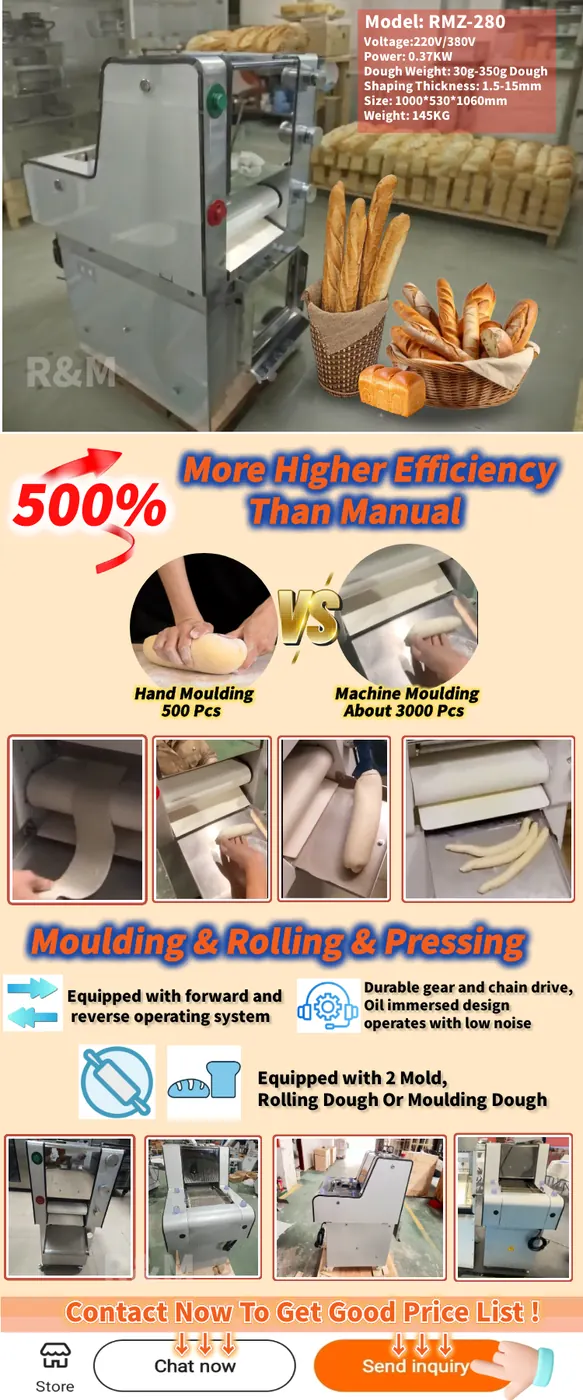
Right-Sized for Small Bakery Production
Why 350g is the right upper limit for this machine: Small bakeries typically produce individual portion sizes rather than large industrial loaves. Baguette portions for retail sale, dinner rolls, small pandesal, pizza dough balls, small long rolls — most of these fall between 80g and 250g. A mini dough moulder sized for 350g covers this entire small-bakery portion category.
The 350g upper limit is not a constraint for most small bakery menus. If your product range consistently requires pieces above 350g, the RMZ-750 (up to 1,250g) or RMZ-380 (up to 1,000g) is the appropriate choice.
What 145kg means in practice: The machine is heavy enough to be stable on the production floor but light enough that two people can move it with a pallet jack if the kitchen layout changes. This is different from the 225–320kg of the industrial models, which are essentially permanent installations.
0.37KW — minimal power draw: A standard commercial kitchen outlet handles this without additional circuit work. For a startup bakery or a café adding a bread program, the low power requirement simplifies the installation.
What Products This Machine Shapes
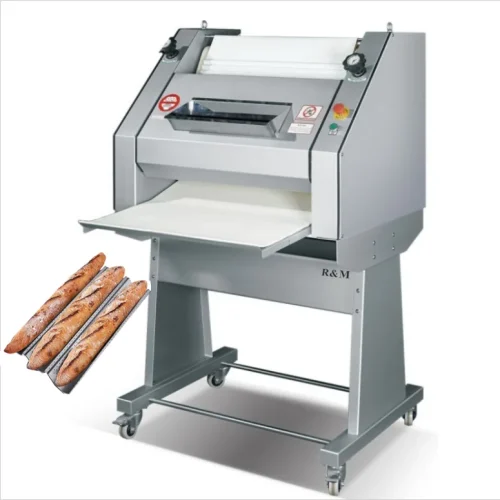
Short baguettes and long rolls (30–200g): The mini dough moulder’s natural output length is approximately 250mm — the ideal format for a short baguette, individual bread roll, or dinner roll. For formats requiring a longer piece, the shaping mechanism produces a tighter, more compact roll that can be hand-finished to the desired length. For the origin and production of the classic long format, see the independent article on baguettes.
Small loaves and sandwich rolls (150–350g): The upper weight range covers small individual sandwich loaves, large dinner rolls, and small-format pull-apart bread portions. The adjustable roller gap handles the initial compression of a 300–350g piece without overworking the dough.
Pandesal and similar soft rolls: The RMZ-280 is widely used for pandesal production in Southeast Asian markets. Pandesal typically runs at 50–80g per piece — well within the machine’s lower weight range.
Mini pizza dough (pizza dough molder function): At the lower weight range (80–150g), the machine shapes small pizza dough balls into a pre-stretched cylindrical form. This is a minor secondary application — the dedicated pizza dough roller machines in the R&M range produce a round pressed base more efficiently.
How the RMZ-280 Compares to the Larger Models
| RMZ-280 (this page) | RMZ-380 Toast Moulder | RMZ-750 Baguette Moulder | |
|---|---|---|---|
| Dough weight | 30–350g | 10–1,000g | 50–1,250g |
| Output length | ~250mm | Long loaf | Long stick |
| Capacity | Moderate | 1,000–3,000 pcs/hr | 1,200 loaves/hr |
| Functions | Rolling + elongation | Forming | Two-stage rubbing |
| Machine weight | 145kg | 225kg | 320kg |
| Power | 0.37KW | 0.75KW | 1KW |
| Best for | Small to medium bakeries | Industrial toast/loaf | Chain bakery, large baguette |
| Price point | Most affordable | Mid-range | Premium |
Choose the RMZ-280 when: Your daily output is in the hundreds, not thousands · Your products are mostly in the 50–300g range · Floor space is limited and a compact machine is required · Budget is a primary consideration and you want to start a bakery business with lower equipment cost
Consider stepping up to the RMZ-380 or RMZ-750 when: Your daily volume consistently exceeds 500–800 pieces per shift · Your dough weights exceed 350g · You are running a central kitchen or supplying other businesses
For laminated croissant shaping, see the croissant moulder (GD-CM01) — the two machines cover the core bread and pastry shaping needs of a small bakery.
Foire aux questions
Is the RMZ-280 suitable for a startup bakery?
Yes — the RMZ-280 mini dough moulder is specifically designed for this use case. The combination of compact size, dual function, low power draw, and the most affordable price point in the R&M moulder range makes it the standard starting machine for an independent bakery setting up a bread program.
What is the difference between the RMZ-280 and RMZ-750?
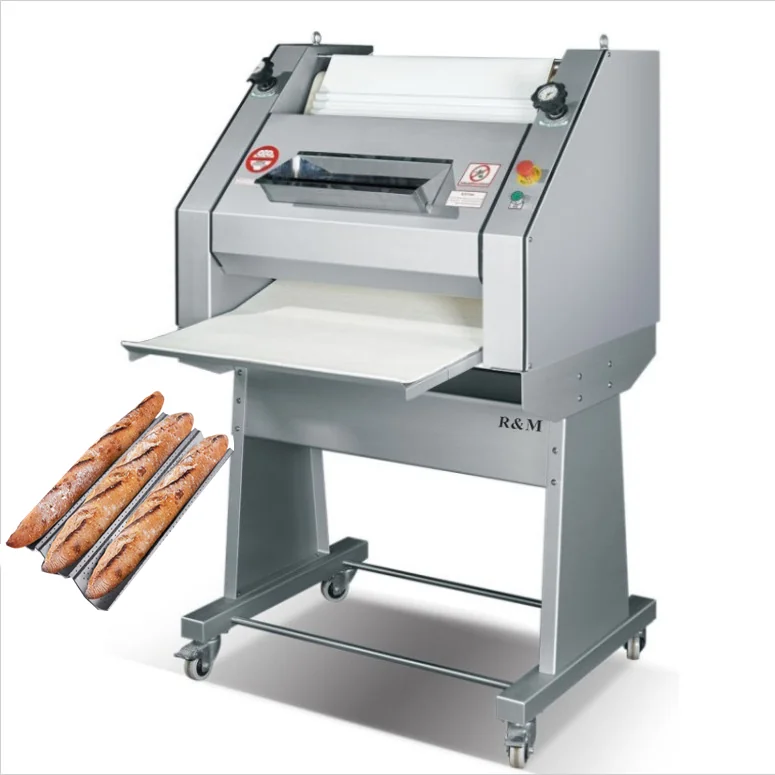
The RMZ-750 is a heavy-duty industrial baguette moulder: 320kg frame, 1,200 loaves per hour, 50–1,250g range, two-stage belt rubbing mechanism. It is designed for chain bakeries and central production. The RMZ-280 is a compact dual-function machine for small bakeries: 145kg, 30–350g range, output length around 250mm, and dual rolling-plus-shaping in one machine.
What is the difference between the RMZ-280 and RMZ-380?
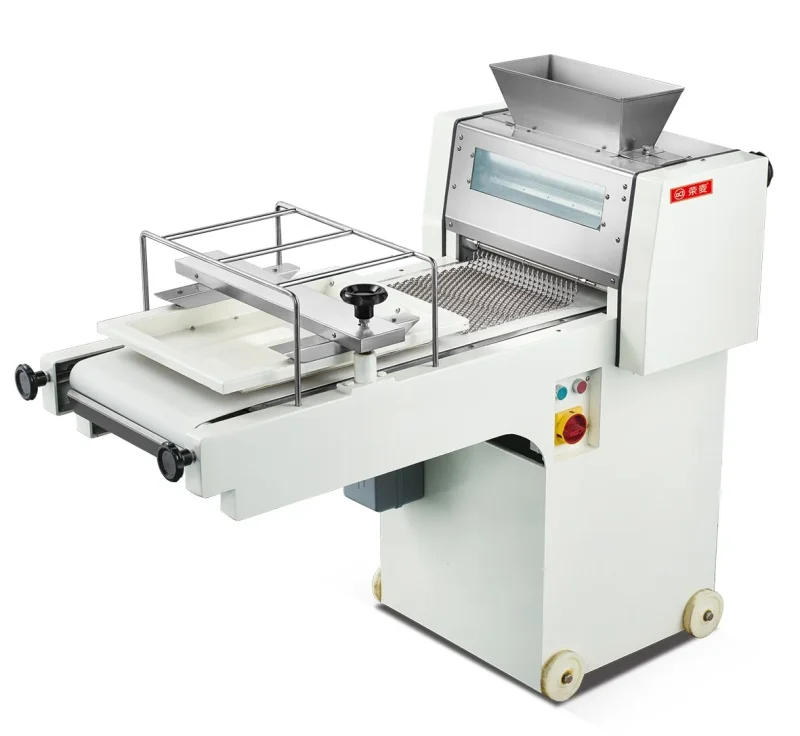
The RMZ-380 is the high-output toast moulder with a 2,350mm conveyor belt, 10–1,000g range, and 1,000–3,000 pieces per hour capacity — built for continuous industrial loaf production. The RMZ-280 is compact (1,000mm length), dual-function, and handles up to 350g — appropriate for small to medium production volumes.
Can this machine shape baguettes?
Yes, within the 250mm output length. It shapes short baguette formats — individual French rolls, small baguette portions, and mini long bread. For full-size 50–60cm baguettes, the RMZ-750 is the purpose-built machine.
Does the machine operate on standard 220V?
Yes. 220V/50Hz single phase is the standard configuration. 380V/50Hz and 110V/60Hz are both available as alternatives.
What is the lead time?
Contact us for the mini dough moulder lead time and pricing.
Get a Quote
Compact dual-function mini dough moulder for small bakeries. The most accessible entry point in the R&M bread dough moulder range.