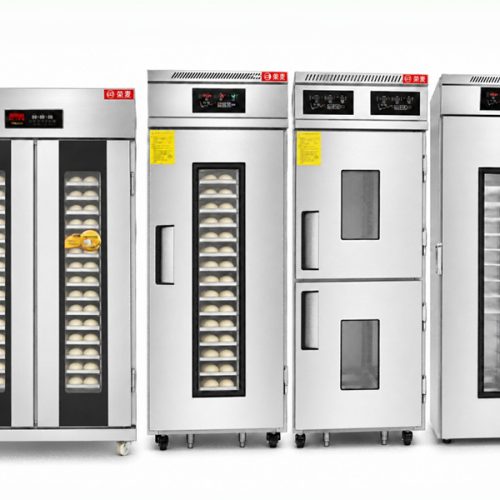




Choosing the right commercial dough proofer machine is one of the most consequential decisions in bakery or pizza shop setup. Unlike domestic workarounds — a warm oven, a heat mat, a folded insulation bag — a commercial dough proofer delivers precise, repeatable temperature and humidity control across every batch, every shift, every day. This guide explains what to look for, what questions to ask, and which proofer type suits which production environment.
Selecting a dough proofer starts with the type of pizza you make and how you organize daily dough preparation. A hand-tossed pizza shop and a pan pizza operation do not necessarily need the same equipment.
The main decision is whether you need a standard heated pizza proofer or a refrigerated retarder proofer. One creates a warm, humid environment for active proofing. The other slows fermentation through cooling and gives the operator more control over when the dough is ready.
This guide follows the two operating scenarios demonstrated in the video: hand-tossed pizza and pan pizza.

Quick Selection Guide
| Pizza production | Recommended equipment | Main reason |
| Hand-tossed pizza | Air-cooled retarder proofer | Slows fermentation and helps dough batches reach the required condition more evenly |
| Pan pizza | Standard dough proofer | Provides a stable warm and humid environment for controlled proofing |
| Bread and bakery products | Standard bakery proofer or retarder proofer | Depends on recipe, production schedule and required holding time |
The correct proofer machine is therefore not simply the largest model or the one with the most functions. It must match the dough process used in the shop.
What Does a Standard Dough Proofer Do?
A standard commercial dough proofer controls temperature and humidity to create a stable environment for yeast fermentation. It is mainly used when the dough needs to rise within a planned production period.
Without controlled proofing, dough may ferment at different speeds as room temperature and humidity change throughout the day. This can affect dough volume, texture and production timing.
For pan pizza, the video recommends a standard proofer operating at:
- Temperature: 32–35°C
- Relative humidity: 75–85%
This environment supports steady proofing while helping prevent the dough surface from drying too quickly.
A standard pizza dough proofer is suitable when dough is prepared and used according to a relatively fixed daily schedule. It does not normally include the refrigeration required for long chilled holding.
Why Hand-Tossed Pizza May Need a Retarder Proofer
Hand-tossed pizza production often requires more control over fermentation time. Dough balls may be prepared in advance and used across several service periods rather than proofed and baked immediately.
For this situation, the video recommends a retarder proofer.
A retarder proofer combines controlled cooling with proofing functions. During the cooling stage, it slows yeast activity and extends the dough preparation window. The operator can then manage the dough more closely according to the shop’s production schedule.
This differs from a standard dough proofer, which primarily provides heat and humidity.
A dedicated dough retarder can slow fermentation, but a retarder proofer is more flexible because it can manage both retarding and controlled proofing. This makes it useful for pizza shops preparing multiple batches of hand-tossed dough.
Air Cooling or Direct Cooling?
The cooling method is an important consideration when selecting a retarder proofer.
The video recommends an air-cooled system for hand-tossed pizza dough. Air circulation helps distribute the cooling effect throughout the cabinet, allowing dough stored in different positions to develop more consistently.
With direct cooling, the temperature may vary between dough placed close to the cooling pipes and dough positioned farther away. This can lead to uneven fermentation timing across the same batch.
For a commercial pizza shop, inconsistent dough creates several practical problems:
- Some dough balls may be ready before others
- Dough texture can vary between trays
- Peak-hour preparation becomes harder to plan
- Staff may need to adjust dough manually
- Product consistency can be affected
An air-cooled retarder proofer is therefore the preferred choice when uniform batch control is more important than basic refrigerated storage.
Selecting a Proofer for Pan Pizza
Pan pizza dough is usually placed into trays or pans before the final proofing stage. In this process, the main requirement is a stable environment that supports predictable dough expansion.
A standard pizza proofer is usually sufficient when:
- Dough is produced and proofed on the same day
- The production schedule is relatively fixed
- Refrigerated fermentation is not required
- The shop needs consistent temperature and humidity
- Dough must proof evenly inside trays or pans
The temperature and humidity settings shown in the video—32–35°C and 75–85% relative humidity—provide a useful reference for pan pizza production. Final settings should still be adjusted according to the recipe, yeast level, dough weight and desired fermentation time.
Is a Pizza Proofer Different from a Bread Proofer?
A bread proofer and a pizza proofer work on the same basic principle: controlling the proofing environment. The main differences usually relate to tray arrangement, capacity, temperature settings and the way the dough is loaded.
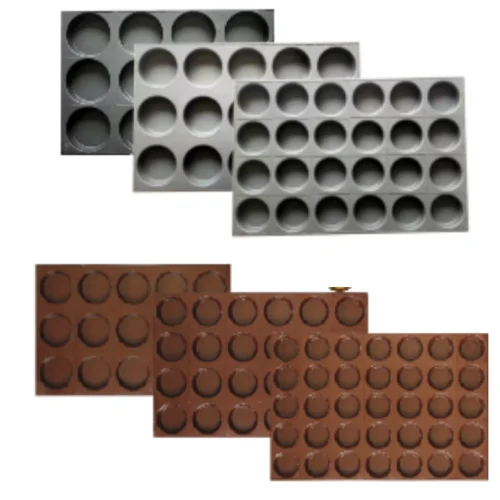
A commercial bread proofer may be configured for bread trays, loaf pans, baguette trays or complete bakery racks. A pizza model may need to accommodate dough boxes, pizza pans or trays of dough balls.
The term bakery proofer is broader and may describe equipment used for bread, buns, pastries and pizza dough. When comparing different dough proofers, buyers should check the internal rack dimensions rather than relying only on the product name.
Pizza settings should not automatically be copied to bread production. Proofing conditions must be adjusted to the recipe and the required finished product.

Five Questions to Answer Before Buying
1. What type of pizza will you produce?
Choose a standard proofer for pan pizza and straightforward same-day proofing. Consider a retarder proofer for hand-tossed pizza and longer fermentation schedules.
2. How long must the dough be held?
If dough will be used soon after mixing, a standard proofer may be sufficient. If it needs to be held for later service periods, refrigerated retarding provides greater flexibility.
3. How much dough is processed per batch?
Calculate the number of dough balls, trays, pans or dough boxes required during the busiest production period. Do not select capacity based only on an average weekday.
4. What tray or rack size is used?
Confirm the dimensions of trays, pans and dough boxes before ordering. Usable internal capacity is more important than the external cabinet size.
5. Is even cooling required?
For retarded hand-tossed dough, an air-cooled system can provide better temperature distribution than direct cooling and reduce differences between cabinet positions.
Standard Proofer vs Retarder Proofer
| Feature | Standard proofer | Retarder proofer |
| Heating | Yes | Yes |
| Humidity control | Yes | Yes |
| Refrigerated holding | No | Yes |
| Slows fermentation | No | Yes |
| Pan pizza | Recommended | Optional |
| Hand-tossed pizza | Limited scheduling flexibility | Recommended |
| Equipment cost | Generally lower | Generally higher |
| Production control | Basic proofing | Retarding and proofing |
A retarder proofer offers more functions, but that does not mean every pizza shop needs one. Buying functions that are not used increases the initial cost and may make operation more complicated.
The best choice is the machine that fits the shop’s actual fermentation process.
Choosing the Right Commercial Dough Proofer
Before requesting a quotation, prepare the following information:
- Pizza type: hand-tossed or pan pizza
- Dough balls or trays required per batch
- Tray, pan or dough-box dimensions
- Daily number of production batches
- Required proofing and holding time
- Local voltage and frequency
- Available installation space
- Preferred standard proofer or retarder proofer
These details allow the supplier to recommend the correct capacity, internal layout and control system.
For pan pizza, R&M recommends a standard proofer that provides stable temperature and humidity. For hand-tossed pizza, an air-cooled retarder proofer offers more control over fermentation timing and batch consistency.
Request a Proofer Recommendation
Not sure which dough proofer fits your pizza shop?
Send R&M Machinery your pizza type, dough quantity, tray dimensions, fermentation schedule and local electrical requirements. Our team can compare standard proofers, air-cooled retarder proofers and different cabinet capacities based on your production needs.
Contact R&M Machinery for specifications, product photos, operation videos and a factory-direct quotation.
What Bakers and Buyers Actually Ask About Dough Proofers
The most common questions from bakery buyers — whether small artisan operations or multi-shift commercial producers — tend to fall into the same practical categories. Here is what experienced bakers consistently raise when evaluating a commercial dough proofer machine:
Why does ambient temperature matter so much for proofing?
Yeast fermentation is highly temperature-sensitive. At 20°C, fermentation is slow; at 27–35°C it accelerates significantly; above 40°C, yeast begins to die. In a bakery environment where room temperature fluctuates between morning and midday — or between seasons — dough proofed without a controlled environment will behave inconsistently. A commercial bread proofer eliminates this variable by maintaining a target temperature within ±1°C throughout the cabinet, regardless of ambient conditions.
For a deeper scientific background on how temperature and humidity drive yeast activity, see the Wikipedia article on proofing (baking technique).
Bakers working in cooler climates or air-conditioned production environments report that switching to a dough proofing cabinet reduced batch variability and allowed them to standardize proofing times — a direct operational benefit in high-output settings.
Can a commercial proofer speed up fermentation?
Yes — and this is one of the primary reasons bakeries invest in dedicated proofing equipment. By maintaining an optimal fermentation environment (typically 32–38°C with 75–85% relative humidity for most bread and pizza dough applications), a commercial dough proofer can reduce proofing time by 20–30% compared to ambient room-temperature proofing. For a high-volume pizza shop or industrial bakery running multiple batches per shift, this time saving directly translates to increased production throughput without additional equipment investment.
What is the difference between a dough proofer and a retarder proofer?
This is the most frequently misunderstood distinction in bakery proofing equipment. A standard commercial dough proofer heats and humidifies — it creates an environment that accelerates yeast activity. A retarder proofer does both: it can cool (retard fermentation) and heat (activate proofing) within the same cabinet. This dual function gives the operator control over when the dough reaches its proofing peak — a critical capability for shops that prepare dough in advance, manage overnight fermentation, or run staggered batch schedules across multiple service periods.
How important is humidity control in a commercial proofer?
Very important — and it is where many low-specification proofers fall short. Humidity in a dough proofing chamber serves two functions: it supports yeast activity by maintaining the correct surface moisture on the dough, and it prevents the outer layer of the dough from drying out before the interior has fully expanded. A dry dough surface forms a skin that restricts rise and produces uneven textures in the finished product. Commercial-grade bakery proofers include steam generation systems or humidity injection to maintain consistent relative humidity throughout the proofing cycle, typically between 70–85% RH depending on the dough type.
Commercial Dough Proofer Capacity: How to Calculate What You Need
Capacity is one of the most common areas where buyers underspecify their commercial dough proofer machine. The correct approach is to calculate peak batch capacity — not average daily output — and size the proofer to handle that volume without requiring multiple proofing cycles during high-demand periods.
- Count maximum concurrent dough units: dough balls, panned loaves, baguette trays or proofing baskets at peak service preparation.
- Check tray and rack dimensions: confirm that your existing trays, pans or dough boxes fit the proofer’s internal rack spacing and door clearance.
- Account for airflow: proofers require adequate space between trays for even heat and humidity distribution — overloading a cabinet reduces proofing consistency.
- Include future capacity: production volumes grow; a proofer selected at 80% capacity allows room for growth without immediate equipment replacement.
For a commercial pizza shop producing 200–400 dough balls per day, a mid-range proofer with 20–40 tray positions is typically sufficient. Larger industrial bread producers may require multi-rack walk-in proofing rooms or continuous proofing tunnel systems integrated into the production line.
Dough Proofer Temperature and Humidity Settings by Product Type
Different dough types require different proofing conditions. The following settings are widely used in commercial bakeries and pizza operations:
| Product | Temperature Range | Relative Humidity | Typical Proofing Time |
|---|---|---|---|
| Pan pizza dough | 32–35°C | 75–85% | 45–90 minutes |
| Hand-tossed pizza dough | 24–28°C (retarder) / 32–35°C (proof) | 70–80% | 2–24 hours (retard) + 30–60 min (proof) |
| White sandwich bread | 35–38°C | 80–85% | 45–75 minutes |
| Sourdough / artisan bread | 24–28°C | 75–80% | 60–120+ minutes |
| Croissant / laminated dough | 26–28°C | 70–75% | 90–180 minutes |
| Burger buns / dinner rolls | 35–38°C | 80–85% | 30–50 minutes |
These ranges serve as a useful starting reference, but final settings should be validated with your specific recipe, yeast quantity, dough weight and desired final volume. Most commercial dough proofers include digital controllers that allow precise adjustment of both temperature and humidity independently.
Standard Proofer vs Retarder Proofer: When to Upgrade
A standard commercial dough proofer is the right choice when dough is mixed, proofed and baked within a single production shift with a predictable daily schedule. It is the most cost-effective solution for pan pizza production, daily bread runs, and uniform-batch operations where refrigerated retarding is not required.
A retarder proofer makes operational and commercial sense when:
- Dough is prepared the night before and baked fresh the following morning.
- The shop operates across multiple service periods and needs dough available on demand.
- Production volumes vary significantly day-to-day and the operator needs flexibility in fermentation timing.
- Dough flavour development is a priority — cold retarding slows fermentation and allows enzymes to develop more complex flavour profiles in artisan bread and pizza dough.
- Food safety requires that fermented dough is held below 8°C between preparation and service.
Related Commercial Bakery.html Equipment
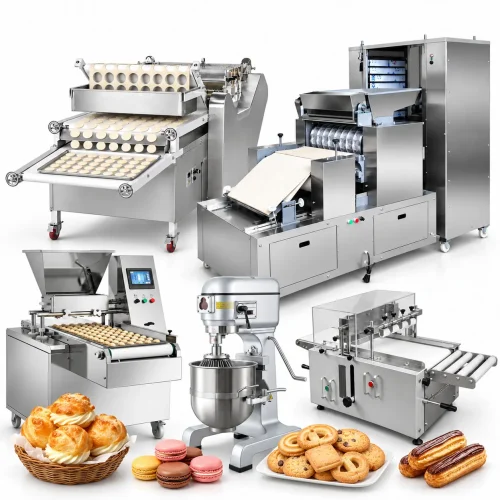
A commercial dough proofer machine works best as part of a coordinated bakery production line. The following equipment categories are commonly paired with proofing cabinets in professional bakery and pizza shop environments:
- Commercial Deck Ovens — gas and electric deck ovens for bread, pizza and pastry; designed to work with dough that has been proofed to the correct volume and surface condition.
- Gas Deck Ovens — LPG and natural gas baking ovens widely used in commercial pizza shops and artisan bakeries globally.
- Fours à convection professionnels — forced-air ovens for pastry, cookies, buns and light bakery products requiring even top-to-bottom heat distribution.
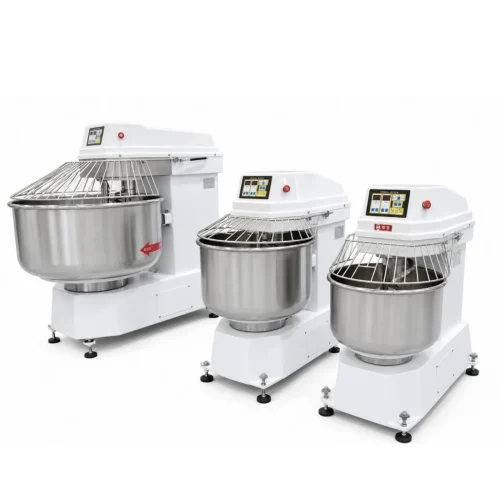
- Spiral Dough Mixers — heavy-duty dough mixers for high-gluten bread and pizza dough; used upstream of the proofing stage for consistent dough development.
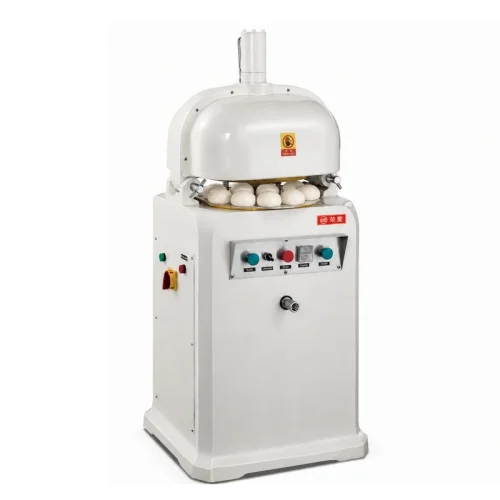
- Dough Dividers and Rounders — automated dough portioning and balling equipment that prepares dough balls for loading into the proofer at consistent weight and shape.
- Rotary Rack Ovens — high-capacity rotating ovens used in industrial bread production downstream of walk-in proofing systems.
Contact R&M Machinery to request specifications, operation videos, or a factory-direct quotation for commercial dough proofer machines, retarder proofers and complete bakery production line equipment. Our team can recommend the right proofing solution based on your product type, batch size, production schedule and available floor space.