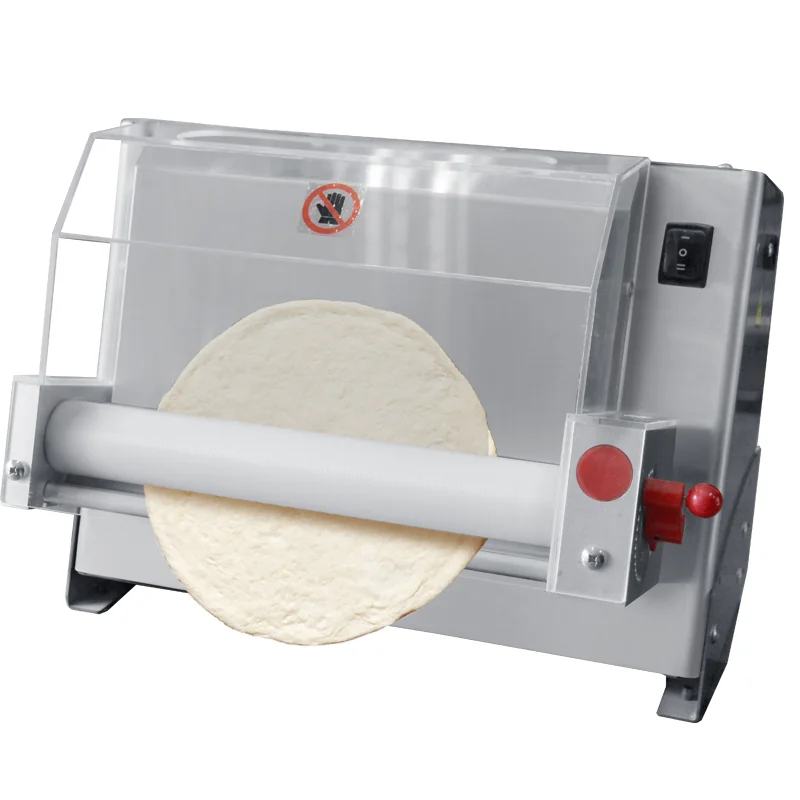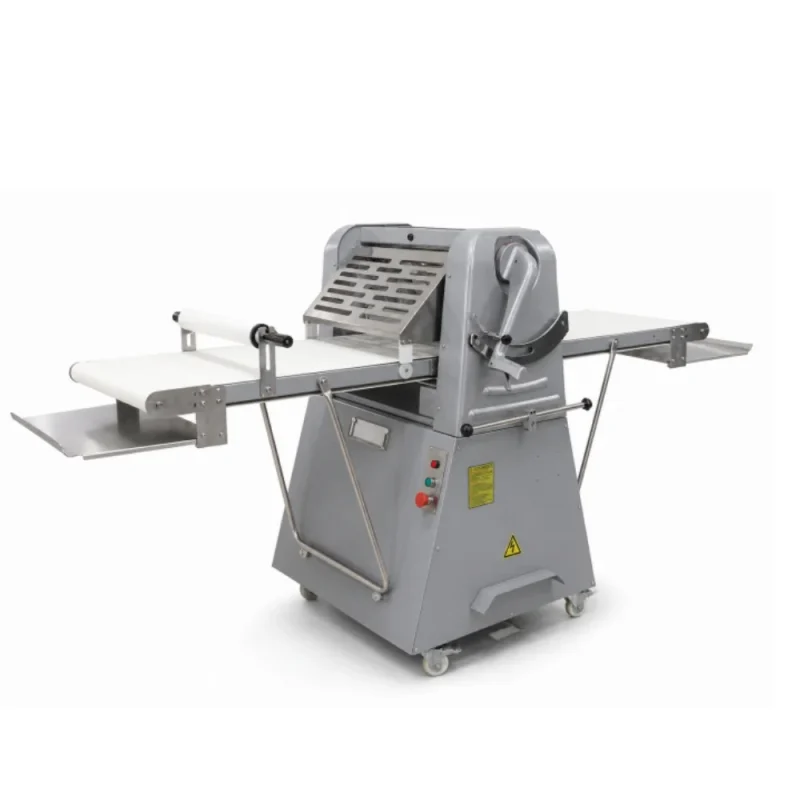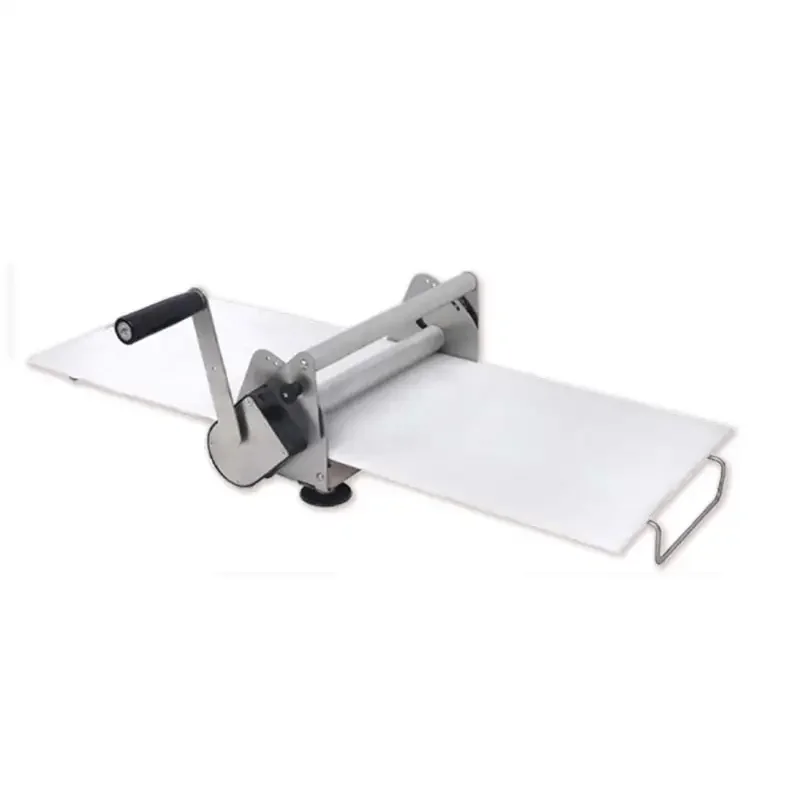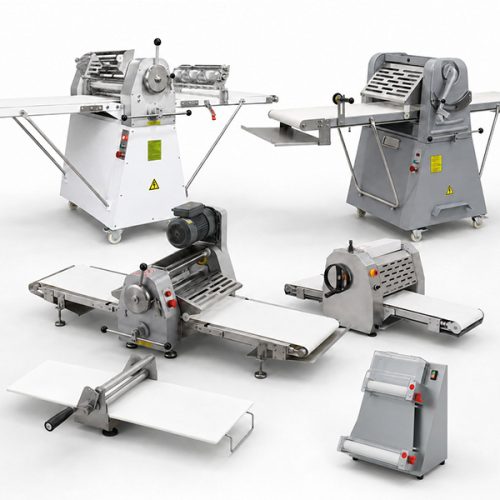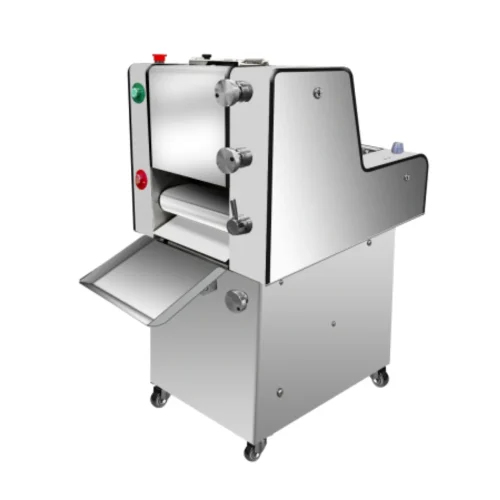




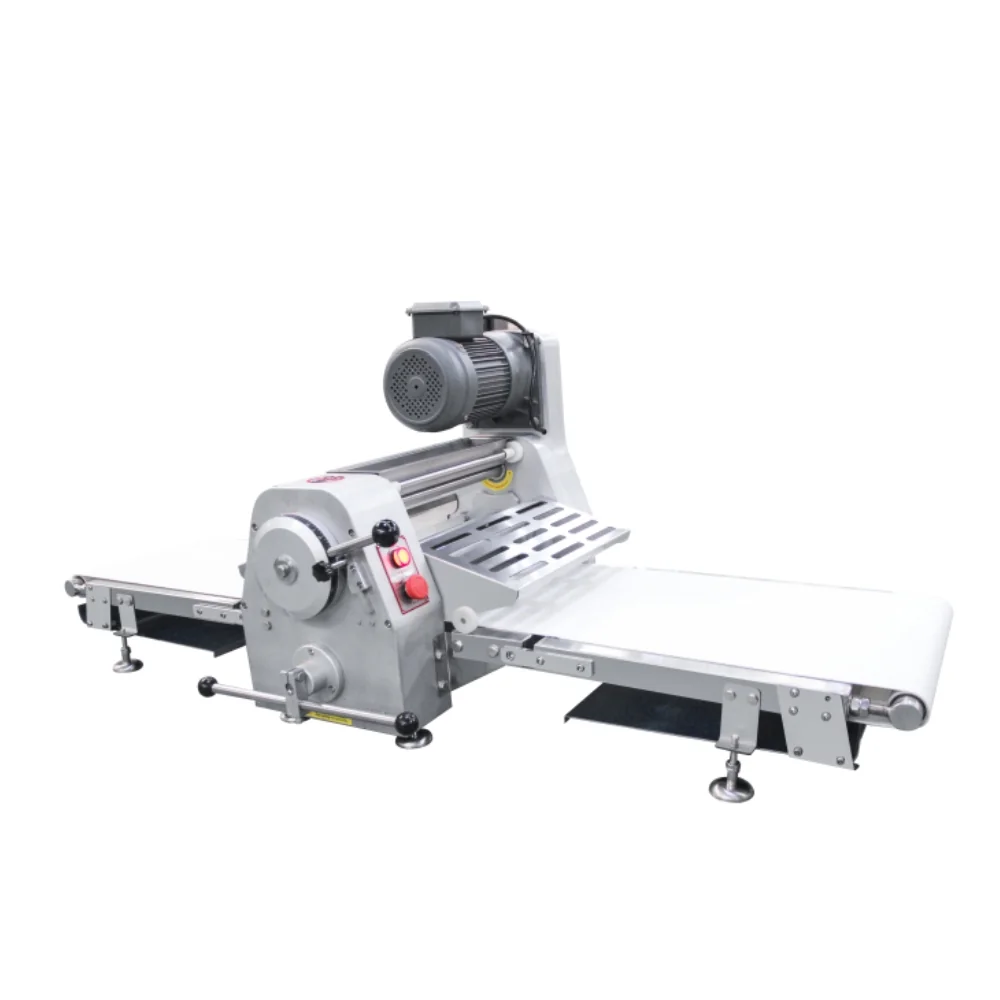
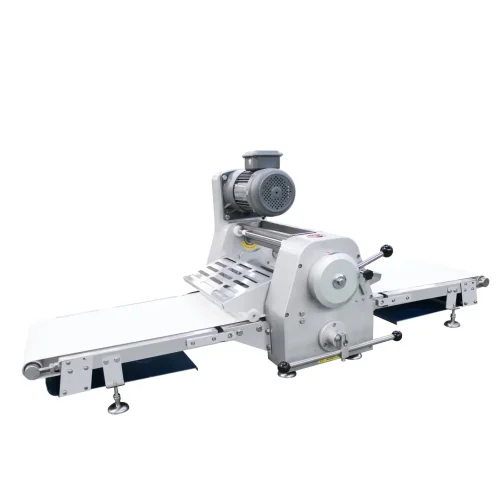
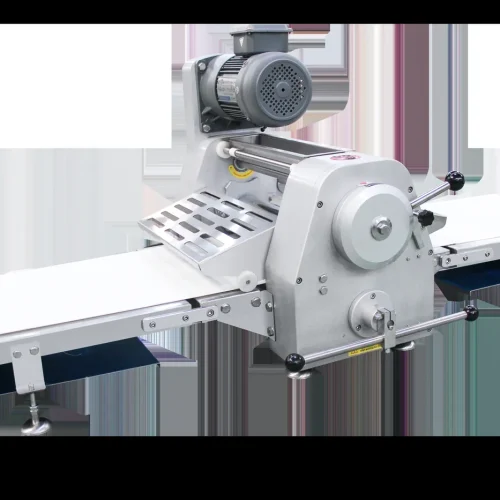
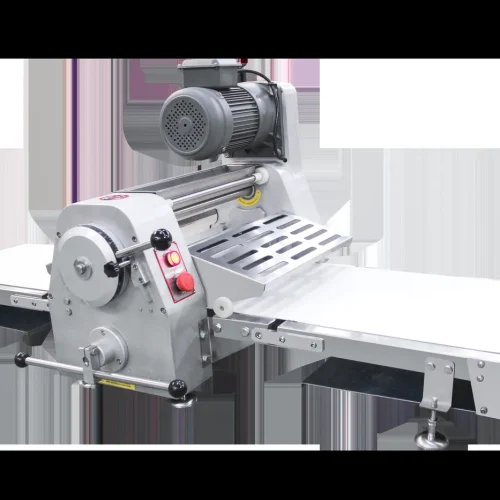
Commercial Tabletop Dough Sheeter — 3 Models, Counter-Height, 1 to 35mm
Three commercial-grade tabletop dough sheeters for mid-size bakeries, pastry kitchens, and food service operations. The RMQ-400T, RMQ-520T, and RMQ-630T share the same 1–35mm reversible roll gap system as the full floor-standing range, at a lower weight (110–115kg) and counter height. All fold flat for storage. 220V or 380V.
Request a Quote
Enter the quantity you need and add to your quote list for pricing inquiries.
Detalles del producto
Commercial Tabletop Dough Sheeter — 3 Models, Counter-Height, 1 to 35mm
Three commercial-grade tabletop dough sheeters for mid-size bakeries, pastry kitchens, and food service operations. The RMQ-400T, RMQ-520T, and RMQ-630T share the same 1–35mm reversible roll gap system as the full floor-standing range, at a lower weight (110–115kg) and counter height. All fold flat for storage. 220V or 380V.
Model Specifications
| Modelo | Belt Width | Conveyor Size | Max Dough Weight | Roll Gap | Potencia | Net Weight | Voltaje |
|---|---|---|---|---|---|---|---|
| RMQ-400T | 400mm | 400×1650mm | 4kg | 1–35mm | 0.4KW | 110kg | 220V or 380V/50Hz |
| RMQ-520T | 500mm | 500×1800mm | 5kg | 1–35mm | 0.55KW | 115kg | 220V or 380V/50Hz |
| RMQ-630T | 600mm | 600×1800mm | 5kg | 1–35mm | 0.55KW | 115kg | 220V or 380V/50Hz |
Contact us for wholesale pricing, lead time, and OEM options.
Counter-Height Sheeting Without the Floor-Standing Footprint
The commercial tabletop dough sheeter occupies the same working surface as any other large countertop appliance. At 110–115kg and a working height designed for bench operation, it installs on a sturdy prep table or a dedicated appliance counter — no floor space consumed, no dedicated machine station required.
This is the key practical difference from the floor-standing RMQ-A series: a commercial tabletop dough sheeter fits into a kitchen where the sheeter is one of several pieces of equipment sharing a prep area, rather than the anchor machine in a dedicated pastry line.
The dough capacity is comparable — 4kg on the RMQ-400T, 5kg on the RMQ-520T and RMQ-630T — which covers the majority of commercial croissant, danish, puff pastry, and pie crust batch sizes. The roll gap range (1–35mm) and reversible belt action are identical to the floor-standing reversible models.
Choosing Between the Three Models
Every tabletop dough sheeter in this range shares the same operating mechanism, voltage options, and net weight (110–115kg). Belt width is the only variable — and it determines both the maximum sheet width and the amount of dough you can run in a single pass.
RMQ-400T (400mm belt): The most compact of the three tabletop models. A 400mm working width suits kitchens making standard croissant sizes, individual danish pastries, and single-serving pie crusts. If your kitchen’s prep space is limited and your product range uses smaller dough formats, the RMQ-400T gives you commercial-grade sheeting at the smallest countertop footprint.
RMQ-520T (500mm belt): The most versatile choice for most commercial kitchens. Five hundred millimeters is wide enough for most croissant sheet formats and covers standard danish sheet widths. The slight power increase over the RMQ-400T (0.55KW vs. 0.4KW) supports the wider roller diameter.
RMQ-630T (600mm belt): The widest tabletop option — useful when your products benefit from a wider working area, or when you want to run wider dough sheets without trimming. Matches the belt width of the RMQ-630A floor-standing model.
Commercial Tabletop Dough Sheeter Features
Reversible belt — the core operating feature: The belt passes dough through the rollers in both directions. Adjust the gap wheel one step, reverse the belt, pass again. Each pass progressively thins the dough without the operator physically repositioning it. This is the same reversible sheeting action found in professional floor-standing machines — applied to a counter-height format.
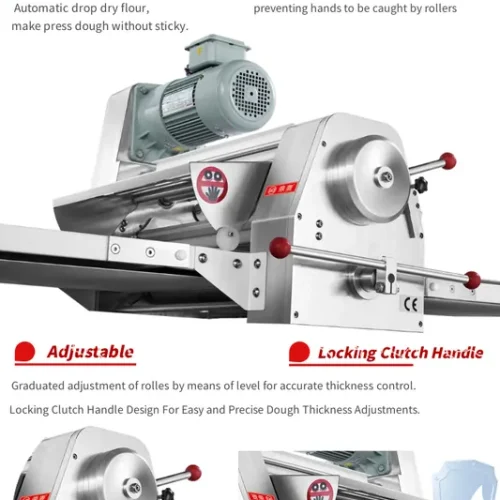
1–35mm adjustable roll gap: From initial sheeting at 30mm down to a finished croissant sheet at 3–4mm, or a pie crust at 5–8mm — the full range is available in fine increments. The gap wheel is accessible at the front of the machine and adjustable during operation.
Fold-flat storage: The conveyor section folds upright when the machine is not in use, reducing the machine’s floor footprint by roughly half. For kitchens where the sheeter is not in continuous use, this matters — the machine stores compactly between production sessions.
Stainless steel construction: Food-contact surfaces including rollers, belt frame, and dough guide rails are stainless steel. Compatible with daily commercial cleaning routines.
220V or 380V: Both single-phase and three-phase voltage are available — specify at order. Most small to mid-size commercial kitchens operate on 220V single-phase.
What This Machine Is Right For
Croissant and danish production in mid-size kitchens: A bakery producing 200–500 croissants per day needs a sheeter that handles full laminated dough batches reliably. The RMQ-520T and RMQ-630T cover this output range at a machine investment appropriate for a mid-size operation. For the technique behind laminated croissant dough, see the independent article on croissants.
Puff pastry and pie crust in hotel and restaurant kitchens: Hotel pastry kitchens producing daily desserts, pie shells, and tart bases benefit from consistent thickness sheeting. The counter-height format suits a standard prep kitchen workflow.
Artisan bakeries adding sheeted products: For an artisan bakery already running manual production that wants to add sheeted pastries or laminated products to the menu, the mini tabletop dough sheeter range is the entry point — and the commercial tabletop dough sheeter is the upgrade when output grows beyond mini capacity.
Table top dough sheeter for sale — what to consider: If you are sourcing a commercial table top dough sheeter, the main variables are belt width (which model), voltage availability (220V vs. 380V), and whether you need OEM branding. We can supply any combination and confirm current pricing and lead time.
Tabletop vs. Floor-Standing Dough Sheeter — Practical Comparison
| Commercial Tabletop (T-series) | Floor-Standing (A-series) | |
|---|---|---|
| Working height | Counter height | Standing height |
| Max dough weight | 4–5kg | 4–15kg |
| Machine weight | 110–115kg | 206–280kg |
| Belt width options | 400, 500, 600mm | 400, 500, 600, 650, 760mm |
| Potencia | 0.4–0.55KW | 0.75–1.1KW |
| Instalación | Prep bench / counter | Permanent floor station |
| Best fit | Mid-size kitchens, varied workspace | Dedicated pastry line, high volume |
For most mid-size commercial bakeries and food service kitchens, the tabletop range covers the output requirement and installation is simpler. Step up to floor-standing when batch weight exceeds 5kg or when a dedicated pastry line justifies the larger machine.
Preguntas frecuentes
What is the difference between the RMQ-400T, RMQ-520T, and RMQ-630T?
Belt width only — 400mm, 500mm, and 600mm respectively. All three share the same 1–35mm roll gap, reversible belt action, 110–115kg weight, and dual 220V/380V voltage. Choose based on the sheet width your products require.
How does a countertop dough sheeter work?
A tabletop dough sheeter works by passing the dough through the rollers: the operator places a dough piece on the conveyor belt, which passes it through a pair of stainless steel rollers set to the gap width you specify. The belt reverses, the dough passes through again at a reduced gap, and this process repeats until the dough reaches your target thickness. The machine handles the back-and-forth; you adjust the gap and manage the fold.
What is the maximum dough weight the tabletop models handle?
4kg for the RMQ-400T; 5kg for the RMQ-520T and RMQ-630T. For batches exceeding 5kg, the floor-standing models (RMQ-670A at 10kg, RMQ-820A at 15kg) are the appropriate choice.
Is a used countertop dough sheeter worth considering?
Used machines may have worn rollers, damaged belts, or electrical wear. If sourcing second-hand, have the machine inspected before purchase. A new R&M tabletop model is factory-tested and ships with full documentation — contact us for current pricing to compare.
Can this machine be adjusted during operation?
Yes. The gap wheel can be adjusted while the belt is running. Reduce the gap by one step between each pass during lamination — a common technique for progressive croissant or puff pastry sheeting.
What belt options are available?
Standard PVC belt. Contact us for material alternatives if your production requirement involves specific hygiene or chemical resistance specifications.
Get a Quote
Three models. Counter height. 1–35mm reversible sheeting. See the full commercial dough sheeter range for all belt widths and formats.