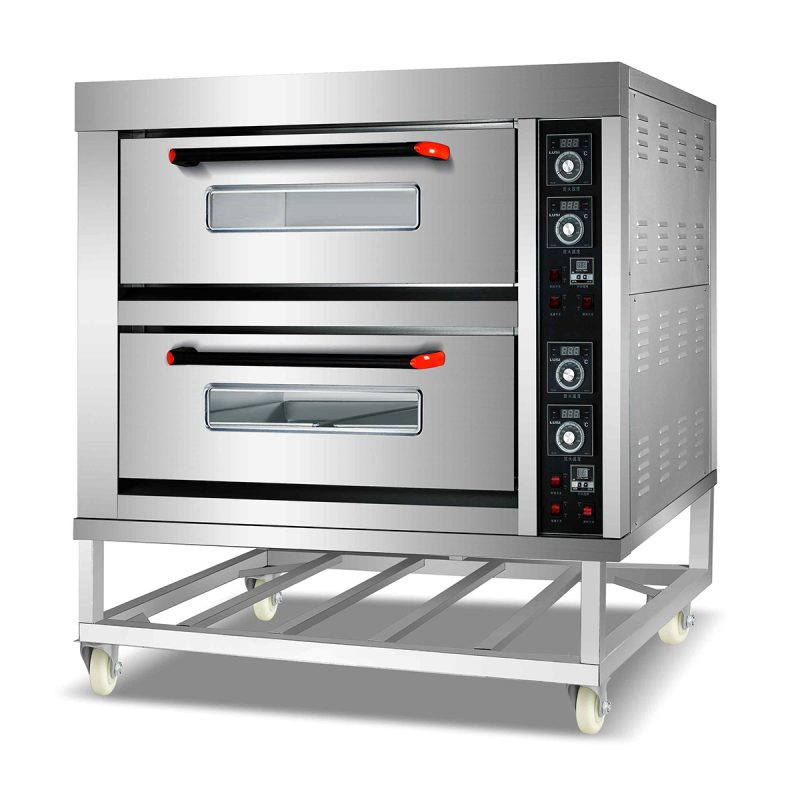
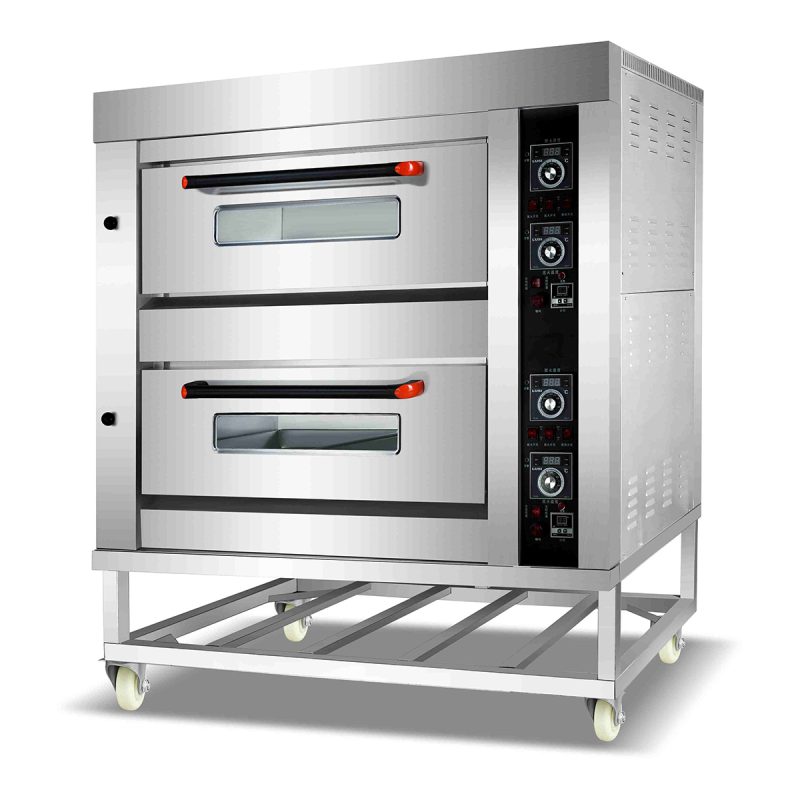
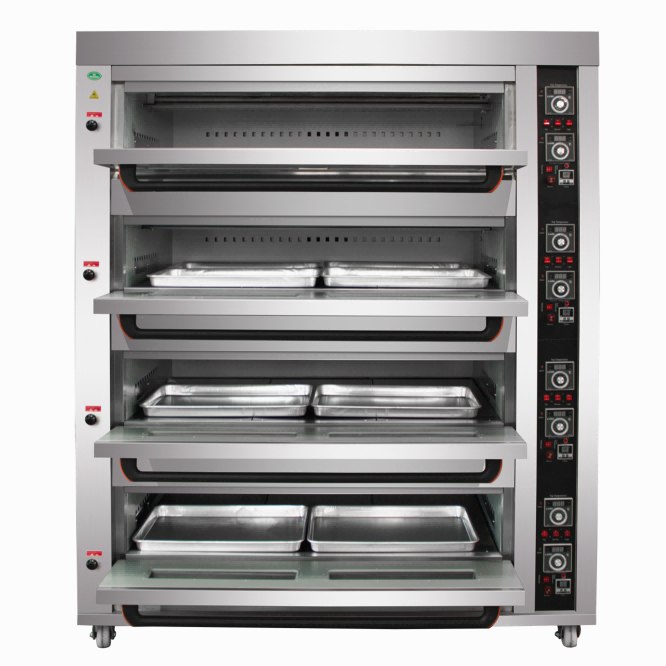
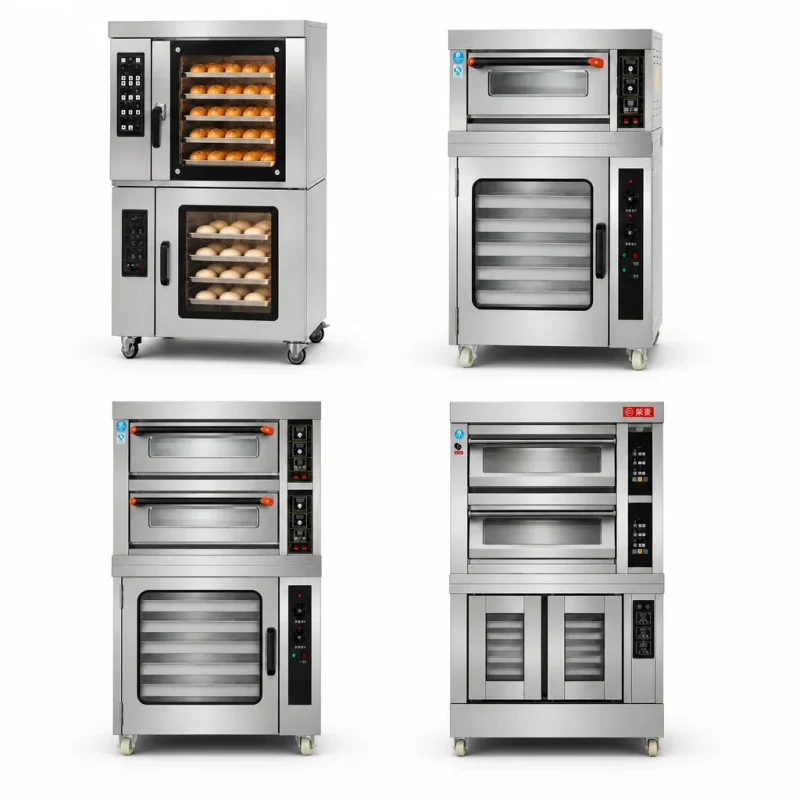
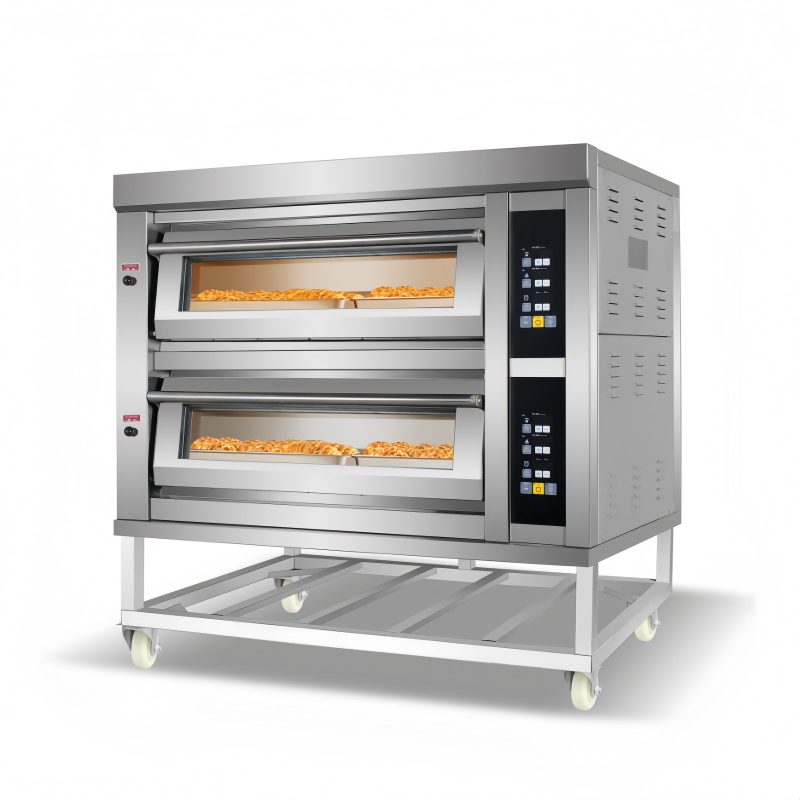
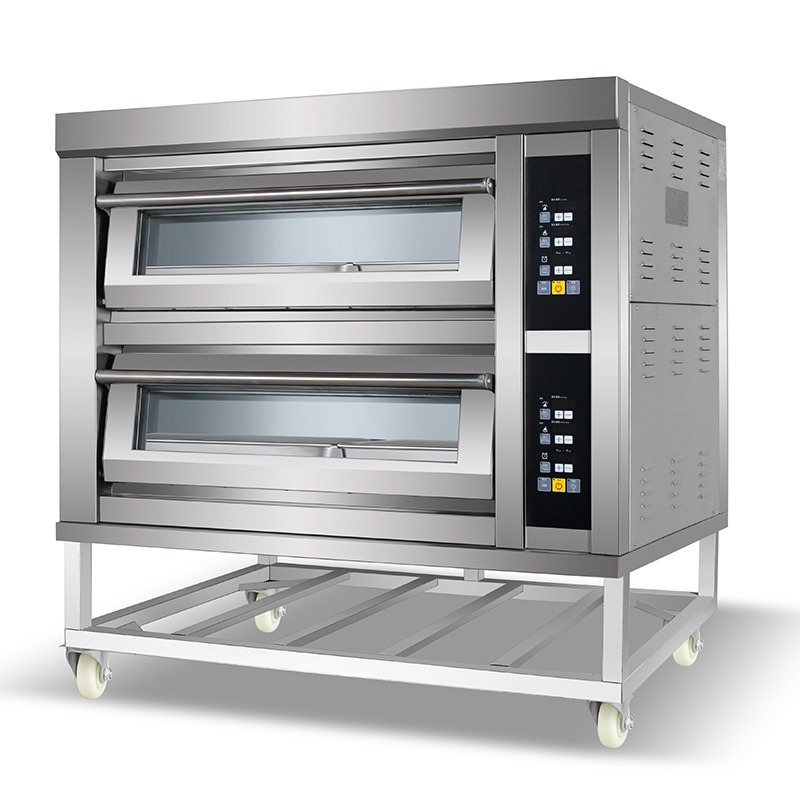
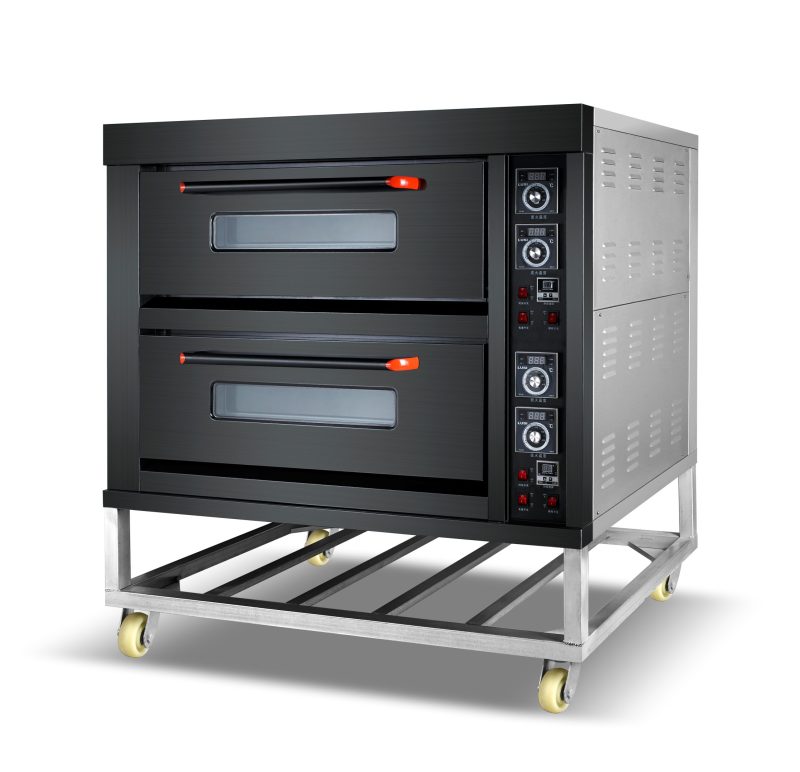
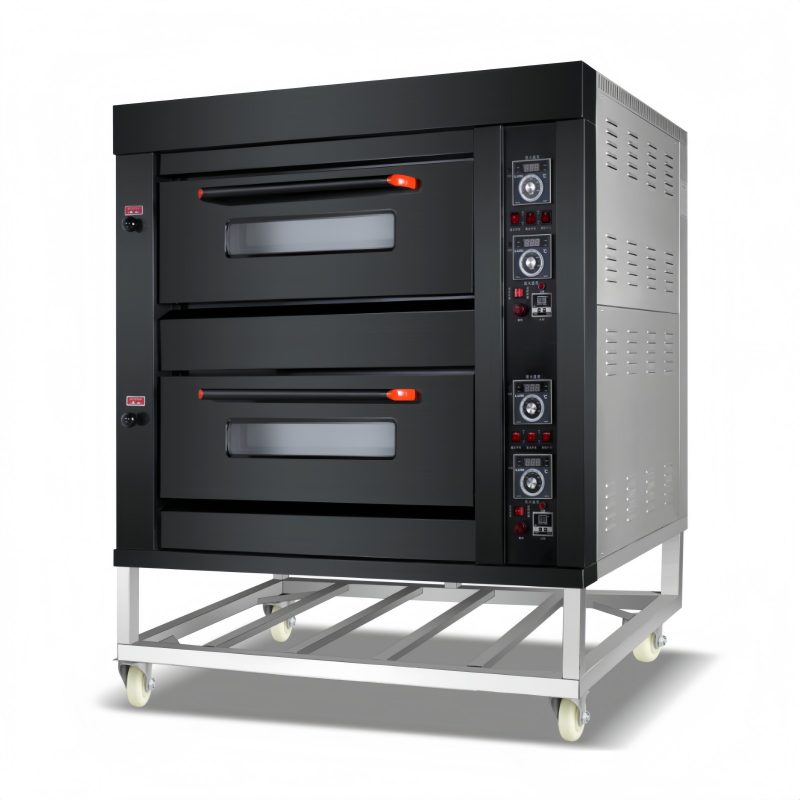
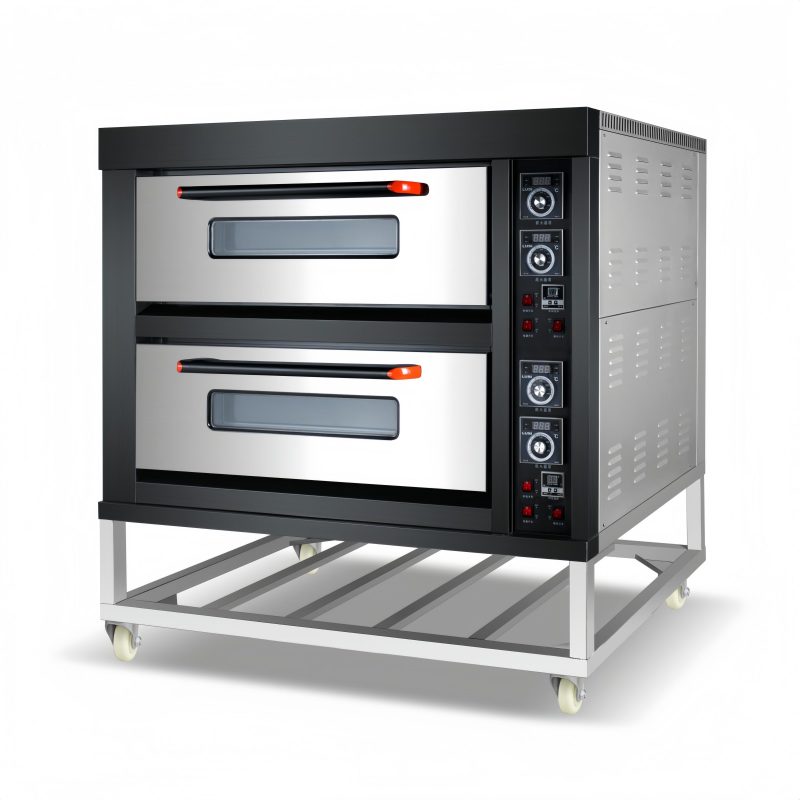
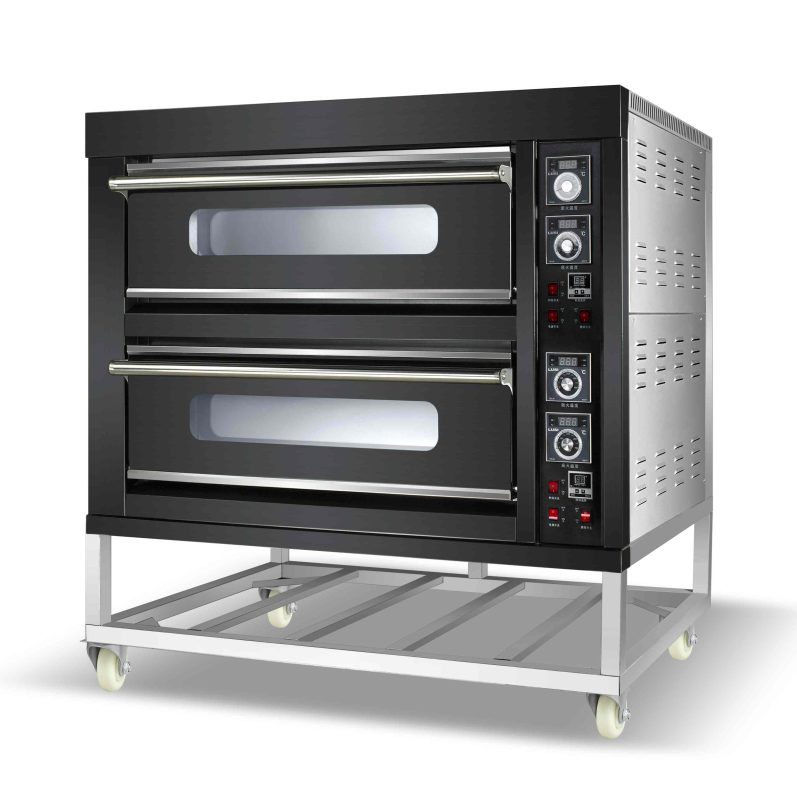
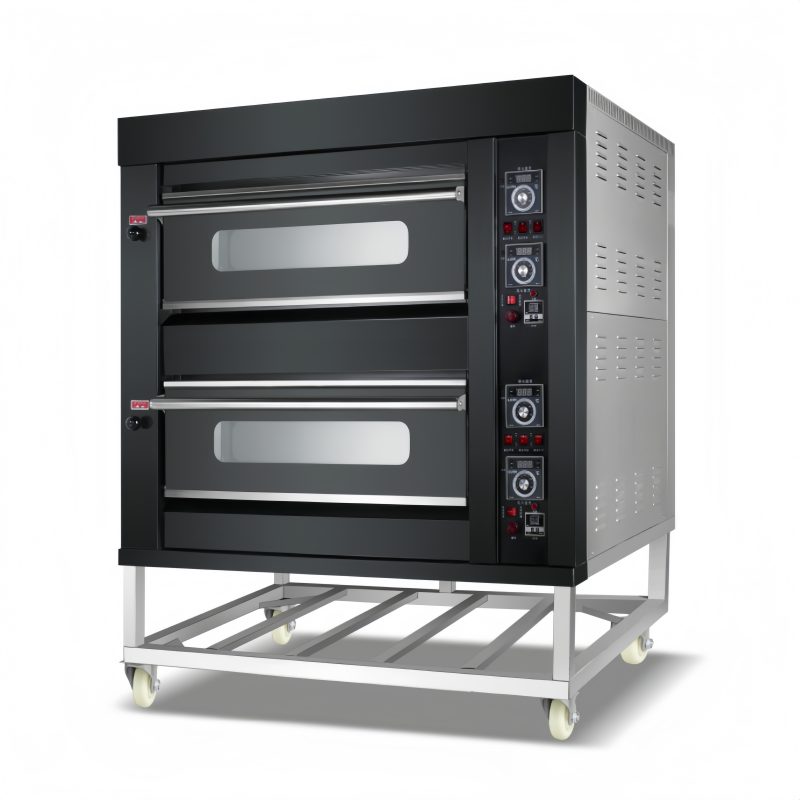
OEM Deck Oven Control Panel Options

Deck Oven Price & Cost Guide — Factory Direct
Deck oven price depends on deck count, trays per deck, fuel type and whether you add steam injection or a stone base. Western-brand commercial deck ovens commonly list from around $15,000 for a single deck. Our factory-direct models deliver comparable thermal-mass construction at a fraction of that, because you buy from the manufacturer rather than through a distributor chain.
| Configuracion |
Typical Use |
Price Range (FOB) |
| Single Deck |
Café and startup bakery |
$500 – $1,200 |
| Double Deck |
Standard commercial bakery |
$1,000 – $2,200 |
| Three Deck |
Full production bakery |
$1,600 – $3,200 |
| Four Deck |
High-volume production line |
$2,400 – $4,500 |
Ranges are FOB factory and move with trays per deck, steam and stone add-ons, control panel grade and order quantity. Wholesale pricing applies to bulk orders — ask for a landed-cost quotation including freight and duties for your destination port.
Deck and Tray Configurations — How to Size Your Oven
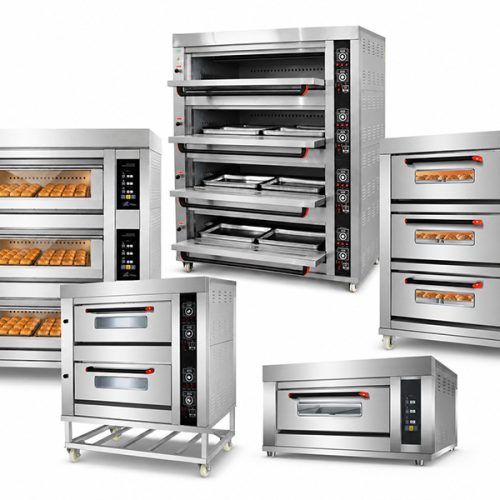
Every R&M deck oven is built to order. Pick the deck count for your production ceiling, then the trays per deck for batch size. All decks take the 400 × 600mm bakery tray standard.
| Deck Count |
Tray Options |
Best Suited To |
| 1 Deck |
1 / 2 / 3 / 4 trays |
Cafés, pastry counters, test kitchens |
| 2 Decks |
2 / 4 / 6 / 8 trays |
Neighbourhood bakeries running bread and cake together |
| 3 Decks |
3 / 6 / 9 / 12 trays |
Production bakeries with a fixed daily schedule |
| 4 Decks |
4 / 8 / 12 / 16 trays |
Wholesale supply and multi-outlet production |
Applications: artisan bread and sourdough, baguettes and crusty rolls, cake and cookies, pizza on a stone base. Each application benefits from a specific chamber height, deck material and optional steam upgrade — tell us what you bake and we will match the build.
Finishes: stainless steel as standard, black titanium as a premium option, and full glass doors where you want the bake visible to customers.
Gas or Electric Deck Oven — Which Should You Buy?
|
Gas Deck Oven |
Electric Deck Oven |
| Heat-up |
Faster, recovers quickly between bakes |
Steady, slightly slower recovery |
| Control |
Good, burner modulated |
More precise, drier heat for pastry |
| Fuel |
LPG propane or LNG natural gas |
110V / 220V / 380V, single or 3-phase |
| Install |
Requiere acometida de gas y extracción | |
No flue, easier in leased units |
| Ideal para |
Pizzerias, high-output bread bakeries |
Pastry work, mall units, gas-restricted sites |
If your site has no natural gas line, an electric build or a propane conversion is the practical route. We also supply a dual-fuel deck oven that combines electric and gas heating in one body, letting you switch energy source as tariffs change through the year.
Steam Injection and Stone Hearth Options
A steam injection deck oven releases a controlled moisture burst at the start of the bake. That steam keeps the loaf surface elastic for longer, producing better oven spring, a glossy finish and the crackly crust that defines artisan bread, sourdough and baguettes. If you only bake cakes, muffins and enriched doughs, you can skip steam and save on the build.
A stone hearth base stores and radiates heat directly into the base of the dough. It is what gives pizza a dry, blistered underside and gives hearth loaves their open crumb. Stone and steam can be combined on the same deck, or specified on selected decks only — for example steam on the lower bread deck and a plain deck above for pastry.
What R&M Can Customize as a Deck Oven Manufacturer
- Add steam injection or a baking stone base to any model
- Configure voltage to 110V, 220V or 380V, single-phase or 3-phase
- Set gas burners for propane LPG or natural gas LNG
- Build modular, split-structure stacks that pass through narrow doorways
- Upgrade from a standard digital panel to a microcomputer or smart memory controller
- Print your brand logo directly on the oven body and doors
- Full OEM and ODM service, including free design drawings for distributors
Distributors also receive free product photography, branded brochure and menu templates, and 24/7 video troubleshooting so a fault never becomes a day of downtime.
Preguntas frecuentes
What is the difference between a deck oven and a convection oven?
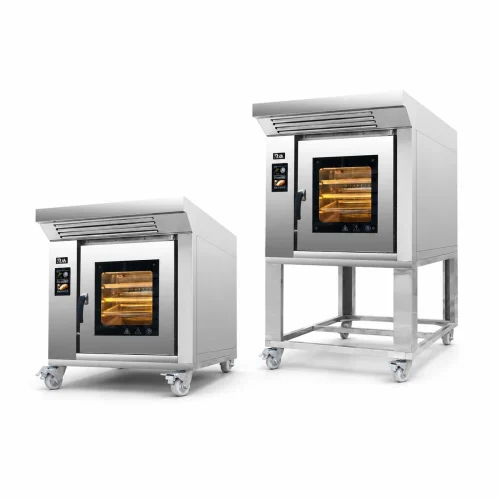
A deck oven bakes with stable radiant heat from the deck surface, while a convection oven circulates hot air with a fan. That makes the deck oven the better tool for artisan bread, sourdough and hearth loaves, because direct bottom heat plus optional steam produces a crisp crust and an open crumb. A convection oven suits soft rolls, muffins and pastries where even browning matters more than crust. Serious bread bakeries usually run both — see our commercial convection ovens for the pastry side of the kitchen.
How much does a commercial deck oven cost?
Factory-direct pricing runs roughly $500 to $1,200 for a single deck, $1,000 to $2,200 for a double deck, $1,600 to $3,200 for three decks and $2,400 to $4,500 for four decks. Trays per deck, steam and stone add-ons, control panel grade and order quantity all move the final figure. Compare on landed cost rather than ex-works, since freight and duties on a heavy refractory oven are significant.
Do I need steam injection or a stone base?
Choose steam if you bake artisan bread, sourdough, baguettes or crusty rolls, because the moisture burst is what creates oven spring and a glossy, crackly crust. Choose a stone base if you bake pizza or hearth-style loaves that need dry, direct bottom heat. Skip both if your output is limited to cakes, muffins and enriched breads — you will not use them and they add to the build cost.
Can I control the temperature of each deck independently?
Yes. Every R&M multi-deck oven has independent top and bottom heating control on each deck. You can hold the lower deck at 240°C for bread while the upper deck sits at 180°C for pastry in the same session. Independent control is the main structural advantage a deck oven has over a single-chamber oven, and it is why bakeries with a mixed product range prefer it.
How do I calculate hourly production capacity?
Hourly output = pieces per tray × trays per deck × number of decks ÷ bake time in hours. On a standard 400 × 600mm tray you can expect roughly 16 croissants, 24 dinner rolls, 12 artisan round loaves, 8 toast molds, 5 baguettes, 6 large cinnamon rolls, 6 nine-inch pizzas or 30 to 36 medium cookies. Capacity shifts with product type, so size the oven against your busiest hour rather than your daily average.
Which deck oven suits my bakery size?
A café or startup bakery is usually well served by a single deck with 1 or 2 trays. A standard commercial bakery runs a double deck with 4 to 6 trays. Full-scale production calls for three or four decks. If you are unsure, send us your daily loaf count and product mix and we will map it to a deck configuration rather than selling you more oven than you need.
Do you offer OEM branding, custom voltage and export certification?
Yes. We configure 110V, 220V and 380V in single or three phase, switch burners between LPG and LNG, print your brand on the oven body, and supply CE documentation for customs clearance. Modular split-structure builds are available where a doorway or lift will not take a fully assembled stack. Send your target market and annual volume and we will confirm MOQ and lead time.
Ready to Specify Your Deck Oven?
Tell us your daily output, product mix and available utilities. Our bakery equipment engineers will recommend the right deck count, tray layout and fuel type, then send a full quotation — typically within 12 hours.
Enviar consultaEnvíanos un mensaje por WhatsApp
Explore más horno comercial para panaderia
Convection Oven — cake, pastry & multi-purposeTodos los hornos comerciales para panaderíaMáquina de donuts

 Español