



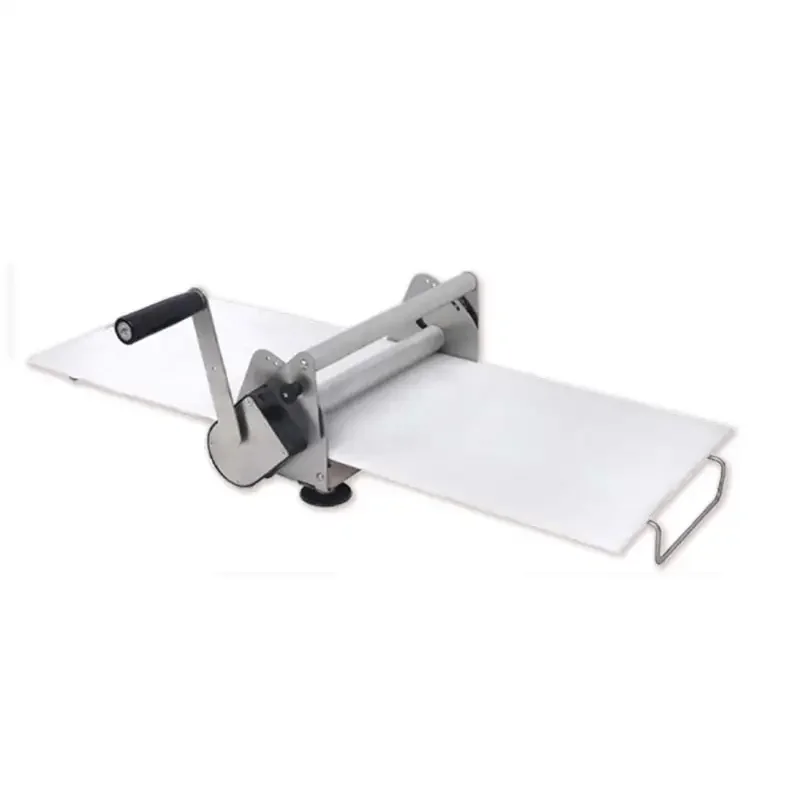


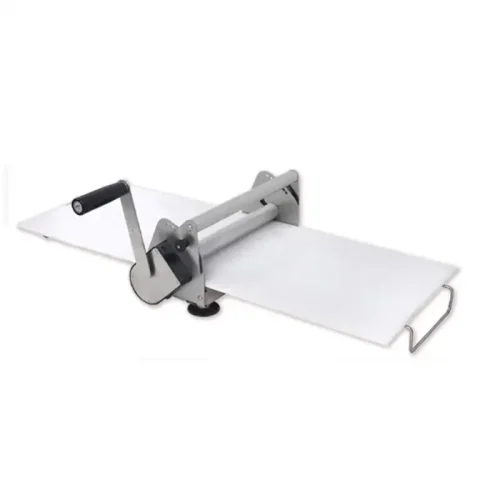
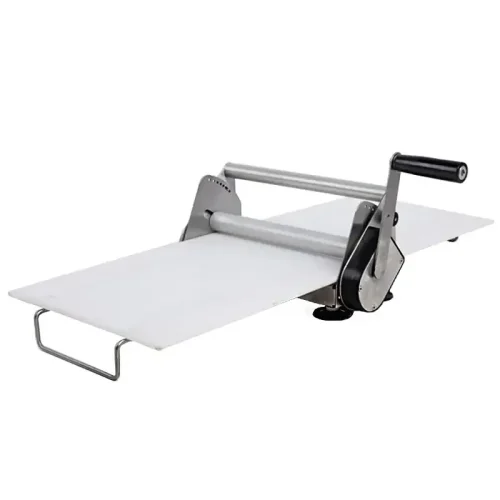
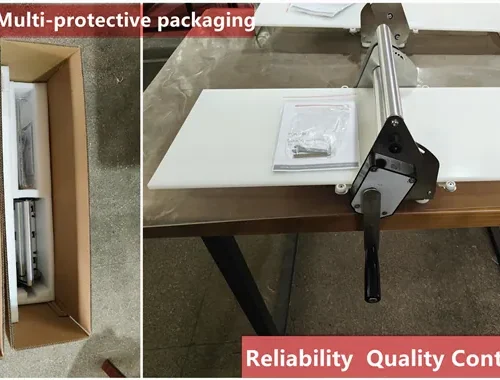
Manual Dough Sheeter — GDDR-3080 (12-Inch) and GDDR-40 (15-Inch)
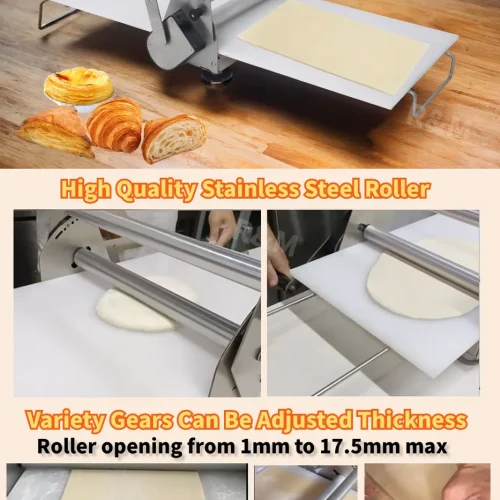
Two manual dough sheeters for home bakers, small pastry operations, and kitchens that need portable, no-power dough rolling. The GDDR-3080 has a 12-inch (320mm) roller and weighs 6.6kg. The GDDR-40 has a 15-inch (400mm) roller and weighs 7.2kg. Both run at up to 240 presses per hour with adjustable thickness settings and food-grade board materials. No electricity required.
Request a Quote
Enter the quantity you need and add to your quote list for pricing inquiries.
Detalles del producto
Manual Dough Sheeter — GDDR-3080 (12-Inch) and GDDR-40 (15-Inch)
Two manual dough sheeters for home bakers, small pastry operations, and kitchens that need portable, no-power dough rolling. The GDDR-3080 has a 12-inch (320mm) roller and weighs 6.6kg. The GDDR-40 has a 15-inch (400mm) roller and weighs 7.2kg. Both run at up to 240 presses per hour with adjustable thickness settings and food-grade board materials. No electricity required.
Model Specifications
| Modelo | Roller Length | Thickness | Slide Board Output | Presses | Machine Size (mm) | Net Weight | Potencia |
|---|---|---|---|---|---|---|---|
| GDDR-3080 | 320mm (12″) | 1–17.5mm | 30×80cm stainless steel (options: 30×60/70/90/100cm) | 240 presses/hr | 800×390×200 | 6.6kg | None |
| GDDR-40 | 400mm (15″) | 1–25mm (+2mm minor adj.) | 40×100cm honeycomb anodised aluminium (PP board option) | 240 presses/hr | 400×1000×460 | 7.2kg | None |
Contact us for pricing and current stock.
Manual Dough Sheeter — What It Is and Who Needs It
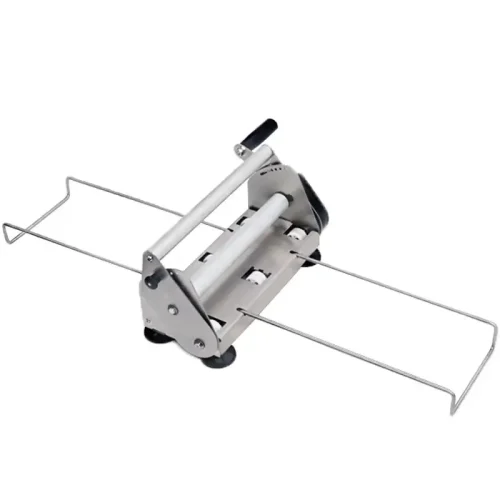
A manual dough sheeter presses dough to a uniform thickness using a hand-operated roller mechanism rather than an electric motor. No power supply, no motor, no belt — the operator drives the roller by hand pressure, and the machine guides the dough through at a consistent thickness set by the gap adjustment.
For home bakers: A dough sheeter for home use gives you consistent, repeatable thickness for pie crust, cookie dough, pasta sheets, and pastry — faster than a rolling pin and more accurate, especially when thickness matters for bake time. Both the GDDR-3080 and GDDR-40 are light enough to store in a kitchen cabinet when not in use.
For small pastry operations without power access: Pop-up stalls, market bakers, and food businesses operating in locations without reliable commercial power run these machines without any electrical infrastructure. At 6.6–7.2kg, both models travel easily.
For dough types that benefit from slow, controlled rolling: High-hydration doughs, delicate pastry, and fondant all benefit from manual control — the operator feels the dough response and adjusts pressure accordingly. Electric sheeting at fixed speed does not give this feedback.
For DIY home setups: Home dough sheeter applications — pizza dough, pasta, pie crust — are the natural fit for these machines. Both models handle the range of home baking tasks where a rolling pin is insufficient but a commercial electric sheeter is excessive.

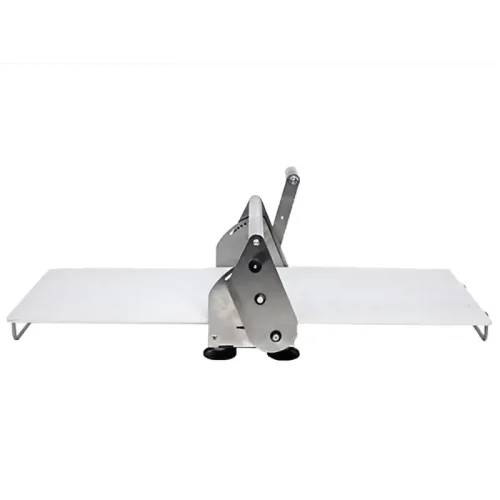
GDDR-3080 — 12-Inch Roller, Stainless Steel Board
The GDDR-3080 is the more compact of the two. At 800×390×200mm machine size and 6.6kg, it fits on a small prep surface and stores easily.
Slide board material and size options: The standard slide board is 30×80cm stainless steel. Four optional sizes are available: 30×60cm, 30×70cm, 30×90cm, and 30×100cm. Choose based on the typical size of the dough pieces you work with — a larger board gives more room to guide a bigger dough sheet; a smaller board is more manageable for individual pastry pieces.
Press thickness range: 1–17.5mm: This range covers most home baking and small pastry applications — from a thick cookie dough at 12–15mm down to a 3–4mm pasta sheet or a thin pie crust. The gap is adjustable before each press cycle.
Capacity: 240 presses per hour: For a manual machine, this is a realistic working rate for most operators. A 240 press/hour figure represents continuous operation — actual working output depends on the size of dough pieces and the time needed between presses.
GDDR-40 — 15-Inch Roller, Honeycomb Board
The GDDR-40 offers a wider 15-inch (400mm) roller and a larger standard board (40×100cm), giving you more working width per press.
Honeycomb anodised aluminium board: The standard board material is honeycomb anodised aluminium. The honeycomb surface texture reduces dough adhesion — dough releases more cleanly from a honeycomb surface than from a flat stainless steel board, particularly for sticky or enriched doughs. This reduces flour usage and tearing of delicate dough sheets. An alternative honeycomb PP (polypropylene) board can be supplied on request — lighter than aluminium and useful for operations where board weight matters.
Press thickness range: 1–25mm (+2mm minor adjustment): The wider range (compared to GDDR-3080’s 1–17.5mm) accommodates thicker dough starting points — useful for initial sheeting of thick bread dough or for pastry formats that start at a significant thickness before progressive rolling.
Manual dough roller for home use — GDDR-40 suitability: At 7.2kg and a 15-inch roller, the GDDR-40 is the right choice when you regularly work with wider dough formats — family-size pie bases, large pasta sheets, or wider cookie batches. The wider board and roller reduce the number of presses needed per dough mass compared to the 12-inch model.
Manual vs. Electric Dough Sheeter — When Manual Is the Better Choice
Choose manual when:
- No reliable power access at the working location (market stalls, pop-ups, remote kitchens)
- Portability is essential — 6.6–7.2kg moves anywhere a rolling pin goes
- You work with dough types where operator control matters (fondant, high-hydration pastry)
- Capital budget is limited and electric sheeting is not yet justified by production volume
- You want a dough sheeter for home use without installing commercial equipment
Choose electric when:
- Daily production volume requires consistent output at speed
- You run the sheeter for many hours per day
- Laminated dough (croissant, puff pastry) requires many progressive passes
Both types produce the same thickness accuracy per press. The manual machine requires operator effort; the electric machine removes that effort at the cost of higher capital and power requirements. For a motorized option, see the mini tabletop electric dough sheeter range.
Applications
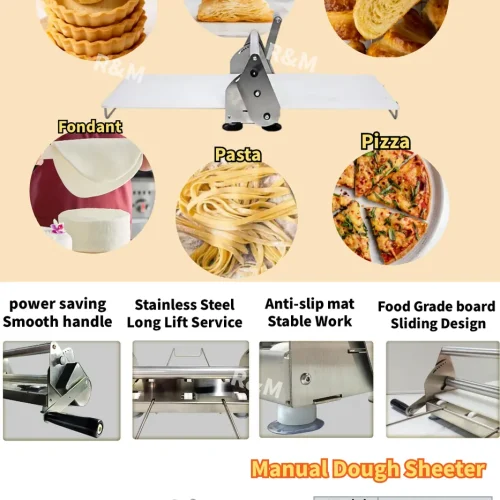
Pizza dough: Roll pizza bases to a consistent thickness before stretching. Both the GDDR-3080 and GDDR-40 handle pizza dough at the standard working range.
Pie crust and tart shells: Consistent thickness matters for even baking. Use the gap setting appropriate for your recipe — typically 3–8mm for shortcrust, 4–6mm for puff pastry tart bases.
Cookie dough: Set the gap to your target cookie thickness and press in consistent sheets for cut-outs. No re-rolling needed — each press produces an even sheet.
Pasta: At 1–4mm, both machines produce fresh pasta sheets. The 12-inch GDDR-3080 is sufficient for individual pasta portions; the 15-inch GDDR-40 produces wider sheets for lasagne and wider pasta formats.
Dumpling and wrapper dough: Thin dumpling wrappers at 1–2mm. The GDDR-3080’s stainless steel board handles the repeated small-portion pressing well.
Fondant and sugar paste: Both machines work for fondant sheeting — though the dedicated electric fondant sheeter (GDDR-4C/GDDR-3C) gives more precise thin-sheet control for cake decoration.
Preguntas frecuentes
What is the difference between GDDR-3080 and GDDR-40?
The GDDR-3080 has a 12-inch (320mm) roller, a stainless steel slide board (30×80cm standard with size options), and a 1–17.5mm thickness range. The GDDR-40 has a 15-inch (400mm) roller, a honeycomb aluminium board (40×100cm), and a 1–25mm range. The GDDR-40 covers wider dough formats and starts from thicker initial dough masses.
Is this suitable for croissant dough lamination?
Manual sheeters handle croissant lamination — in fact, many artisan croissant bakers prefer manual control for hand-laminated croissant dough. The process is slower than an electric reversible sheeter but gives the operator full control over each pass. The GDDR-40’s wider roller is the better choice for full-size croissant production.
How does this compare to using a rolling pin?
A rolling pin produces variable thickness depending on operator technique and fatigue. The manual dough sheeter produces consistent thickness on every pass within the set gap — the same result regardless of how many pieces you press. For production quantities of 50+ pieces, the consistency advantage is significant.
Is it suitable for home use?
Yes. Both models are used in home kitchens. The GDDR-3080 at 6.6kg is particularly suited to a home kitchen — it stores easily and handles all common home baking dough types.
Do you ship these internationally?
Yes. Both models are available for export. Contact us with your destination for shipping cost and lead time.
Manual dough sheeter for home use — which model do you recommend?
For most home bakers, the GDDR-3080 (12-inch) is sufficient — it covers pizza dough, pie crust, cookie dough, and pasta at a compact size. If you regularly work with wider formats (large pizza bases, wide pasta sheets), the GDDR-40 is the better fit.
Get a Quote
Manual, portable, no electricity. 12-inch or 15-inch roller. Factory-direct pricing. For powered options at scale, see our commercial dough sheeter range.