





Commercial Water Chiller for Bakery.html — RML Series, 100 to 500 L/H, up to 1000 L/H on Request
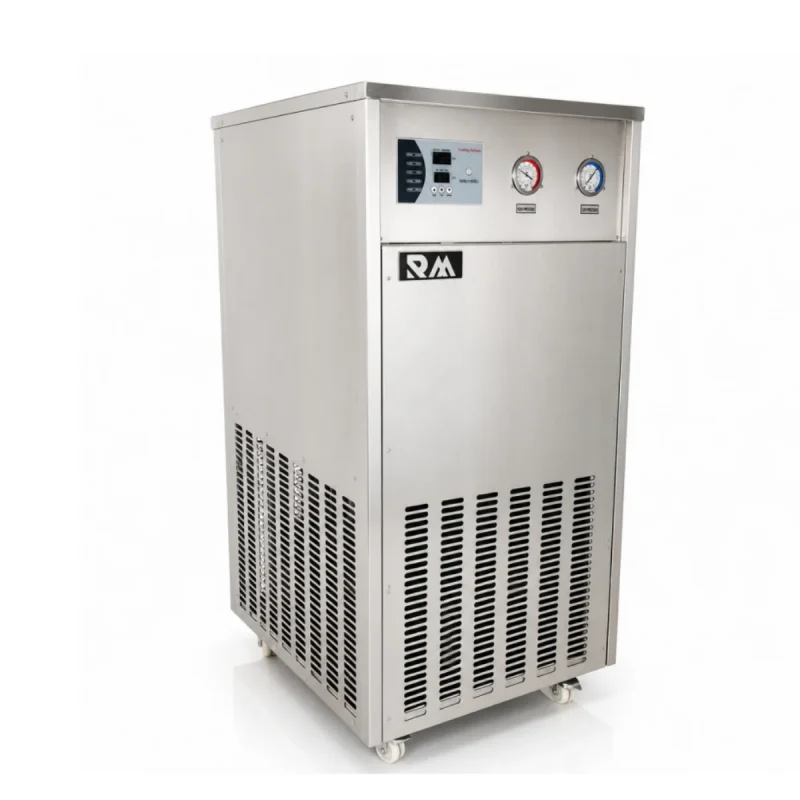
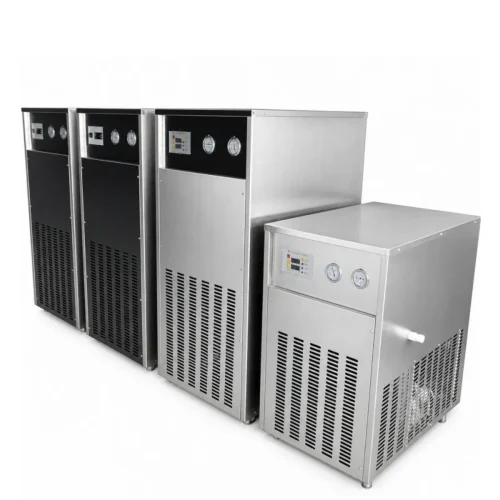
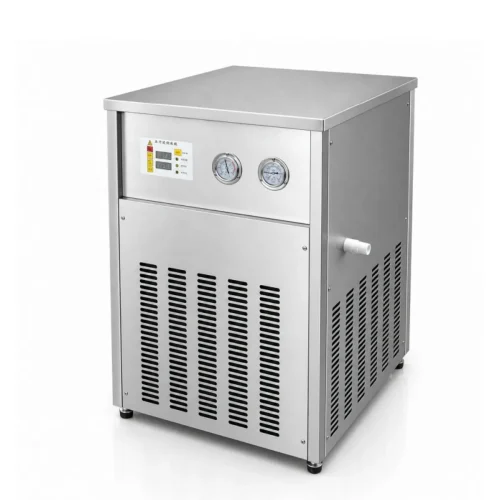
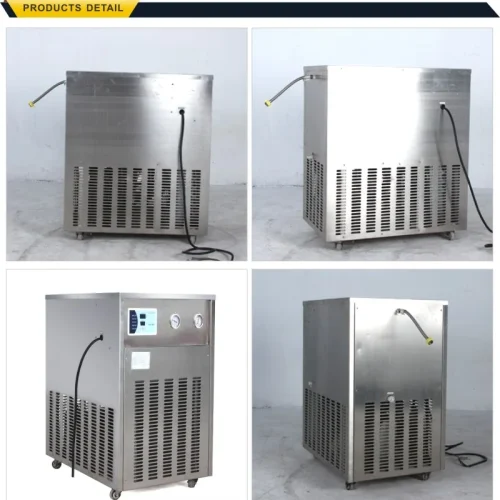
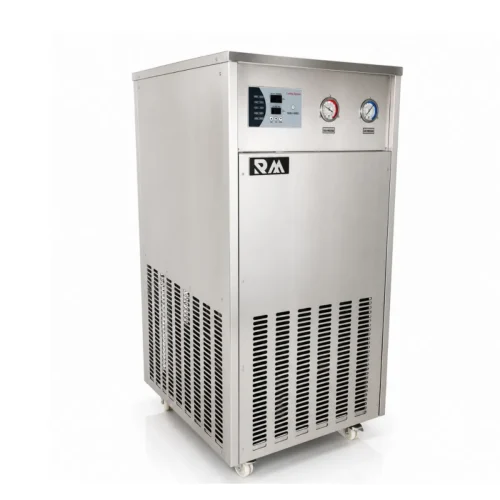
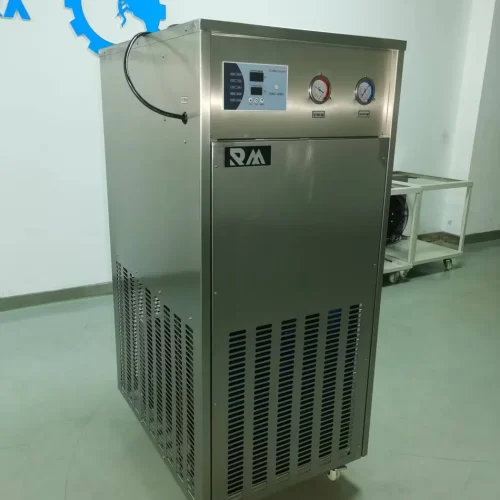
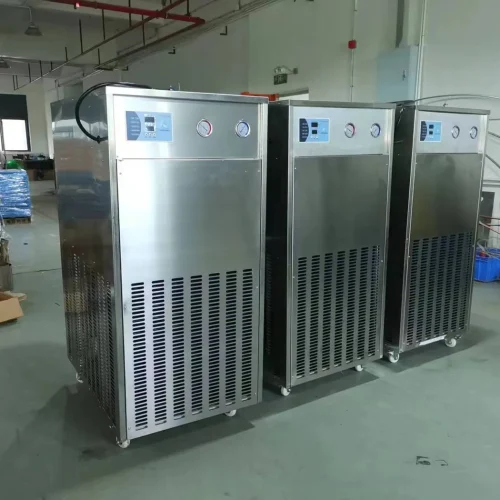
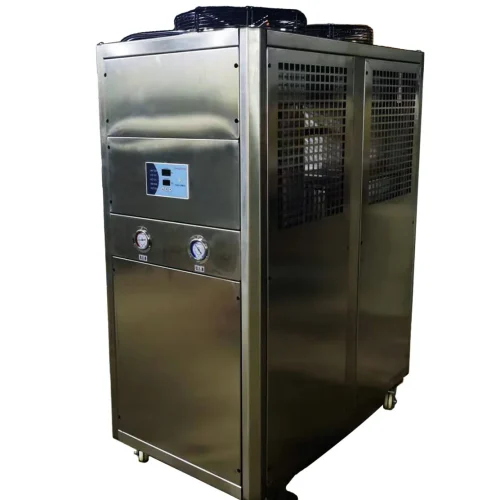
R&M RML-series water chillers are purpose-built for the bakery and food industry. They cool mixing and ingredient water to a controlled 5–25°C — the temperature window that determines dough fermentation quality, consistency, and final bread texture. Four standard models from 100 to 500 litres per hour (1–5HP), with larger capacities up to 1,000 L/H available on request. Imported compressor, 304 stainless steel water tank, micro-computer temperature control, automatic feed water. The dough water chiller that professional bakeries install before the mixer — not after.
Request a Quote
Enter the quantity you need and add to your quote list for pricing inquiries.
Product Details
Commercial Water Chiller for Bakery.html — RML Series, 100 to 500 L/H, up to 1000 L/H on Request
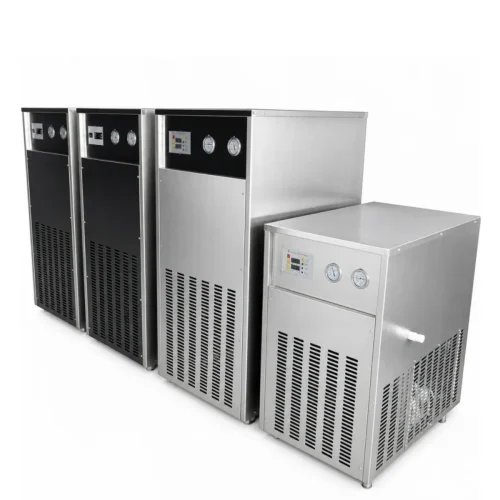
R&M RML-series water chillers are purpose-built for the bakery and food industry. They cool mixing and ingredient water to a controlled 5–25°C — the temperature window that determines dough fermentation quality, consistency, and final bread texture. Four standard models from 100 to 500 litres per hour (1–5HP), with larger capacities up to 1,000 L/H available on request. Imported compressor, 304 stainless steel water tank, micro-computer temperature control, automatic feed water. The dough water chiller that professional bakeries install before the mixer — not after.

Why a Bakery.html Water Chiller Is Not Optional Equipment
Dough temperature is the single most important variable a baker controls after recipe formulation. It determines:
Fermentation speed: Yeast activity doubles roughly with every 10°C rise in dough temperature. A few degrees of difference in the mixing water changes proofing time by an hour or more — and the baker’s whole production schedule with it.
Dough consistency batch to batch: Mixing water drawn from a tap varies with the season — cold in winter, warm in summer, unpredictable in between. A bakery that mixes with tap water makes different dough in July than in January. A water chiller holds the water at the same temperature every day, so the dough behaves the same every day.
Final bread quality: Dough that overheats during mixing produces bread with coarse texture, weak structure, and shorter shelf life. Dough held at the correct temperature produces a finer crumb, better oven spring, and longer freshness. For bakers selling to customers who notice texture, this is the difference between a repeat customer and a complaint.
The bakery water chiller does one thing: it delivers water to the mixer at a set temperature, batch after batch, day after day. Everything else — consistent dough, consistent proofing, consistent bread — follows from that.
Model Specifications (RML Series)
| Model | Output | Refrigeration | Compressor | Water Pump | Tank Capacity | Temp Range | Voltage | Net Weight |
|---|---|---|---|---|---|---|---|---|
| RML-100 | 100 L/H | 3.0 KW (2,580 kcal/h) | 1HP | 0.37 KW (0.5HP) | 100L | 5–25°C | 220V/50Hz | 90 kg |
| RML-200 | 200 L/H | 5.6 KW (4,988 kcal/h) | 2HP | 0.37 KW (0.5HP) | 130L | 5–25°C | 220V/50Hz | 130 kg |
| RML-300 | 300 L/H | 8.4 KW | 3HP | 0.75 KW (1HP) | 200L | 5–25°C | 380V/50Hz | 180 kg |
| RML-500 | 500 L/H | 14 KW | 5HP | 0.75 KW (1HP) | 250L | 5–25°C | 380V/50Hz | 300 kg |
Custom capacity: Outputs above 500 L/H, including 1,000 L/H units, are available on request.
All models: R22 refrigerant, fan-cooled condenser, 304 stainless steel water tank. RML-100 and RML-200 run on single-phase 220V; RML-300 and RML-500 require three-phase 380V. Contact us for current pricing and lead time.
Which Model Fits Your Bakery.html — A Sizing Guide
The RML series is a straight capacity ladder: each step up roughly doubles the cooling output. Sizing is about matching the commercial water chiller to your daily water consumption.
RML-100 (100 L/H, 1HP, 220V) — small bakeries, cake shops, pastry kitchens
A bakery producing a few hundred loaves per day, a cake shop with a small mixing station, or a pastry kitchen mixing dough in batches. The 100L storage tank covers a full mixing session. Single-phase 220V plugs into a standard commercial outlet — no three-phase wiring required.
RML-200 (200 L/H, 2HP, 220V) — medium bakeries, restaurant bakeries
The most commonly ordered model in the series. A medium bakery producing 1,000–3,000 loaves per day, or a hotel/restaurant central bakery running a standard spiral mixer line. 220V single-phase keeps installation simple. This is the water chiller most bakeries choose when moving from manual temperature management to a dedicated chiller unit.
RML-300 (300 L/H, 3HP, 380V) — high-volume bakeries
A bakery producing 3,000–6,000 loaves per day or running a high-capacity production line. Requires three-phase 380V supply. The 200L storage tank supports continuous mixing across multiple lines.
RML-500 (500 L/H, 5HP, 380V) — industrial bakeries, central kitchens
Central bakeries supplying multiple outlets, industrial bread plants, or large central kitchens. 500 L/H output and 250L storage support continuous high-volume production. Requires three-phase 380V. The industrial water chiller for operations that cannot afford temperature variability at scale.
Capacity note: The output figure (L/H) is the chiller’s steady-state cooling rate — how many litres of water it can bring to and hold at the set temperature per hour. The storage figure (L) is the tank volume. For intermittent mixing — which is how most bakeries operate — the storage tank acts as a buffer: chilled water is drawn down during mixing and re-cooled between batches.
Core Build Specification — What You Are Actually Buying
Imported brand compressor
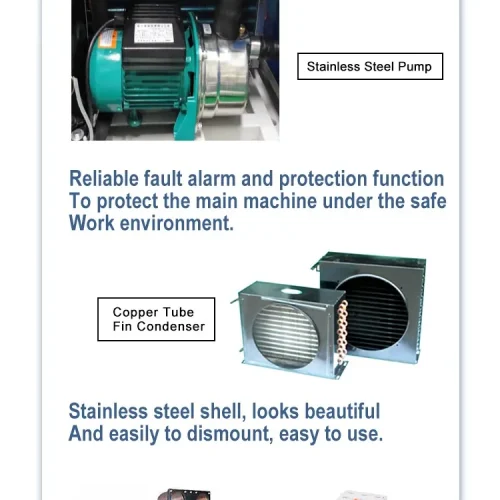
The RML series uses an imported brand compressor — the component that does the actual cooling work. A commercial-grade compressor holds the set temperature reliably through continuous daily operation, which is the difference between a water chiller that works for years and one that fails mid-summer.
304 stainless steel water tank
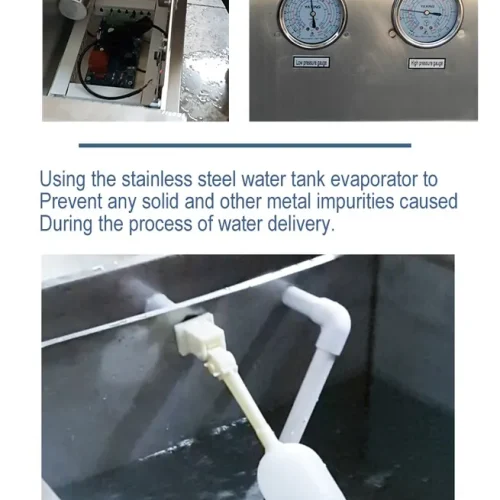
The water tank and evaporator are 304 stainless steel — the food-grade standard. It prevents the metallic impurities and scale that can form in mild-steel tanks and get carried into the dough water. It also withstands the daily cleaning cycle of a commercial bakery.
Micro-computer temperature control
A digital controller manages the cooling cycle: the set temperature (SV) and actual water temperature (PV) display on the panel. The controller opens and closes the compressor within a control differential (factory default 3°C) to hold the water temperature within the set range — no manual switching, no temperature drift.
Automatic feed water (float ball valve)
A floating ball valve in the tank monitors the water level and opens the inlet automatically when it drops. The tank refills itself — no manual topping up between batches, and no risk of the pump running dry.
Multiple protection systems
The water chiller protects itself — and the bakery — against faults:
- High and low pressure protection on the refrigeration circuit
- Compressor overload protection
- Water flow switch: if the pump fails or water flow drops too low, the flow switch stops the compressor automatically
- Liquid level alarm
- Temperature high/low alarms (E02/E08 fault codes)
- Phase sequence protection on three-phase models (E04)
These are not optional extras. They are the standard safety layer that keeps a continuously running machine from damaging itself or running unsafely.
Temperature Range and Practical Control
The RML series holds a 5–25°C range — the practical window for bakery mixing water.
Why the low end is 5°C: The control system’s anti-freeze function (factory default 3°C) prevents the evaporator from freezing. The controller stops cooling at the low limit and can circulate the pump to protect the system. Setting below 5°C risks evaporator icing — the manual explicitly warns against this.
Why the high end is 25°C: Above roughly 25°C, water drawn from a chiller provides no meaningful cooling benefit for dough — the point of the machine is to deliver water below ambient summer temperature. 25°C is the practical ceiling for the standard configuration.
What this means in practice: A bakery in a 35°C summer ambient can hold mixing water at, say, 10°C all day. That single control point — consistent water temperature delivered by this commercial water chiller — is what makes dough behave identically in July and January.
The Dough Temperature Chain — Where the Water Chiller Fits
A complete dough temperature control setup in a professional bakery:
1. Water chilling (this machine): Water enters the water chiller, is cooled to the set temperature, and stored in the stainless tank.
2. Mixing: Chilled water goes into the mixer with flour, yeast, and other ingredients. The controlled water temperature is the primary lever for final dough temperature.
3. Fermentation and proofing: Dough at the correct temperature proofs on schedule — predictable timing for the production plan.
4. Baking: Dough with correct fermentation produces consistent oven spring, crumb, and crust.
The water chiller sits at step 1 — upstream of everything else. Fix the water temperature and every downstream step becomes predictable.
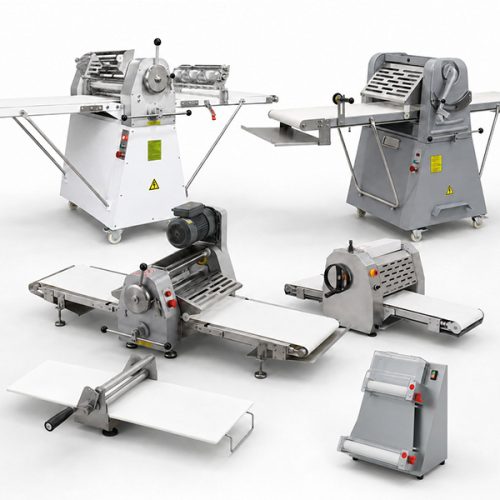
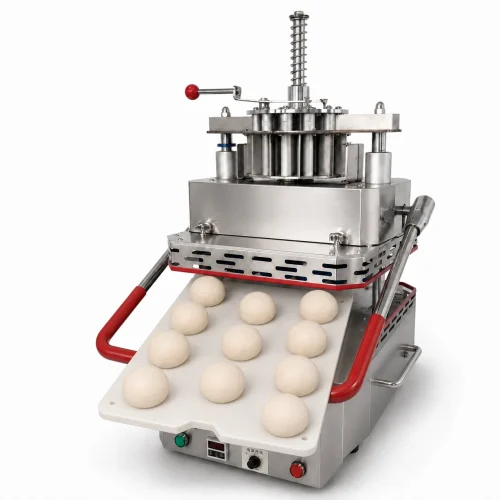
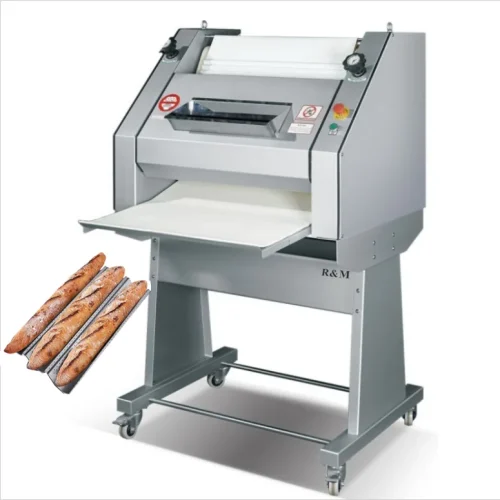
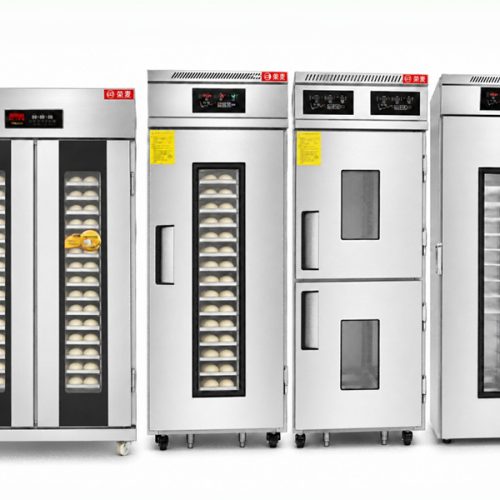
Related equipment note: R&M also manufactures dough sheeters, moulder machines, proofers, and bakery ovens — the full bakery equipment range behind the mixer. The dough water chiller is the piece that belongs before the mixer. See also our supporting bakery machine category for other production line ancillaries.
Frequently Asked Questions
What does a bakery water chiller do?
It cools the water used for dough mixing to a controlled temperature (5–25°C on the RML series). Consistent mixing water temperature produces consistent dough fermentation, proofing time, and final bread quality — independent of the season or the tap water temperature.
What is the difference between a water chiller and a water cooler?
A water cooler typically refers to a drinking-water dispenser or a simple cooling unit. A water chiller is a refrigeration unit that produces a continuous supply of chilled process water at a controlled temperature — for dough mixing, ingredient cooling, or process use. The RML series is a process water chiller for bakery use.
How do I choose between RML-100 and RML-200?
Match the output to your daily mixing volume. RML-100 (100 L/H) suits a small bakery mixing in batches; RML-200 (200 L/H) suits a medium bakery or restaurant bakery running a standard mixer line. If you are unsure, tell us your daily loaf output and mixing schedule — we will recommend the right water chiller unit.
Do I need 220V or 380V?
RML-100 and RML-200 run on single-phase 220V/50Hz — standard commercial power. RML-300 and RML-500 require three-phase 380V/50Hz. Check your facility’s electrical supply before ordering.
Why is the water tank stainless steel?
The tank and evaporator are 304 stainless steel — food-grade, corrosion-resistant, and easy to clean. It prevents metal impurities from entering the dough water and withstands commercial cleaning cycles.
What refrigerant does the RML series use?
R22 refrigerant. Contact us if your market has restrictions on R22 equipment — alternative refrigerant options may be available on request.
Can I get a capacity above 500 L/H?
Yes. Outputs up to 1,000 L/H are available on request. Contact us with your production volume for a custom quotation.
What is the price and lead time?
Contact us with your model, quantity, and destination. We will confirm pricing and lead time within one business day.
For background on industrial refrigeration principles, see the Wikipedia article on chillers.
Get a Quote
Commercial water chiller for bakery. 100 to 500 L/H standard, up to 1,000 L/H on request. Factory-direct.