





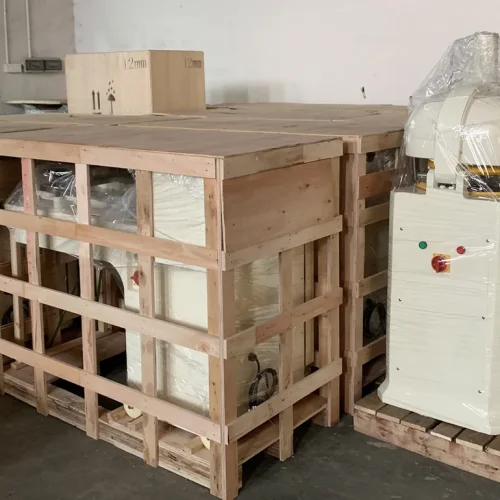
Toast Moulder RMZ-380 — 1000 to 3000 Pieces per Hour, 10 to 1000g
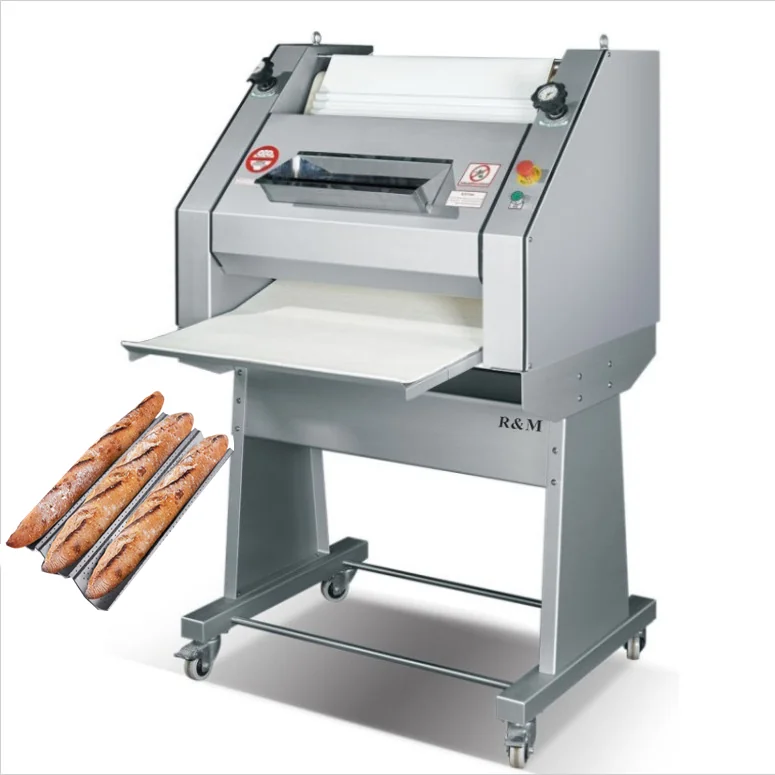
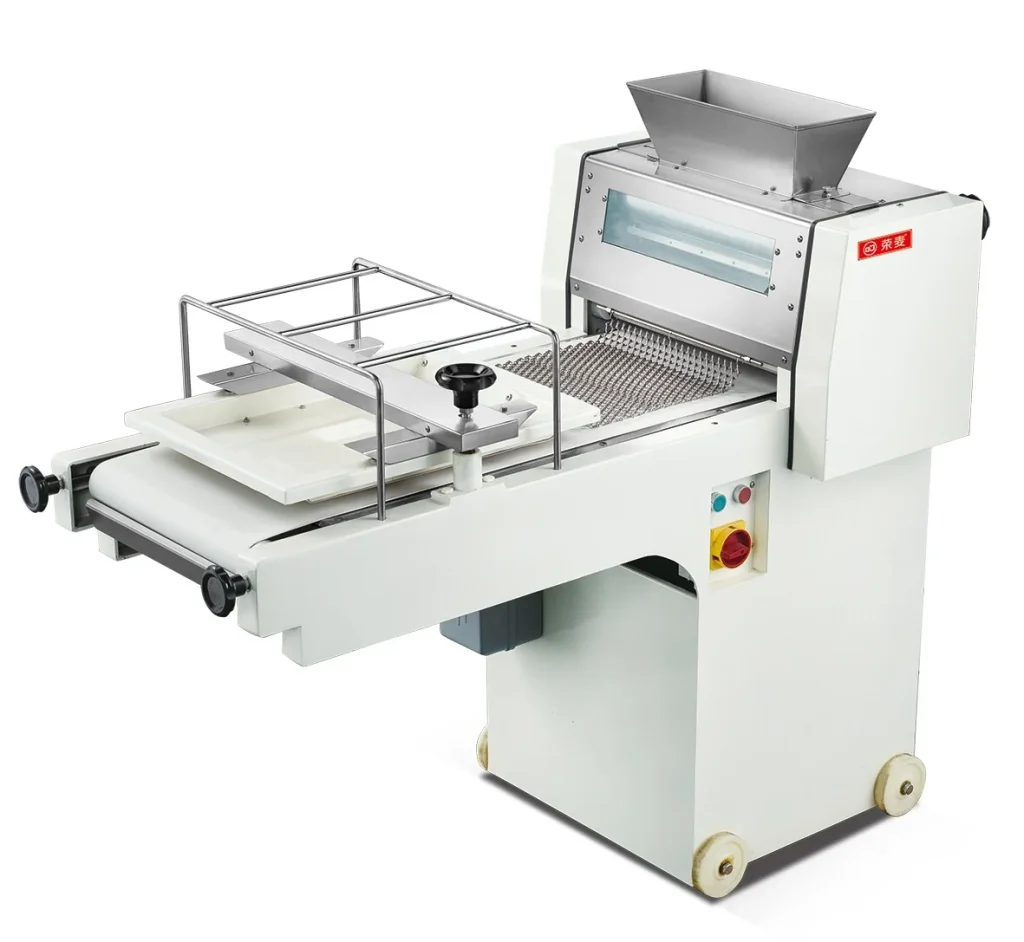
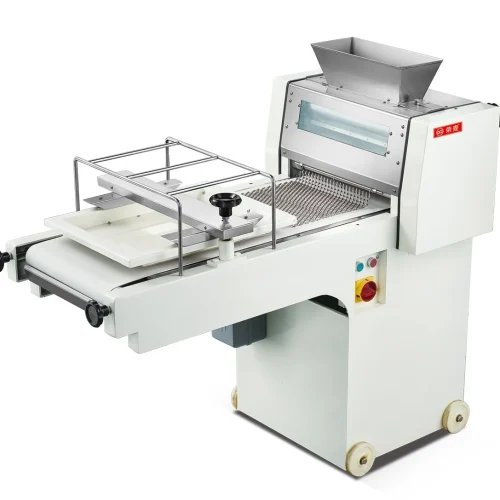
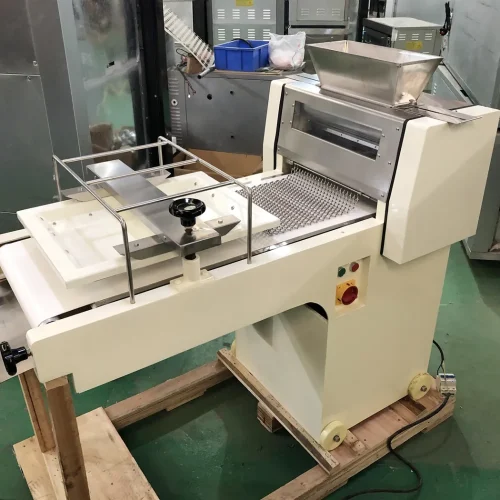
The RMZ-380 is R&M’s high-output commercial toast moulder for large-scale loaf bread production. A 2,350mm conveyor belt, 10–1,000g dough weight range, and a capacity of 1,000–3,000 pieces per hour make it the core shaping machine for industrial bread plants, chain bakery central kitchens, and wholesale loaf suppliers. 225kg frame, 0.75KW, 220V or 380V.
Request a Quote
Enter the quantity you need and add to your quote list for pricing inquiries.
Product Details
Toast Moulder RMZ-380 — 1000 to 3000 Pieces per Hour, 10 to 1000g
The RMZ-380 is R&M’s high-output commercial toast moulder for large-scale loaf bread production. A 2,350mm conveyor belt, 10–1,000g dough weight range, and a capacity of 1,000–3,000 pieces per hour make it the core shaping machine for industrial bread plants, chain bakery central kitchens, and wholesale loaf suppliers. 225kg frame, 0.75KW, 220V or 380V.
Toast Moulder Specifications
| Parameter | Value |
|---|---|
| Model | RMZ-380 |
| Dimensions | 580 × 1,340 × 1,100mm |
| Conveyor belt size | 2,350 × 380mm |
| Dough weight range | 10–1,000g |
| Output capacity | 1,000–3,000 pieces/hour |
| Power | 0.75 KW |
| Net weight | 225 kg |
| Voltage | 220V/50Hz or 380V/50Hz (110V/60Hz optional) |
Contact us for wholesale pricing and OEM options.
The Core Machine for Toast Bread Production
Toast bread — sandwich loaves, white pullman bread, milk bread, whole grain sliced bread — is among the highest-volume products in commercial and industrial bakery production globally. The shaping step before tin loading is a production bottleneck in kitchens that rely on hand-rolling: one operator can roll approximately 200–400 pieces per hour by hand, with size variation increasing as fatigue sets in.
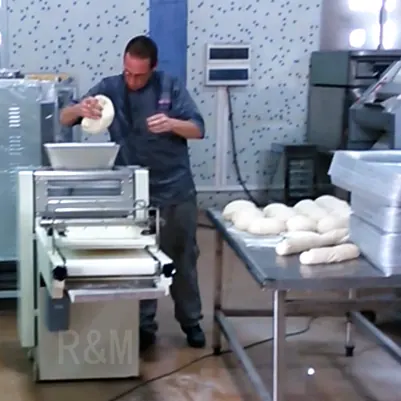
The RMZ-380 replaces this bottleneck. At 1,000–3,000 pieces per hour, it reshapes the production economics of any operation running toast lines at scale. A single operator loading the machine keeps pace with the output; the toast moulder handles the rolling, degassing, and forming.
For the history and production of the format, see the independent article on toast bread.
What the 2,350mm Conveyor Belt Enables
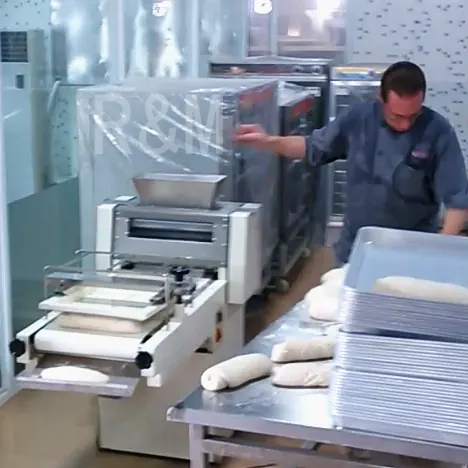
The long conveyor belt is the functional center of the RMZ-380. Dough pieces enter at one end, travel the full length of the belt through the forming mechanism, and exit at the other end as rolled, shaped loaf pieces ready for the tin.
Consistent rolling action over a long travel path
The extended belt length gives the dough piece more distance in contact with the forming mechanism compared to shorter machines. This produces more thorough degassing and a tighter, more even roll — important for sandwich loaves where a uniform, fine crumb is expected. On this toast moulder, the belt travel path is the reason a 400–700g loaf piece emerges with even surface tension and no compressed edges.
Continuous feed design
An operator can load pieces onto the belt continuously — the machine does not need to stop between pieces. This continuous feed design is what enables the 1,000–3,000 pieces per hour rate. For comparison, a batch-type press requires a full stop-load-press-unload cycle per batch. The toast moulder’s continuous feed keeps the belt moving at constant speed, so output pacing is set by the operator’s loading rhythm rather than by machine cycling.
380mm belt width
The 380mm belt width accommodates the standard pullman and sandwich tin dough piece dimensions. Wider belt machines handle larger loaf formats; the 380mm width is sized for the standard sandwich loaf range.

Dough Weight Range: 10g to 1,000g
The RMZ-380’s range is unusually wide. At the low end, 10g covers small roll and mini bread formats — dinner rolls, breakfast roll portions, and small Italian-style panino. At the high end, 1,000g covers large Pullman loaves and commercial sandwich bread formats.
This range makes the RMZ-380 a versatile loaf bread moulder for a central kitchen producing both toast loaves and a dinner roll product line. Running both products on one machine rather than two reduces capital expenditure and floor space requirements.
For standard sandwich loaves (400–700g dough weight): This is the sweet spot of the machine’s output range — the 1,000–3,000 pieces per hour rating applies to this weight class.
For dinner rolls and small loaves (50–200g): The machine handles these comfortably; output at smaller piece weights tilts toward the higher end of the capacity range per hour.
Applications
Industrial sandwich bread and Pullman loaf production
The primary application. An industrial bread plant producing sandwich loaves for supermarket supply runs the RMZ-380 as the bread moulding machine in the line, positioned at the shaping station before the tin-loading conveyor. The machine’s output rate matches or exceeds the throughput of a commercial dough mixer feeding a continuous production line.
Chain bakery central kitchens
A central kitchen supplying multiple café or restaurant outlets with daily fresh loaves operates the RMZ-380 for the shaping step. One machine handles the full day’s toast production in a fraction of the time hand-rolling would require.
Hotel and institutional food supply
Hotels producing their own breakfast breads and toast — and institutional kitchens in hospitals, schools, and large-scale catering — use the RMZ-380 for daily loaf production. The machine’s consistent output means uniform slice count and weight across every loaf.
Dinner rolls and bun forming (secondary application)
The 10–1,000g range extends the toast moulder’s use to dinner roll and soft bun pre-forming. For bakeries producing both loaves and rolls, the RMZ-380 handles both product types on the same machine across different production runs. Beyond toast moulder use, the RMZ-380 doubles as a bun molder, loaf molder and bread molder for mixed product lines.
RMZ-380 vs. RMZ-280 Mini Dough Moulder — How to Choose
| RMZ-380 Toast Moulder | RMZ-280 Mini Dough Moulder | |
|---|---|---|
| Dough weight range | 10–1,000g | 30–350g |
| Capacity | 1,000–3,000 pcs/hr | Lower output, smaller batch |
| Conveyor belt | 2,350mm long | Shorter |
| Machine weight | 225kg | 145kg |
| Power | 0.75KW | 0.37KW |
| Best for | Industrial lines, central kitchens | Small to medium bakeries |
| Function | Forming / rolling only | Rolling + elongation (dual function) |
Choose the RMZ-380 when:
- Your daily toast production exceeds 500–1,000 loaves per shift
- You are running a central kitchen or industrial bread plant
- You need continuous feed operation rather than batch processing
- Your dough pieces exceed 350g consistently
Choose the RMZ-280 when:
- You run a small to medium independent bakery
- Your daily volume is moderate (a few hundred pieces)
- Your kitchen space is limited and a compact, lighter machine is more practical
- Your primary products include baguettes and other elongated formats alongside toast (dual function advantage)
If your product range is primarily long French bread rather than tin loaves, the RMZ-750 baguette moulder is the matching machine for that category.
Frequently Asked Questions
What bread types can the RMZ-380 shape?
The primary application is toast bread and sandwich loaves. It also handles dinner rolls, soft buns, and any dough in the 10–1,000g range that requires rolling and forming before final proofing and baking.
How does a bread moulder work?
A bread moulder machine passes a pre-divided dough piece through rollers and a forming mechanism. The rollers flatten and degas the dough, and the mechanism rolls it into a cylinder or specific shape. The formed piece is then placed in a tin or on a baking tray for final proofing and baking. Shaping happens before proofing — placing shaped dough into a moulder after proofing would damage the gas structure.
What is the difference between the RMZ-380 and the RMZ-280?
The RMZ-380 is the high-output industrial toast moulder — long conveyor, wider capacity range (10–1,000g), heavier frame (225kg), and designed for continuous production. The RMZ-280 is a compact dual-function machine for small to medium bakeries. See the comparison table above for a detailed breakdown.
Can I use this for loaf bread formats other than standard sandwich?
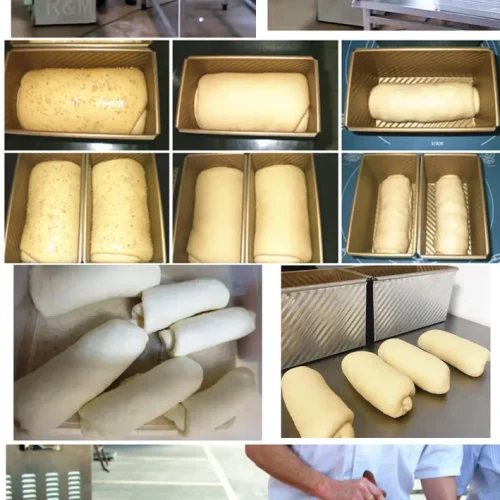
Yes. Milk bread, whole grain loaves, brioche loaf, and other tin bread formats that fall within the 10–1,000g range are all compatible. The machine forms a cylinder that fills the tin uniformly during proof.
Does the machine require a dedicated power connection?
0.75KW on 220V or 380V. Both are standard commercial supply voltages. A 110V/60Hz option is available for North American buyers.
What is the lead time and MOQ?
Contact us with your quantity and destination. We will confirm within one business day.
Get a Quote
High-output toast moulder for industrial bread production. 1,000–3,000 pieces per hour — part of R&M’s bread dough moulder range. Contact us for the dough moulder machine that matches your production volume.