



Customer Case | Chattogram, Bangladesh
Sweet Basket produces packaged bread and a broad range of baked goods for the Chattogram market. Customer-shared production photos show R&M rotary ovens working in a busy bakery environment where rack movement, batch consistency and practical daily output matter.
Plan a Similar Bakery.html Project
A Chattogram Bakery.html with a Broad Product Range
Sweet Basket is a bakery brand serving Chattogram, Bangladesh. Its packaged 450 g sandwich bread is the clearest product in the customer photos. Current local retail listings also show milk bread, brown bread, sesame buns, cream buns, butter buns, dinner rolls, mini plain buns, cakes, toast products and cookies under the same brand.

This range creates a practical production challenge. Tinned loaves need controlled heat for good volume, straight sides and an even top color. Buns require consistent browning across open trays. Cakes and cookies need gentler recipe settings and careful airflow. The bakery oven must therefore handle repeat production without forcing the team into a single-product schedule.
For a growing bread manufacturer, this is where equipment selection affects more than nominal capacity. The oven has to fit the products, tray system, labor flow and local utility conditions. A machine that is large on paper but slow to load, difficult to balance or poorly matched to the product mix can become the bottleneck of the bakery line.

Why a Rotary Oven Fits High-Volume Sandwich Bread Production
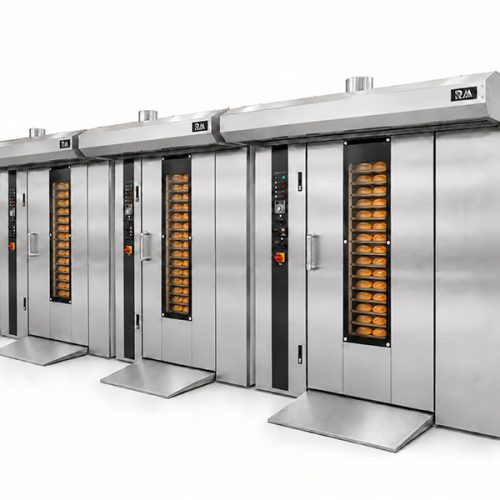
A rotary oven bakes a complete trolley inside a hot-air chamber. The rack rotates during the cycle while the circulation system moves heated air around the load. This gives each tray more repeatable exposure than a fixed rack in an uneven chamber and makes full-trolley loading practical for commercial production.
For Sweet Basket’s sandwich loaves, consistent airflow is directly linked to the finished pack. Loaves from the upper, middle and lower tray positions should reach a similar color and bake level. Better batch uniformity makes slicing and packing easier because the production team receives fewer loaves with pale sides, dark tops or uneven moisture.
The same full-rack workflow also supports planned batches of buns, rolls and other products. Operators can prepare the next trolley while the current batch is baking, then exchange racks at the oven door. This reduces tray-by-tray handling and helps the bakery keep mixing, proofing, baking, cooling and packing in sequence.
Matching the Commercial Bread Oven to Sweet Basket’s Products
Sandwich Bread, Milk Bread and Brown Bread
Tinned loaves benefit from balanced vertical airflow and stable temperature recovery. These conditions support loaf volume, even side color and a repeatable crumb before slicing. Steam can be limited or omitted according to the formula and desired crust; the correct setting should be proven with the customer’s tins, dough weight and bake profile.
Buns and Dinner Rolls
Buns expose more surface area directly to moving air. Air outlets and fan settings therefore need to be balanced so the outer trays do not color too quickly. Once the recipe is validated, the rotating rack helps maintain a consistent result across larger batches of sesame buns, cream buns and plain rolls.
Cakes, Toast Products and Cookies
A mixed bakery can use the same industrial oven for separate product programs, but not with one universal setting. Cakes generally need controlled air movement; toast and dry products may use a longer drying stage; cookies require close control of spread, base color and moisture. A useful bakery solution stores or documents individual time, temperature, airflow and steam settings for each product family.
Full-Rack Workflow on the Production Floor
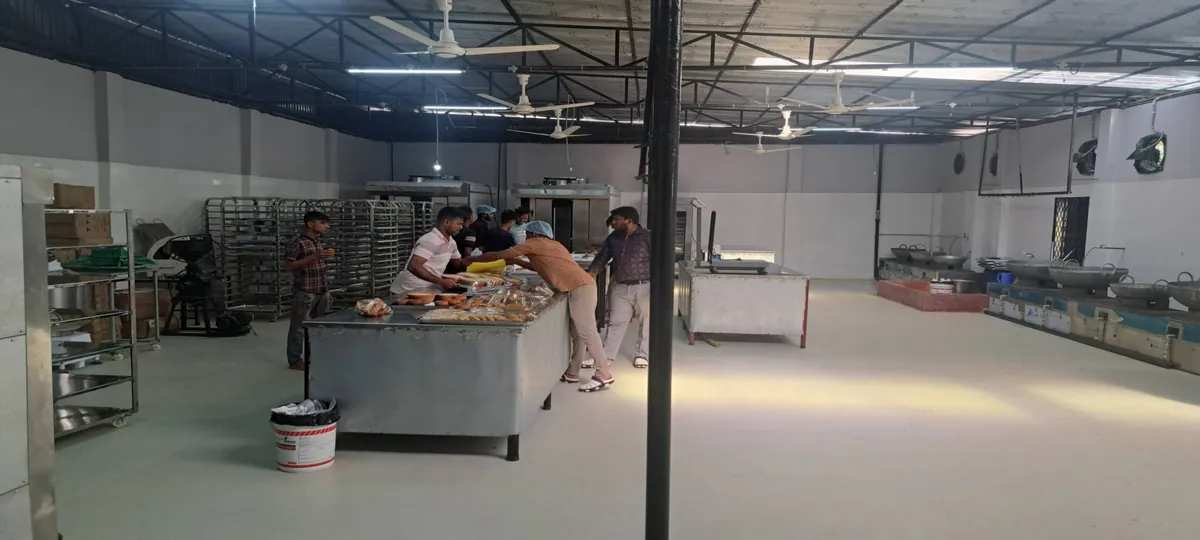
The production image shows two ovens positioned behind the main working tables, with several wheeled racks available between baking and handling areas. This layout gives the team room to stage trays, unload baked products and return empty trolleys without carrying individual pans across the floor.
Using twin ovens can also give a multi-product bakery more scheduling flexibility. One chamber may continue a bread program while the other handles a different batch or recovers for the next trolley. The exact operating plan depends on oven capacity and recipe times, but separate chambers help reduce the risk that one long cycle delays the entire production schedule.
For buyers comparing baking equipment, the trolley route deserves the same attention as oven output. Door width, turning radius, floor level, cooling space and rack quantity all affect real throughput. The best result comes from treating the commercial oven, trolleys and surrounding work area as one system.
Construction Details That Matter in Daily Bakery.html Work
A commercial baking oven runs through repeated heating and cooling cycles, so insulation and structural strength influence both temperature stability and service life. R&M’s rotary oven range uses a multi-layer insulated body, stainless-steel chamber and exterior sections, and a heavy steel base and rotating structure. Selected fuel-fired configurations use a 3.0 mm SUS304 stainless-steel combustion chamber; the final material specification depends on the ordered model and heating system.
Adjustable hot-air outlets allow the baking pattern to be tuned for different loads. Stable trolley rotation keeps the rack moving through the airflow, while optional steam supports products that require surface moisture or crust development. These features are useful only when they are matched to actual tray dimensions, loaf tins and recipes, so R&M reviews production information before recommending a configuration.

What Bangladesh Bakery.html Buyers Can Learn from This Project
Sweet Basket’s case is a useful reference for bakeries that sell both packaged bread and shorter-run baked products. Start with the products that generate daily volume, then check whether the proposed bread oven can also support the secondary range without difficult changeovers.
- Define the load: provide tray size, tin dimensions, dough weight, trays per batch and target batches per day.
- Validate the products: test the main loaf first, then buns, cakes or cookies with separate baking programs.
- Check local energy: confirm voltage, phase, frequency and the availability of LPG, natural gas or diesel before choosing electric or fuel-fired heating.
- Plan the trolley route: allow clear access from proofing to baking, cooling and packing.
- Confirm the specification: review heating power, steam, controller, burner, chamber materials, insulation and included racks before production.
These checks are especially important when choosing a rotary oven in Bangladesh or sourcing other commercial bakery equipment in Bangladesh, where electrical capacity and fuel availability may differ by site. A properly configured bakery oven in Bangladesh should fit the customer’s utilities as closely as it fits the required batch output.
Choosing Industrial Bakery.html Equipment in Bangladesh
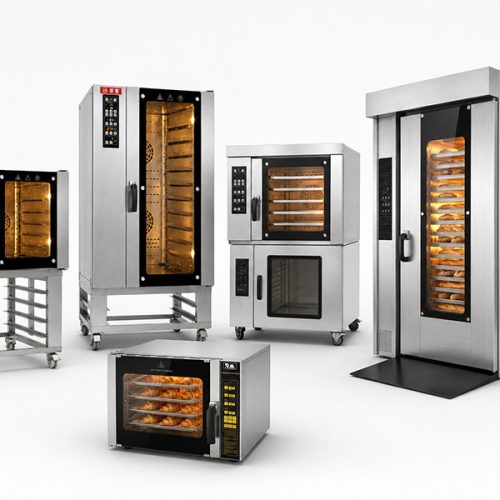
R&M supplies rotary rack ovens in multiple tray capacities with electric, gas, diesel and selected dual-energy configurations. The right choice is based on the product range, trolley and tray format, available utilities, installation space and production target—not on tray count alone.
For a new project, send R&M your bread types, photos or dimensions of the finished products, expected daily quantity, working hours, tray size and local energy details. Our team can then match the oven with the rest of the bread making equipment and identify whether proofing, mixing, moulding, slicing or cooling capacity will limit the line.
As a bakery equipment manufacturer with export project experience, R&M supports equipment selection, production confirmation, shipping preparation and after-sales communication. Buyers comparing bakery equipment suppliers can request a model-specific quotation and layout review instead of relying on a generic bakery oven for sale listing.


Foire aux questions
Why is a rotary oven suitable for sandwich bread?
Its rotating trolley and controlled hot-air circulation support repeatable heat exposure across a full rack. For tinned sandwich loaves, that helps the baker manage color, volume and batch consistency.
Can one rotary rack oven bake bread, buns, cakes and cookies?
Yes, provided each product has a validated program. Temperature, baking time, airflow, steam and loading density should be adjusted to the recipe rather than copied from the bread setting.
What should a bakery in Bangladesh confirm before choosing an oven?
Confirm the product list, tray size, batch target, daily working hours, available voltage and fuel, steam requirements, trolley access, exhaust, water supply and maintenance clearance. These details determine the practical oven capacity and heating configuration.
Why is a rotary oven suitable for sandwich bread?
Its rotating trolley and controlled hot-air circulation support repeatable heat exposure across a full rack. For tinned sandwich loaves, that helps the baker manage color, volume and batch consistency.
Can one rotary rack oven bake bread, buns, cakes and cookies?
Yes, provided each product has a validated program. Temperature, baking time, airflow, steam and loading density should be adjusted to the recipe rather than copied from the bread setting.
What should a bakery in Bangladesh confirm before choosing an oven?
Confirm the product list, tray size, batch target, daily working hours, available voltage and fuel, steam requirements, trolley access, exhaust, water supply and maintenance clearance. These details determine the practical oven capacity and heating configuration.
Plan a Rotary Oven Project for Bangladesh
If you are opening a bakery, expanding packaged bread output or replacing an existing industrial oven, send us your product list and production target. R&M will prepare a suitable commercial bakery equipment recommendation for your site.
Demander une recommandation concernant un four rotatif

Explore Related Bakery.html Equipment


Pétrisseuses de boulangerie Commercial