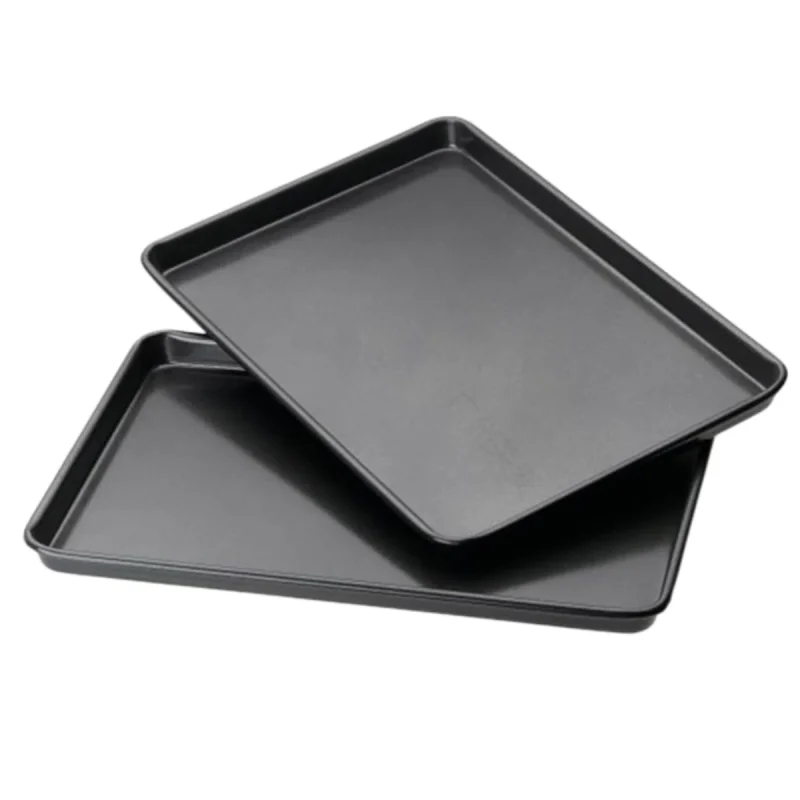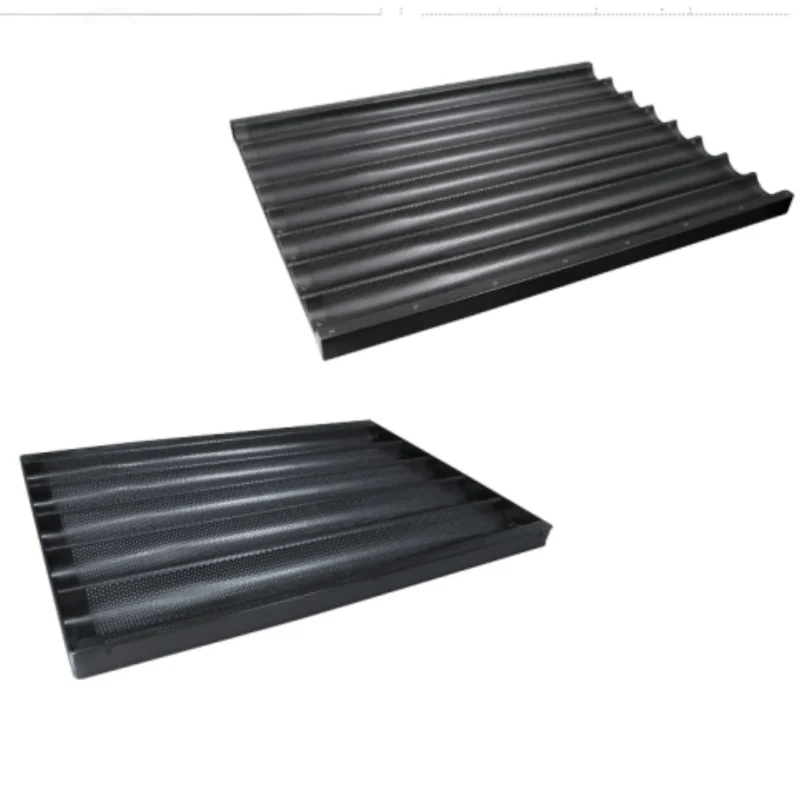




Perforated Baking Tray — Aluminum Perforated Sheet Pan, 400×600mm & 800×600mm
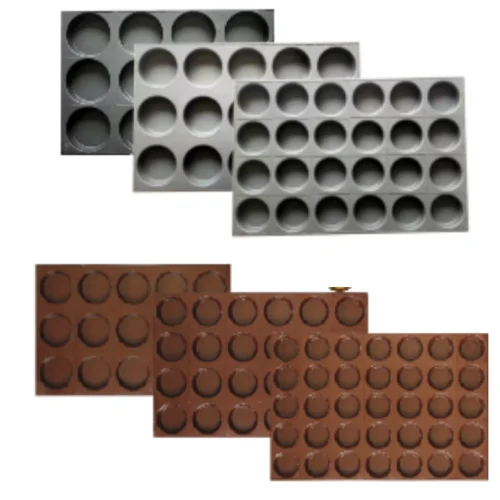
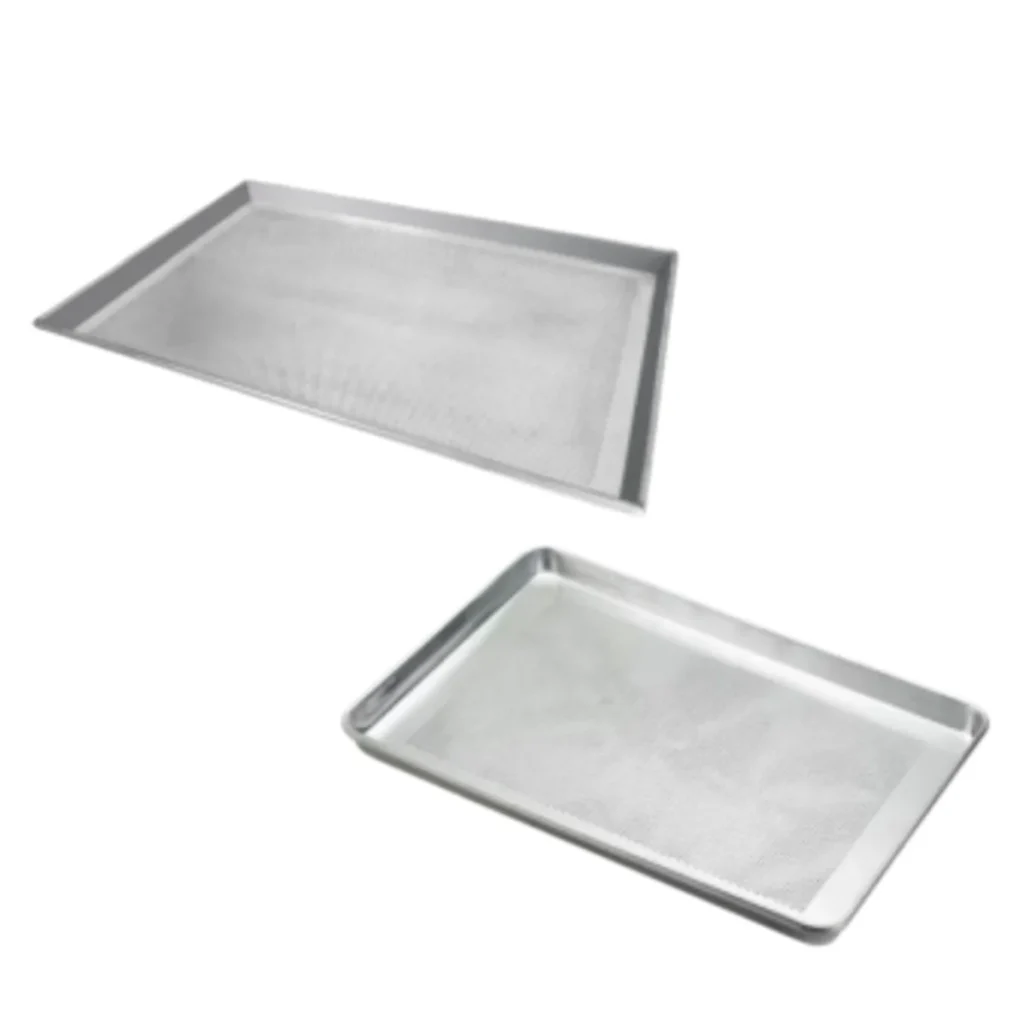
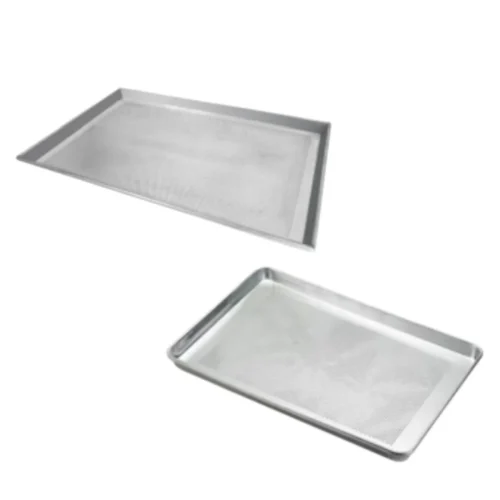
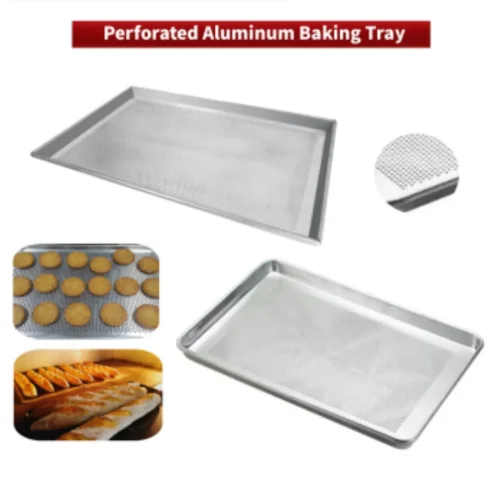
R&M perforated baking trays are aluminum sheet pans drilled with a dense grid of small holes, made for bakers who need even heat and a crisp bottom on every product. The perforations let hot air circulate under the dough while it bakes, so cookies, bread rolls, baguettes and pastries cook evenly with no soggy bases. Standard sizes are 400×600 mm and 800×600 mm, in plain aluminum or aluminized finish. These are the trays that earn their place in rack ovens, deck ovens and convection ovens across commercial bakeries.
Demander un devis
Indiquez la quantité souhaitée et ajoutez-la à votre liste de devis pour obtenir un devis.
Détails du produit
Perforated Baking Tray — Aluminum Perforated Sheet Pan, 400×600mm & 800×600mm
R&M perforated baking trays are aluminum sheet pans drilled with a dense grid of small holes, made for bakers who need even heat and a crisp bottom on every product. The perforations let hot air circulate under the dough while it bakes, so cookies, bread rolls, baguettes and pastries cook evenly with no soggy bases. Standard sizes are 400×600 mm and 800×600 mm, in plain aluminum or aluminized finish. These are the trays that earn their place in rack ovens, deck ovens and convection ovens across commercial bakeries.
Why a Perforated Baking Tray
A solid baking tray traps heat and steam under the product. A perforated tray lets it escape:
- Even baking. Hot air reaches the underside of the dough through the holes, so the base bakes at the same rate as the top. No pale centers, no burnt edges.
- Crisp bases. Steam escapes through the perforations instead of condensing under the product — the reason perforated trays are standard for baguettes, bread rolls and pastry that need a dry, crisp bottom.
- Faster, more even color. Airflow across and under the product gives uniform browning across the whole tray, batch after batch.
- Good for delicate doughs. Even heat distribution reduces the risk of over-baking thin or fragile items like cookies and small pastries.
Sizes and Options
| Modèle | Tray size | Finish |
|---|---|---|
| Perforated aluminum tray | 400×600 mm | Aluminum |
| Perforated aluminized tray | 400×600 mm | Aluminized |
| Perforated aluminized tray | 800×600 mm | Aluminized |
Aluminum: light, fast heat transfer — the economical choice for everyday baking.
Aluminized: the same perforated design with an aluminized surface, which stands up to daily washing and repeated oven cycles better than plain aluminum.
Both finishes carry the same dense hole grid. Contact us with your tray size and oven rack dimensions if you need confirmation on fit.
What to Bake on a Perforated Tray
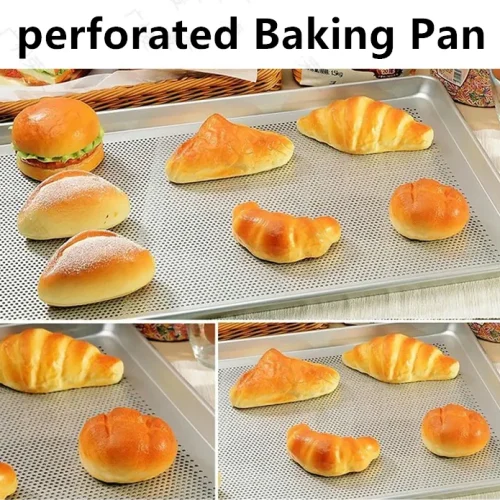
Bread rolls and buns. Rows of rolls bake evenly with crisp, golden bottoms — the standard tray for hamburger buns, dinner rolls and crusty bread.
Baguettes and long bread. The classic perforated application. Steam escapes through the holes, giving baguettes the dry, crisp crust that a solid tray cannot produce.
Croissants and pastry. Laminated dough benefits from airflow underneath — even lift and a clean, crisp base.
Cookies and biscuits. Small items bake evenly with no over-browned bases, and the tray releases them cleanly.
Pizza bases and flatbreads. A perforated tray gives flat dough a crisp, evenly baked bottom before finishing in a deck or conveyor oven.
Aluminum vs Aluminized — Which Finish
Aluminum perforated trays are lightweight and heat up quickly. They are the economical workhorse for bakeries where trays are used, washed and rotated on a daily cycle.
Aluminized perforated trays carry a protective surface layer that resists oxidation and corrosion better than plain aluminum. For bakeries that run high-volume oven cycles or wash trays frequently, the aluminized finish lasts longer before showing wear.
Many bakeries run both: aluminized for the high-turnover items and plain aluminum for lighter duty. R&M supplies both, so the mix is one order.
Caring for Perforated Trays
- Wash with standard bakery detergent. Warm water and a soft brush clear the holes; rinse well so no detergent residue remains in the perforations.
- Dry before stacking. Trays stored wet can spot, especially in the holes where water collects.
- Avoid dropping. Perforated trays are lighter than solid trays — treat them with the same care as any aluminum sheet pan.
- Check the holes. If dough or debris builds up in the perforations over time, a soak clears them and restores airflow.
Foire aux questions
What sizes are available?
400×600 mm in aluminum and aluminized finishes, and 800×600 mm in aluminized finish.
Why do the trays have holes?
The perforations let hot air circulate under the dough and let steam escape during baking, producing even heat and a crisp base that solid trays cannot match.
What is the difference between aluminum and aluminized?
Aluminum is lightweight with fast heat transfer. Aluminized has a protective surface layer that resists oxidation and stands up better to daily washing and repeated oven cycles.
Can I use these trays in a rack oven or deck oven?
Yes, they are built for commercial oven service. Confirm your oven rack dimensions at quotation so we can match the tray size.
Can you make custom sizes?
Yes, tray dimensions and finishes can be made to order. Minimum order quantity applies.
What is the price?
Price depends on size, finish, quantity and destination. Contact us for a factory-direct quotation.
Get a Quote
Perforated baking tray — aluminum & aluminized, 400×600mm & 800×600mm, dense hole grid for even baking. Factory direct from R&M. This range is part of the full accessories range chez R&M.