



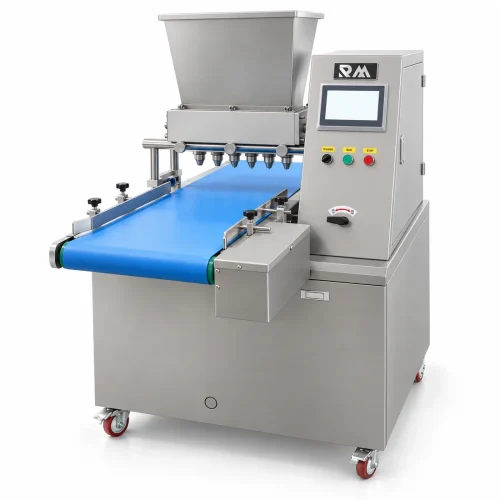
Automatic Jenny Cookies Machine — GD-CO400Z / GD-CO600Z for 3D Butter Cookies
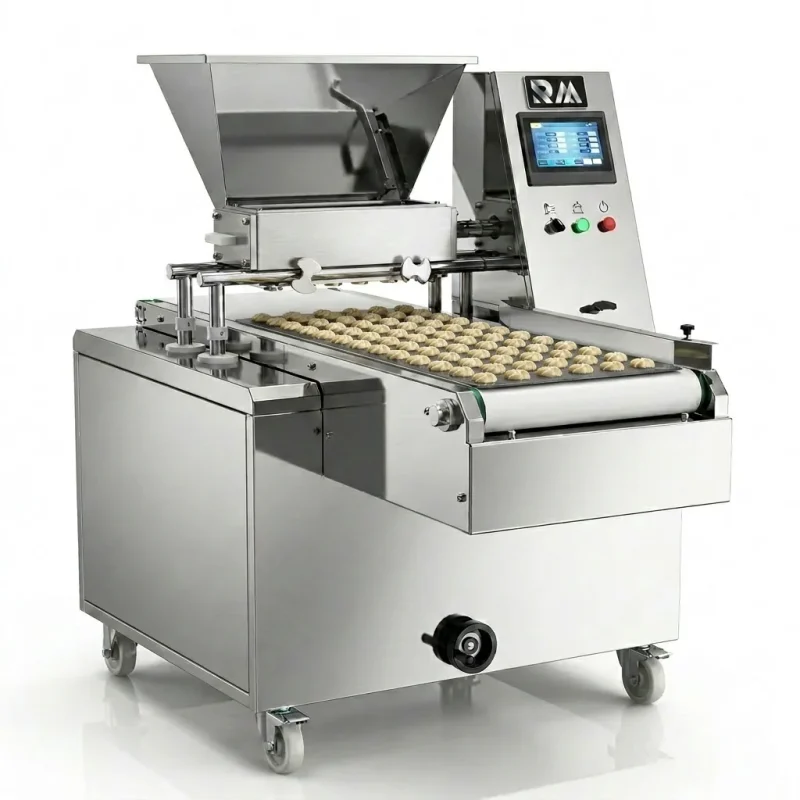
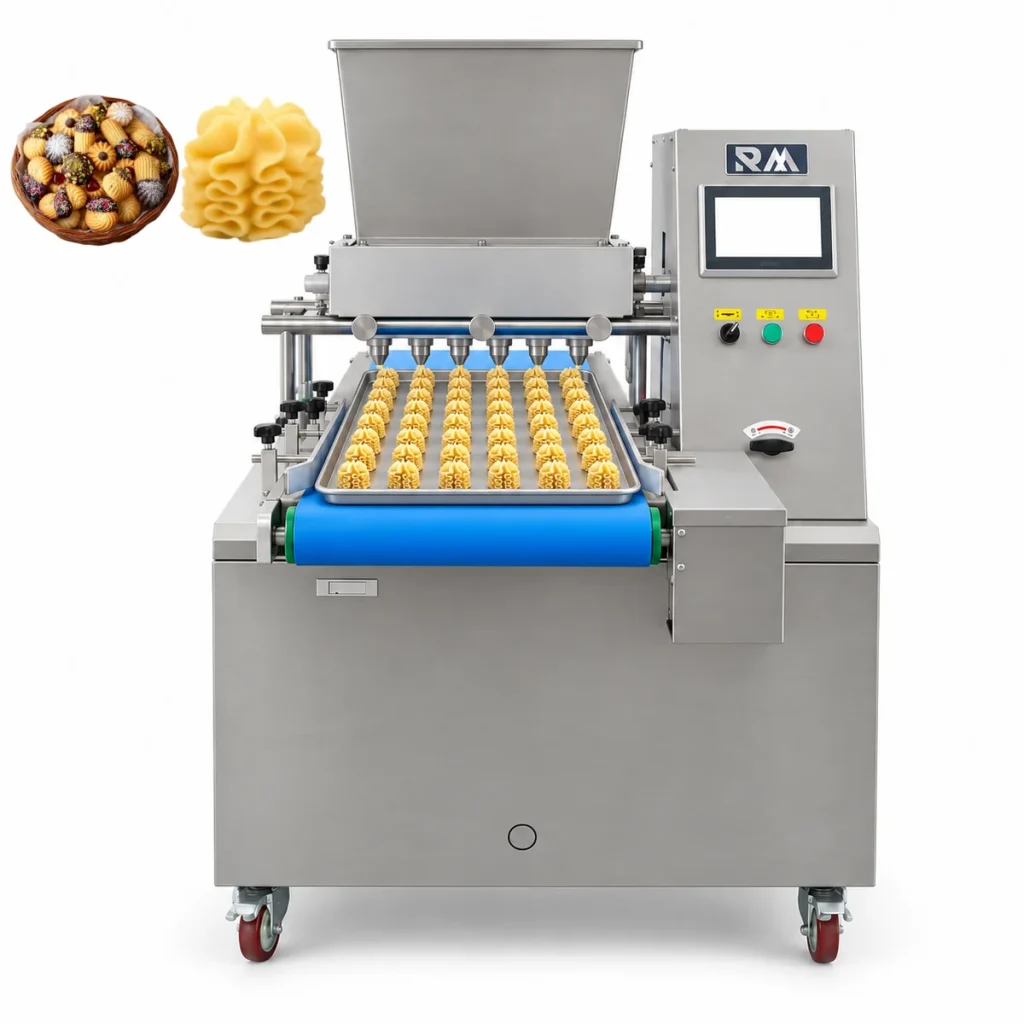
The GD-CO400Z and GD-CO600Z are Jenny cookies machines for high-relief butter cookies. A rotating nozzle head builds each piece in layers as it deposits, so the flower and rosette patterns hold their shape through baking. Two belt widths, LCD touch panel with stored programs.
Demander un devis
Indiquez la quantité souhaitée et ajoutez-la à votre liste de devis pour obtenir un devis.
Specifications
Description
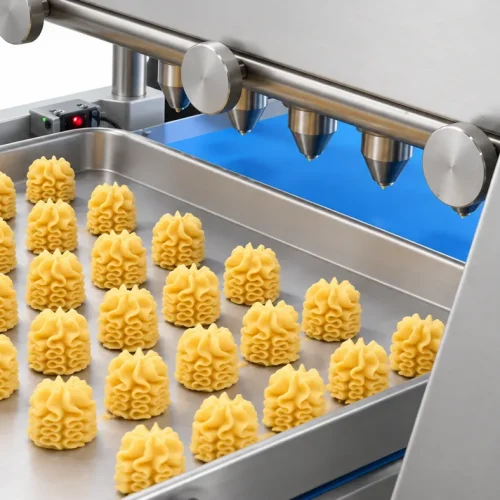
The GD-CO400Z and GD-CO600Z are Jenny cookies machines built for high-relief butter cookies. Where a standard depositor lays down a flat swirl, this machine extrudes through nozzles that turn as the head rises, so every cookie leaves the tray with a pleated, three-dimensional profile.
Bakeries move to this model for one reason: the shape sells. A gift-box butter cookie is judged on how the pattern reads in the box, and a flat deposit softens in the oven and loses its edges before it reaches the packer. The Z-series was developed around stiffer, butter-rich dough so that the ridges the nozzle cuts are still there after baking.
What a Jenny Cookies Machine Does Differently
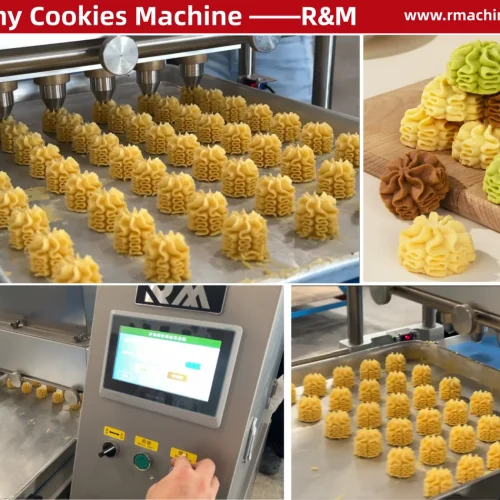
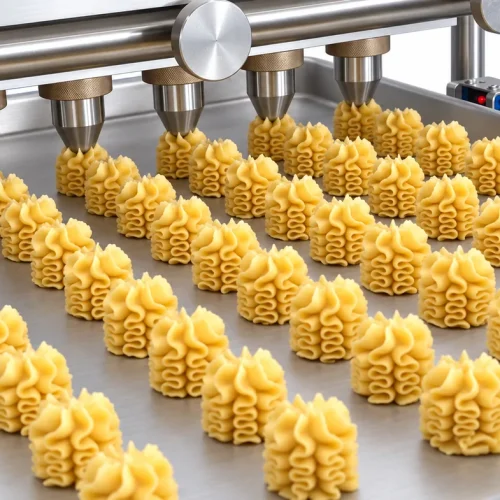
Standard rotary depositing seats dough onto the tray from a rotating base. This machine adds a vertical stroke and a turning nozzle head: the head descends, turns through the pattern, then lifts clear of the piece. The dough is built up in layers rather than dropped in one go, which is what gives a Jenny cookie its stacked ridges and open top.
Two things follow from that motion. The first is pattern depth — the profile is formed by the nozzle, not by a mould, so it can be changed without changing any tooling. The second is rhythm: because the head has to complete its stroke before the tray moves, the machine is programmed around a cycle rather than run free.
Rotating Nozzles and the Reciprocating Stroke
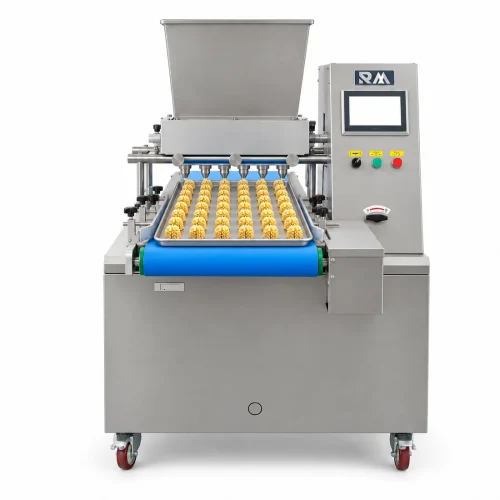
The nozzles sit in a row across the belt and turn individually through the programmed pattern. Each nozzle doubles as a cookies shaper, cutting the ridges as it lifts away from the deposit. Working together, the head behaves as a cookie dough extruder that turns as it extrudes, laying the dough down in layers rather than in a single drop.
Because the motion is under program control, the same nozzle can produce a different profile for a different order — the shape lives in the program, not in a mould.
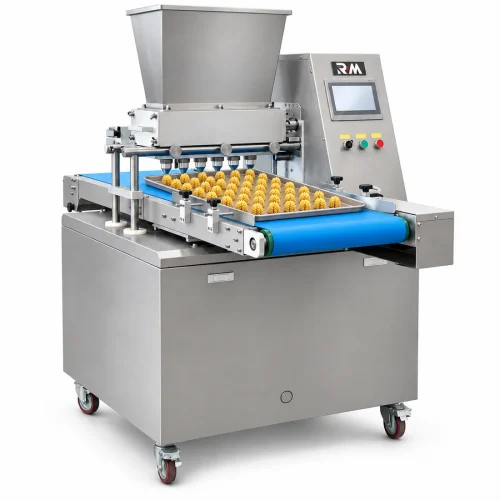
Trays sit on the belt between adjustable guide rails with locking knobs, so a change of tray width is a mechanical adjustment rather than a new fixture.
Dough Condition for High-Relief Patterns
Butter-rich dough at a consistent temperature is what makes the pattern hold. A mix that is too warm slumps after depositing and closes up in the oven; a mix that is too cold tears as the nozzle turns. Keep the dough at the temperature that produced your approved sample and the machine will repeat it — a cookies machine repeats what it is given, and it cannot rescue a batch that has gone soft.
Jenny Cookies Compared with Standard Deposited Cookies
| Standard rotary deposit | Jenny cookies machine (Z-series) | |
|---|---|---|
| Nozzle motion | Turns in place | Turns and reciprocates |
| Pattern depth | Shallow swirl | Stacked ridges, open top |
| Dough | Medium-consistency butter dough | Stiffer, higher-butter dough |
| Typical product | Spritz, rosettes, sandwich bases | Jenny cookies, bear cookies, 3D butter cookies |
| Models | GD-CO400 / GD-CO600 | GD-CO400Z / GD-CO600Z |
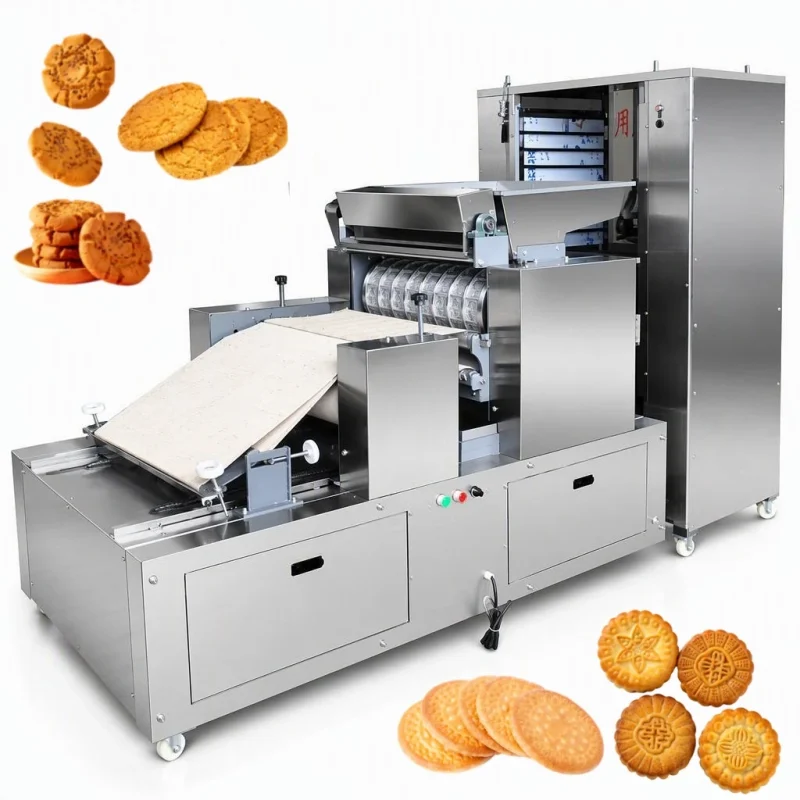
Both machines share the same forming stage in a cookie line. The choice between them is decided by the product, not by the price bracket. For swirls, rosettes and everyday butter cookies, our standard cookie depositor covers that part of the range.
How the Pattern Is Drawn
On this cookies machine the controller runs a drawing program rather than a single timed deposit. In sequence:
- Tray in position. The tray advances in steps along the belt and stops square to the nozzle row, held by the guide rails.
- Deposit. The head drops, the nozzles turn through the programmed path, and the head lifts away from the finished piece.
- Tray advance. The tray moves on by one position while the head is clear.
- Repeat. The cycle runs until the tray is full; the operator removes it and loads the next.
What the program controls is the path the nozzle travels, the deposit time and the spacing between pieces. Because all three are stored, a repeat order is a recall rather than a re-setup: the cookie making machine produces the same tray on the second shift as it did on the first.
Two Models — GD-CO400Z and GD-CO600Z
Both models run the same head, the same controller and the same 1.2 kW drive. They differ in belt width and frame size, so the choice is decided by the tray you already use and the number of pieces you want across the belt.
| Item | GD-CO400Z | GD-CO600Z |
|---|---|---|
| Belt width | 420 mm | 620 mm |
| Overall size | 93 × 155 × 141 cm | 113 × 155 × 141 cm |
| Power | 1.2 kW | 1.2 kW |
| Net weight | 350 kg | 450 kg |
| Tension | 220V / 50Hz | 220V / 50Hz |
| Control | LCD touch panel | LCD touch panel |
A wider belt does not make the cookies machine run faster — it deposits more pieces in the same pass. If your trays are 400 mm class, the GD-CO400Z matches them; if you run 600 mm trays or want more nozzles active per cycle, the GD-CO600Z is the one to quote.
Products Beyond Standard Jenny Cookies
The same head that produces a Jenny cookie also covers the rest of a butter-cookie range, which is usually the argument that settles the purchase: one cookie maker machine for both the everyday line and the premium shapes.
- Jenny cookies and bear cookies — the classic gift-box formats
- 3D butter cookies with stacked ridges and an open top
- Two-tone and three-tone doughs — plain, matcha and chocolate in the same tray
- Rosettes, flowers and shell profiles for mixed assortments
- Standard butter cookies and spritz shapes for daily production
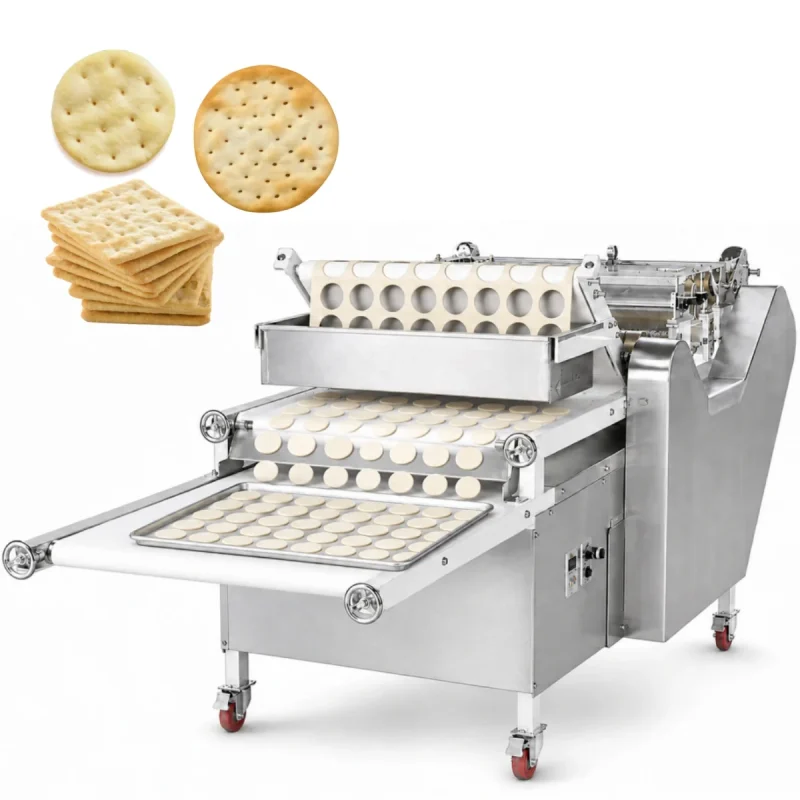
Two-tone work depends on the doughs being prepared separately and loaded in sequence; tell us the combination you want to run and we will confirm how it is handled on the machine. Biscuit and cracker forming is handled by our fully automatic biscuit making machine.
Memory, Changeover and Day-to-Day Operation
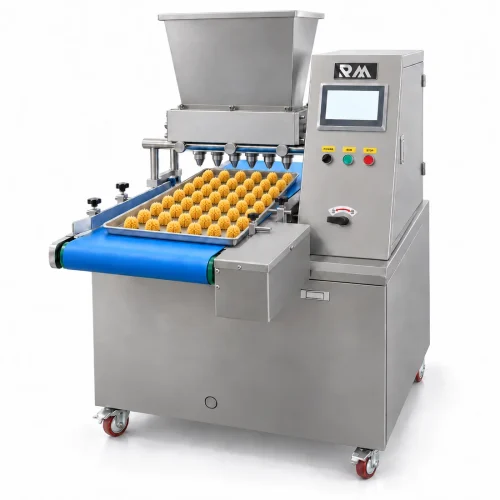
- LCD touch panel with stored programs. The panel keeps 15 memory groups and stores up to 40 sets of production data, so an approved pattern can be called back rather than rebuilt.
- Automatic pattern control. The screen runs the drawing sequence; the operator confirms the tray size and starts the cycle.
- Adjustable tray guide rails. Locking knobs set the rails to the tray width, which is the main mechanical change between products.
- Stainless steel body and hopper. The hopper and dough-contact parts are stainless, so the machine can be cleaned down between products without corrosion.
- Mobile base. Heavy-duty casters with brakes let the machine be repositioned for cleaning or line changes, then locked for production.
- Physical start and stop. Motor start and stop are on the panel alongside the touchscreen, so the machine can be halted without working through the screen.
Specifications
| Item | GD-CO400Z | GD-CO600Z |
|---|---|---|
| Application | High-relief Jenny cookies and 3D butter cookies | High-relief Jenny cookies and 3D butter cookies |
| Forming method | Rotating nozzle extrusion with reciprocating head | Rotating nozzle extrusion with reciprocating head |
| Belt width | 420 mm | 620 mm |
| Overall size | 93 × 155 × 141 cm | 113 × 155 × 141 cm |
| Rated power | 1.2 kW | 1.2 kW |
| Power supply | 220V / 50Hz | 220V / 50Hz |
| Net weight | 350 kg | 450 kg |
| Control | LCD touch panel | LCD touch panel |
| Program memory | 15 memory groups, up to 40 data sets | 15 memory groups, up to 40 data sets |
| Body and hopper | Stainless steel | Stainless steel |
| Mobility | Casters with brakes | Casters with brakes |
Nozzle count, nozzle set supplied and rated output are confirmed with the quotation, because they change with the product and the belt width you select.
Where It Fits in a Cookie Line
The machine forms the cookie and nothing else. A typical layout runs:
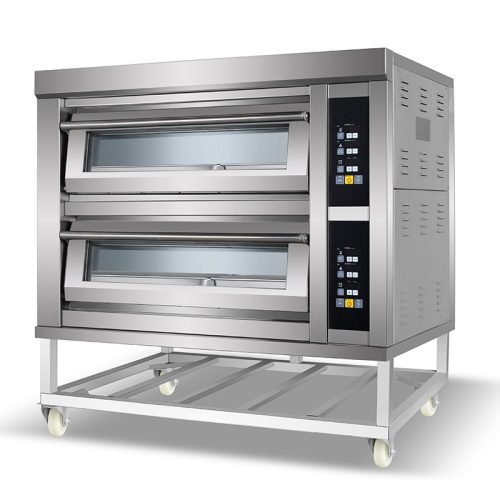
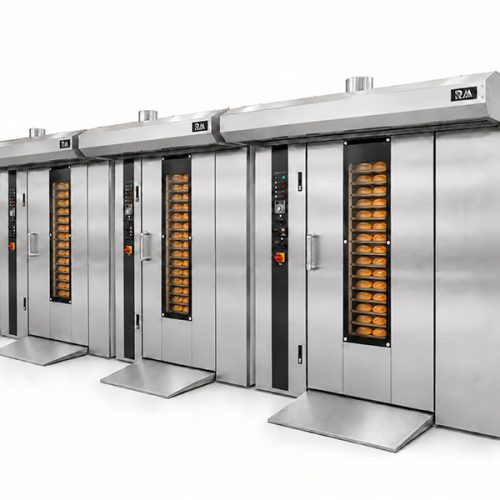
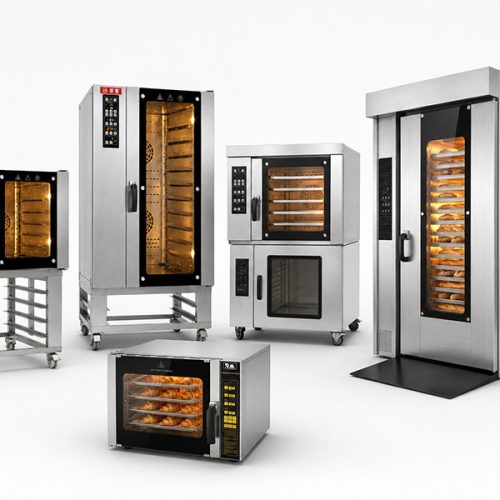
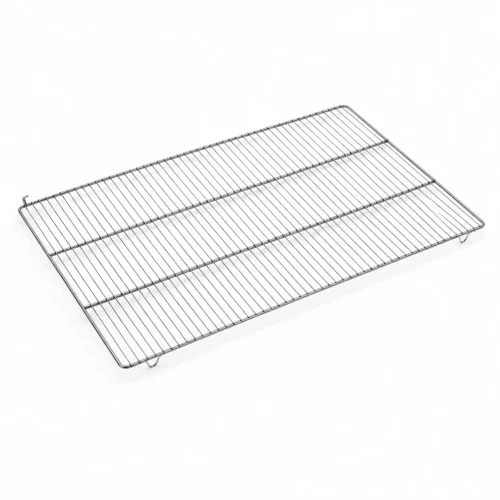
Planetary mixer → Jenny cookies machine → four à étagères rotatives or tunnel oven → cooling racks → packing
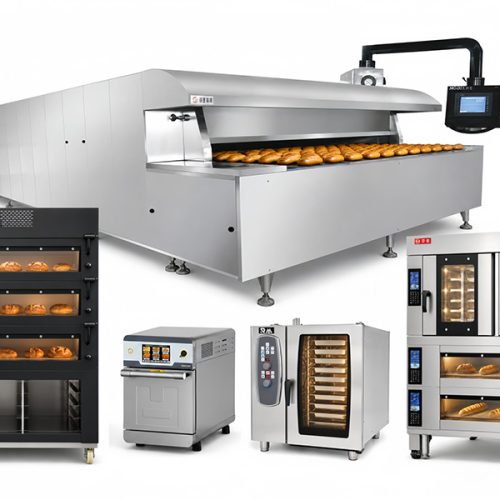
As a bakery cookies machine it covers the forming stage only: mixing, baking, cooling and packing are separate equipment and are not included unless quoted as part of a project. The machine can be placed directly before a rack oven or a tunnel oven — send us the tray size and the discharge height you are working to and we will confirm the transfer arrangements.
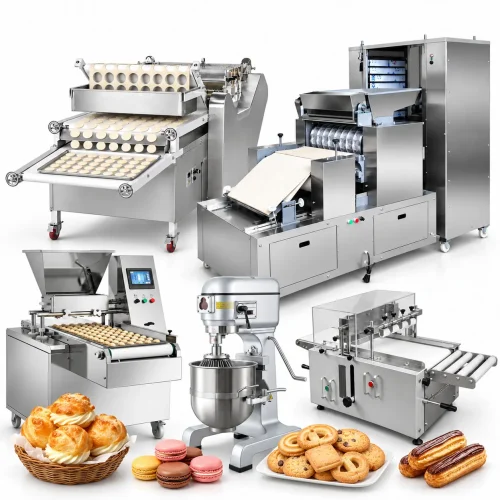
R&M supplies cookie equipment as single units or as a configured line from mixer to packing. Where a bakery is buying the downstream cookie making equipment at the same time, the forming stage and the oven capacity are sized together rather than in sequence.
For a bakery running a mixed range, the usual pattern is to keep a standard depositor on everyday butter cookies and use the Z-series for the shapes that carry the brand. Where the premium range is the whole business, one machine covers it.
Buying a Cookies Machine for Gift-Box and Premium Output
Three questions decide the configuration:
- Which tray do you run? Belt width follows the tray: 420 mm or 620 mm class.
- How many pieces per tray, and how many trays per shift? This sets the nozzle count and the cycle time.
- What pattern, at what finished weight? The pattern and the deposit weight are program parameters; both should come from an approved sample.
This is commercial cookie machine equipment rather than a bench unit — allow production space for tray loading and unloading on both sides, cleaning access around the head, and a level floor. The machine is mobile on casters, but it is not a tabletop appliance.
Send a photo or sample of the cookie you want to produce, the tray dimensions you use, and your shift target. We will confirm the model, the nozzle set and the program settings, and quote it as one package. You can also review the wider cookies and biscuit machine range before confirming the configuration.
Foire aux questions
How is this different from your standard cookie depositor?
The standard machine deposits from a rotating base and produces shallow swirls and rosettes. This machine adds a reciprocating head with turning nozzles, so the dough is laid down in layers and the finished cookie has a deeper, three-dimensional profile. Both are forming machines designed to sit before the oven; the difference is the pattern they can hold.
Can it also make ordinary butter cookies and spritz shapes?
Yes. The everyday butter cookie and spritz profiles run on the same machine, so a bakery does not need separate equipment for the standard range and the gift-box range.
Can I change the pattern without buying new tooling?
Yes — the pattern is held in the program and in the nozzle motion, so a different design is a different program rather than a new mould. That is what separates this cookies maker from machines that need a new die for every shape. Custom nozzles are available where a design needs a specific opening; those are confirmed against your sample.
What dough does it need?
Butter-rich dough, firm enough to hold the ridges the nozzle cuts. The practical limit is temperature consistency: dough that is too warm slumps after depositing and closes up in the oven, and dough that is too cold tears as the nozzle turns. We recommend a trial on your own formula before the nozzle set is finalised.
Does it bake the cookies?
No. The cookies machine deposits the shaped dough onto trays and stops there. Baking is done in a rack oven or a tunnel oven, and cooling and packing are separate stages.
How many nozzles are supplied, and can I run more than one row?
The nozzle set is configured to your tray and your product, so the count is confirmed with the quotation rather than fixed. Send the finished cookie diameter, the spacing you want and the tray size, and we will propose the layout.
Can it produce two different doughs in one tray?
Two-tone and three-tone work is done by preparing the doughs separately and loading them in sequence — plain, matcha and chocolate in one assortment is a common requirement. Tell us the combination and we will confirm the handling on the machine.
How is the machine shipped, and what space does it need?
The frame is mobile on braked casters but weighs 350 kg on the GD-CO400Z and 450 kg on the GD-CO600Z, so allow a level floor and access for a pallet truck or forklift on delivery. Packing details and container loading are confirmed with the quotation — send your destination port and quantity.
What information do you need for a quotation?
A photo or sample of the finished cookie, the tray dimensions you use, the finished weight and diameter, the patterns you want to run, your target trays per shift, and the destination country. The sample decides the nozzle set and the program, so it gets you the firmest figure.
About Price
A cookies machine price depends on the configuration rather than on the model number: the belt width, the number of nozzles in the set, any custom nozzle openings, the memory configuration and the packing method for export. Quoting a Jenny cookie machine without knowing your tray and your pattern would produce a figure that has to be revised later, so send the product details first and we will quote the machine, the nozzle set and the spares as separate items. If you are comparing suppliers, compare the nozzle set and the belt width before comparing headline prices.
Request a Quotation
Send a photo or sample of the cookie, your tray dimensions and your shift target. We will confirm whether the GD-CO400Z or the GD-CO600Z suits your layout, specify the nozzle set and return a quotation with packing and lead time.