



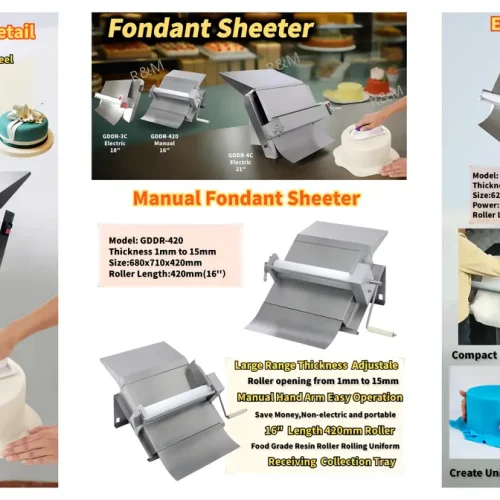
Machine à étaler le fondant — Électrique et manuelle, rouleaux de 16 à 21 pouces
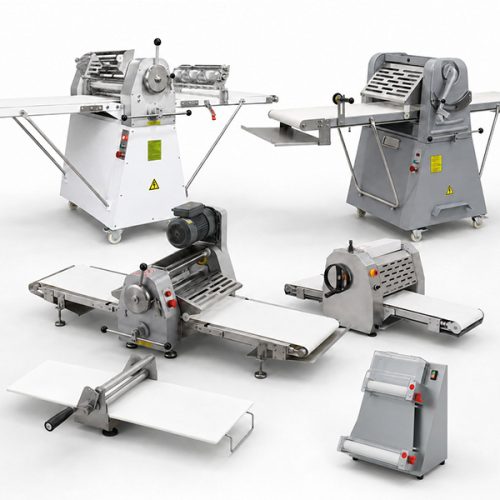
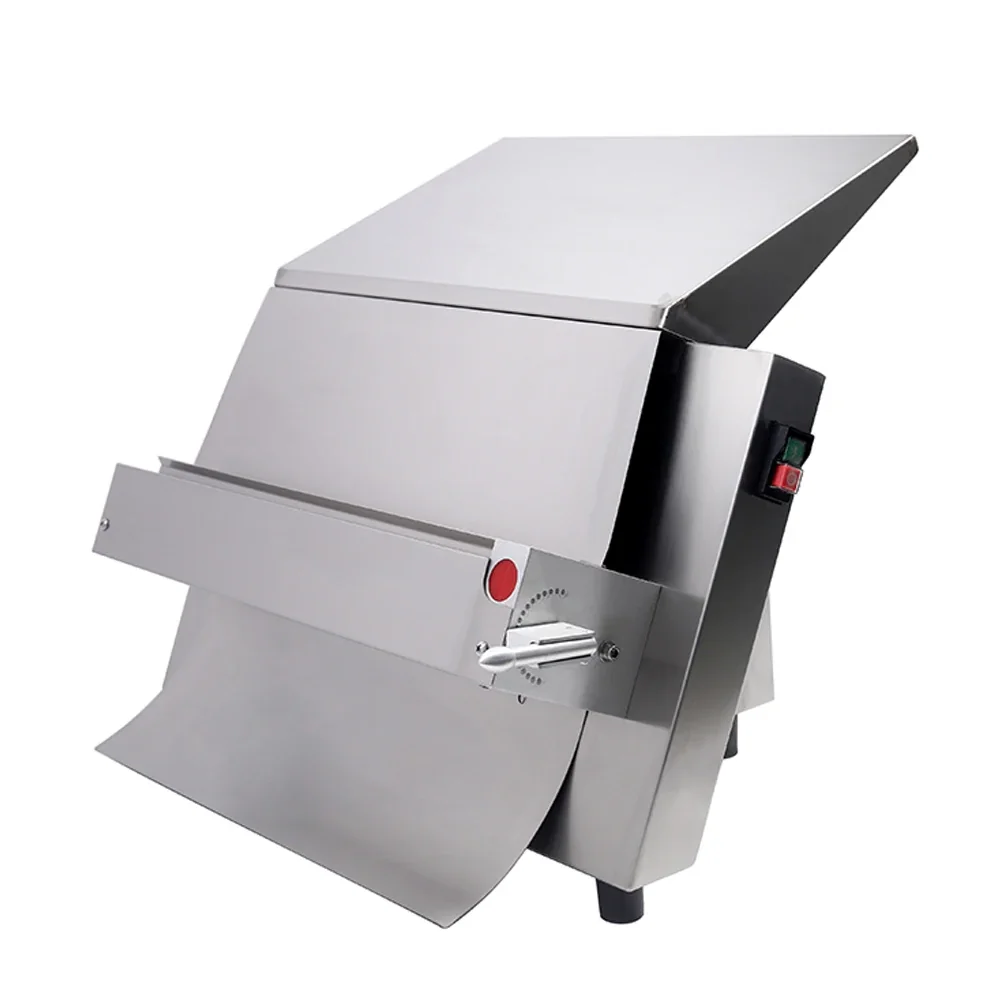
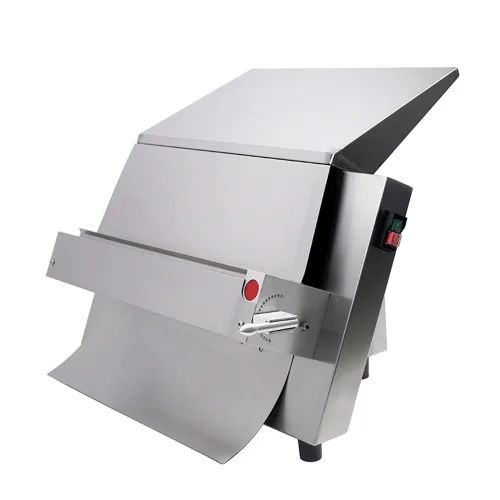
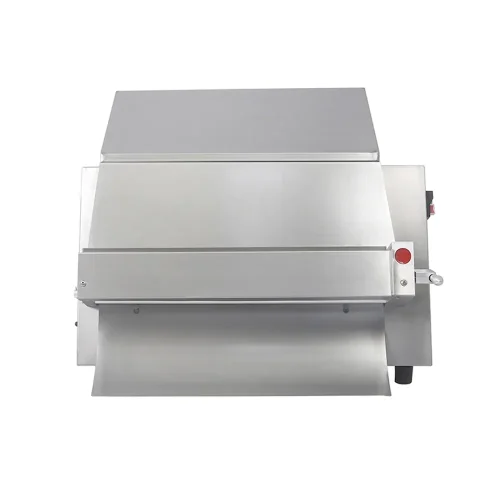
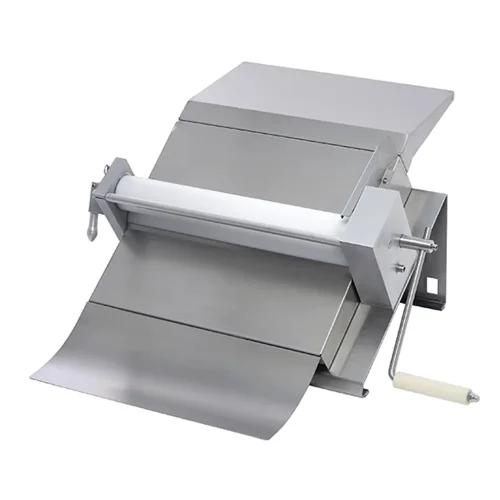
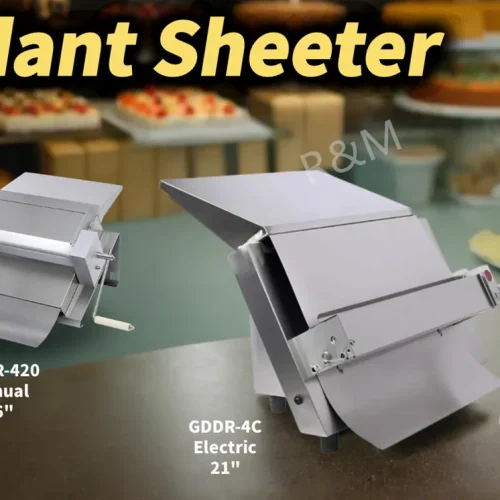
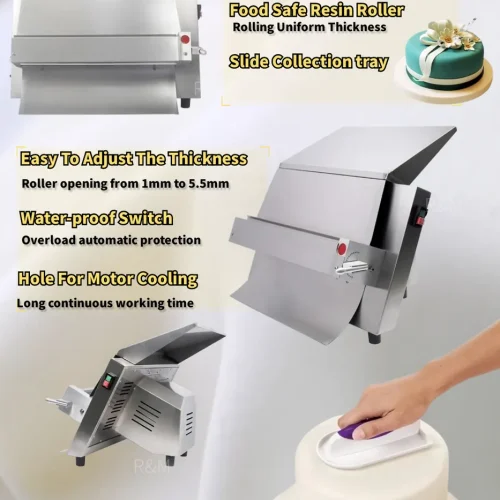
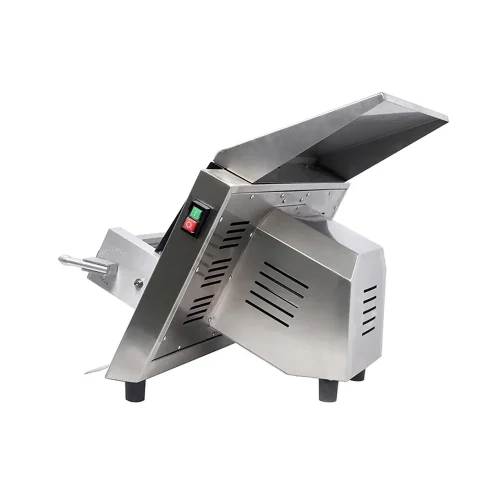
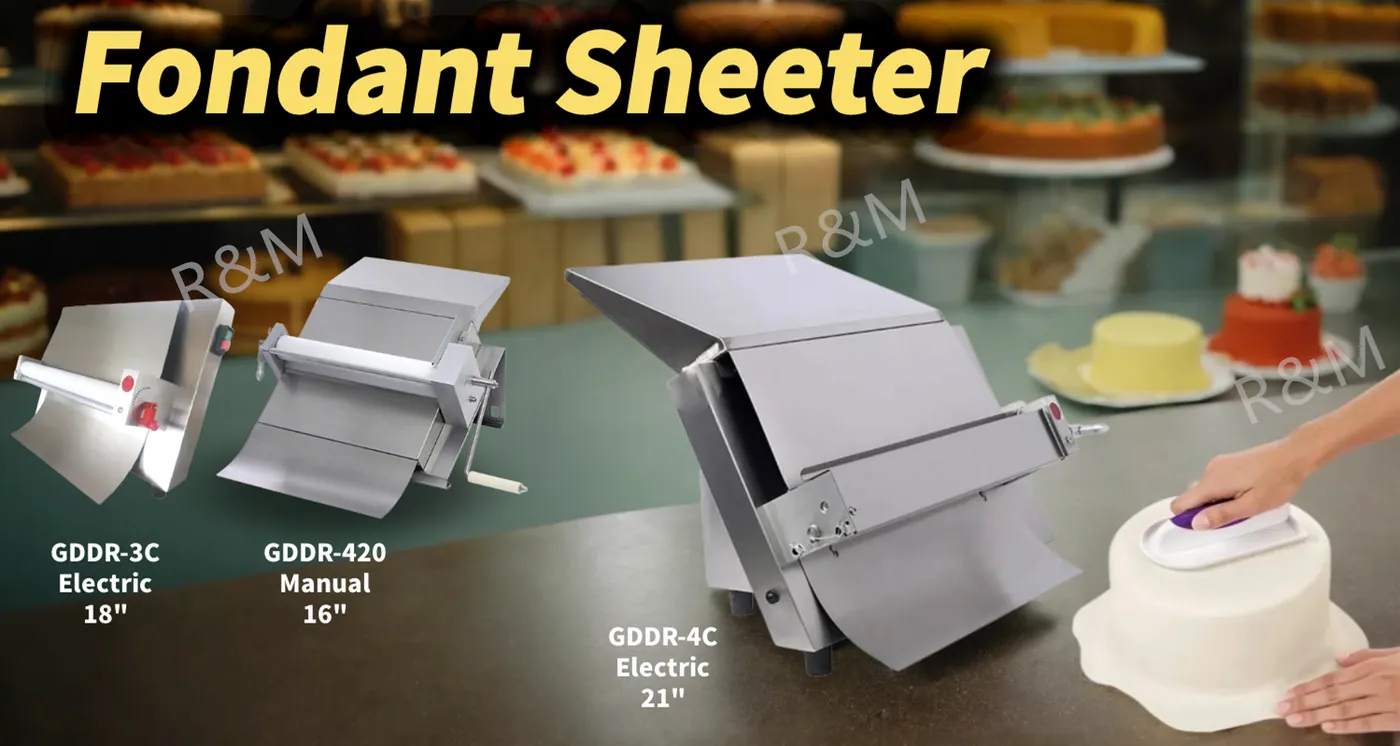
Three fondant sheeter models — two electric (GDDR-4C and GDDR-3C) and one manual (GDDR-420) — for cake decorating, fondant icing production, and sugar paste sheeting. The electric models produce sheets from 1 to 5.5mm at up to 120 pieces per hour; the manual model sheets from 1 to 15mm. Choose by roller size: 21 inches, 18 inches, or 16 inches. 220V single phase for both electric models.
Demander un devis
Indiquez la quantité souhaitée et ajoutez-la à votre liste de devis pour obtenir un devis.
Détails du produit
Machine à étaler le fondant — Électrique et manuelle, rouleaux de 16 à 21 pouces
Three fondant sheeter models — two electric (GDDR-4C and GDDR-3C) and one manual (GDDR-420) — for cake decorating, fondant icing production, and sugar paste sheeting. The electric models produce sheets from 1 to 5.5mm at up to 120 pieces per hour; the manual model sheets from 1 to 15mm. Choose by roller size: 21 inches, 18 inches, or 16 inches. 220V single phase for both electric models.
Model Specifications
| Modèle | Type | Roller Width | Thickness Range | Capacity | Machine Size (mm) | Net Weight | Tension |
|---|---|---|---|---|---|---|---|
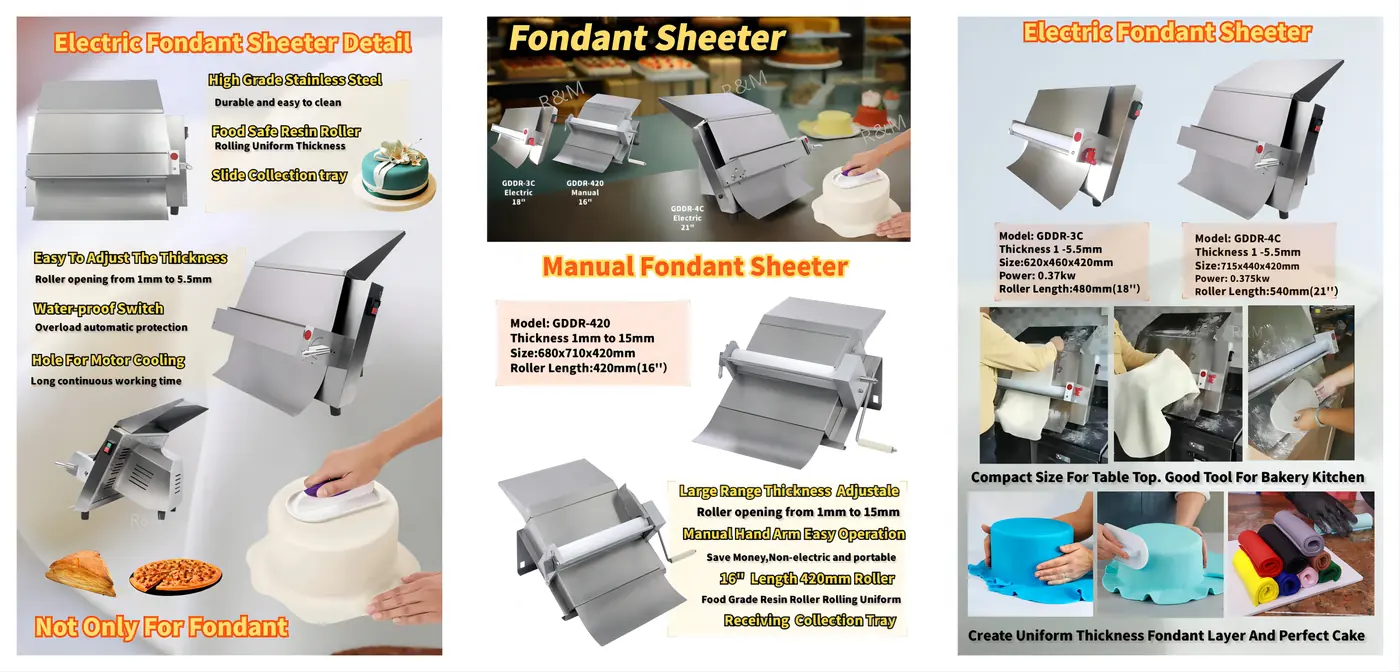
| GDDR-4C | Electric | 540mm (21″) | 1–5.5mm | 120 pcs/hr | 715×440×420 | 36.5 kg | 220V/50Hz |
| GDDR-3C | Electric | 480mm (18″) | 1–5.5mm | 120 pcs/hr | 620×460×420 | 30 kg | 220V/50Hz |
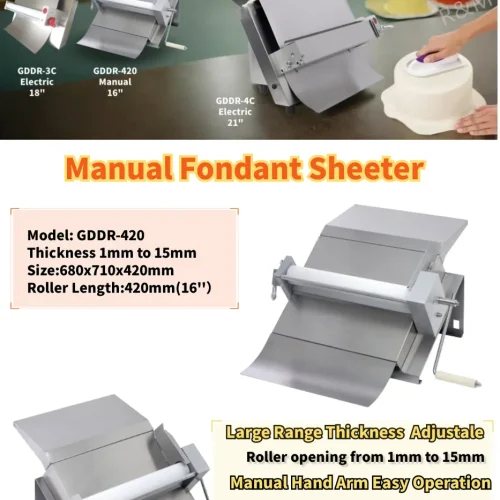
| GDDR-420 | Manual | 420mm (16″) | 1–15mm | 120 presses/hr | 680×710×420 | 21 kg | None |
Contact us for pricing and export availability.
What a Fondant Sheeter Does Differently from a Dough Sheeter
A standard bread or pastry dough sheeter is built around flour-based dough — higher rolling force, wider thickness range, PVC or stainless steel contact surfaces. A fondant sheeter is designed around the specific properties of sugar paste and fondant icing: lower rolling force, fine thickness control at the thin end (1–2mm for cake covering sheets), and non-stick surface materials that prevent sugar paste from tearing.
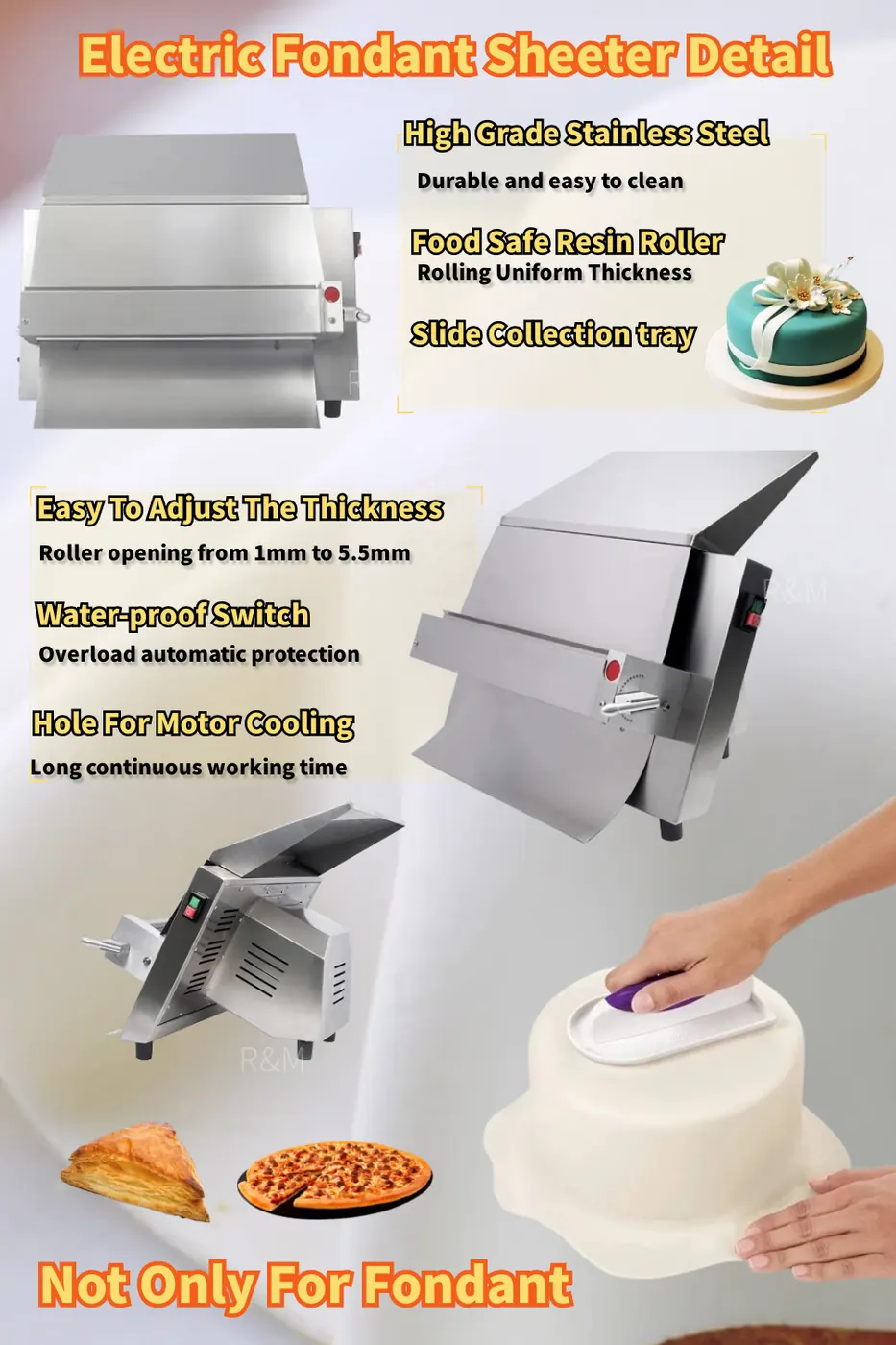
The GDDR-4C, GDDR-3C, and GDDR-420 are built for exactly this application. The 1–5.5mm range on the electric models covers the typical fondant cake covering thickness — most cake decorators work in the 3–5mm range for smooth coverage, with thinner sheets for fine decorative elements. The manual GDDR-420 gives a wider range (1–15mm) for mixed applications including fondant and softer dough types.
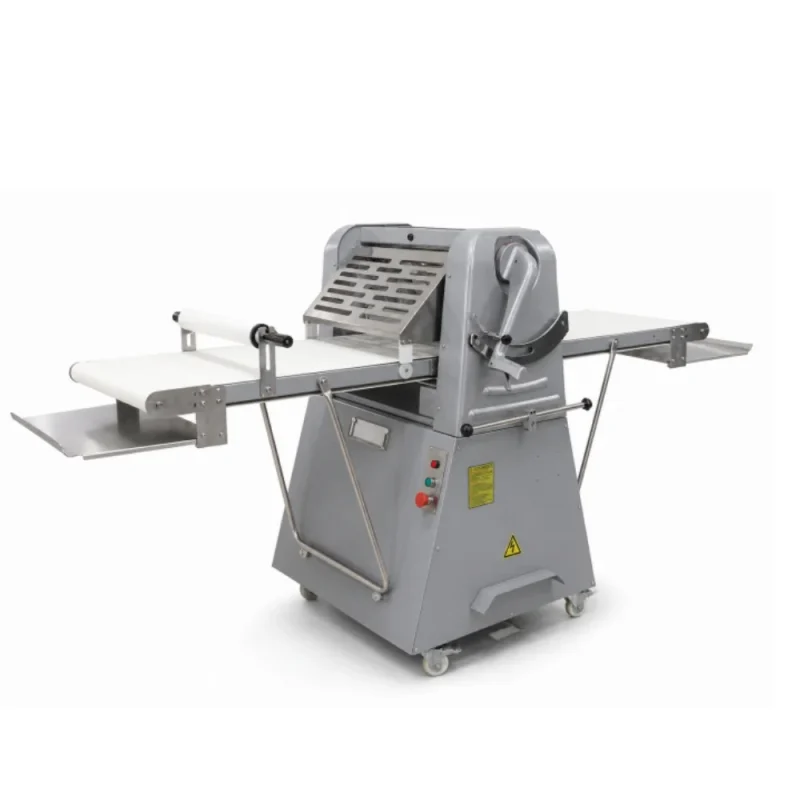
For kitchens that mostly roll bread and pastry dough rather than sugar paste, a mini tabletop dough sheeter is the compact alternative for small-batch lamination.
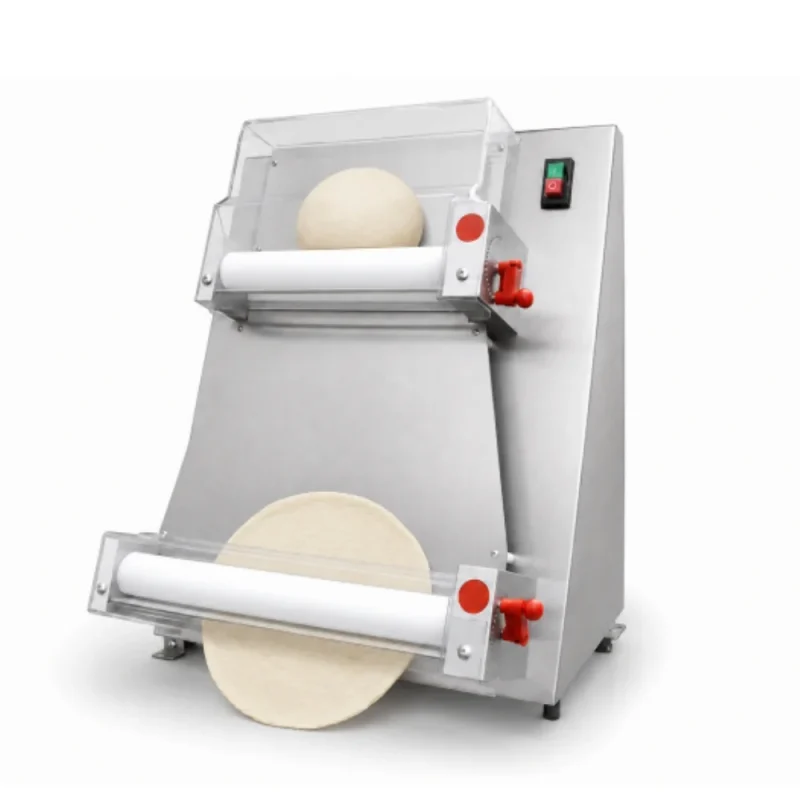
For pizza bases rather than fondant sheets, a pizza dough roller delivers the higher rolling force that flour dough requires.
For a general introduction to sugar paste and its uses, see the independent article on fondant icing.
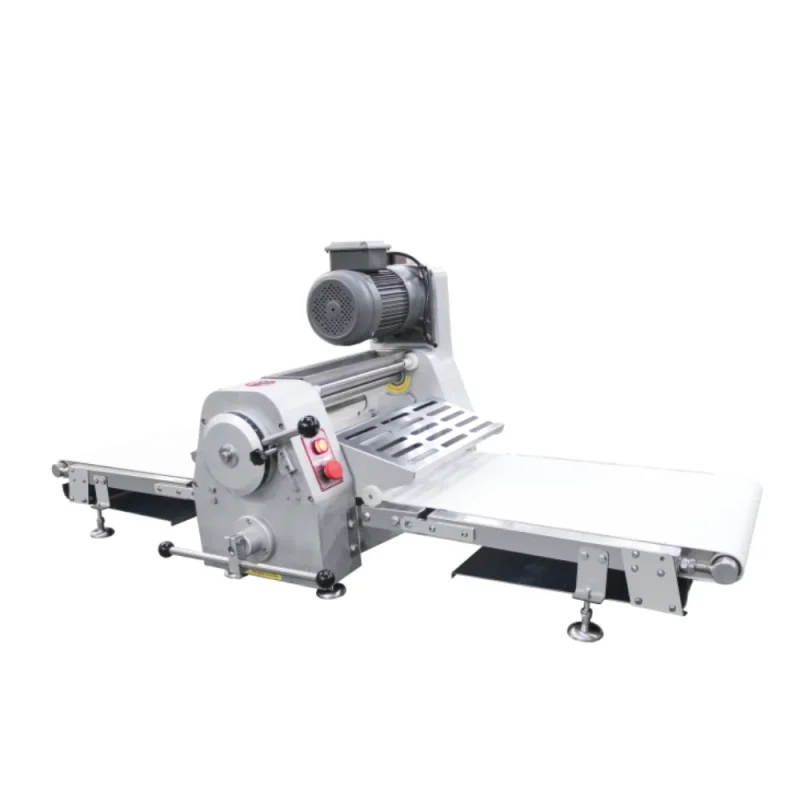
GDDR-4C — The Large Electric Fondant Roller Machine
At 540mm (21 inches), the GDDR-4C is the widest fondant sheeter in the range. A wider roller produces wider sheets in a single pass — useful for covering larger cake tiers (10-inch, 12-inch) with minimal joins. The machine weighs 36.5kg, sits on a standard prep counter, and runs on 220V single phase.
Electric fondant roller — how it operates: The operator feeds fondant into the machine, which passes it between stainless steel rollers at the gap set by the adjustment mechanism. The belt moves the fondant sheet through at a consistent speed. The result is a flat, even sheet at the specified thickness — more consistent than hand rolling and faster for production quantities.
At 120 pieces per hour, the GDDR-4C is suited to a cake studio or bakery producing custom cakes daily or handling volume orders — wedding season, event bakeries, wholesale cake supply.
GDDR-3C — The 18-Inch Compact Electric Fondant Sheeter
The GDDR-3C is 480mm (18 inches) wide and weighs 30kg. The lighter weight and smaller footprint (620×460mm) make it the more practical choice for a smaller studio or a kitchen where counter space is limited.
The roller width — 18 inches — comfortably covers most standard cake tier sizes up to approximately 10 inches in diameter.
Set up on a standard 60cm prep counter, the GDDR-3C still leaves room for a fondant tub and a work board beside it. One decorator can roll fondant for two or three celebration cakes in a single session, then lift the 30kg machine onto a shelf when the counter is needed for assembly. It is the electric model most often chosen for small cake studios that want consistent output without a large footprint.
For a one-person cake decorating studio or a bakery where fondant work is a regular but not dominant activity, the GDDR-3C covers the requirement at a smaller machine size.
Both the GDDR-4C and GDDR-3C produce the same 1–5.5mm thickness range and the same 120 pieces per hour output. The only difference is roller width and machine size.
GDDR-420 — The Manual Fondant Sheeter
The GDDR-420 is hand-operated — no motor, no power connection. At 21kg, it is the lightest of the three fondant models and requires no electrical installation.
The 1–15mm thickness range is wider than the electric models, accommodating fondant at various stages of preparation as well as softer dough applications. For a cake decorator who works with both fondant and soft pastry, the GDDR-420 provides multi-purpose manual rolling capability.
At 120 presses per hour, the manual output matches the electric models in rated capacity — but the operator provides the drive force. For a small studio producing decorative cakes a few days a week, this is sufficient. For continuous high-volume output, the electric GDDR-3C or GDDR-4C removes operator fatigue from the equation.
Applications
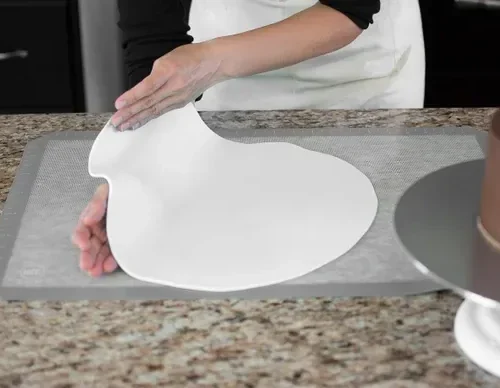
Cake decorating and fondant icing: The primary application. Roll fondant sheets for tiered cakes, figure sculpting, and fine cake decoration. The precise 1–5.5mm range on the electric models covers smooth fondant coverage at any cake size from cupcakes to large celebration cakes.
Sugar paste and gum paste: Both electric models handle sugar paste and gum paste — the same rolling properties as fondant. Gum paste rolled to 1–2mm produces thin decorative elements including flowers, bows, and lettering.
For gum paste flowers, roll the paste to 1–2mm so the petals stay thin and flexible, then shape each petal while the paste is still workable. Because the roller gap stays constant across the full width, every petal comes out the same thickness — which matters when assembling layered flowers from several identical petals. The non-stick resin surface also reduces the need to dust cornflour between the paste and the rollers.
Marzipan: Marzipan sheeting for covering fruit cakes and as a base layer under fondant. The electric machines produce consistent marzipan sheets in the 4–6mm range appropriate for cake covering.
Pasta and soft dough (GDDR-420): The manual GDDR-420’s 1–15mm range covers soft pasta dough and other light applications beyond fondant. It is the most multi-purpose of the three models.
Foire aux questions
What is the difference between GDDR-4C and GDDR-3C?
Roller width: GDDR-4C is 540mm (21 inches); GDDR-3C is 480mm (18 inches). The GDDR-4C produces wider sheets in a single pass and suits larger cake tiers. Both operate at 220V, produce 1–5.5mm sheets, and run at up to 120 pieces per hour. The GDDR-3C is lighter (30kg vs. 36.5kg) and has a smaller footprint.
Can I use a dough sheeter for fondant?
A standard bread or pastry dough sheeter is not optimized for fondant — the rolling force and surface material are designed for flour-based dough, not sugar paste. A dedicated fondant sheeter produces cleaner, more consistent fondant sheets without the tearing or sticking issues that arise from using the wrong machine.
What fondant thickness is best for cake covering?
Most professional cake decorators work at 3–5mm for smooth coverage on tiered cakes. For fine decorative elements, 1–2mm. The electric fondant sheeter gives you consistent control across this range.
Is the GDDR-420 manual sheeter suitable for commercial cake production?
At 120 presses per hour, it handles small to moderate production volumes. For a small cake studio producing 5–15 custom cakes per week, the GDDR-420 is practical and affordable. For higher volumes where the machine is in continuous use, the electric models remove operator fatigue.
Can the fondant sheeter be used for other materials?
Yes. The electric models handle sugar paste, gum paste, and marzipan with the same rolling properties as fondant. The manual GDDR-420’s wider 1–15mm range also covers soft pasta dough and lighter applications — the most multi-purpose of the three models.
What is the lead time?
Contact us with your model, quantity, and destination. We will confirm lead time and pricing within one business day.
Get a Quote
Electric fondant roller machine or manual fondant sheeter. Factory-direct pricing.
The fondant sheeters are part of the commercial dough sheeter range — factory-direct with export support.