





Tabletop Donut Fryer RMT-102 RMT-103 | Semi Auto Donut Machine 3 Shapes
Request a Quote
Enter the quantity you need and add to your quote list for pricing inquiries.
Detalles del producto
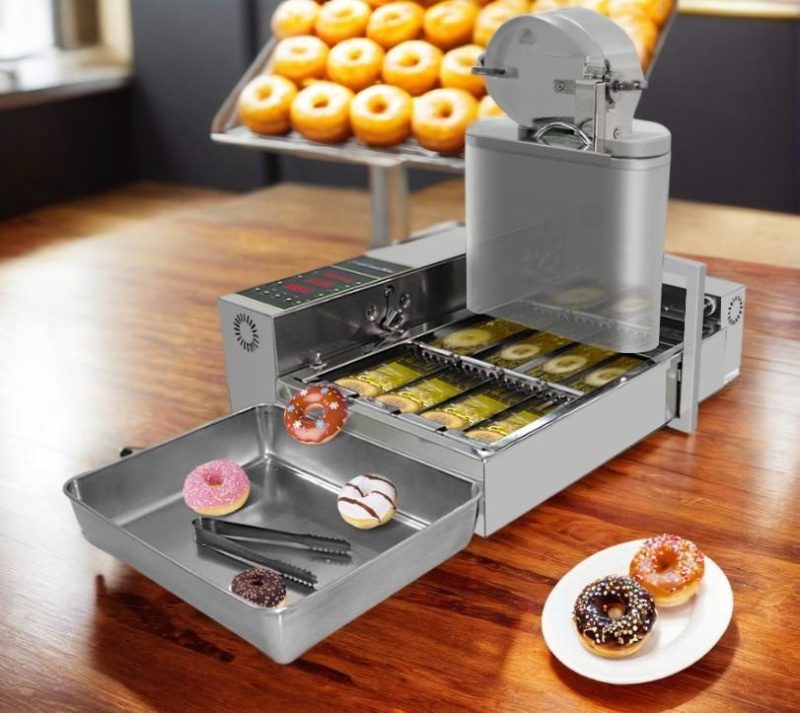
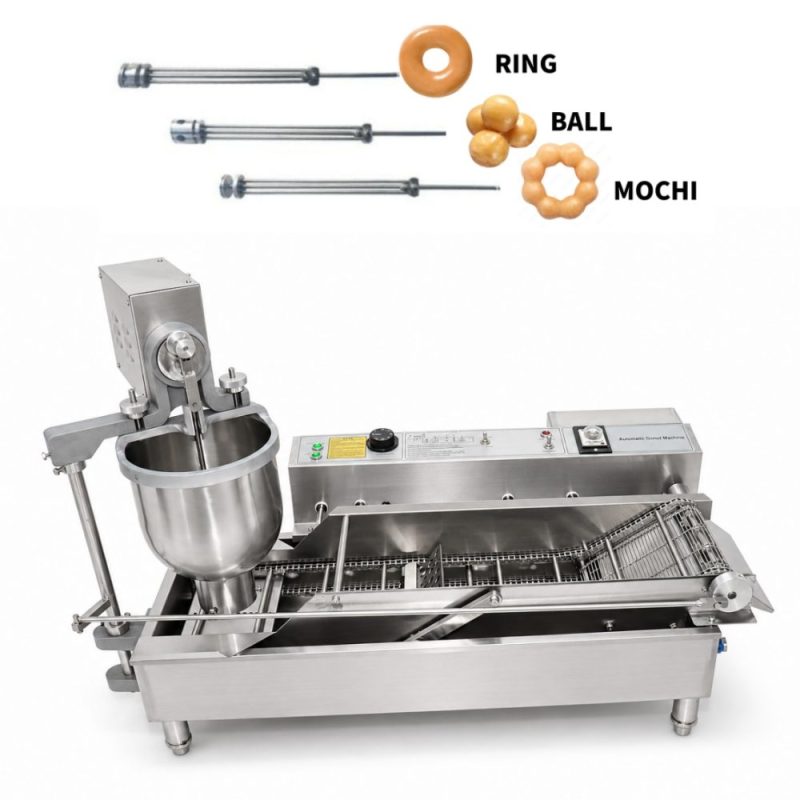
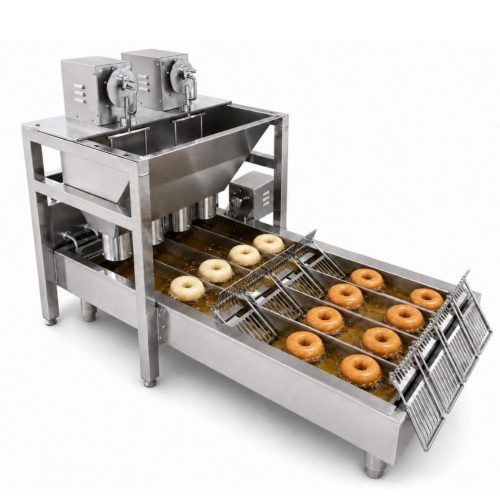
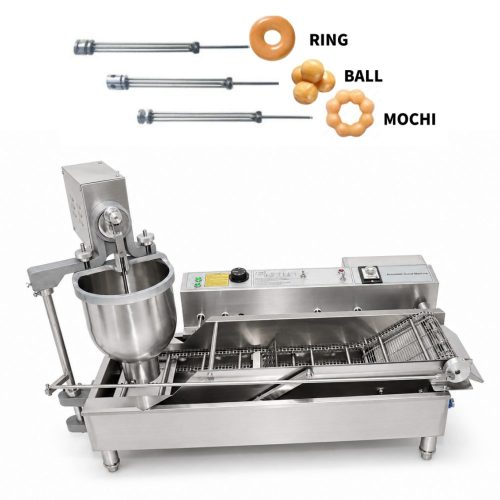
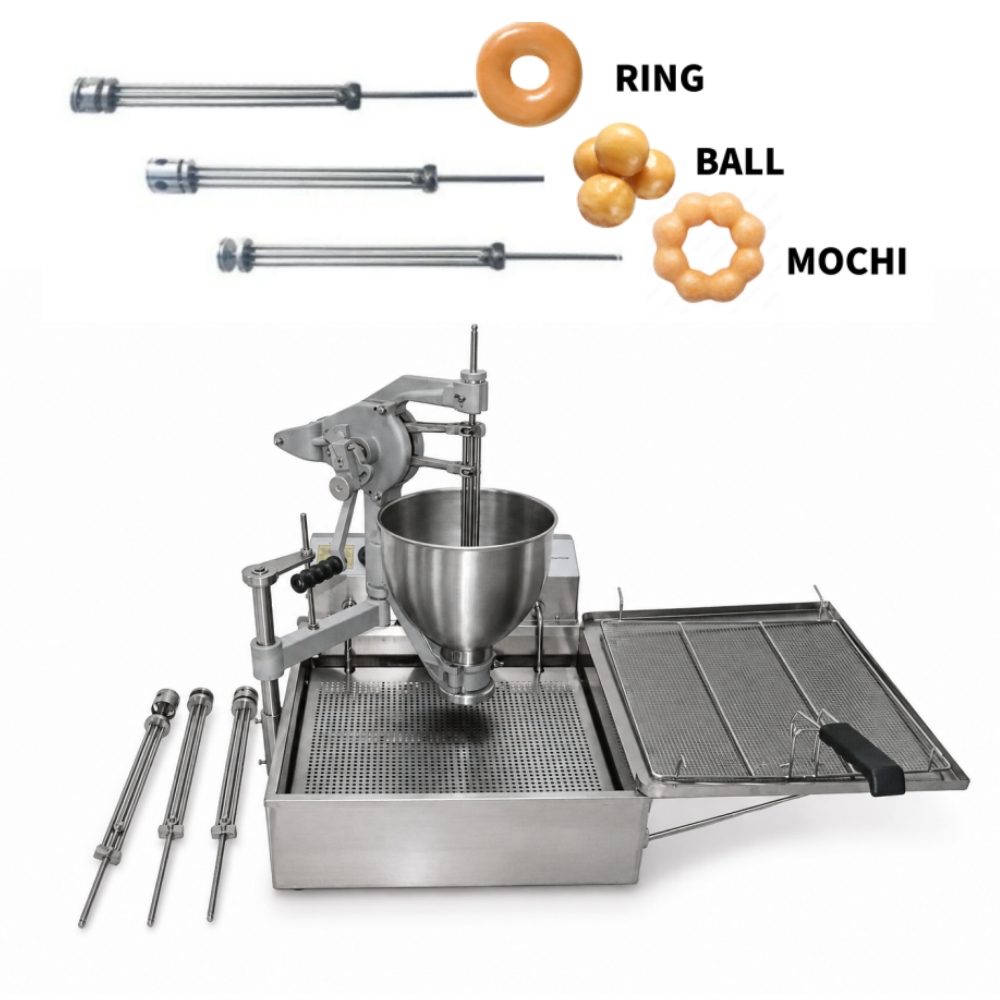
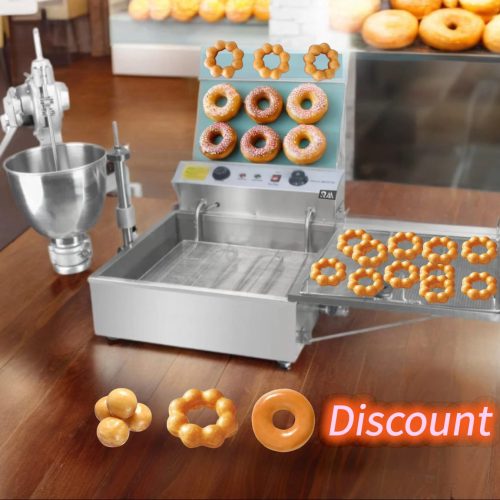
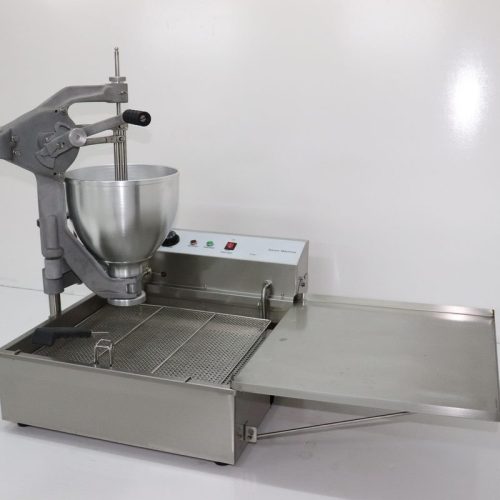
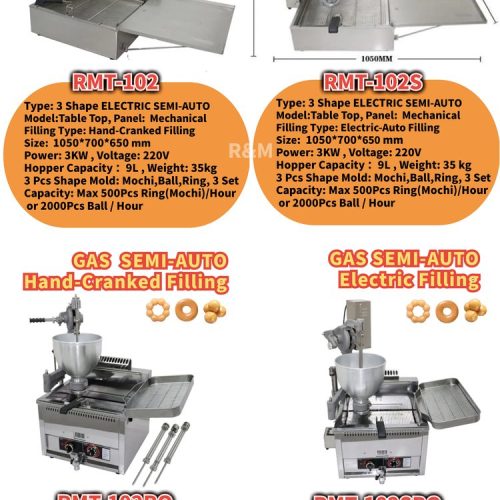
The tabletop donut fryer range covers eight semi-automatic models across two formats — countertop (RMT-102 series) and vertical stand (RMT-103 series). All eight include three shape molds for mochi, ball and ring donuts, and all offer a choice between hand-cranked and electric batter filling.
Semi-Automatic: What the Operator Does
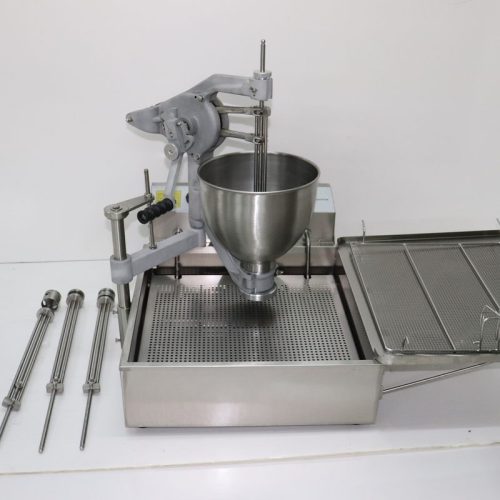
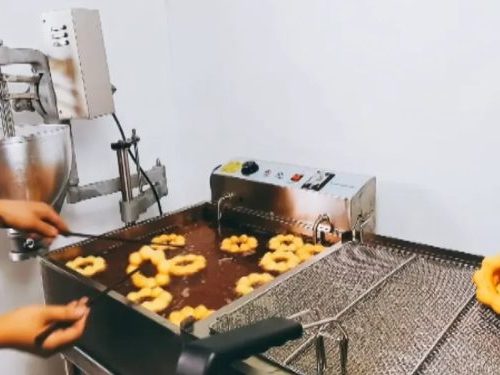
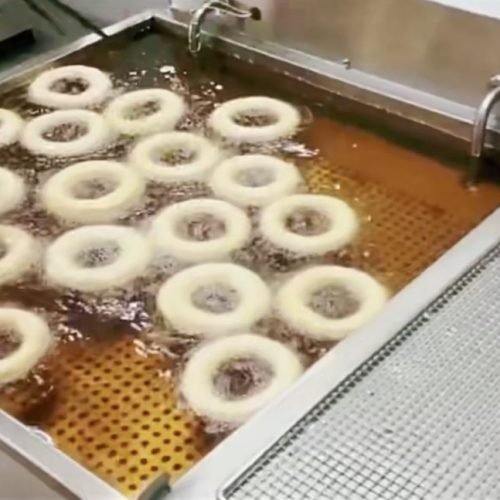
On a semi-automatic tabletop donut fryer, the operator controls batter dispensing — either by turning a hand crank or pressing an electric filling switch. Frying, timing and removal are managed manually with the supplied fryer mesh. This gives the operator direct control over portion timing and placement, at the cost of higher labour input compared with a fully automatic machine.
For small shops, the trade-off often makes sense: lower capital cost, simpler mechanics, fewer parts to service, and a smaller footprint.
Eight Models: Full Comparison
| Modelo | Format | Heating | Filling | Size (mm) | Peso |
|---|---|---|---|---|---|
| RMT-102 | Table top | Electric 3 kW | Hand-cranked | 1050×700×650 | 35 kg |
| RMT-102S | Table top | Electric 3 kW | Electric auto | 1050×700×650 | 35 kg |
| RMT-102RQ | Table top | Gas 50 W | Hand-cranked | 950×650×550 | 40 kg |
| RMT-102SRQ | Table top | Gas 50 W | Electric auto | 950×650×550 | 45 kg |
| RMT-103 | Vertical stand | Electric 3 kW | Hand-cranked | 1050×700×1400 | 60 kg |
| RMT-103S | Vertical stand | Electric 3 kW | Electric | 1050×700×1400 | 60 kg |
| RMT-103RQ | Vertical stand | Gas 50 W | Hand-cranked | 950×650×1250 | 70 kg |
| RMT-103SRQ | Vertical stand | Gas 50 W | Electric | 950×650×1250 | 70 kg |
All models: 9 L hopper · 3 shape molds (mochi, ball, ring) · 220 V · max 500 pcs/hour ring or mochi, 2,000 pcs/hour ball · 3-gear thickness adjustment
Tabletop or Stand: Which Format?
- Table top (RMT-102 series) — sits on an existing work surface; lower cost; suits shops with spare counter space and lighter production schedules
- Vertical stand (RMT-103 series) — self-supporting cabinet with integrated storage below; frees counter space; better ergonomics for continuous operation; the enclosed base keeps the work area tidier
Hand-Cranked or Electric Filling?
The hand-cranked filler gives tactile control over dispensing speed and is mechanically simpler — nothing to fail electrically. The electric filler removes physical effort during long production runs and produces more consistent portion timing. For operations running under an hour of donut production per day, hand-cranked is usually sufficient. Beyond that, electric filling reduces operator fatigue noticeably.
Three Shapes on Every Model
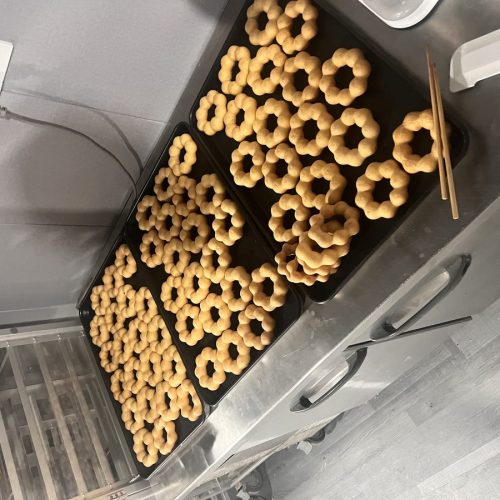
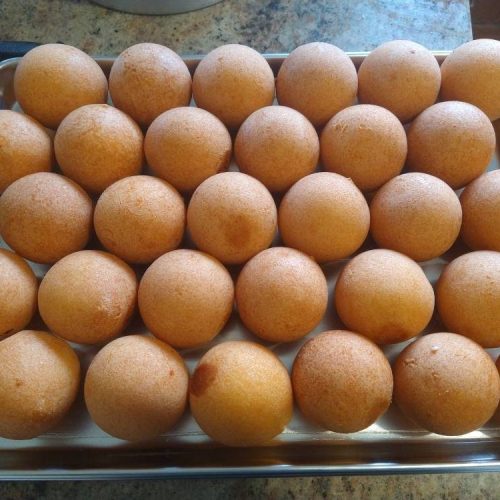
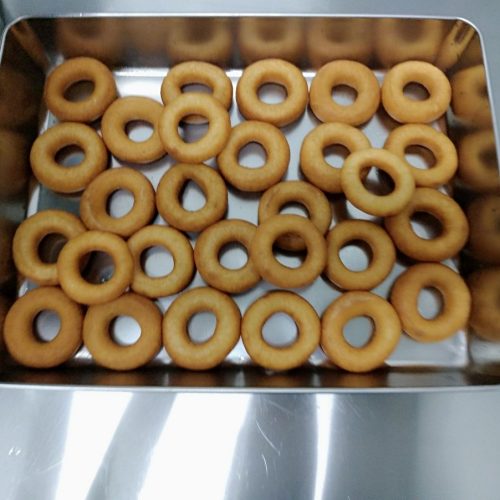
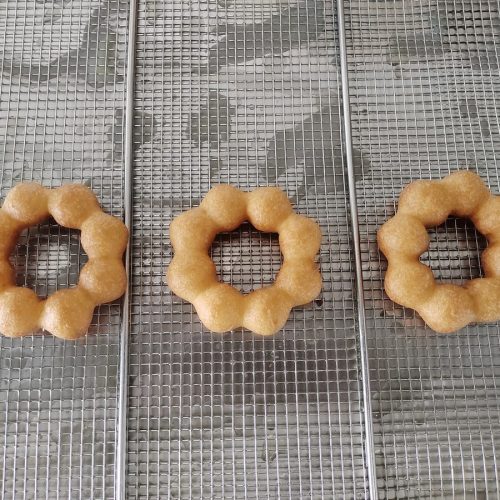
All eight tabletop donut fryer models ship with three mold sets — mochi (pon de ring), ball and classic ring. Output differs by shape: up to 500 pieces per hour for ring and mochi, and up to 2,000 pieces per hour for ball donuts, which are smaller and fry faster.
Preguntas frecuentes
What is the difference between hand-cranked and electric filling?
Hand-cranked filling requires the operator to turn a crank to dispense each portion. Electric filling dispenses at the press of a switch. Both produce identical donuts; the difference is operator effort and consistency over long runs.
Is a tabletop donut fryer enough for a small shop?
For shops producing under a few hundred donuts per day, yes. Maximum output is 500 pcs/hour for ring and mochi shapes. If you need sustained higher volume or want to free the operator for other tasks, a fully automatic machine is the better fit.
Can I upgrade from a semi-automatic to a fully automatic machine later?
The machines are separate products rather than upgradeable platforms. Many shops start with a semi-automatic unit and add an automatic machine as volume grows, keeping the semi-auto for specialty shapes or backup capacity.
What is the minimum equipment needed to start a donut shop?
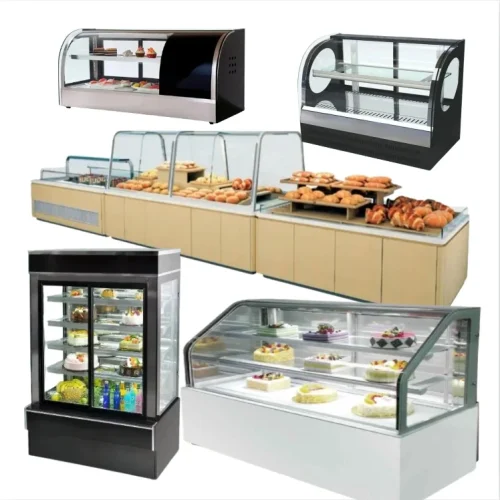
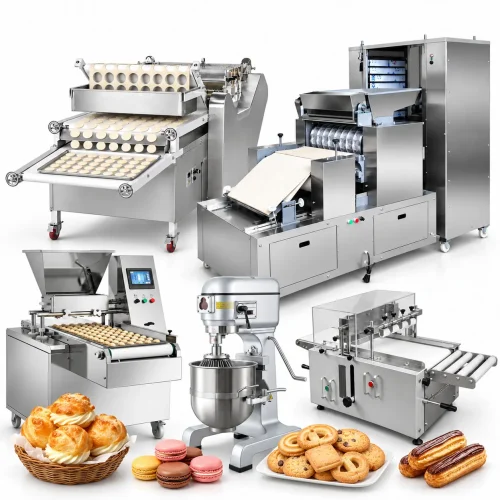
At minimum: a donut fryer, a mixer for batter preparation, and a display case. A semi-automatic tabletop fryer with three shape molds covers the production side at the lowest capital entry point. Filling injectors and glazing equipment can be added as the product range expands.
How much counter space do the tabletop models need?
The RMT-102 series measures 1050 × 700 mm or 950 × 650 mm depending on model, plus clearance for the output tray and operator access. Allow approximately 1.4 m of counter width for comfortable working.
Related Products
- Mochi Donut Machine RMT-100S — fully automatic three-shape alternative
- All Donut Machines · Maquinaria auxiliar para panadería
- Request Semi-Auto Model Pricing
Reference: doughnut production methods.