



Spray Type Dough Proofer — Precise Humidity Without a Water Tank
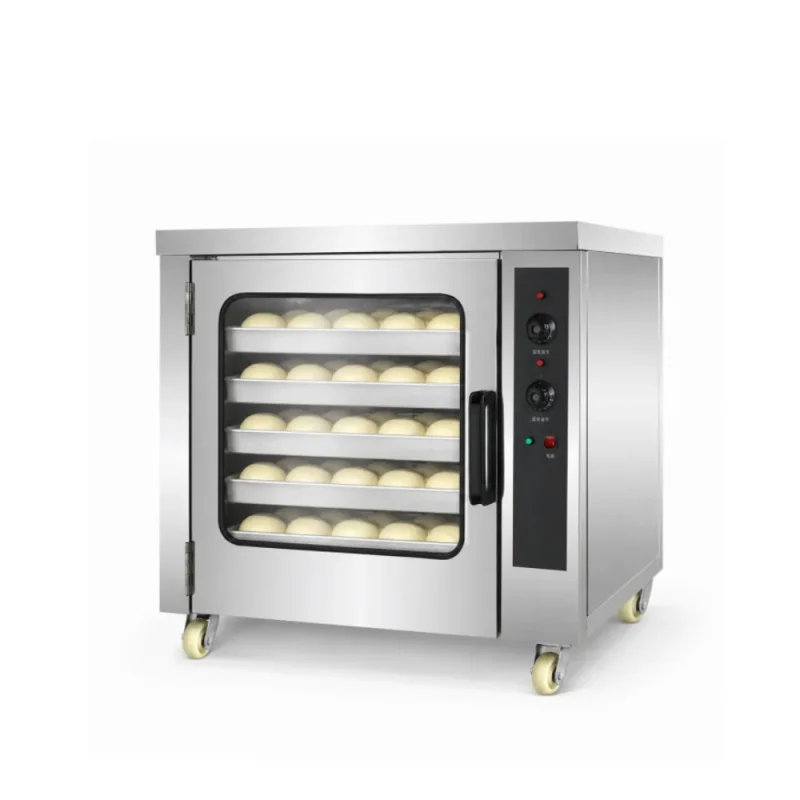
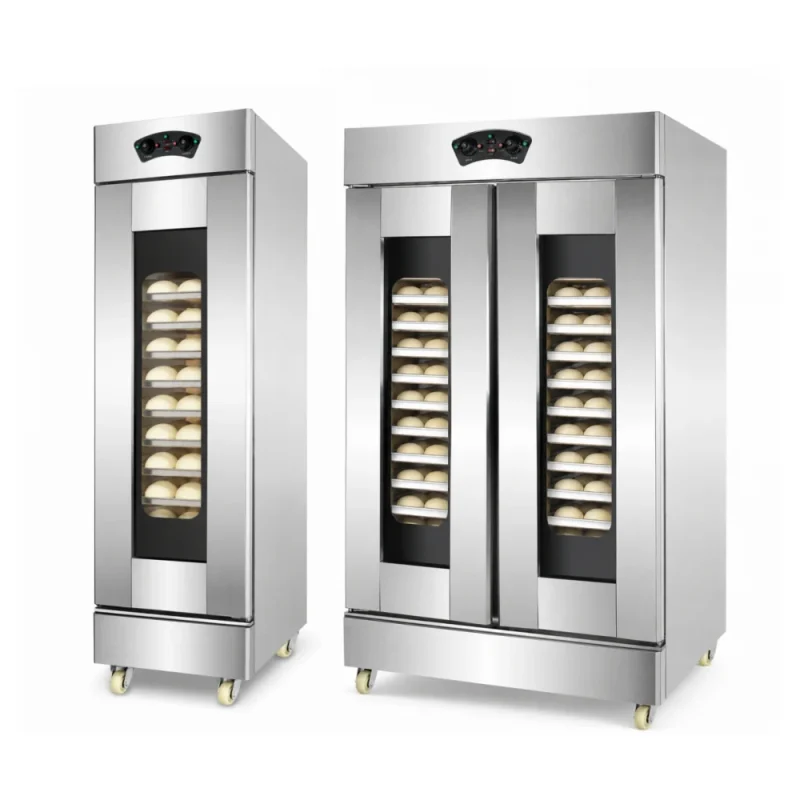
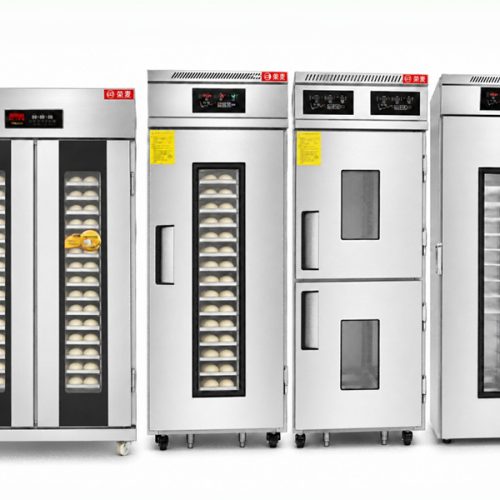
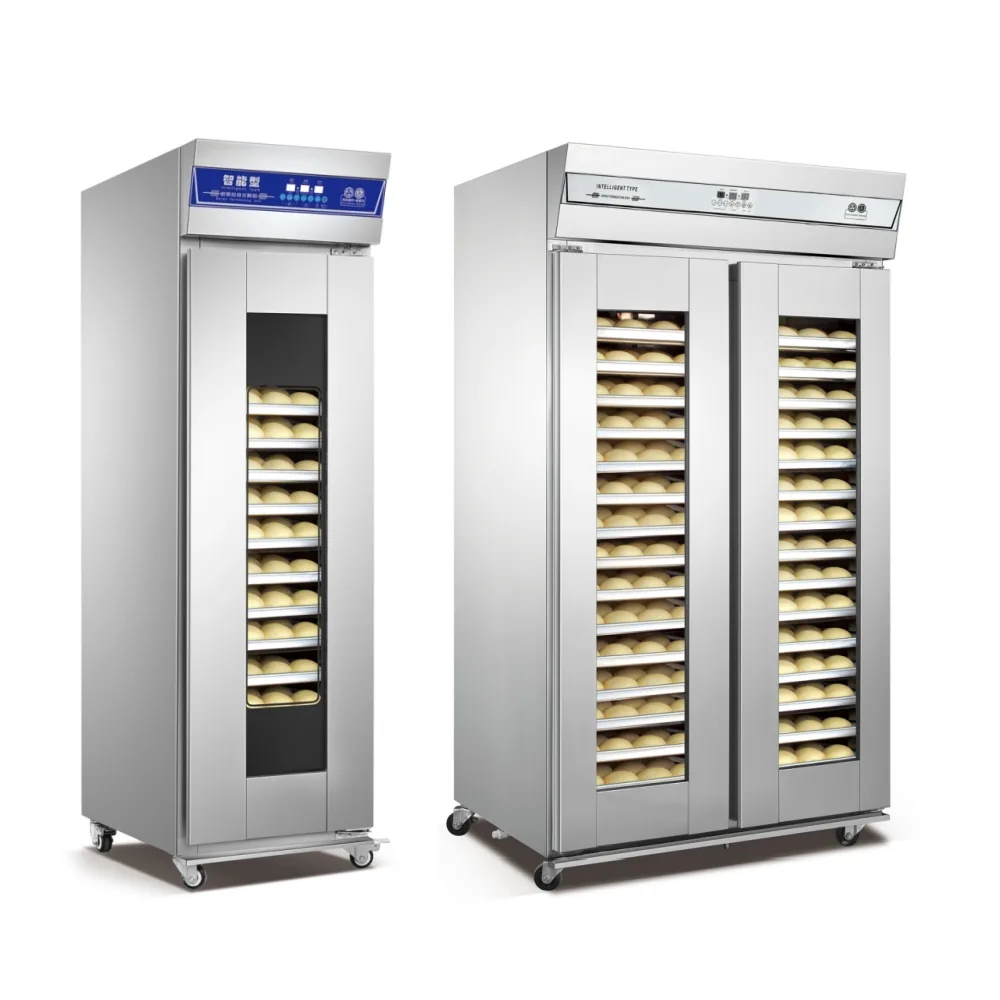
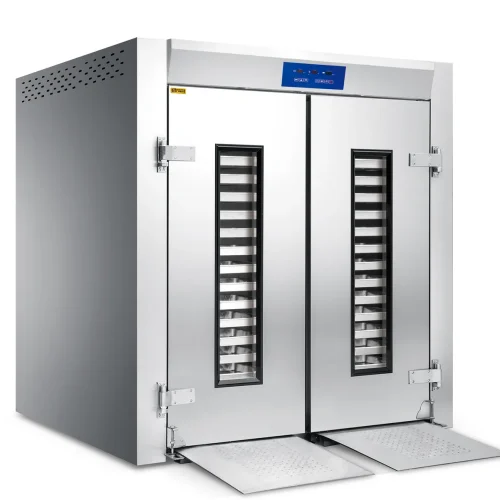
R&M’s spray type dough proofers generate humidity through a mist nozzle connected directly to a water line — no open tank to maintain, no risk of dry boiling, more precise humidity control than boiled water systems. Five models cover reach-in formats (16 and 32 trays) and roll-in formats (32 and 64 trays). Humidity range 60–100%, temperature up to 60°C. 220V.
Request a Quote
Enter the quantity you need and add to your quote list for pricing inquiries.
Detalles del producto
Spray Type Dough Proofer — Precise Humidity Without a Water Tank
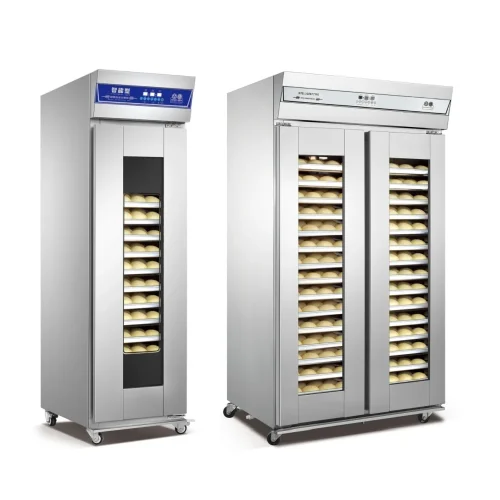
R&M’s spray type dough proofers generate humidity through a mist nozzle connected directly to a water line — no open tank to maintain, no risk of dry boiling, more precise humidity control than boiled water systems. Five models cover reach-in formats (16 and 32 trays) and roll-in formats (32 and 64 trays). Humidity range 60–100%, temperature up to 60°C. 220V.
Model Specifications
Reach-In Spray Proofers (fixed rack)
| Modelo | Trays | Dimensiones (mm) | Humidity | Temperatura | Potencia | Peso |
|---|---|---|---|---|---|---|
| PXF-16A | 16 | 520×820×1,960 | 60–99% | Room temp–50°C | 1.35KW | 150kg |
| PXF-32A | 32 | 1,000×820×1,960 | 60–99% | Room temp–50°C | 2.56KW | 162kg |
| GD-16FP | 16 | 880×550×2,000 | 80–90% | 35–40°C | 1.5KW | 84.9kg |
| GD-32FP (double door) | 32 | 1,100×880×2,000 | 80–90% | 35–40°C | 1.8KW | 126.8kg |
| GD-32FP (single door) | 32 | 1,020×750×2,000 | 80–90% | 35–40°C | 1.8KW | — |
Roll-In Spray Proofers (trolley-based)
| Modelo | Trolleys | Trays | Dimensiones (mm) | Humidity | Temperatura | Potencia | Peso |
|---|---|---|---|---|---|---|---|
| RMF-1T | 1 | 32 | 1,000×1,210×2,120 | Room–100% | Room temp–60°C | 2KW | 220kg |
| RMF-2T | 2 | 64 | 1,830×1,210×2,120 | Room–100% | Room temp–60°C | 4KW | 335kg |
All models: 220V/50Hz, stainless steel, tempered glass window, foam insulation. Contact us for pricing.
Spray vs. Boiled Water — The Core Technical Difference
Both system types do the same job: maintain a warm, humid environment for dough proofing. The mechanism is different.
Boiled water (XF series): A heating element in a water tank boils water to produce steam. The steam disperses into the cabinet. The humidity level is indirectly controlled — higher heating raises steam production. Tank needs a water supply; the float valve manages auto-fill. If the water supply is interrupted and the float valve fails, the heating element can run dry.
Spray (PXF/GD/RMF series): A solenoid valve opens on-demand from the control system, spraying a fine mist of water through a nozzle into the cabinet. No open tank — the water enters directly from the supply line and vaporizes. Humidity is controlled directly: the solenoid opens for a set interval to raise humidity to the target level and closes when it is reached.
What this means for a buyer:
- Spray systems respond faster to humidity changes — useful when products require specific humidity curves during proofing.
- No risk of a boil-dry event — there is no open tank to run dry.
- Spray systems are generally slightly higher cost than equivalent boiled water models.
- Both systems require a water supply connection at the installation location.
Understanding the Two Spray Proofer Sub-Ranges
PXF series (reach-in, 60–99% humidity, room temp–50°C): The broader humidity range (60–99%) and temperature ceiling (50°C) make these the more flexible reach-in option. For bakeries proofing a wide variety of products — including some that need lower humidity (croissants, danish) and some that need near-saturation (steam buns, baozi) — the PXF-series covers the full range.
GD series (reach-in, 80–90% humidity, 35–40°C): Narrower range, optimized for standard bread and bun proofing at the typical commercial temperatures. The GD-16FP at 84.9kg is notably lighter than the PXF-16A at 150kg — easier to relocate if the kitchen layout changes.
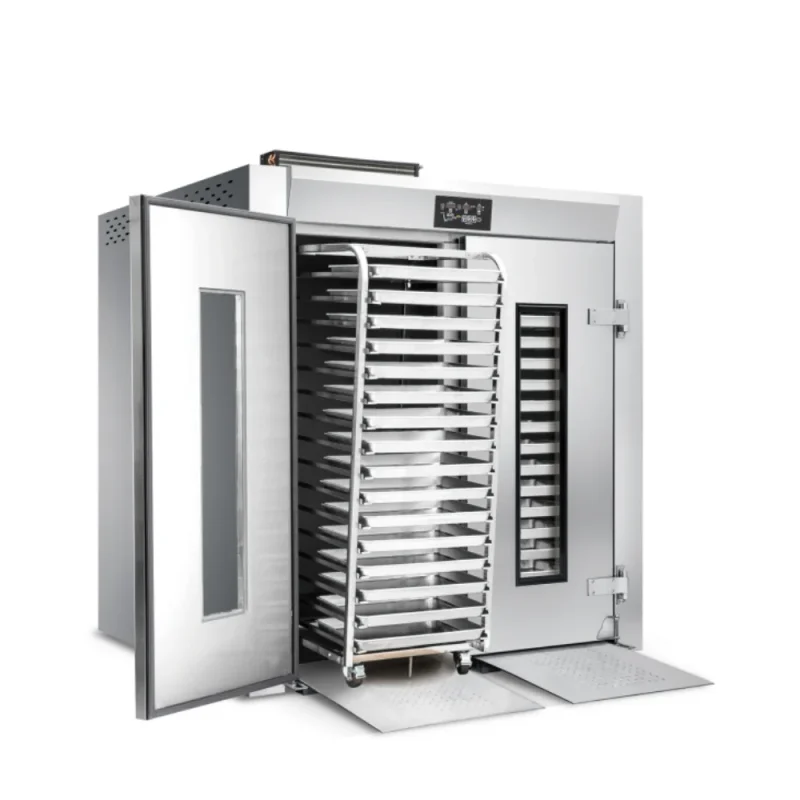
RMF series (roll-in, 32–64 trays, up to 100% humidity): The roll-in format means the trolley — loaded with trays of shaped dough — rolls directly into the cabinet on wheels. There is no need to transfer individual trays from the trolley to internal racks. For high-volume operations that handle large quantities of trays per proofing cycle, this eliminates a manual handling step that is slow and can disturb shaped dough. 100% humidity capability covers high-steam applications including baozi and specialty breads.
Foam Insulation Layer — Why This Matters
All models in the PXF, GD, and RMF spray series include a foamed insulation layer within the cabinet walls. This insulation serves two purposes:
Energy efficiency: A well-insulated cabinet loses less heat through the walls. The heating element does less work to maintain the set temperature, reducing electricity consumption over a long proofing session.
Temperature stability: When the proofing cabinet door is opened briefly — to check dough progress or add a tray — a well-insulated cabinet recovers to set temperature faster than an uninsulated one. Temperature fluctuation during proofing affects the final product.
The insulation specification distinguishes commercial-grade proofers from uninsulated improvised setups (a heated cabinet without insulation). For a commercial operation running the proofer multiple shifts per day, the insulation pays back in energy savings and product consistency.
Spray Type Dough Proofer Applications
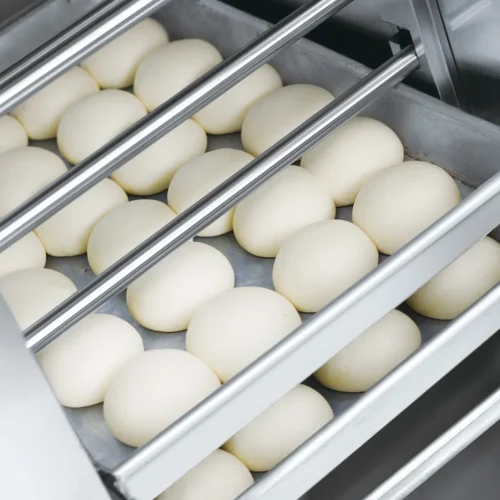
Commercial bread and bun proofing (all models): Standard application. Every spray type dough proofer in the range delivers the 80–99% humidity conditions required for most enriched dough proofing — rolls, buns, sandwich bread, and similar products. For bakeries that need a dependable commercial bread proofer, the spray series combines precision with reliability.
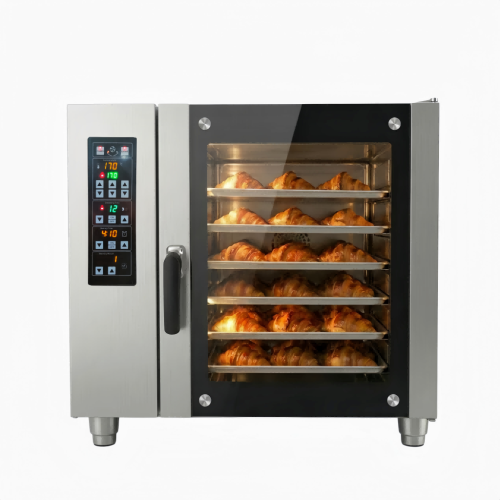
Croissant and danish proofing (PXF series): Croissants proof at 26–28°C with 75–80% humidity. A spray system’s faster humidity response makes it easier to hold these precise conditions compared to a boiled water system. The PXF series’ 60–99% humidity range covers the croissant-specific lower humidity requirement. For bakers new to laminated dough, a croissant proofing guide from an independent source helps confirm the target temperature and humidity ranges.
Donut and doughnut proofing: Yeast donuts proof in the 32–38°C range at 60–75% humidity before frying. The spray system’s controllable humidity range handles this without the high-humidity overshoot that can soften the dough surface before it reaches the fryer.
Pizza dough proofing (roll-in RMF series): Pizza dough balls loaded on trolleys roll directly into the RMF-series cabinet. High-output pizza operations proofing many trays per cycle benefit from the roll-in format — load once, proof in one step, roll out and bake. For pizza operations that also run cold-fermented dough, the R&M retarder proofer handles overnight cold retardation before proofing.
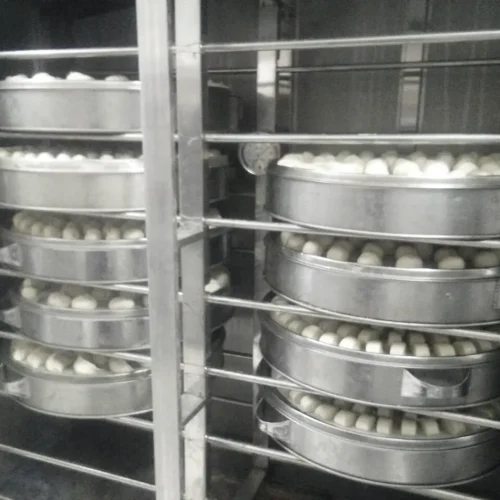
Baozi and steam bun production (RMF series, 100% humidity): Steam buns require near-saturation humidity (90–100%) during final proofing. The RMF-series’ 100% humidity ceiling covers this. The roll-in format is particularly practical for baozi production, which typically involves many trays loaded on a trolley before steaming.
Pastry proofer applications: Any laminated or enriched pastry requiring a final proof before baking — butter croissants, pain au chocolat, danish pastries — benefits from a spray proofer’s precise humidity control that avoids the condensation and skin formation that can occur with high-humidity boiled water systems.
Preguntas frecuentes
What is the difference between a spray proofer and a boiled water proofer?
A spray proofer generates humidity by spraying a fine water mist from a nozzle — connected directly to the water supply. A boiled water proofer heats a water tank to produce steam. Spray systems are more precise in humidity control and have no risk of boil-dry events. Both require a water supply connection. Spray proofers are typically slightly higher in initial cost. The R&M boiled water proofer (XF series) remains the more affordable entry option.
Can a spray proofer be used as a steam proofer for baozi?
The RMF-series roll-in models with 100% humidity capability cover baozi and steam bun production applications. The reach-in PXF and GD models reach 99% and 80–90% respectively — suitable for most steam bun proofing.
What is the humidity range for croissant proofing?
Most croissant recipes specify 75–80% relative humidity during proofing at 26–28°C. The PXF series (60–99% range) covers this. Set your target humidity at 78% and your temperature at 27°C for typical croissant proofing conditions.
How does the roll-in format (RMF series) differ from a standard reach-in proofer?
A reach-in proofer has internal fixed racks — you load trays one by one into the cabinet. A roll-in proofer has no internal racks — the trolley loaded with trays rolls directly into the cabinet on wheels. For high-volume operations, roll-in eliminates manual tray-by-tray loading and unloading.
What water pressure does the spray system require?
Standard municipal water supply pressure (typically 0.2–0.4 MPa). Contact us to confirm the exact specification for your installation.
Get a Quote
Spray type dough proofer with direct water-line humidity. Reach-in or roll-in. 16 to 64 trays.