



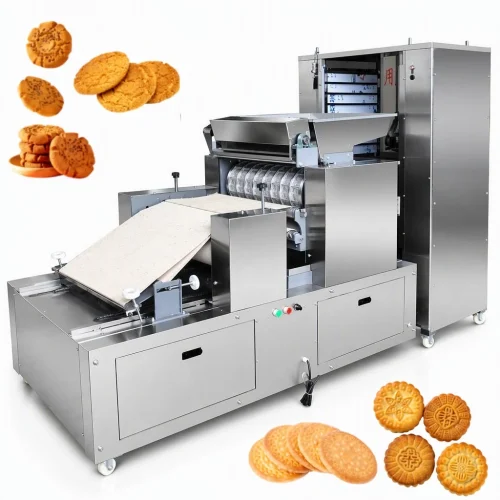
Fully Automatic Biscuit Making Machine for Small Business
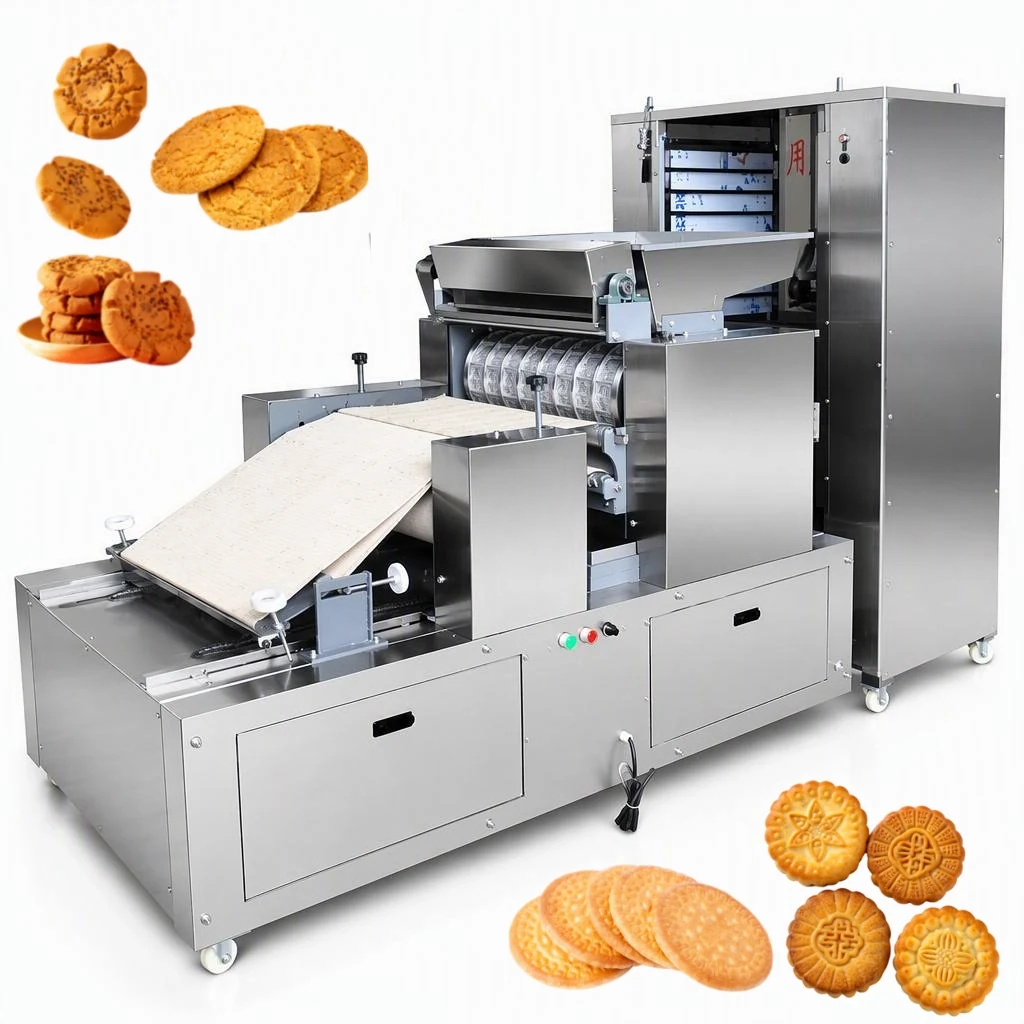
A fully automatic biscuit making machine for small business — the GSHX-400 at 250 kg/h and the GDHX-600 at 500 kg/h. Rotary moulding forms shaped and embossed biscuits in one pass, with custom moulds, stainless steel build and 380V/50Hz power.
Request a Quote
Enter the quantity you need and add to your quote list for pricing inquiries.
Specifications
Description
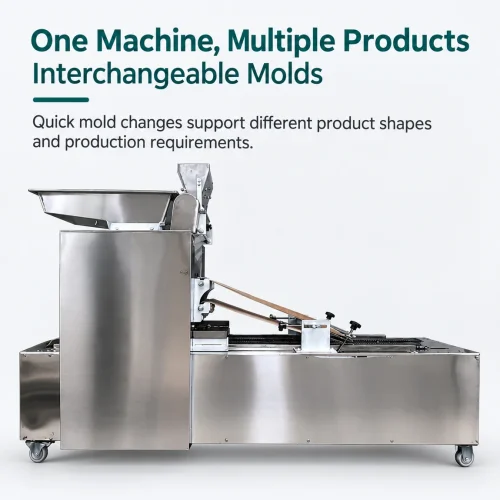
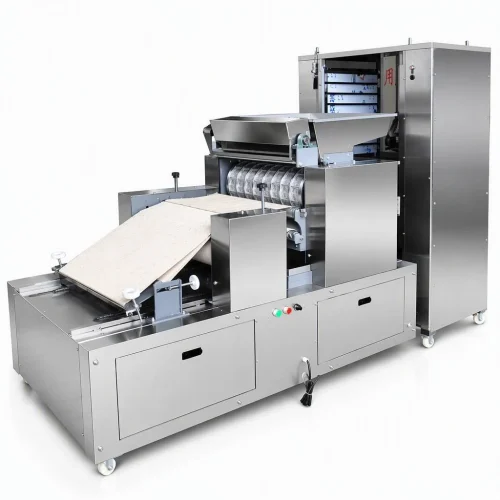
The GSHX-400 and the GDHX-600 are fully automatic biscuit making machines built for small and mid-size production. Dough is loaded into the hopper, a feed roller presses it into the cavities of an engraved moulding roller, and every biscuit is released onto the conveyor ready for the oven. There is no sheeting and no hand rework — the piece leaves the roller finished, at 250 kg/h on the GSHX-400 and 500 kg/h on the GDHX-600. For a bakery moving up from hand piping, this is the step that turns shaped and embossed biscuits into a production item rather than a speciality. Because the machine is automatic, output no longer depends on how fast an operator can pipe by hand, and piece weight stays steady from the first tray of the shift to the last. As a biscuit making machine it covers the middle of the market: larger than a bench press, smaller than a fully integrated line, and supplied with the mould that suits your product instead of a fixed shape.
Two Models — GSHX-400 and GDHX-600
Both models use the same rotary moulding principle and the same 248 mm roller diameter. They differ in output and frame size, so the choice between them is a volume decision rather than a capability decision.
| Item | GSHX-400 | GDHX-600 |
|---|---|---|
| Rated output | 250 kg/h | 500 kg/h |
| Motor power | 1.5 kW | 3 kW |
| Power supply | 380V / 50Hz | 380V / 50Hz |
| Overall dimensions | 2,200 × 950 × 1,280 mm | 2,200 × 1,100 × 1,300 mm |
| Net weight | 700 kg | 1,000 kg |
| Roller diameter | 248 mm | 248 mm |
GSHX-400 or GDHX-600 — How to Choose
The GSHX-400 produces 250 kg/h and the GDHX-600 produces 500 kg/h, and both take the same moulding roller, so a bakery that outgrows the smaller machine can move up without repeating the mould and nozzle development work. Two figures usually settle the question:
- Trays or weight per shift. If one shift on one product covers your orders, the GSHX-400 is the smaller commitment. If you run several products, supply wholesale or expect to add a second shift, the GDHX-600 gives the headroom without a second machine.
- Finishing and packing capacity. A machine rated at 500 kg/h only pays for itself if the trays, oven and packers downstream can keep up. If your oven is the constraint, the smaller model with a second shift is often the better plan.
If your target sits between the two, tell us the daily output you need and the size of the biscuit. The model recommendation follows from those two figures.
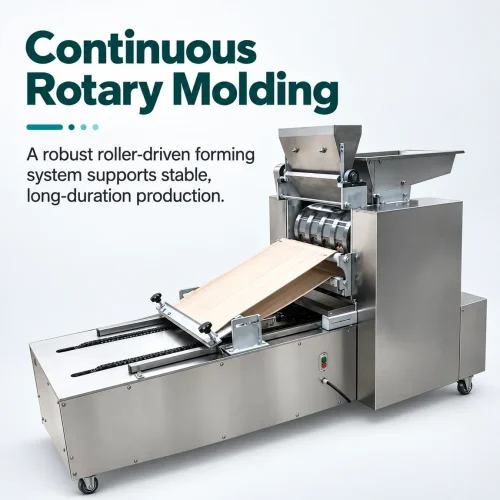
How Rotary Moulding Works
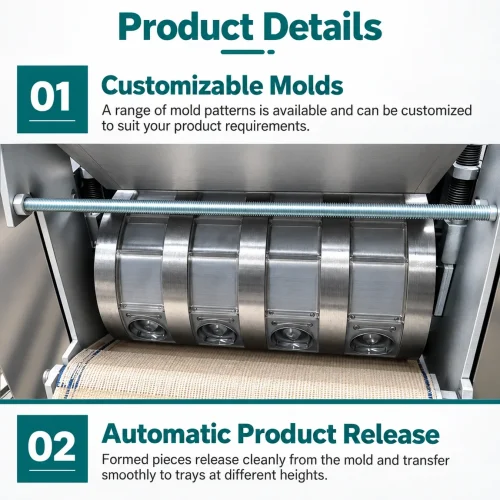
- Feed — dough is loaded into the hopper. A feed roller presses it into the cavities of the engraved moulding roller.
- Form — each cavity fills under controlled pressure, so piece weight stays consistent across the run.
- Release — a take-off roller lifts the formed piece cleanly from the cavity and transfers it to the conveyor.
- Convey — pieces travel to the oven or to a tray, spaced and oriented for baking.
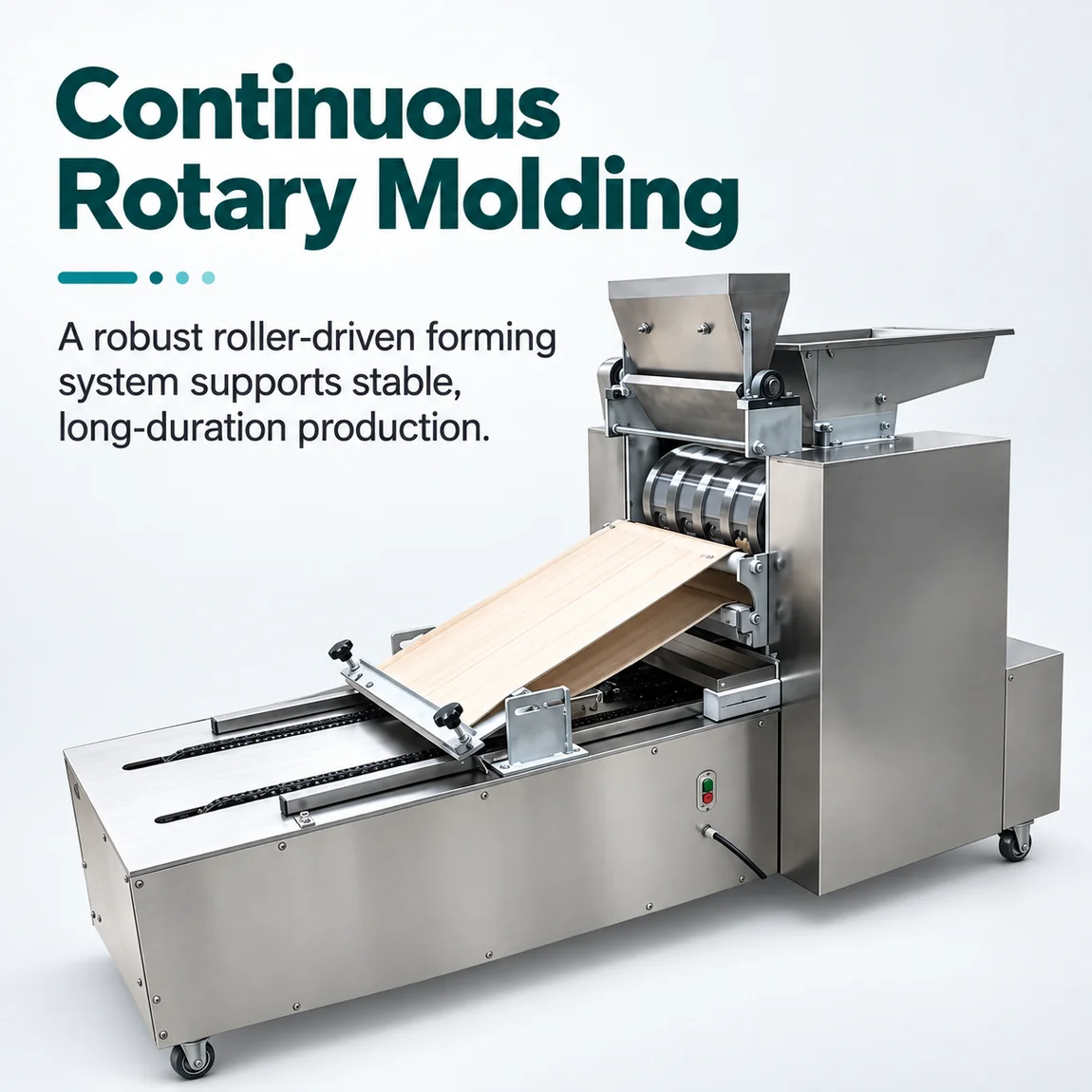
Because the dough is pressed into the cavities rather than cut from a sheet, the excess dough around the moulds is lifted and returned to the feed by the machine’s scrap recovery system, so it is not collected by hand or re-worked at the end of the shift. Material use is tighter and the line needs fewer operators than a sheet-and-cut setup.
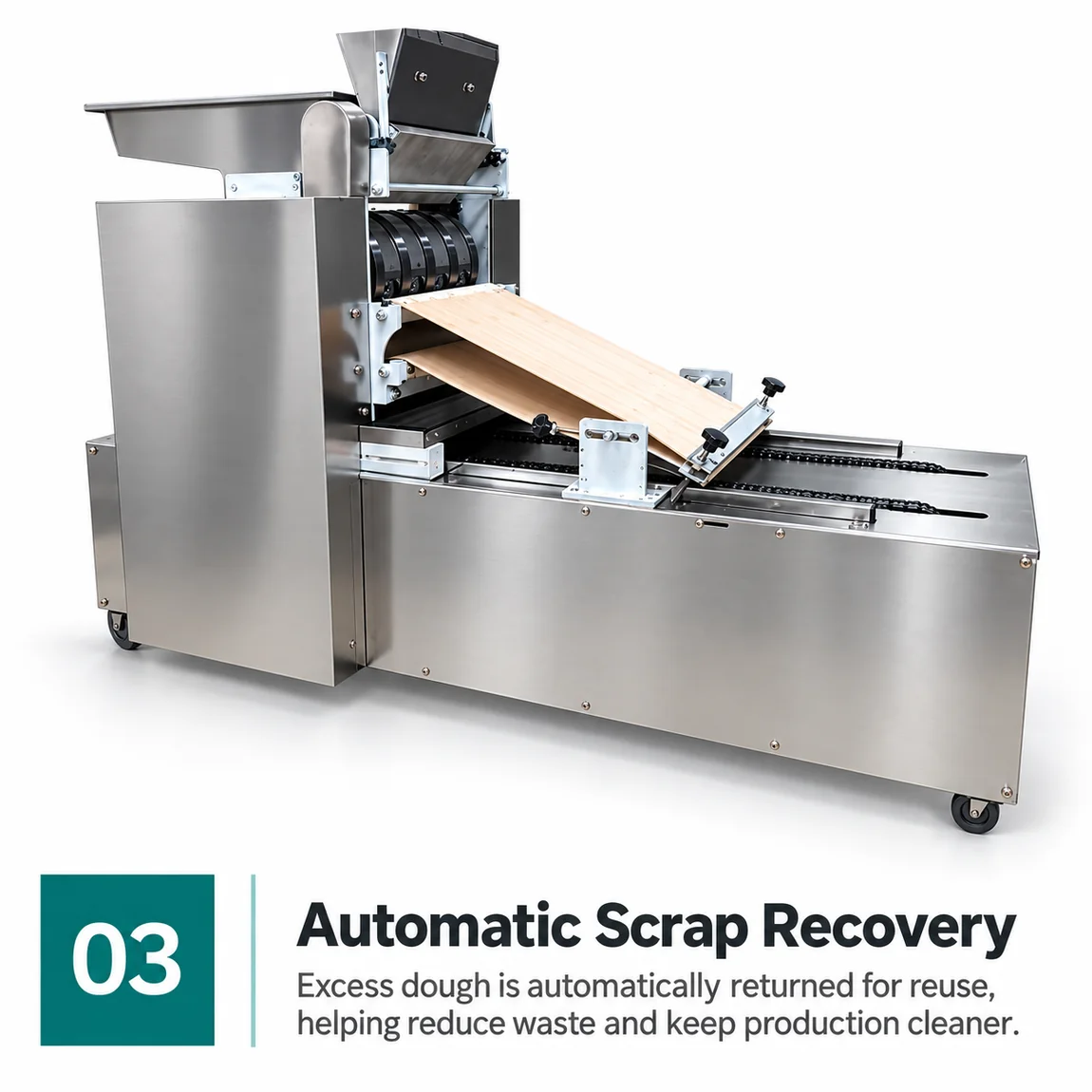
One Machine, Many Biscuit Shapes
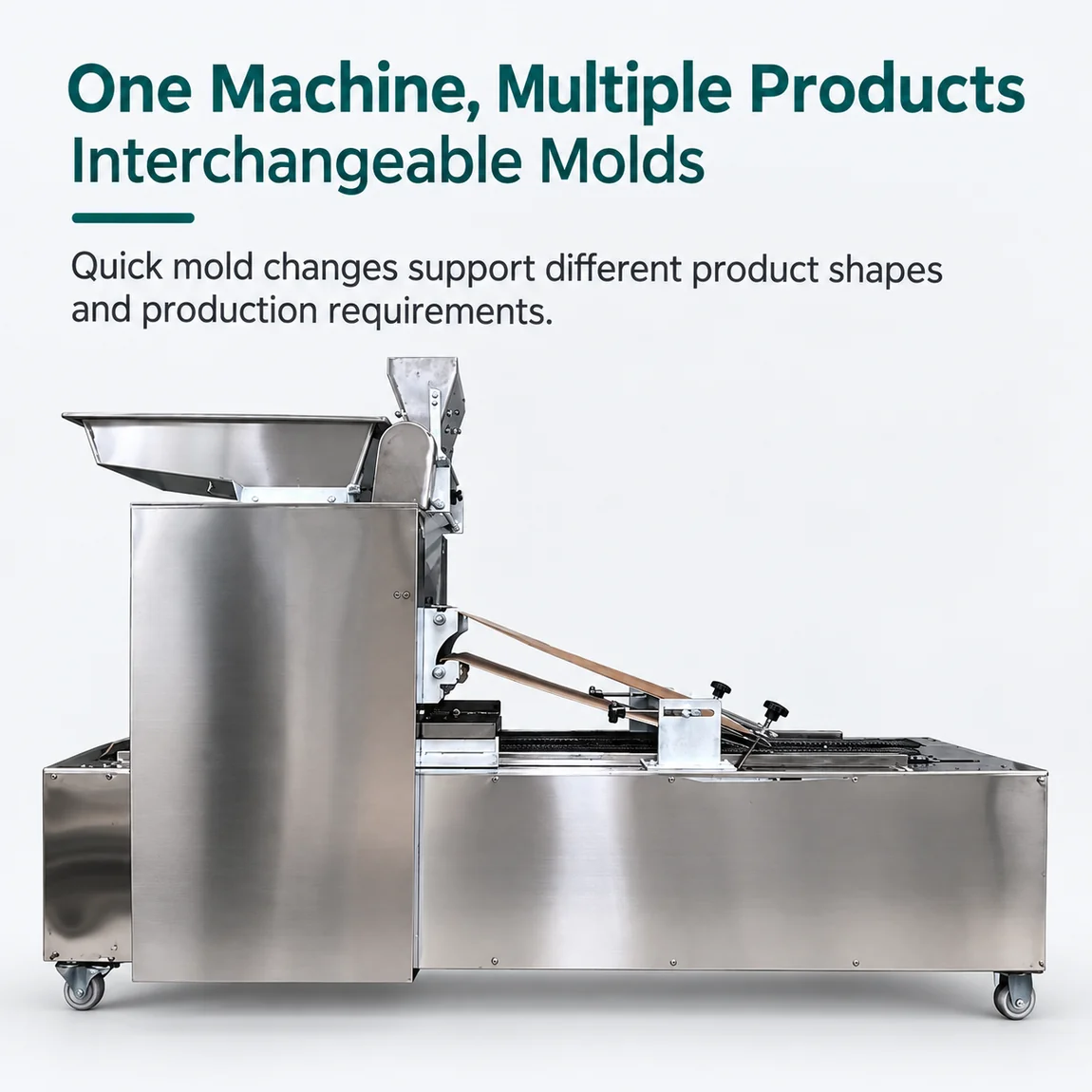
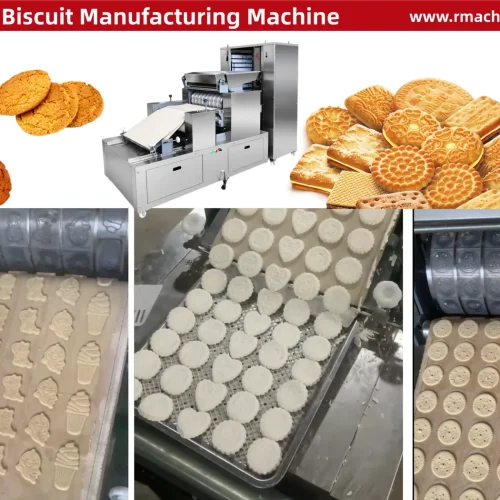
A mould change switches the product. Standard moulds cover the common short-dough biscuit range; custom moulds are made to your drawing or a product sample. Typical output from a single machine includes:
- Butter cookies and spritz-style biscuits — including flower, swirl and petal profiles
- Chinese walnut cookies (桃酥) and peanut cookies — crumbly, high-fat short dough
- Shortbread — fingers, rounds and petticoat tails
- Sesame biscuits and small short biscuits (小酥饼)
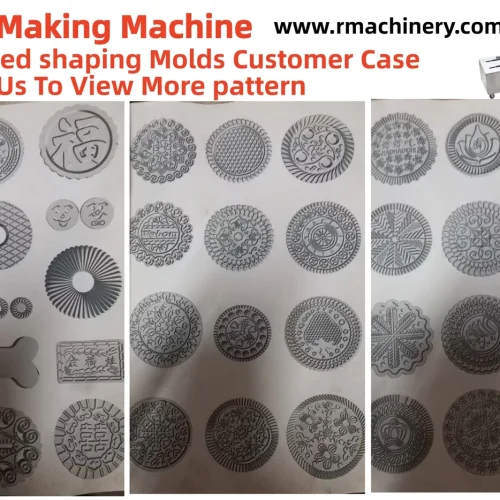
- Embossed and character biscuits — letters, numbers, cartoon shapes, scalloped edges
- Speculoos and selected digestive biscuit recipes
- Selected atta biscuit recipes — where the dough suits rotary moulding
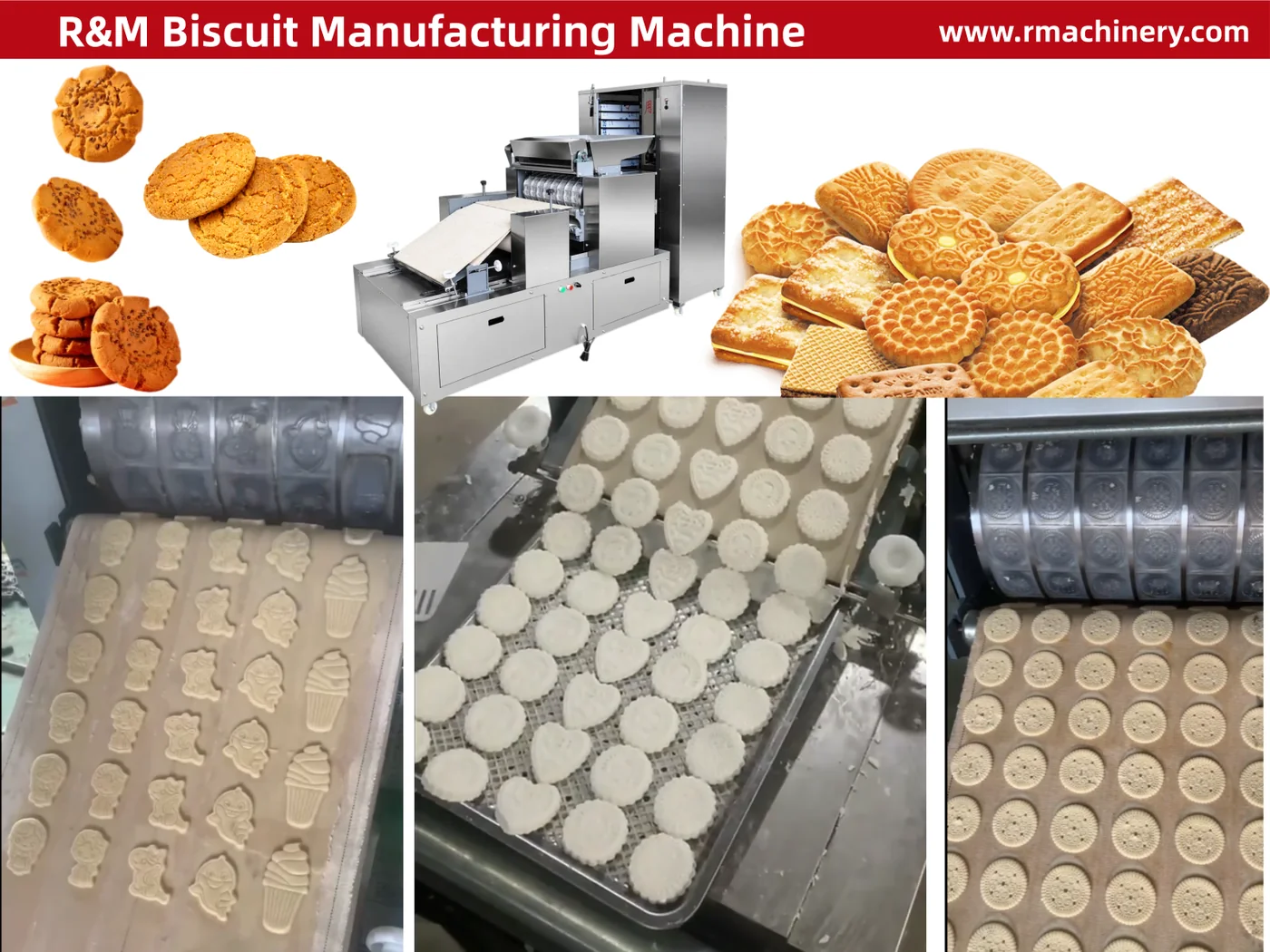
Several rows can be arranged across a single roller to raise output without increasing machine speed. If you want two sizes on one roller, or a mix of shapes across rows, that is built into the mould design rather than added as a separate machine.
Moulds Made to Your Product
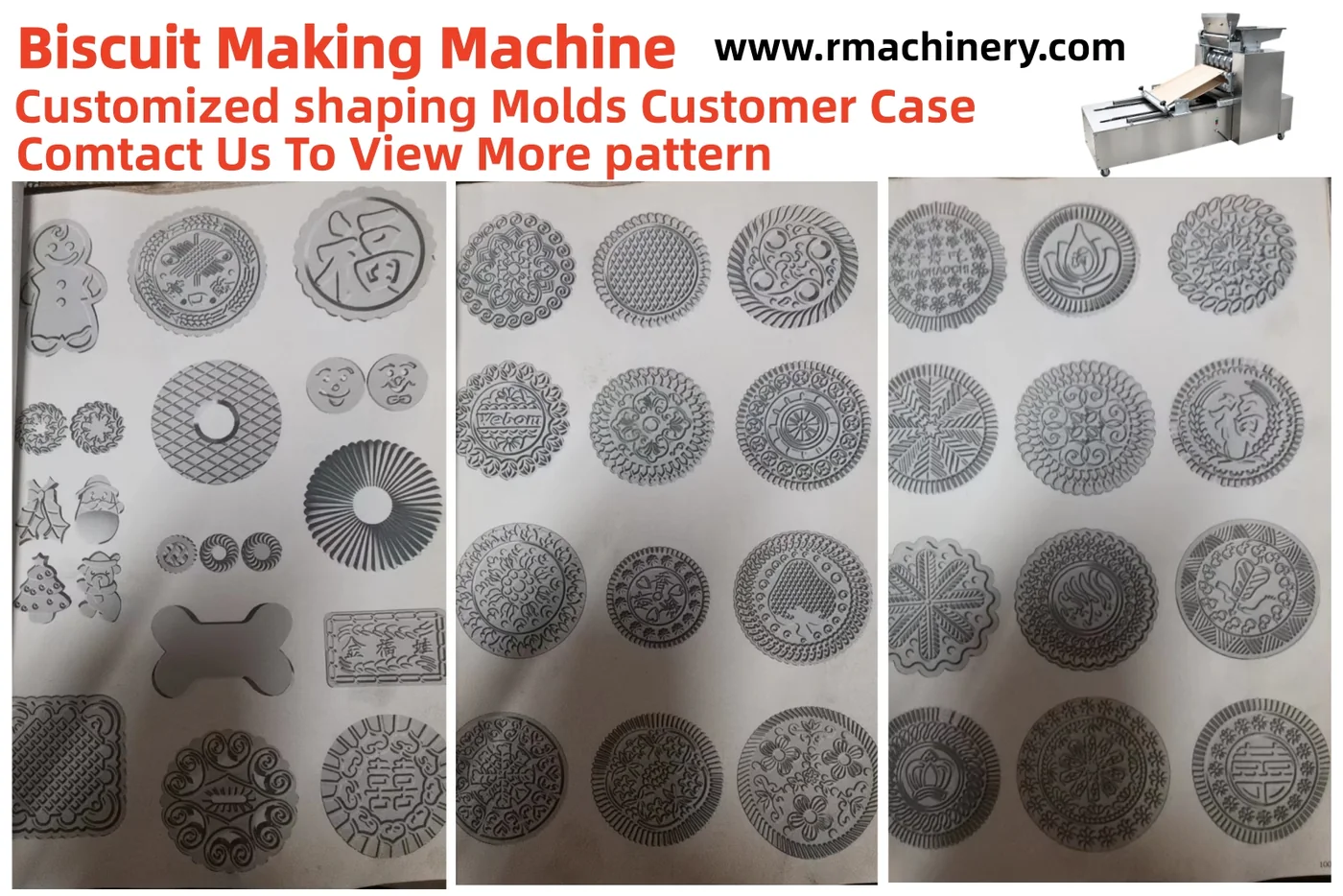
On a rotary moulder machine the roller is the part that decides the product, so it is treated as the starting point of the order rather than an accessory. Send a sample biscuit, a dimensioned drawing or a clear photo of the pattern and we will confirm what the roller can reproduce.
What Can Be Built Into a Roller
- Product outline, size and edge profile
- Surface relief — logos, lettering, embossing, decorative patterns
- Row count across the roller
- A docking (pricking) unit where the recipe needs holes for controlled venting during baking
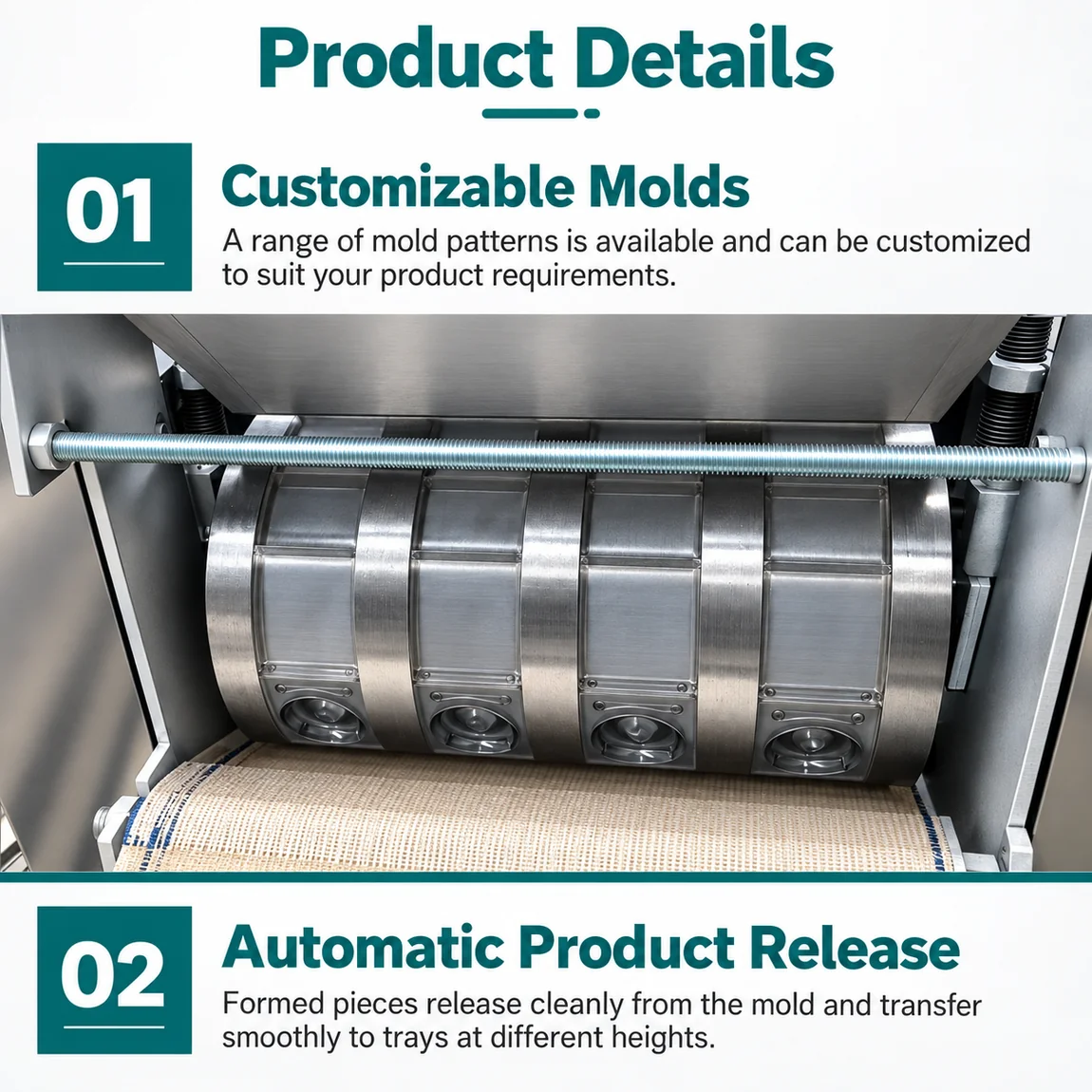
Dough That Suits Rotary Moulding
Small, evenly distributed inclusions such as chopped nuts are usually fine. Large or irregular pieces can interrupt cavity filling and release, so those recipes should be trialled first. The same applies to high-fat dough: rotary moulding is built for short dough, but the mix still has to release cleanly. Excess free oil, a warm dough or an over-soft batch will cause sticking and loss of pattern, so a forming trial on your own formula is recommended before the mould is cut.
Built for Daily Production
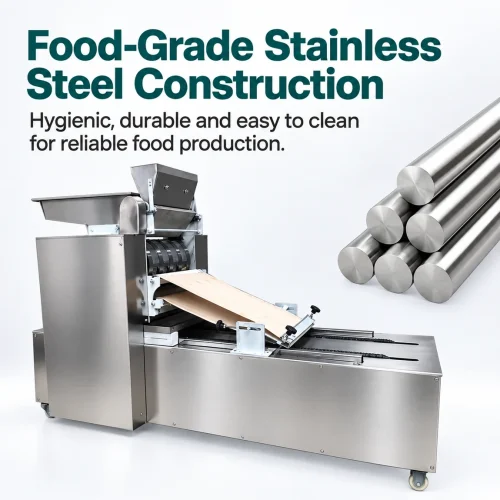
- Full food-grade stainless steel body — the frame and dough-contact parts are stainless, so the machine can be washed down and does not corrode in a humid bakery.
- Disinfection spray system — the current version includes a built-in spray system so the forming area can be treated between production runs.
- Automatic forming — the machine runs the fill, press, release and convey cycle continuously; the operator loads dough and removes finished pieces.
- Strong motor with stable output — the drive is specified for continuous shift work rather than intermittent use, which is what keeps piece weight steady through a long run.
- Low-noise operation — the mechanism runs quietly enough to sit in a normal production area without adding to workshop noise.
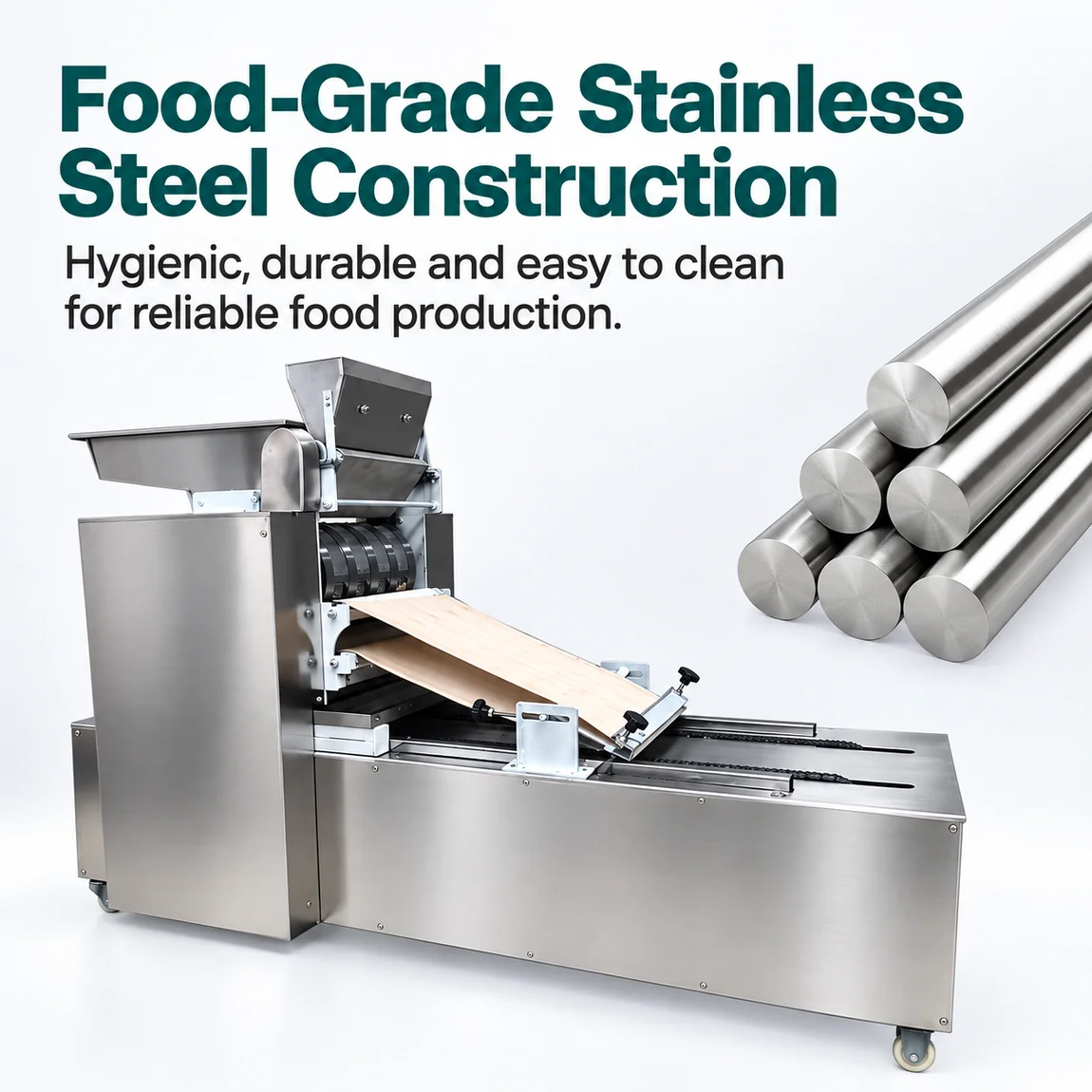
The machine is used in food processing plants, bakeries and cake shops, and is equally at home on a mixed-product line where the mould changes between shifts.
Specifications
| Item | GSHX-400 | GDHX-600 |
|---|---|---|
| Forming method | Rotary moulding with an engraved moulding roller | Rotary moulding with an engraved moulding roller |
| Roller diameter | 248 mm | 248 mm |
| Rated output | 250 kg/h | 500 kg/h |
| Motor power | 1.5 kW | 3 kW |
| Power supply | 380V / 50Hz | 380V / 50Hz |
| Overall dimensions | 2,200 × 950 × 1,280 mm | 2,200 × 1,100 × 1,300 mm |
| Net weight | 700 kg | 1,000 kg |
| Moulds | Changeable; custom rollers made to sample or drawing | Changeable; custom rollers made to sample or drawing |
| Body material | Food-grade stainless steel | Food-grade stainless steel |
| Cleaning | Disinfection spray system | Disinfection spray system |
| Docking (pricking) unit | Optional | Optional |
Both models run on 380V / 50Hz as standard. Tell us the supply at your site and we will confirm the electrical configuration with the quotation.
Where It Fits in a Biscuit Line
The moulder is the forming stage. A typical arrangement runs: Planetary mixer → biscuit making machine → tunnel oven or rack oven → cooling racks → biscuit sandwiching or packing
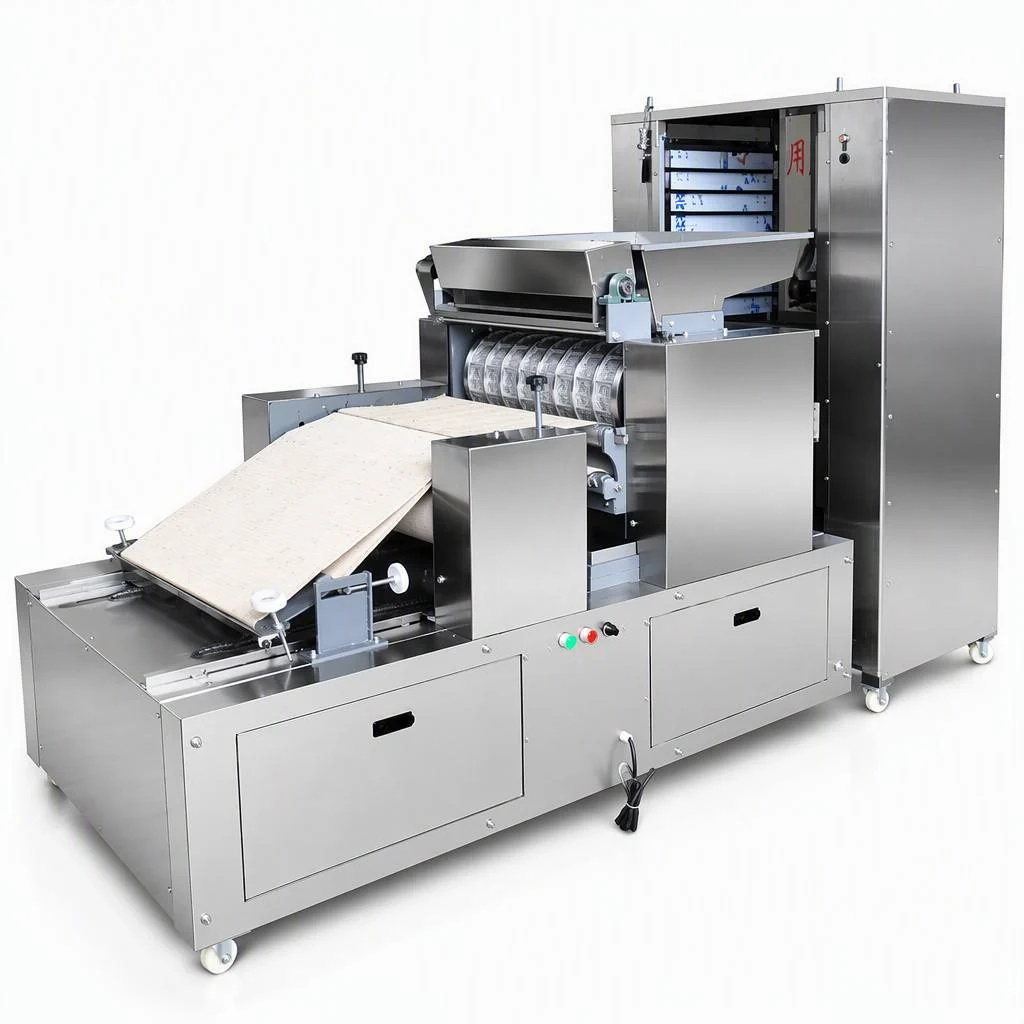
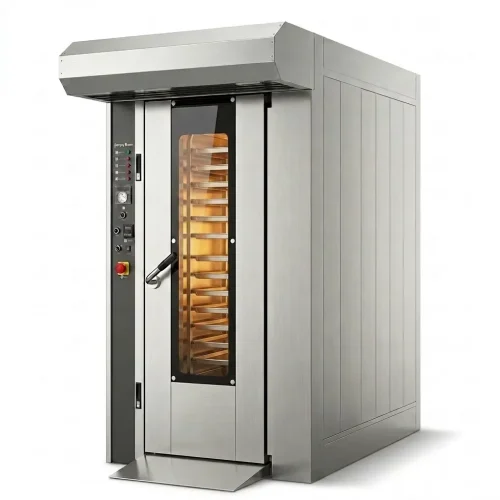
Upstream, a planetary mixer handles the short dough; downstream, baking is done in an industrial tunnel oven for continuous production or a rack oven for batch work. Neither the mixer nor the oven is included with this machine unless quoted separately.
Biscuit Making Machine for Small Business
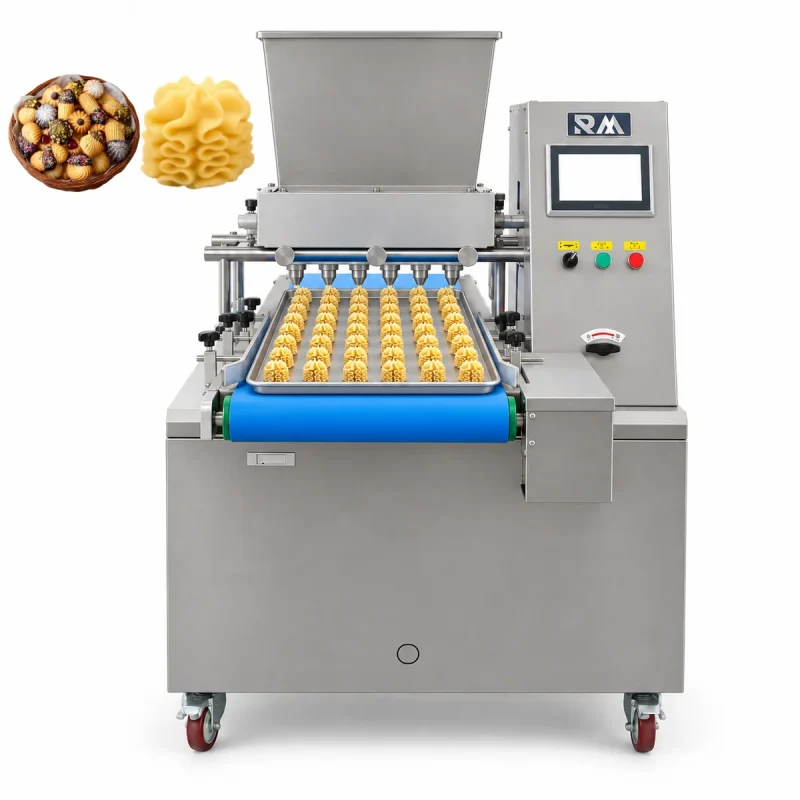
For a shop moving up from hand piping or a pastry bag, this is the step that makes embossed biscuits viable at volume. For a biscuit machine maker, that shift usually comes down to labour cost and consistency rather than speed. For larger plants, the same machine works as the forming unit in a biscuit manufacturing machine setup feeding a tunnel oven. If you are comparing a cookie press machine against a depositor: a depositor portions soft dough through nozzles and suits drop cookies, macarons and choux; a rotary moulder presses short dough into an engraved roller and suits shaped, embossed and crumbly biscuits. Some bakeries run both — soft-dough depositing is handled by our automatic cookie depositor machine. As a small biscuit making machine by footprint compared with a full cracker or biscuit line, the GSHX-400 is the usual starting point for a single-line bakery; the GDHX-600 is bought when the product range grows rather than the ambition.
Getting the Right Configuration
Three things decide whether the machine suits your product: the dough, the mould and the volume. Send us the following and we will confirm the model and the configuration before you commit:
- Product photos or a physical sample of the biscuit
- Dough type and approximate fat content, plus a description of how it handles
- Finished piece size, weight and required rows per pass
- Target output per shift — this usually settles whether the GSHX-400 or the GDHX-600 is right
- Site power supply and delivery country
We will come back with the model, mould design, quotation and lead time. Price depends on the model, mould complexity, row count, docking option, electrical configuration and packing method, so a mouldable sample gets you a firmer figure than a generic enquiry. Both models are quoted as a biscuit making machine with one standard mould; extra rollers are priced separately so you can add shapes as the range grows. You can also review the wider cookies and biscuit machine range before confirming the configuration.
Preguntas frecuentes
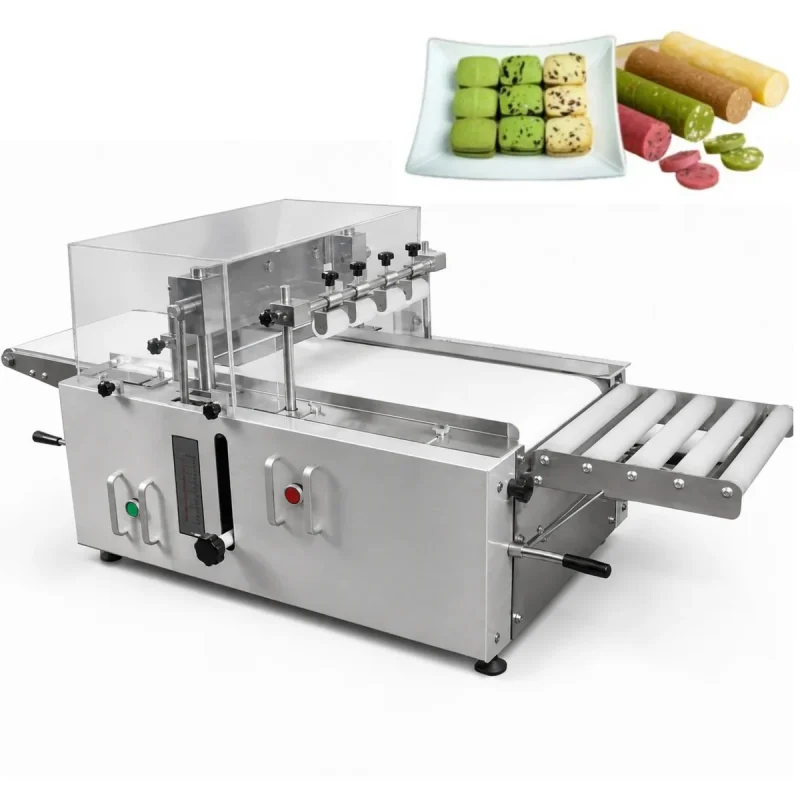
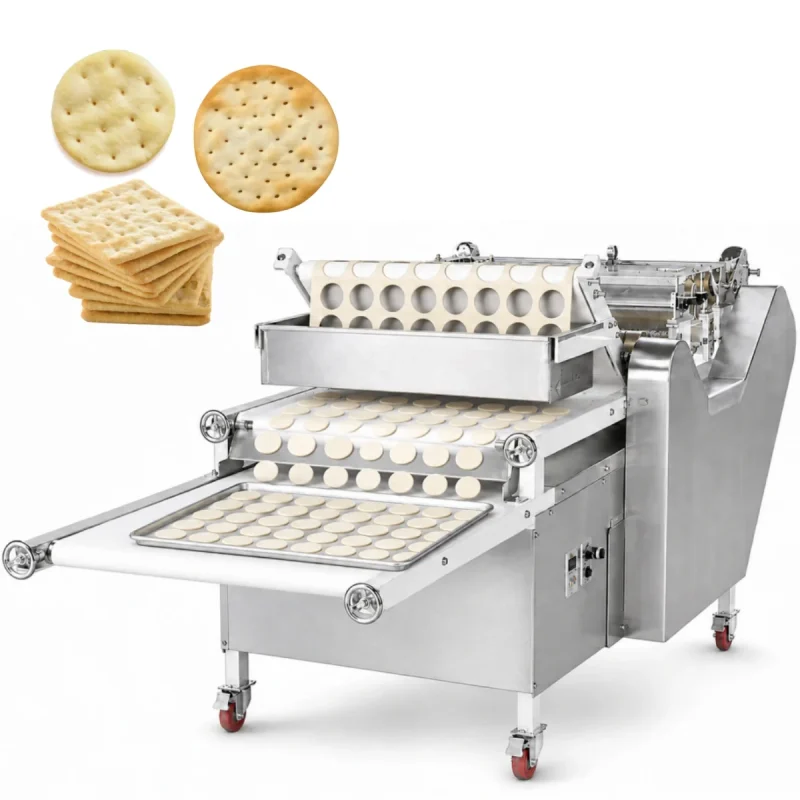
What is the difference between a biscuit press machine and a biscuit cutter machine? A press machine forms the piece by pressing dough into an engraved roller cavity, so the shape and surface pattern come from the mould. A cutter slices or stamps dough that has already been sheeted or formed into a log. If you need deep patterns, logos or shaped edges, the press machine is the correct route; for log cutting, see our cookie cutter machine. Which of the two models do I need? The GSHX-400 produces 250 kg/h and the GDHX-600 produces 500 kg/h, and both use the same 248 mm roller. If you are running one shift and one product, the GSHX-400 usually covers it; if you run multiple products or supply wholesale, the GDHX-600 gives headroom without buying a second biscuit making machine. How many biscuits per hour can it produce? Output is rated as dough throughput — 250 kg/h on the GSHX-400 and 500 kg/h on the GDHX-600. Biscuits per hour depends on the weight of each piece, so a 10 g biscuit and a 30 g biscuit give very different counts from the same machine. Send us the piece weight and target count and we will convert it against the two models. Can it handle high-fat, crumbly short dough? Yes — that is what it is designed for. Rotary moulding suits dough with more fat and sugar and less water than cracker dough. The limit is release: if the dough is too warm or carries excess free oil it will stick in the cavity and the pattern will blur. We recommend a trial on your own formula before the mould is made. Can the mould be customised with our logo or a specific shape? Yes. The engraved roller can be produced for different shapes, sizes, logos, decorative patterns and edge designs, and several rows can be arranged across one roller to increase output. Send a sample or drawing and we will confirm what can be reproduced at the size you need. Can I produce more than one shape on the same machine? Yes, by changing the moulding roller. Many bakeries keep a standard butter cookie roller in the machine and switch to a character or seasonal roller for specific orders. Changeover is a mechanical swap; keep the roller clean and stored flat. What products can it make besides butter cookies? Chinese walnut cookies, peanut cookies, shortbread, sesame biscuits, small short biscuits, embossed and character biscuits, speculoos and selected digestive biscuit recipes. Dough that must be sheeted and cut — soda crackers, saltines, water crackers and similar firm doughs — needs a sheet-and-cut forming machine instead, such as our cracker forming machine. Does the machine need a separate conveyor or oven? The forming conveyor is built into the machine. Baking, cooling and packing are separate equipment. The moulder can be positioned directly before a tunnel oven or used with trays for a rack oven — give us your discharge height and tray size and we will confirm the transfer. How do I keep the machine clean between products? The frame is stainless steel and the current version includes a disinfection spray system for the forming area. The moulding roller lifts out for cleaning and product changeover. We supply the cleaning routine with the machine. What power supply does the machine need? 380V / 50Hz as standard on both models, at 1.5 kW for the GSHX-400 and 3 kW for the GDHX-600. Send us your site supply when you enquire and we will confirm the configuration for your market. Is the machine available for small business volumes? Yes — it is used by cake shops and single-line bakeries as well as larger plants. The GSHX-400 at 250 kg/h is the usual starting point; the controlling factor is the mould and the dough rather than a minimum volume. Tell us your daily target and we will confirm which model to begin with. What information do you need to quote? Product sample or drawing, dough type and condition, finished size and weight, rows required per pass, docking or not, target output, site power supply and delivery country. The sample is the most important item — it decides the mould and therefore most of the cost.
Request a Quote for the Fully Automatic Biscuit Making Machine
Send a product sample or drawing with your dough description and target output. We will confirm whether the GSHX-400 or the GDHX-600 suits your volume, specify the mould and return a quotation with power configuration, packing and lead time. Request a quote →