



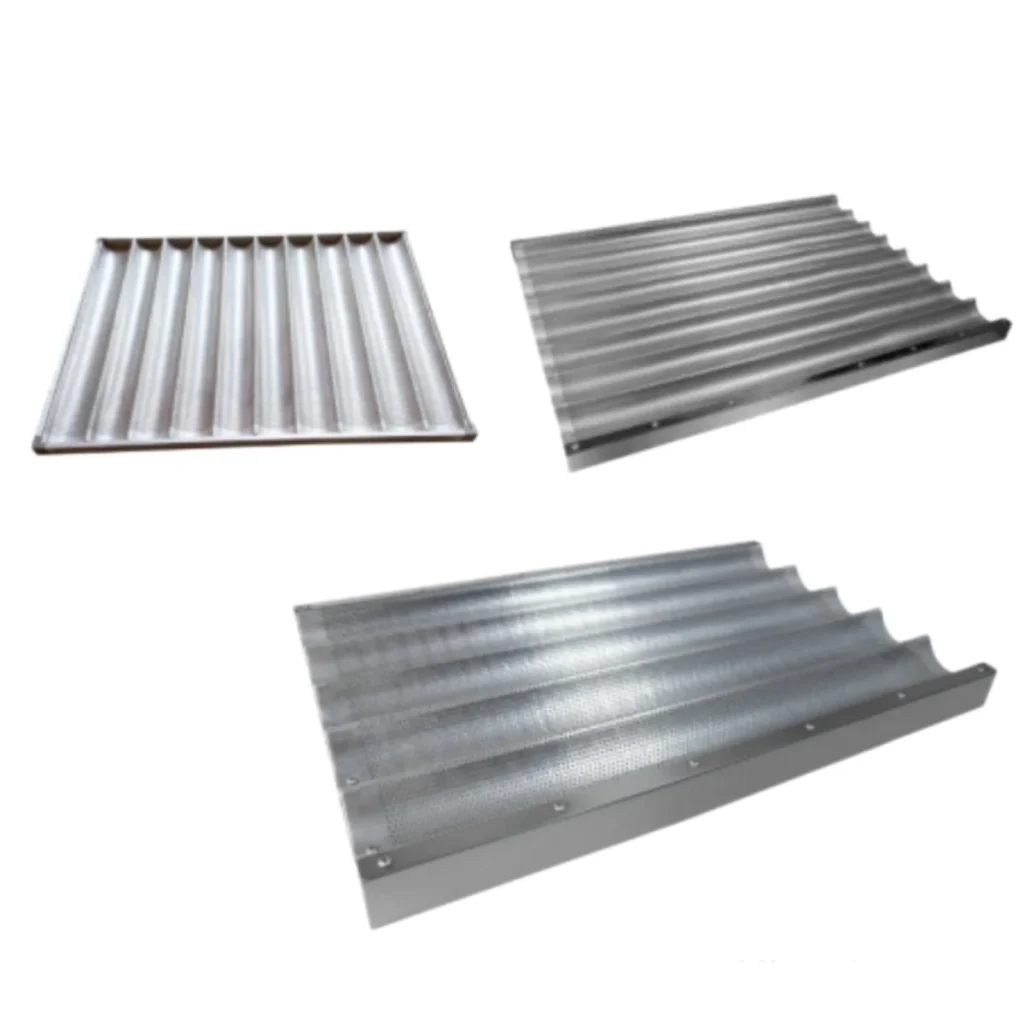
Baguette Pans — Aluminum Baguette Baking Trays, 3 to 10 Rows
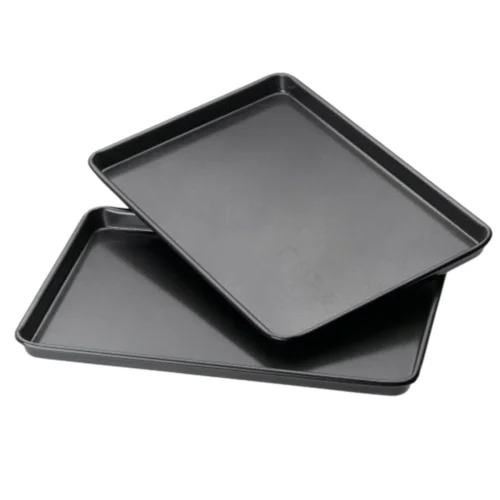
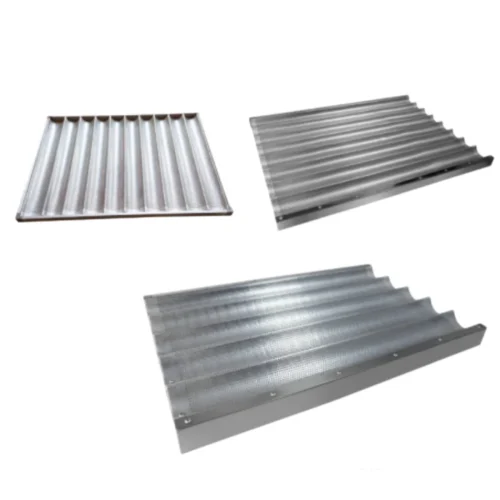
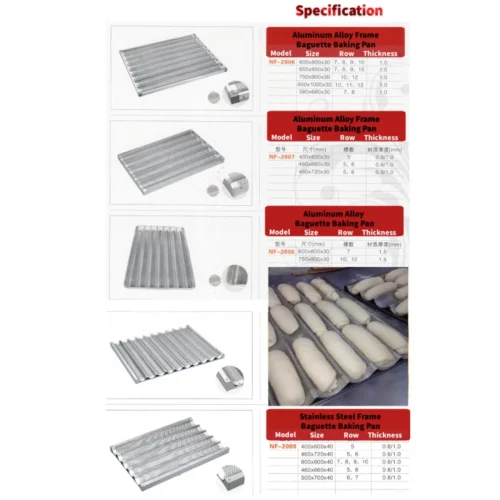
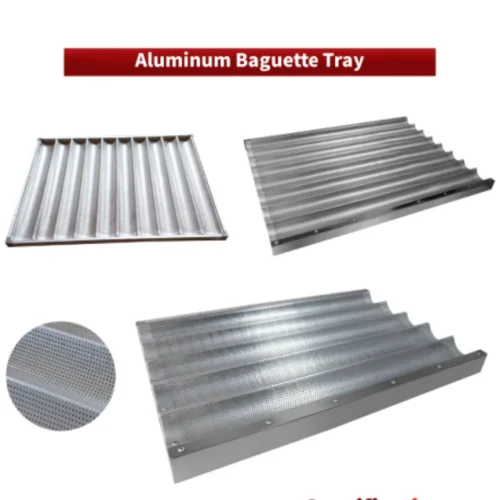
R&M baguette pans are the formed aluminum trays that give baguettes their classic rounded shape and even crust. Each tray has corrugated channels — one baguette per channel — in 3-row, 5-row, 8-row and 10-row configurations, on both 400×600 mm and 600×800 mm tray sizes. The corrugated profile supports the dough during proofing and baking, so baguettes keep their shape instead of spreading flat. Straight aluminum finish with optional border rim, built for deck ovens and rack ovens.
Request a Quote
Enter the quantity you need and add to your quote list for pricing inquiries.
FAQ
Preguntas frecuentes
What is a perforated baking tray used for?
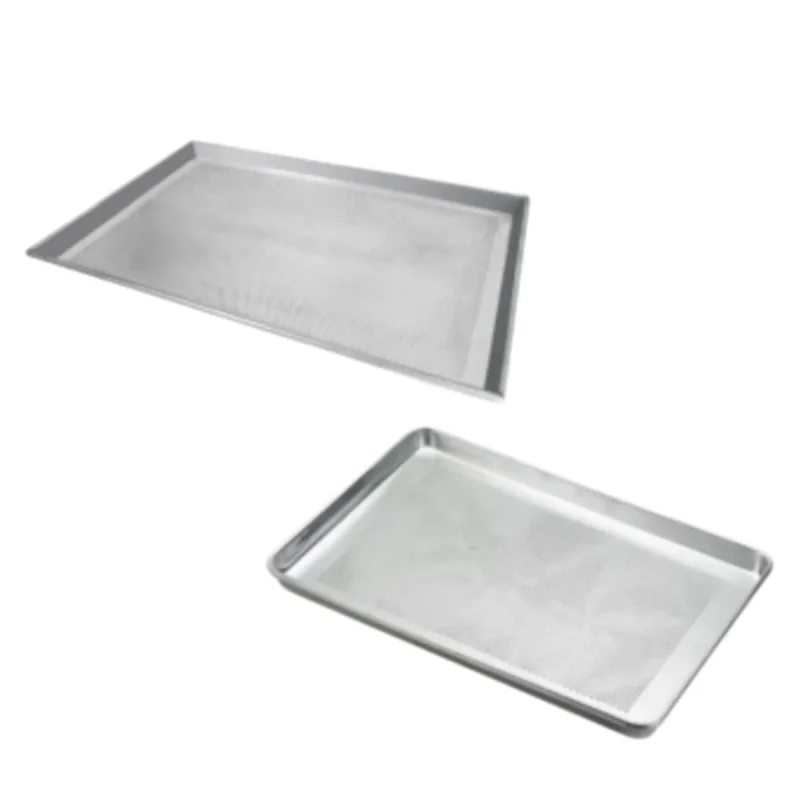
A perforated baking tray — also called a perforated baking sheet or perforated baking pan — is used wherever a crisp bottom and even colour are required: cookies, bread rolls, baguettes, pizza bases, croissants, pies and pastries. The holes allow oven air to reach the underside of the dough and let steam escape, so products bake faster and crisper than on a solid pan.
What sizes are available?
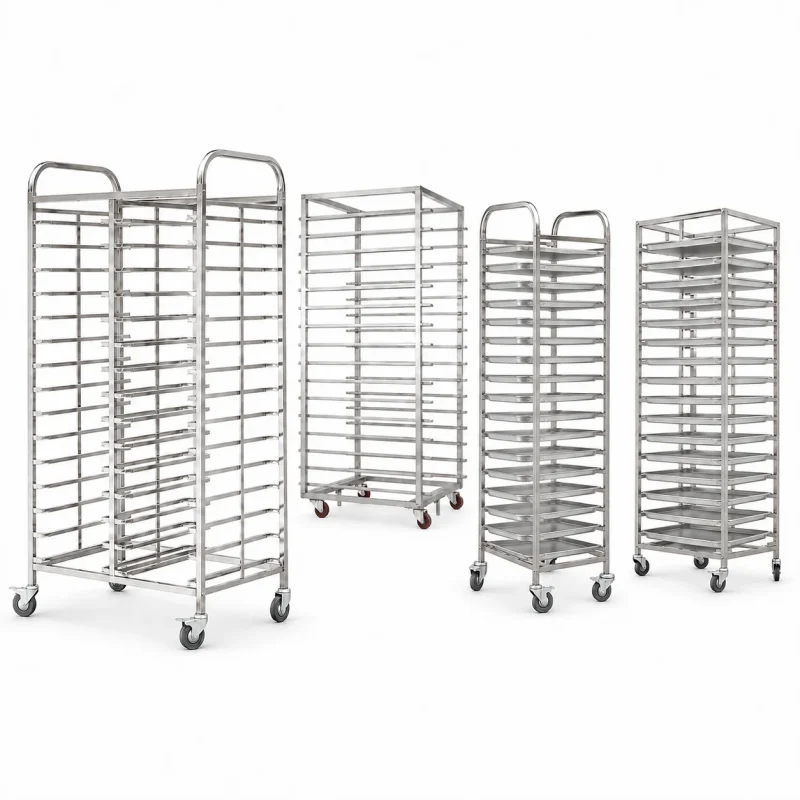
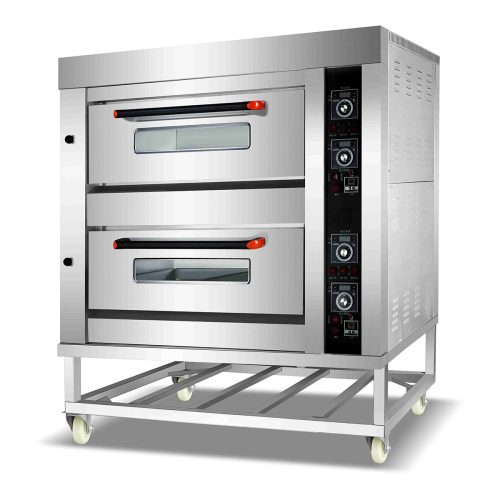
R&M supplies 400×600 mm and 800×600 mm perforated trays. The 400×600 mm size fits standard deck ovens and rack ovens; the 800×600 mm size suits larger ovens and industrial lines. Edge heights of 30 mm and 50 mm are available, with thickness from 1.0 to 1.2 mm.
What is the difference between a perforated tray and a mesh baking tray?
A perforated baking tray is a rigid aluminum or aluminizing pan with a dense pattern of holes punched in the base. A mesh baking tray (wire mesh) is a lighter woven-wire construction with the highest air flow. Perforated trays are the practical choice for commercial ovens where durability and even support matter.
Can I use a perforated baking tray for pizza?
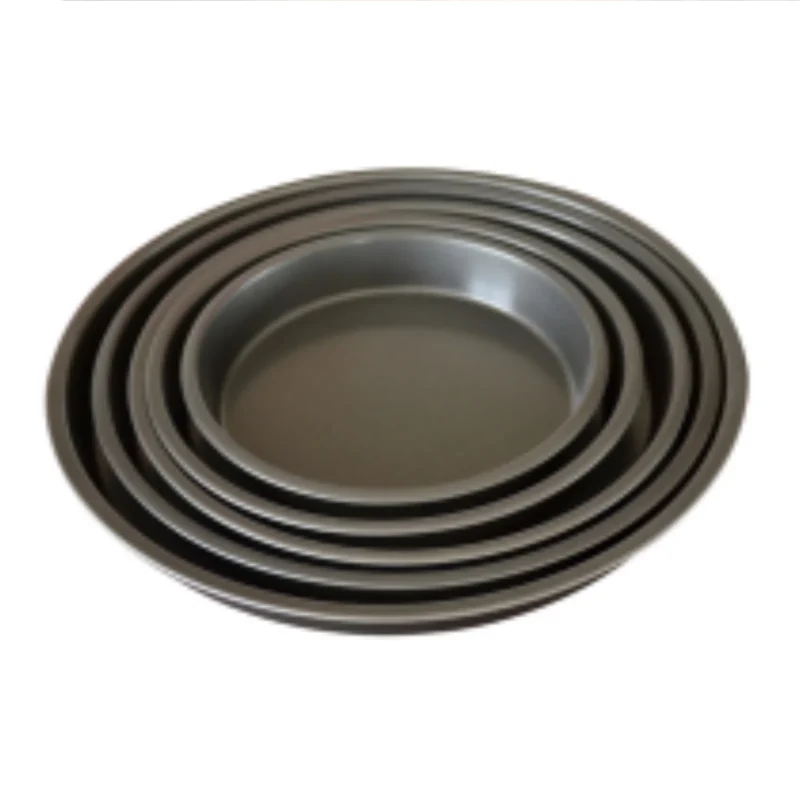
Yes. A perforated baking tray with holes works well for pizza bases — the airflow helps bake the underside of the crust evenly and prevents a soggy centre. For maximum ventilation, many pizzerias prefer a dedicated pizza screen; R&M can advise on the best option.
Do doughs stick to perforated trays?
Less than on solid trays, because steam escapes through the holes instead of condensing between the dough and the pan. For very sticky doughs, light dusting with flour or a non-stick treatment option is recommended. Aluminizing also improves release over plain aluminum.
Can I get OEM branding and custom hole patterns?
Yes. Custom hole patterns, surface finishes and OEM branding are available for wholesale and OEM orders. Minimum quantities apply — contact us with your requirements for a factory-direct quotation.