Not sure which dough sheeter fits your kitchen?
Send us your dough type, batch size and kitchen layout — factory quote within 12 hours.

R&M Commercial Dough Sheeter & Dough Roller Machine Range — Reversible Pastry Sheeter, Tabletop Sheeter and Pizza Dough Roller
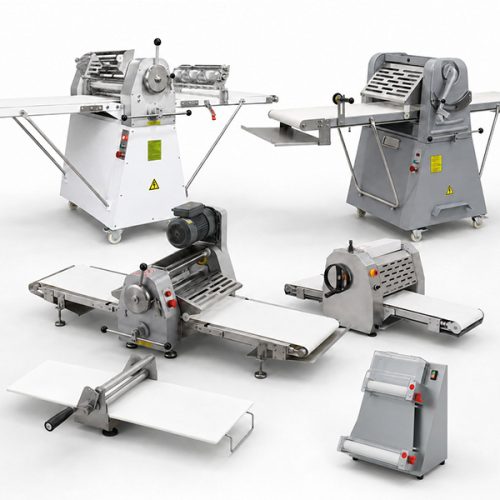
The R&M Dough Sheeter Range — Eight Products, One Factory
| Product |
Roller Width |
Max Dough |
Best For |
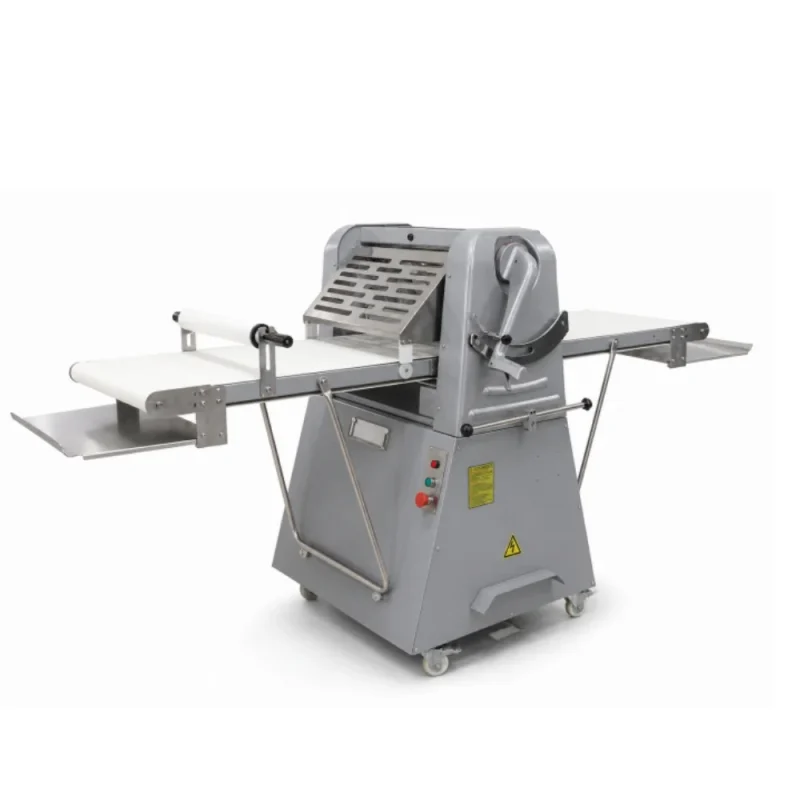
| Floor-Standing Reversible Sheeter |
400 – 760mm |
4 – 15kg |
Croissant, puff pastry, high volume |
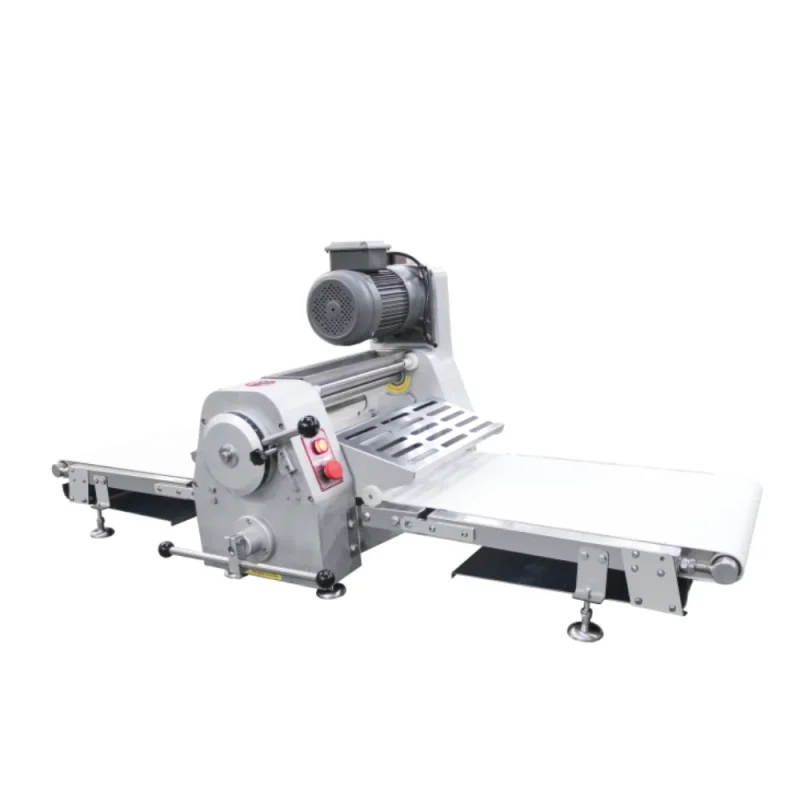
| Commercial Tabletop Sheeter |
400 – 600mm |
4 – 5kg |
Mid-size kitchens, counter-height |
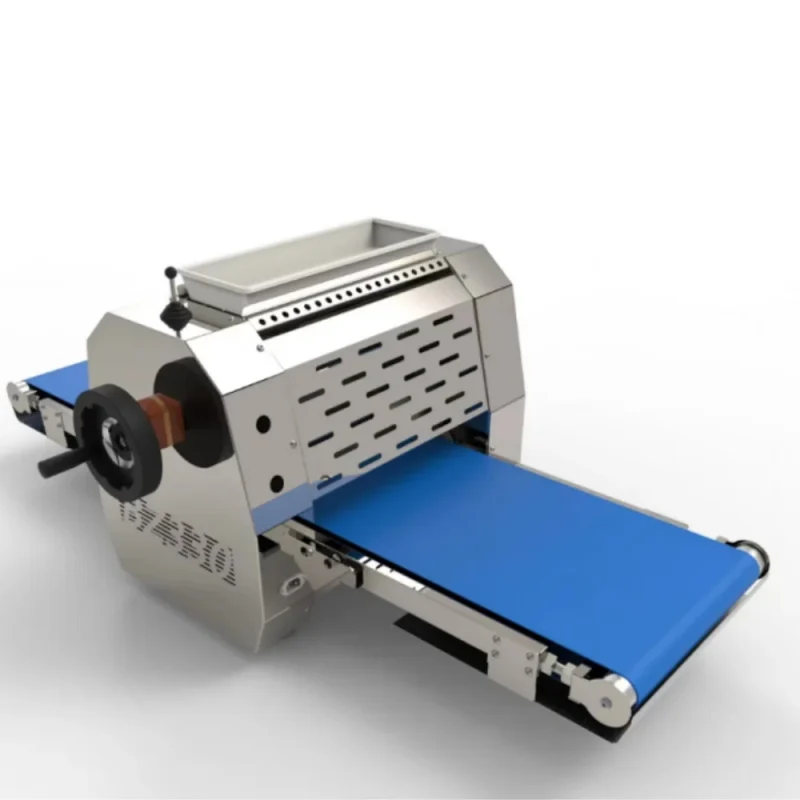
| Mini Tabletop Sheeter |
350 – 420mm |
2.5 – 4kg |
Small bakeries, cafés, OEM color |
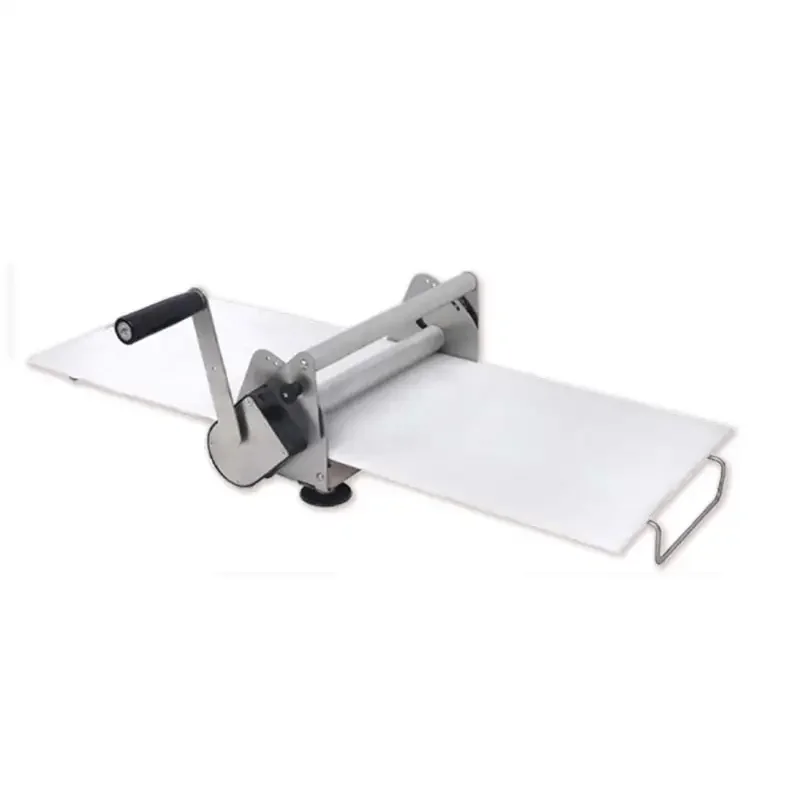
| Manual Dough Sheeter |
320 – 400mm |
N/A |
Home bakers, pop-ups, portable use |
| Fondant Sheeter |
420 – 540mm |
— |
Cake decorating, sugar paste |
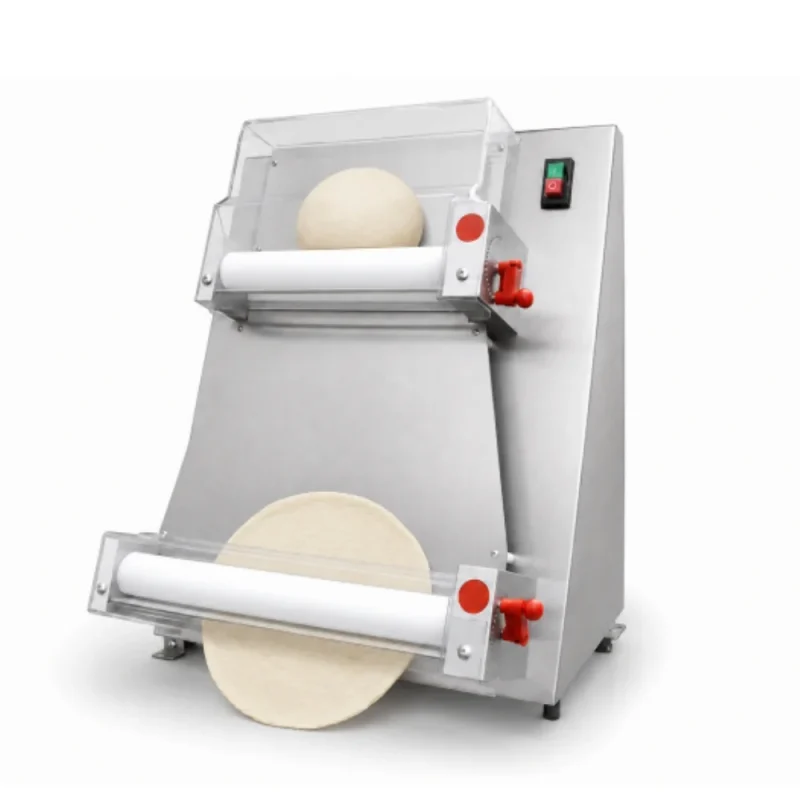
| Pizza Dough Roller (Double-Stage) |
12 – 16" base |
50 – 500g |
Commercial pizzerias, chains |
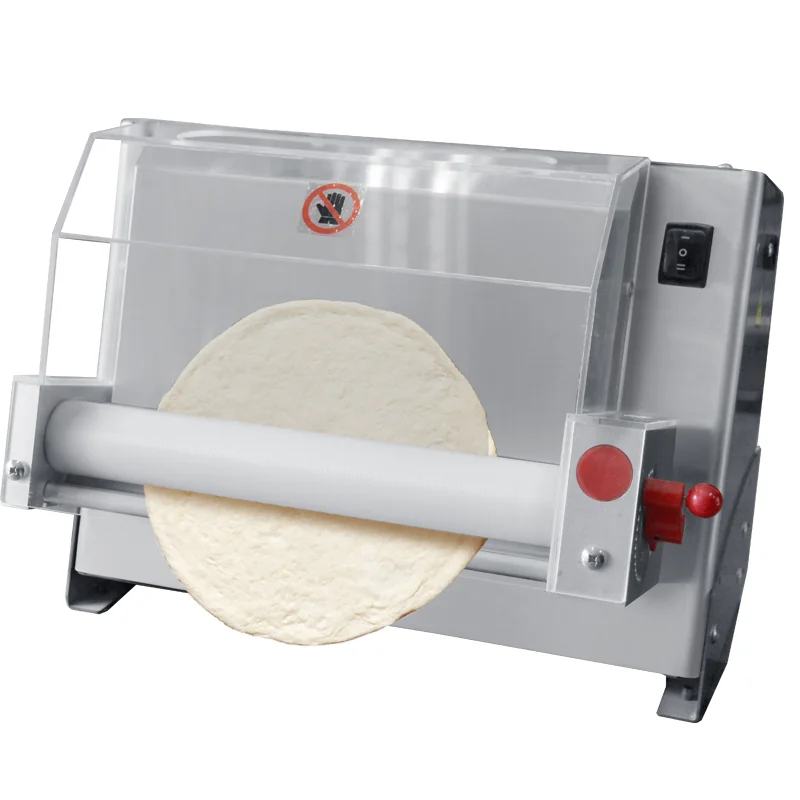
| Pizza Dough Roller (Single-Stage) |
12 – 19" base |
50 – 500g |
Restaurants, quick-service, catering |
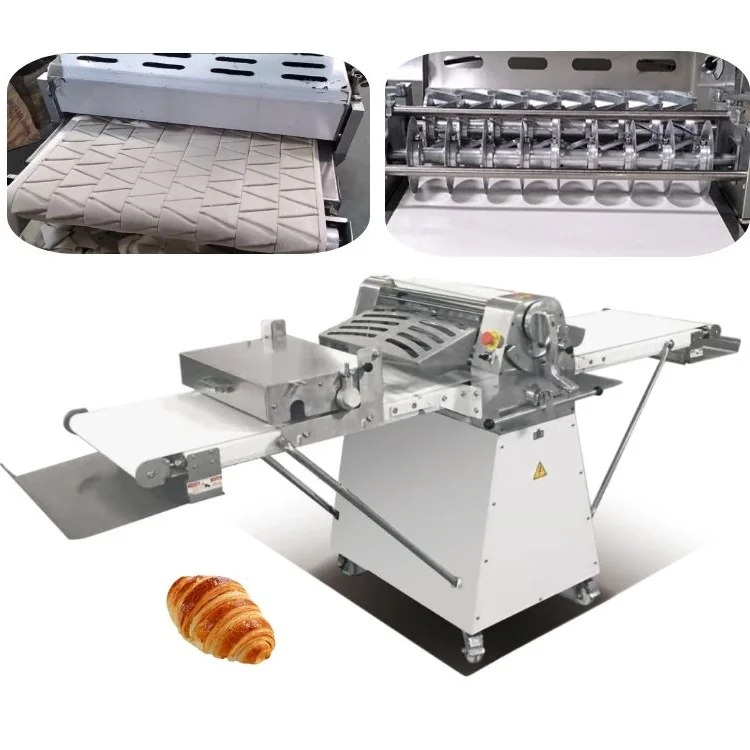
| Sheeter + Cutter Roller |
520mm |
5kg |
Croissant production line |
How to Choose the Right Dough Sheeter
The right machine depends on three things: what you are making, how much of it, and where the machine sits in your kitchen.
What you are making
Laminated pastry (croissant, puff pastry, danish)
The floor-standing reversible dough sheeter is the standard choice. The reversible belt action handles the back-and-forth lamination passes efficiently. For a croissant production line, pair it with the sheeter-cutter roller (RMQ-520-CUT) to integrate the cutting step.
Pizza bases
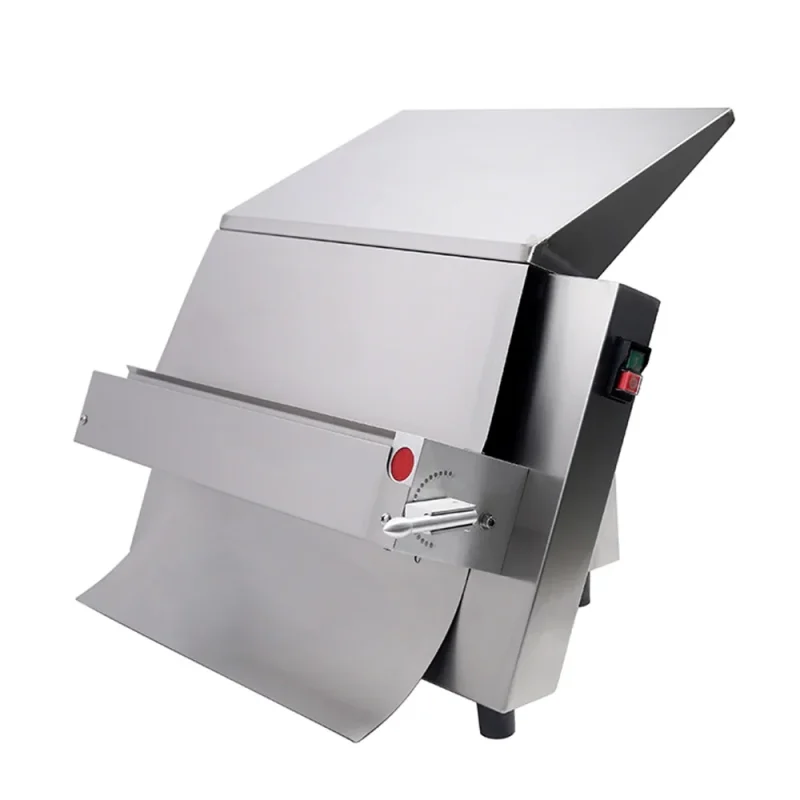
The pizza dough roller range (RMPR series) — not the sheeter range — is built for this application. The double-stage RMPR1/RMPR2 produces more uniform bases; the single-stage RMPR3/RMPR4/RMPR6 is the lower-cost alternative.
Pie crust, cookie dough, tart shells
Any model in the electric dough sheeter range (floor-standing, commercial tabletop, or mini tabletop) handles these applications. Choose based on your kitchen layout and batch size.
Fondant and sugar paste
The dedicated fondant sheeter (GDDR-4C, GDDR-3C, or GDDR-420) is built for this material. A bread dough sheeter is not optimized for fondant.
General pasta and bread
The floor-standing or tabletop reversible sheeters handle both. The 1mm minimum gap covers fresh pasta sheets; standard bread dough sheeting works at 8–20mm passes.
How much you are making
For a startup bakery or small café producing dozens of pieces per session, the mini tabletop or manual models are appropriate and cost-effective. For a central kitchen supplying multiple outlets, the floor-standing RMQ-670A (10kg) or RMQ-820A (15kg) handles full-scale commercial production.
Where the machine sits
If you have a dedicated pastry station with floor space available, floor-standing is the ergonomically better choice. If the sheeter machine shares counter space with other equipment, tabletop or mini-tabletop fits the layout without requiring a dedicated floor area.
Dough Sheeter vs. Dough Roller — What’s the Difference?
These terms are often used interchangeably, but in practice they describe distinct tools:
A dough sheeter (also called a pastry sheeter أو sheeter machine) is a machine with a conveyor belt and reversible rollers. It is designed for progressive lamination and sheeting of pastry dough — passing the dough forward and backward through the rollers multiple times at progressively narrower gaps. The output is a thin, even dough sheet.
A dough roller أو dough rolling machine typically refers to a simpler machine that passes dough through rollers in one direction — either for initial flattening, bread dough prep, or pizza base pressing. Pizza dough roller machines are a specific category built for pressing portioned dough balls into flat bases. Both types are manufactured by R&M and covered on this page.
Buying Guide — Key Specifications to Compare
- Roll gap range: How thick to how thin the machine can sheet. For laminated pastry, you need a wide range (typically 2–35mm); for fondant, a narrow precise range (1–5.5mm) matters more.
- Conveyor belt width: The working width of the commercial dough sheeter. Wider belt = wider dough sheets = fewer cuts needed to cover large formats.
- Maximum dough weight: Critical for floor-standing and tabletop sheeters. Size your machine to your typical batch weight with margin — running a machine at its maximum consistently reduces life expectancy.
- Machine weight and installation: Tabletop and mini models (75–115kg) install on a sturdy prep bench. Floor-standing models (190–280kg) are permanent floor installations.
- Voltage: Most models are available in 220V/50Hz single phase and 380V/50Hz three phase. The RMQ-820A runs on 380V only. Specify at order.
- OEM availability: Custom color, panel branding, and voltage conversion (110V) are available on selected models. Contact us with your requirements.
Full Dough Sheeter & Dough Roller Product Range
Five models for professional pastry kitchens. Belt widths from 400mm to 760mm, handling 4kg to 15kg per run. Standard for commercial croissant and puff pastry production.
Counter-height reversible sheeting at 4–5kg capacity. The same 1–35mm roll gap as the floor-standing range, in a lighter (110–115kg) bench-top installation.
Compact folding sheeters for startup bakeries and café kitchens. Lightest in the range at 75–100kg. RMQ-370T available in multiple colors with OEM options.
Hand-operated, no electricity. 12-inch (320mm) and 15-inch (400mm) rollers. For home bakers, pop-up stalls, and portable use. 6.6–7.2kg.
Dedicated electric and manual machines for fondant, sugar paste, and marzipan. 18 to 21-inch electric rollers at 1–5.5mm. Manual GDDR-420 at 16 inches, 1–15mm.
Two-roller-stage machines for 12-inch and 16-inch commercial pizza bases. More consistent base thickness than single-pass machines. 0.37KW, 35–42kg.
Three models covering 12, 16, and 19-inch pizza bases. Lighter (26.5–27kg) and lower cost than the double-stage. The practical choice for moderate-volume pizza kitchens.
A commercial dough sheeter with an integrated cutter roller for laminated dough. Sheets and cuts croissant triangles (or other shapes) in one pass. Designed to pair with the R&M croissant moulder.
الأسئلة المتكررة
What is the difference between the floor-standing and tabletop dough sheeter?
Both use reversible belt action and the same 1–35mm roll gap. The floor-standing models handle more dough per run (up to 15kg vs. 5kg for tabletop), are heavier (206–280kg vs. 110–115kg), and operate at standing height rather than counter height. For a dedicated pastry production line, floor-standing is standard. For a multi-purpose counter-height kitchen, tabletop is more practical.
Commercial tabletop sheeter vs. mini tabletop sheeter — which is right for me?
The commercial tabletop (RMQ-400T/520T/630T) handles 4–5kg batches with wider roller options (400–600mm). The mini tabletop (RMQ-330TS/400TS/370T) handles 2.5–4kg, is lighter (75–100kg vs. 110–115kg), and includes color and OEM options on the RMQ-370T. Choose commercial tabletop for a regular mid-size production; choose mini tabletop for a startup bakery or limited counter space.
Can I use a dough sheeter for pizza dough?
A dough sheeter can flatten pizza dough into sheets, but it is not optimized for round pizza base production. A pizza dough roller press (RMPR series) produces consistent round bases faster and at better diameter consistency for pizza service. For a kitchen primarily making pizza, the RMPR series is the right choice over a sheeter.
What is a reversible dough sheeter?
A reversible dough sheeter has a belt that passes dough in both directions — forward through the rollers, then backward without the operator physically moving the dough. This back-and-forth action is essential for laminated pastry production (croissant, puff pastry, danish) where many progressive passes are required.
Do these machines handle high-hydration bread dough?
Yes, up to approximately 70–72% hydration. Above this, dough tends to stick to belts and rollers — light dusting with flour helps. For very high-hydration artisan bread, hand-shaping or a separate dough divider workflow is more appropriate.
What is the lead time for international orders?
Contact us with your model selection, quantity, and destination. We will confirm lead time and freight cost within one business day.
Can I get OEM branding on the machines?
Yes. Panel branding, machine color (especially on the RMQ-370T mini series), and packaging documentation are available for OEM orders. Minimum quantities apply. Contact us with your requirements.
{"@context":"https://schema.org","@type":"CollectionPage","name":"Commercial Dough Sheeter & Dough Roller","description":"R&M full range of commercial dough sheeters and dough rollers. Floor-standing reversible, commercial tabletop, mini tabletop, manual, fondant sheeter, pizza dough roller (single and double stage), and sheeter with cutter roller.","url":"https://rmachinery.com/bakery-equipment/dough-sheeter/","publisher":{"@type":"Organization","name":"Rongmai Machinery","url":"https://rmachinery.com"}}
{"@context":"https://schema.org","@type":"BreadcrumbList","itemListElement":[{"@type":"ListItem","position":1,"name":"Home","item":"https://rmachinery.com"},{"@type":"ListItem","position":2,"name":"Dough Sheeter","item":"https://rmachinery.com/bakery-equipment/dough-sheeter/"}]}
Request a Custom Sheeter Quote
Not sure which machine fits your production? Send us your dough type, batch size, and kitchen format — we will recommend the right commercial dough sheeter أو dough roller model and reply with factory-direct wholesale pricing within 12 hours.
Get Custom RFQ For Your Dough Sheeter
Share your dough type, batch size, kitchen layout and country — we match the right electric dough sheeter or roller and reply with factory wholesale price within 12 hours.
Related Bakery Equipment