



Stone Base Deck Ovens for Pizza — 1 to 4 Decks, Electric, Gas & Dual-Fuel
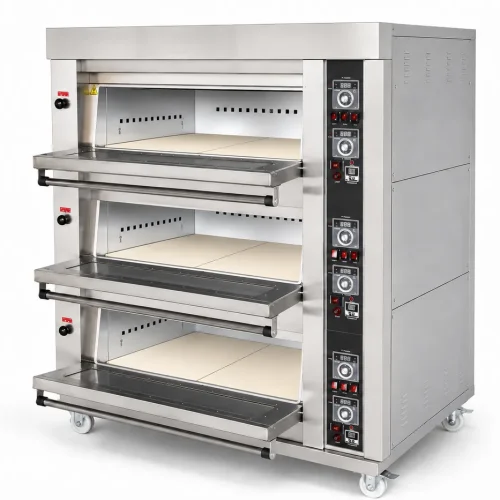
R&M deck ovens fitted with a stone base bring genuine stone-baked texture to New York-style, Roman, and pan pizzas — without the cost or installation requirements of a specialist pizza oven. Available in 1 to 4 deck configurations, electric, gas, and dual-fuel options, in both standard and large chamber sizes. Up to 300°C. Suitable for bakeries, cafés, and restaurants where pizza is part of a broader menu rather than the sole product.
اطلب عرض أسعار
أدخل الكمية التي تحتاجها وأضفها إلى قائمة عروض الأسعار الخاصة بك للاستفسار عن الأسعار.
تفاصيل المنتج
Stone Base Deck Ovens for Pizza — 1 to 4 Decks, Electric, Gas & Dual-Fuel
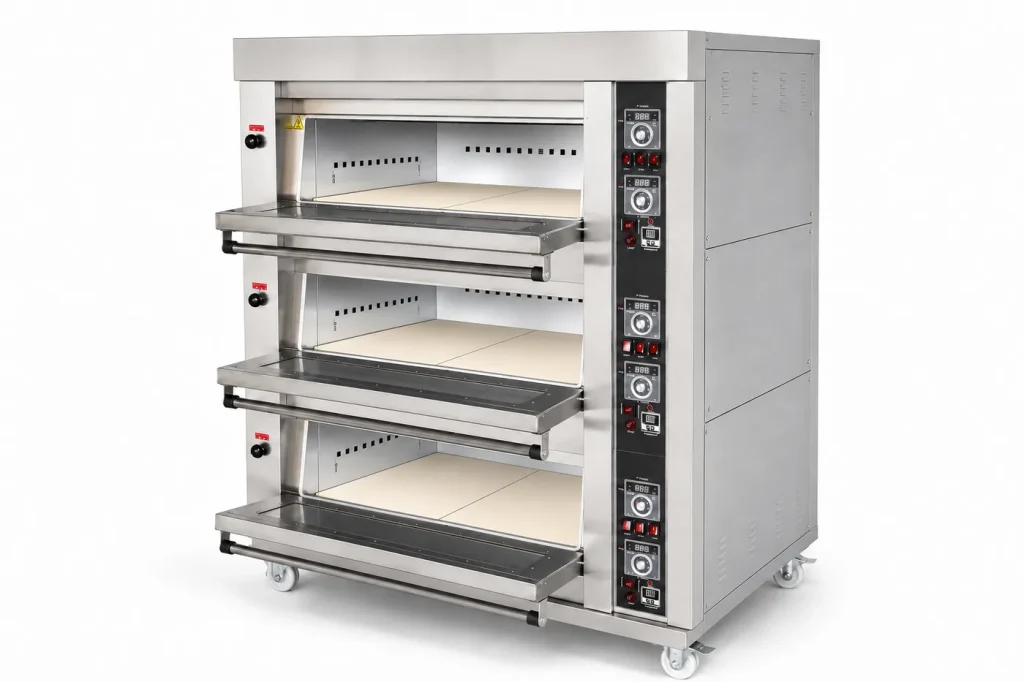
Stone deck ovens for pizza from R&M bring genuine stone-baked texture to New York-style, Roman, and pan pizzas — without the cost or installation requirements of a specialist pizza oven. Available in 1 to 4 deck configurations, electric, gas, and dual-fuel options, in both standard and large chamber sizes. Up to 300°C. Suitable for bakeries, cafés, and restaurants where pizza is part of a broader menu rather than the sole product.
What Makes This Different from a Specialist Pizza Oven
These are standard commercial deck ovens with a stone base fitted to the baking surface. That is a deliberate specification choice, not a compromise.
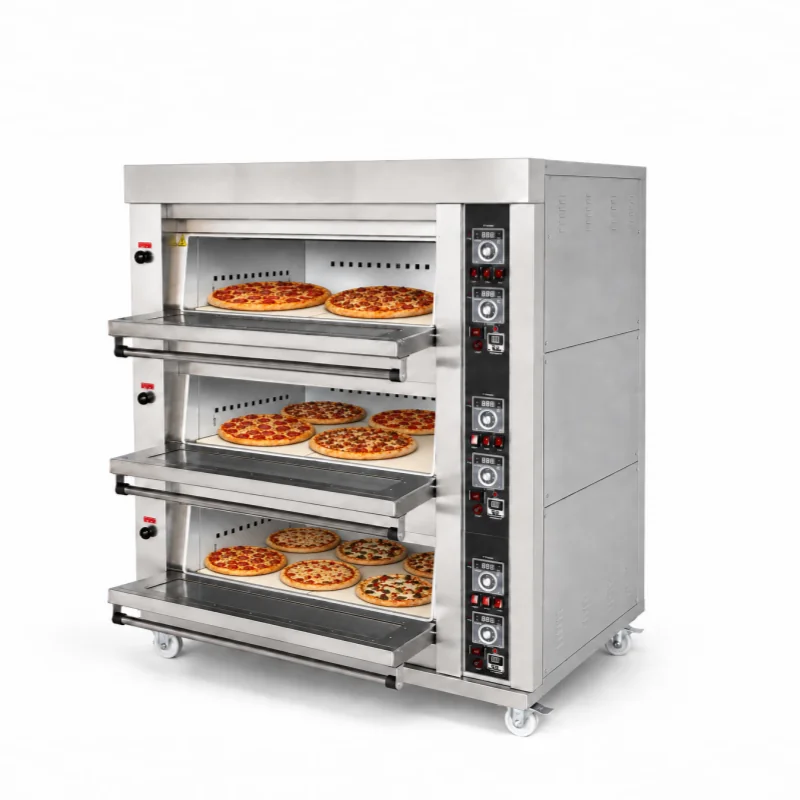
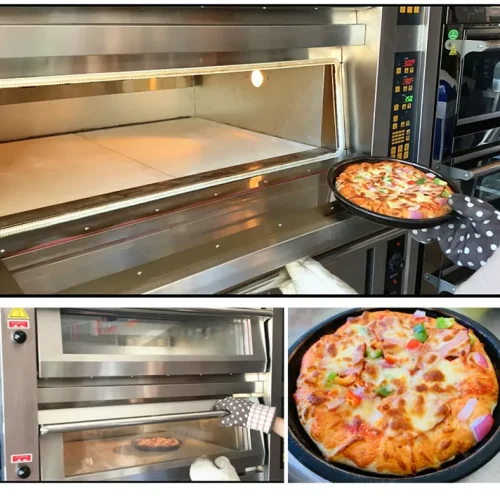
The stone base delivers the heat transfer that gives stone-baked pizza its characteristic texture: heat absorbed during preheat is released into the dough base during the bake, producing a crisp, dry crust without the tray marks you get from a metal surface. The cordierite stone handles the daily thermal cycling of a commercial kitchen without cracking — which is why this stone deck oven is trusted in busy pizzerias and bakeries.
The difference from a specialist pizza deck oven is temperature ceiling and focus. These ovens operate at up to 300°C — suited to New York-style, Roman-style, and pan pizza, which bake at longer times with more complex toppings. If your operation is primarily a pizzeria running Neapolitan-style pies at 450–500°C in 90 seconds, a specialist model is the right tool. If pizza is part of a broader baking menu, this oven handles everything — bread, pastry, flatbread, pizza — without compromise.
The practical advantages of a stone deck oven: up to 4 decks, dual-fuel availability, larger chamber options, and a lower unit cost than specialist high-temperature ovens.
Available Configurations
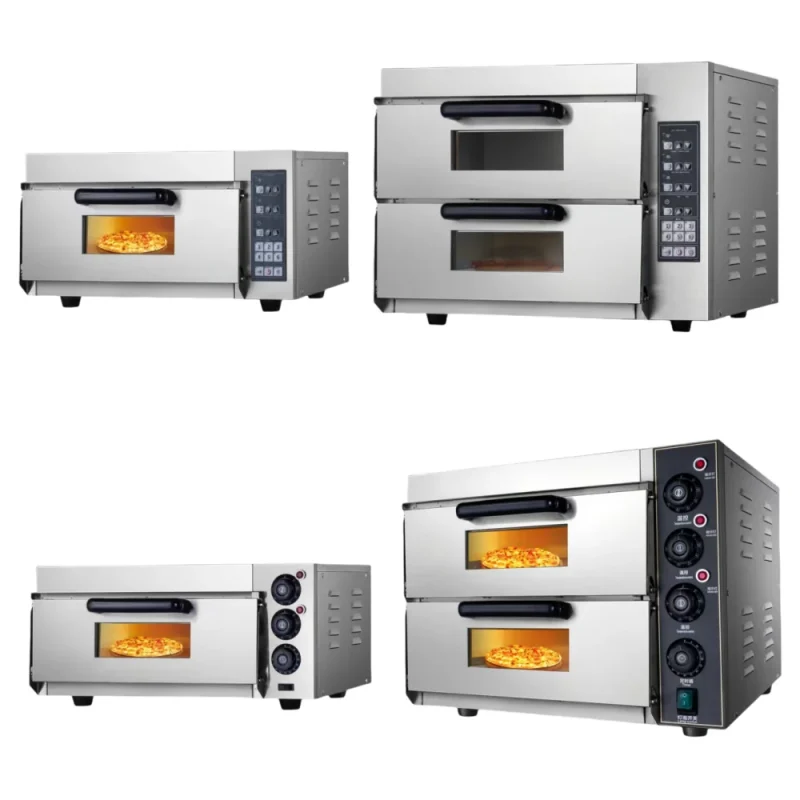
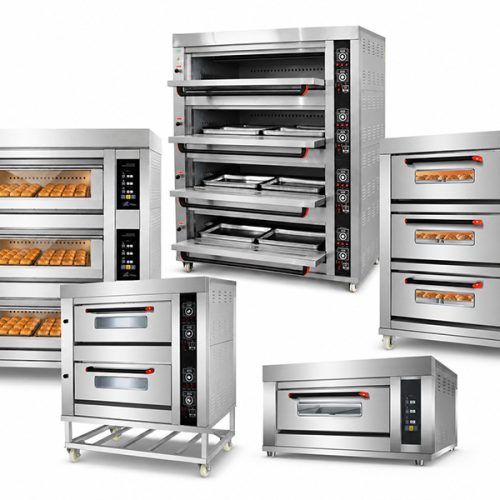
1 to 4 decks. Electric, gas, or dual-fuel. Standard and large chamber options. Specify at time of order.
| Configuration | Decks | Energy Options | Notes |
|---|---|---|---|
| Single deck | 1 | Electric / Gas / Dual-fuel | Compact footprint for moderate volume |
| Double deck | 2 | Electric / Gas / Dual-fuel | Independent temperature control per deck |
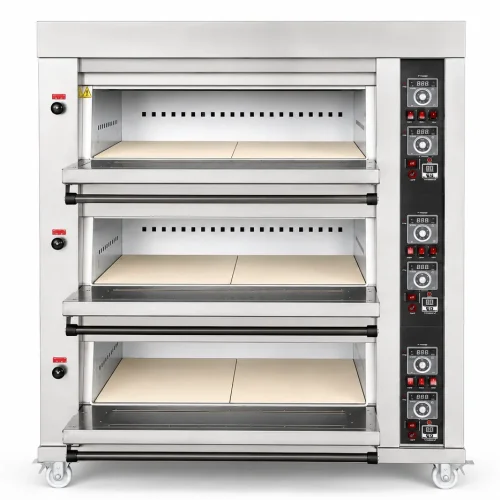
| Triple deck | 3 | Electric / Gas / Dual-fuel | High-output for busy restaurant service |
| 4-deck | 4 | Electric / Gas | Maximum capacity; suited to central kitchens |
Full model codes and technical specifications are available on request. Contact us with your deck count, energy source preference, and chamber size requirement.
Chamber sizes: Standard and large chamber options available across most configurations. The standard chamber handles 3–4 pizzas per deck depending on size; the large chamber accommodates more product per cycle.
Voltage: Single-phase (220–240V/50Hz) and three-phase (380V/50Hz) options available depending on model. Confirm supply capacity before ordering. Three-phase models carry higher output and are suited to the upper deck counts.
Electric, Gas, or Dual-Fuel — Which Configuration to Choose
Electric deck ovens
Cleaner installation. Precise digital temperature control from the panel. No gas line required. Available in single-phase for smaller units, three-phase for higher-output models. Heat-up from cold takes longer than gas but maintains temperature steadily through high-volume service.
Gas deck ovens
Faster heat-up and recovery between consecutive bakes. Gas heat produces slightly different baking characteristics that some operators prefer for crust texture. Suitable for locations with existing gas infrastructure and where energy cost favors gas. Requires ventilation — proper kitchen extraction is needed. LPG and natural gas configurations available; specify at order.
Dual-fuel (electric + gas)
Runs on either energy source independently. Useful where energy costs fluctuate, or where kitchen gas supply is limited and electric backup is needed. This configuration is available on select models — contact us to confirm availability for your required deck count.
The Stone Base — Baking Performance at 300°C
The baking stone fitted to these ovens is a high-density cordierite composition. Cordierite is chosen for stone deck ovens because it handles repeated thermal cycling without cracking — a common failure mode with lower-grade stone slabs — and stores heat effectively for consistent base baking.
At operating temperatures up to 300°C, the stone-baked result on New York-style and pan pizzas is substantially better than baking on a wire rack or metal tray: the base is dry and crisp, the edge has the characteristic open structure, and toppings finish properly before the base overcooks.
For operations that want to upgrade from tray baking to stone baking without buying a dedicated pizza oven, adding the stone base to a deck oven is the practical route. These ovens also bake bread and flatbreads without any modification — the stone works across product types.
Top and bottom heat control: Each deck has independent top and bottom element control. For pizza, most operators run a higher bottom temperature to drive the stone heat and a moderate top temperature for the toppings. Precise settings depend on your dough formula and topping weight.
Who These Ovens Are Built For
Bakeries and bread-focused operations
The primary use case for commercial deck ovens is bread baking. If your operation bakes bread as its main product and wants to offer pizza as part of the menu, this oven handles both without compromise. The stone base is the shared requirement.
Cafés and casual dining restaurants
For cafés and restaurants where pizza appears on the menu alongside other dishes, a 1- or 2-deck stone deck oven is the practical choice. The capacity is sufficient for table-service volumes, the footprint fits a kitchen that was not designed around a pizza operation, and the capital cost is lower than a specialist oven.
High-volume central kitchens
For central kitchen or commissary operations producing pizza alongside baked goods, the 3- and 4-deck electric configurations provide large-scale output. Multiple independent decks allow different products to bake simultaneously at different settings.
Restaurant groups scaling up
A triple deck pizza oven or 4-deck configuration running at capacity produces more product per shift than a single-deck specialist oven. For restaurant groups that need consistent, repeatable output across multiple locations, the standardized deck oven format is straightforward to replicate and service.
Build Specification
Structure: Commercial-grade stainless steel body throughout. The construction is designed for daily professional use — the panels and frame are built to the same specification as our full deck oven range, not a reduced commercial-light standard.
Insulation: Heavy-duty insulation on all chamber walls. Maintains operating temperature during back-to-back baking cycles and limits radiated heat at the exterior surface — important in kitchens with limited space between equipment.
Controls: Digital panel with independent top and bottom temperature readout per deck. Timer function on each deck. Straightforward to operate and consistent in the temperature it holds across a full service shift. The control panel is the same across electric and dual-fuel models; gas models use a dedicated burner control.
Mobility: Heavy-duty casters on all floor-standing models. The multi-deck configurations are substantial units — the casters allow repositioning during a kitchen fit-out or deep clean without dismantling.
Viewing window: Tempered glass door panel on each deck. Monitor bake progress without opening the door, which keeps the chamber temperature stable during service.
Multi-Deck Operation — Running Different Products Simultaneously
The independent control on each deck is not just a feature — it is what makes multi-deck operation practical for a mixed menu. In a 3-deck stone deck oven:
- Deck 1 (top): running at 280°C for thin-crust pizza, stone preheated
- Deck 2 (middle): running at 230°C for focaccia or flatbreads
- Deck 3 (bottom): running at 200°C for holding baked goods between service windows
This kind of operation is routine in busy restaurant kitchens. The alternative — separate ovens for each product type — costs more and takes more floor space. The deck oven format with stone base is designed for this kind of mixed use.
For pure-pizza operations at high volume and maximum temperature, a specialist pizza oven is the right tool. For everything else, this is the professional standard.
الأسئلة المتكررة
What is the maximum temperature, and what pizza styles does it suit?
These ovens reach up to 300°C. That temperature is well-suited to New York-style pizza (typically baked at 230–280°C for 7–12 minutes), Roman-style (pizza al taglio), and thick-crust or pan pizza. For Neapolitan-style pizza requiring 450–500°C, a specialist high-temperature oven is the more appropriate choice.
How does a stone base deck oven differ from a specialist pizza deck oven?
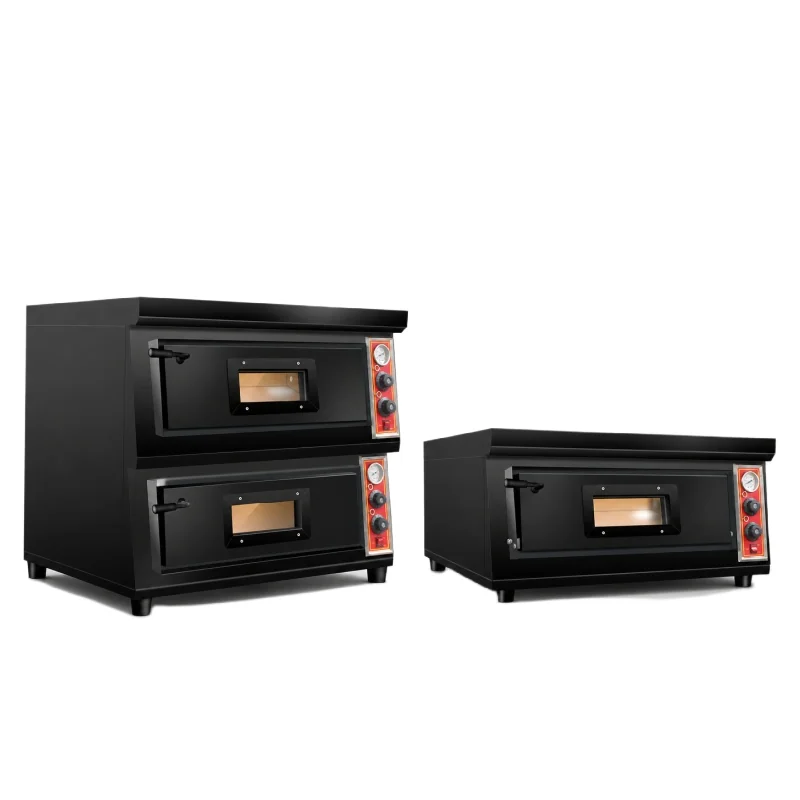
A specialist pizza deck oven — such as our black series — is built specifically for pizza at high temperatures (up to 450–500°C) using high-performance stainless steel heating elements. Our stone base deck ovens are versatile commercial baking ovens that handle pizza well at standard deck oven temperatures, alongside bread, flatbread, and pastry. Lower capital cost, higher flexibility, larger deck count options, and dual-fuel availability are the practical differences.
What is the difference between single-phase and three-phase models?
Single-phase models (220–240V/50Hz) are available for lower-deck-count configurations and work on standard commercial supply. Three-phase models (380V/50Hz) power the higher-output multi-deck configurations and require a three-phase supply — standard in commercial kitchen installations. Confirm your available supply before ordering.
Can I run the gas and electric simultaneously on a dual-fuel model?
Dual-fuel models are designed to operate on either energy source, not both simultaneously. The dual-fuel configuration gives you the option to use gas or electric depending on operational conditions, energy cost, or supply availability.
Are LPG and natural gas both supported?
Yes. Gas models are available in LPG and natural gas configurations. Specify your fuel type at time of order — the gas train and burner settings are calibrated to the fuel during production and are not field-switchable.
Can these ovens bake bread and other products, not just pizza?
Yes. The stone base works for any product that benefits from direct radiant heat and a dry baking surface: bread loaves, baguettes, focaccia, flatbreads, croissants, and many pastry items. The independent temperature control per deck allows different products to run simultaneously. This is the primary reason operators choose a stone deck oven over a specialist pizza oven when their menu is mixed.
What is the lead time and how are the units shipped?
Standard configurations ship in 15–25 business days. Custom or non-standard deck counts may require additional production time. Units are crated in reinforced export packaging. We coordinate international freight — contact us with your destination and quantity for a shipping estimate.
Do you offer OEM or private-label manufacturing?
Yes. Panel branding and documentation can be produced under your brand. Contact us with your requirements for scope and lead time.
What after-sales support is provided?
We supply replacement parts directly — heating elements, baking stones, control panels, door glass, and casters. Installation guidance is included with every shipment. Technical support is available remotely for commissioning and troubleshooting.
Get a Quote
1 to 4 decks. Electric, gas, or dual-fuel. Stone base standard. Factory-direct pricing.
Tell us your deck count, preferred energy source, chamber size requirement, and voltage supply — we will recommend the right configuration and send a quote within one business day.
GET A QUOTE — WHATSAPP / EMAIL →
Steam Injection Option — Adding Artisan Bread Capability to This Stone Deck Oven
The stone base and steam injection combination converts this commercial deck oven into a full artisan bread deck oven setup. For bakeries that produce both pizza and crusty European-style bread — baguettes, sourdough, ciabatta — the stone hearth deck oven configuration with steam is the practical single-oven solution.
Steam injection on a deck oven with steam works by introducing water vapor into the chamber during the early bake phase. The steam keeps the dough surface extensible during oven spring — the phase where the dough expands rapidly in the first few minutes at baking temperature. Without steam, the surface crust forms too early, restricting expansion and producing a denser loaf with less open crumb structure. After the spring phase, the steam dissipates and the crust dries to the characteristic crackled finish of a properly baked artisan loaf.
A steam injection deck oven is the professional standard for hard-crust bread baking. Combined with the stone base — which drives dry heat into the dough from below — the setup produces results that match dedicated artisan bread ovens at significantly lower capital cost. The stone floor also works across product types: bread, flatbreads, pizza, and pastry all benefit from direct stone contact during the bake.
The steam injection option is factory-installed and must be specified at order. It is available on single to 3-deck configurations — for 4-deck models, contact us to confirm availability. Buyers looking for a stone deck oven for sale with steam injection capability should specify this clearly when requesting a quote.
Commercial Stone Oven — Sourcing and Specification Checklist
For buyers sourcing a commercial stone oven for the first time, these are the specification points to confirm before placing an order:
Stone composition. Our baking stones are cordierite-based — a refractory ceramic composition chosen for commercial deck oven use because it handles daily thermal cycling (heat-cool-heat cycles) without cracking. Lower-grade stone alternatives — compressed calcium silicate or basic ceramic tile — fail under this thermal stress within months of daily use. Ask any supplier what material the stone is and whether it is cordierite or equivalent refractory composition.
Temperature ceiling. For a commercial stone oven in a restaurant or bakery setting, confirm the maximum operating temperature against your product requirements. Our stone deck ovens reach 300°C — sufficient for New York-style pizza, Roman pizza, flatbreads, and most commercial bread. Neapolitan-style pizza requires 450°C+; that is a specialist product requiring a specialist oven.
Deck independence. A multi-deck stone hearth deck oven should have independent temperature control per deck. Confirm this — shared temperature control across decks means all chambers bake at the same setting, which prevents mixing product types in a single production cycle.
Steam availability. Not all stone deck oven configurations include steam as standard. Confirm whether steam injection is an option for your required deck count, and whether it is factory-installed or a field kit.
For an overview of baking stone materials and their properties, see the Wikipedia article on baking stones.
Frequently Asked Questions — Additional
Is this stone deck oven for sale with steam injection available for immediate shipment?
Standard stone deck oven configurations (without steam) typically ship within 15–25 business days. Configurations with factory-installed steam injection may require an additional 5–10 days of production time. Contact us with your required configuration and target date — we will confirm the current production schedule.
Can the commercial deck oven with steam be used for products other than bread?
Yes. Steam is typically used for bread products that benefit from moisture in the early bake phase. For pastry, pizza, and other products, the steam function is simply not activated — the oven operates as a standard stone deck oven. The steam system does not affect oven performance when not in use.
What is the stone hearth deck oven price range?
Price depends on deck count, energy source (electric, gas, dual-fuel), and optional features (steam, chamber size). Contact us with your configuration requirements and we will send a current factory-direct quote within one business day.