




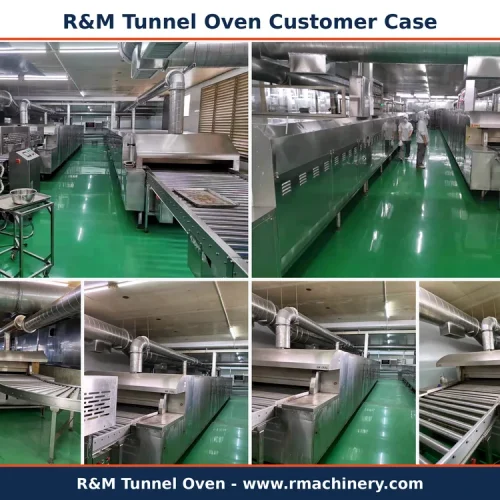
Industrial Tunnel Oven for Bakeries | R&M Machinery
Custom industrial tunnel oven for continuous bread, biscuit, mooncake and pizza production. Electric, LPG or LNG heating. Baking width 600–2,500 mm. PLC or digital control. Belt, chain, mesh or steel conveyor. Factory-direct from R&M — send your product and output target for a line proposal.
اطلب عرض أسعار
أدخل الكمية التي تحتاجها وأضفها إلى قائمة عروض الأسعار الخاصة بك للاستفسار عن الأسعار.
تفاصيل المنتج
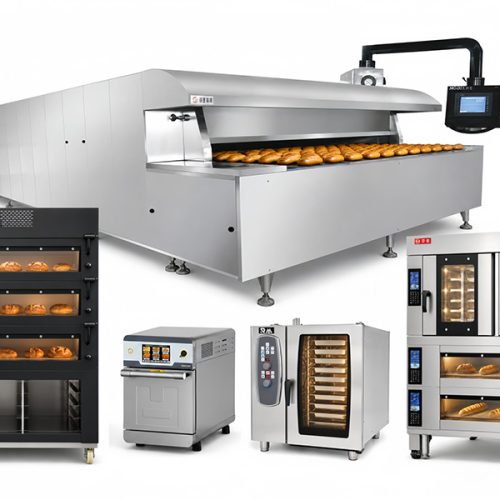
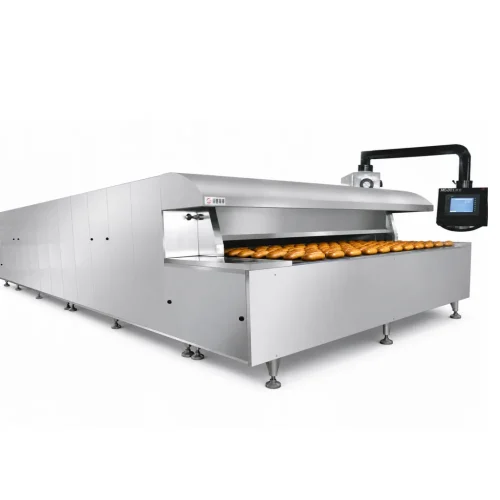
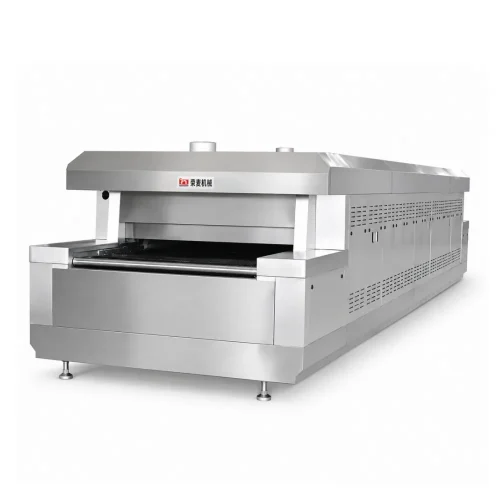
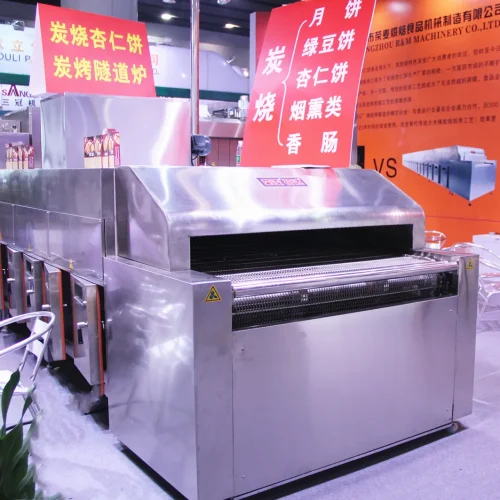
Industrial Tunnel Oven for Continuous Bakery Production
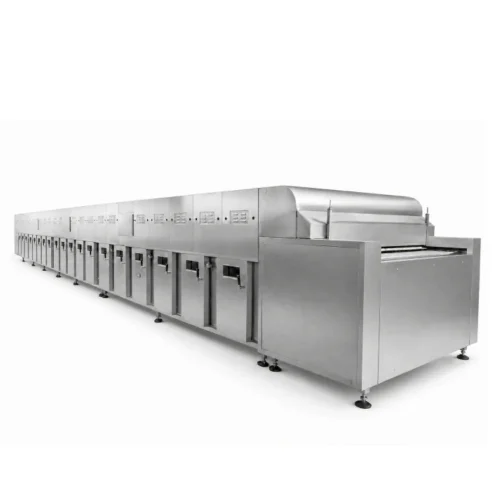
Move from batch loading to stable, continuous output. R&M designs each tunnel oven around your product, hourly target, tray or belt format, available utilities and factory layout. Choose electric, LPG or LNG heating, then specify the baking width, tunnel length, conveyor and control level. The result is an in line oven that keeps products moving through controlled baking zones with less handling between batches.
REQUEST A LINE PROPOSAL → Send Your Product & Output Target
Send product photos, unit weight, target output per hour, available floor space, tray size and local power or fuel details.

Quick Configuration Options
- Custom chamber width: approximately 0.6–2.5 m
- Heat source: electric, LPG or LNG
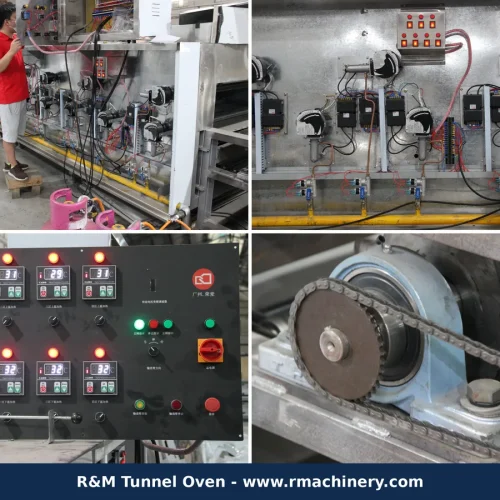
- Control: PLC touchscreen or digital temperature control
- Conveyor: chain, chain plate, wire mesh or steel belt
- Integration: infeed, outfeed, cooling and packaging modules
Built for Continuous Output, Not Batch Bottlenecks
This tunnel oven for bakery production carries products through a controlled heat profile without stopping the line for repeated loading and unloading. The oven tunnel can be divided into multiple zones, so the upper and lower heat can be tuned for crust color, moisture release and internal bake. Conveyor speed is adjusted by inverter to match product size, recipe and required dwell time.
For an industrial bakery, this continuous baking oven can reduce handoffs between batches and make the production rhythm easier to standardize. It can operate as a bread production oven, biscuit oven, mooncake oven or general industrial oven for baking, depending on the heating layout and conveyor selected for the product.
How the Continuous Baking Process Works
| Stage | What Happens |
|---|---|
| 1. Load | Dough pieces, trays or products enter on the selected conveyor. |
| 2. Develop | The first zone begins expansion, setting or surface drying. |
| 3. Bake and color | Independent zone settings balance core baking and surface color. |
| 4. Discharge | Finished products exit to cooling, inspection or packaging equipment. |
Because raw product enters at one end and baked product exits at the other, the layout supports a clear one-way workflow. When properly planned with surrounding conveyors, this can reduce unnecessary crossing between raw and finished-product handling areas.
Choose the Heating Method That Fits Your Plant
Electric Tunnel Oven
An electric tunnel oven uses evenly arranged heating elements and can be configured as an infrared tunnel oven for recipes that need responsive zone control and repeatable surface color. It suits plants with stable electrical capacity, facilities that prefer no on-site gas system, and production lines where clean utility planning is a priority. Final connected load depends on chamber width, length, zone count and operating temperature.
Gas Tunnel Oven: LPG or LNG
A gas tunnel oven uses distributed burner tubes with fan-assisted combustion to supply continuous heat across the baking chamber. LPG or LNG can be selected according to local fuel access. The burner, gas train, pressure requirement, exhaust and safety interlocks must be engineered for the installation country and confirmed before production.
Special Product Heating Configuration
For selected roasted, smoked or specialty biscuit products, R&M can review a combined heating concept using electric elements with an additional charcoal or radiant-heat section. This is not a standard configuration and requires product trials, local safety review and written engineering approval.
Control the Bake Profile, Not Just the Temperature
Each product develops differently. Bread needs controlled expansion and moisture release; biscuits need stable drying and color; mooncakes need a balanced first and second bake. The control system therefore coordinates temperature, conveyor speed and time rather than treating the machine as a single hot chamber.
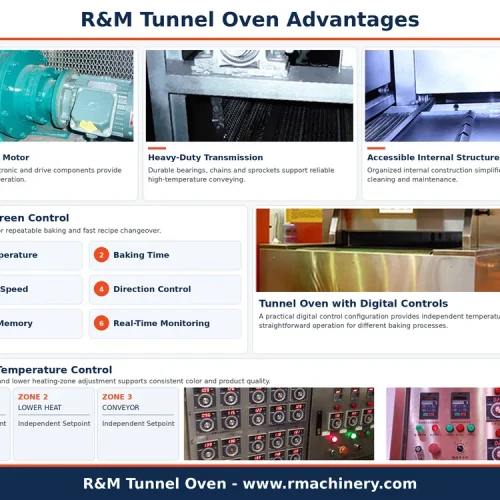
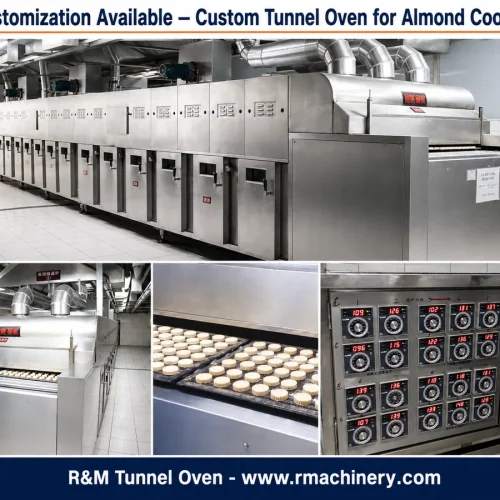
- Multiple baking zones with separate recipe values; a three-zone layout is available and the final zone count depends on the project.
- Independent upper and lower temperature settings to manage top color, bottom color and core bake.
- PID temperature regulation to reduce temperature fluctuation around the set point.
- Variable conveyor speed for product changeovers and dwell-time adjustment.
- PLC touchscreen option for recipe storage, live monitoring, direction and speed control.
- Digital control panel option for projects that prefer a simpler operating interface.
- Fault monitoring and safety alarms for key control points; final alarm list follows the approved electrical design.

Engineered Around the Product and Factory
A useful tunnel oven for sale is not selected only by overall length. The baking curve, product spacing, belt loading, usable width and cooling requirement must work together. R&M can manufacture a small tunnel oven with an approximately 600 mm baking width or a multi-lane system approaching 2.5 m, subject to product and layout review.
When comparing tunnel oven manufacturers, ask how they calculate dwell time, heated length, belt loading, exhaust and utility demand. R&M develops the proposal from sample or recipe data, target pieces per hour, unit weight, desired color, available space and local energy supply. This project method is also used for industrial tunnel ovens for sale to integrated food factories, not only stand-alone bakery lines.
Conveyor Options for Different Products
| Conveyor | Typical Use |
|---|---|
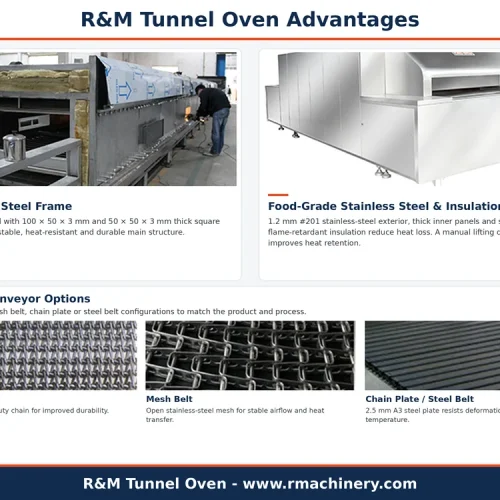
| Wire mesh belt | Biscuits, cookies, small baked pieces and products that benefit from open airflow. Suitable for a mesh belt oven configuration. |
| Chain or tray conveyor | 400 × 600 mm trays, mooncakes, cakes and products that remain on baking pans. This is a band oven or tray-chain layout. |
| Chain plate | High mechanical support and steady transport for selected heavy loads. |
| Steel band | Flat-bottom products where a smooth continuous baking surface is required. |
Note: Different band ovens can produce very different results. Final selection must be based on the product base, release method, airflow, cleaning method and maximum belt load.

Heavy Structure and Layered Heat Retention
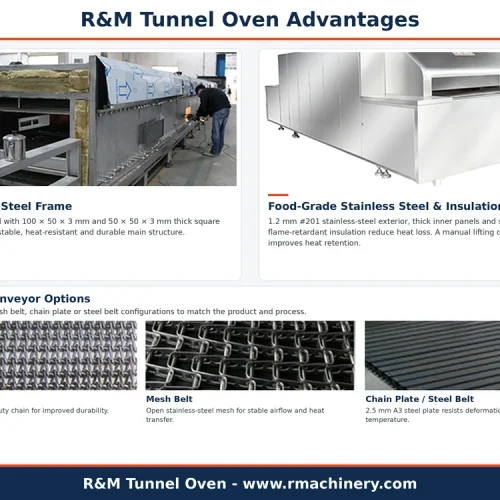
The main frame uses 10# channel steel with 100 × 50 × 3 mm and 50 × 50 × 3 mm square tube sections in the reference design. This reinforced structure helps the long oven body remain stable during continuous high-temperature operation. The reference exterior uses 1.2 mm 201 stainless steel, while the chamber liner uses 1.5 mm aluminized steel.
Insulation is concentrated around the chamber: approximately 250 mm at the top, 200 mm on both sides and 120 mm at the bottom in the source configuration. Manual lift doors at the entrance and exit can be adjusted to the product height to limit open-area heat loss.

Applications
| Product Group | Configuration Note |
|---|---|
| Bread and buns | A tunnel oven for bread can handle sandwich loaves, hamburger buns, dinner rolls and similar products when the proofing and loading systems are matched. |
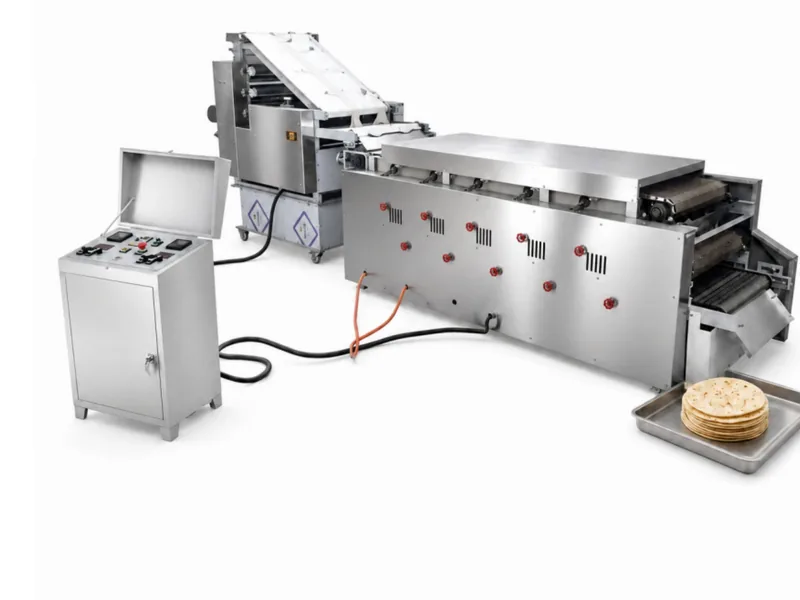
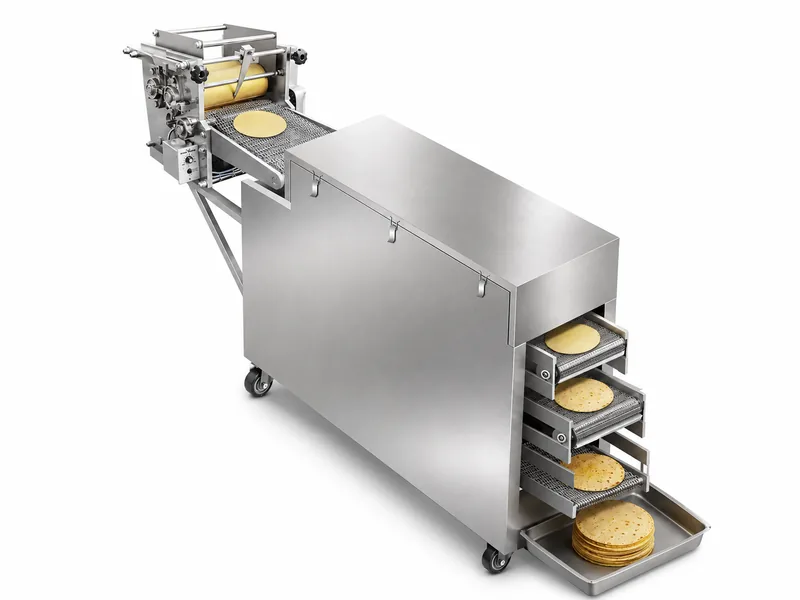
| Pita and flatbread | For a pita bread tunnel oven for sale, provide dough diameter, thickness, moisture, baking time and desired pocket formation before sizing. |
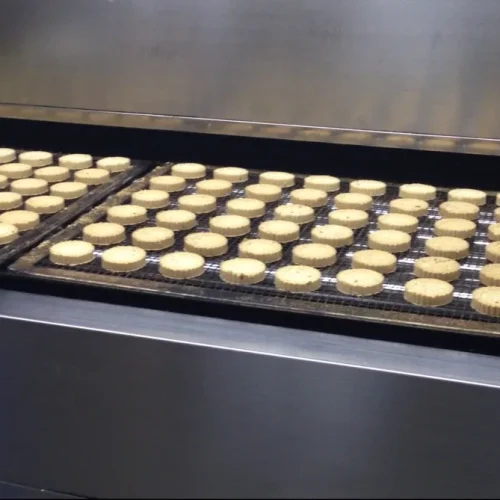
| Biscuits and cookies | A commercial biscuit oven can use mesh or steel-band transport. A biscuit baking tunnel oven is configured around moisture removal, bottom contact and color consistency. |
| Mooncakes and pastries | Supports tray-based first or second baking and can connect to egg-wash, tray-return, cooling and packaging modules. |
| Cakes and snacks | Suitable for selected cake, almond biscuit and snack formats after tray, belt and airflow confirmation. |
| Industrial pizza | A tunnel pizza oven can be engineered for factory pizza output when the belt, top/bottom heat and bake profile are validated for the product. |
Pizza Production: Confirm the Process Before Ordering
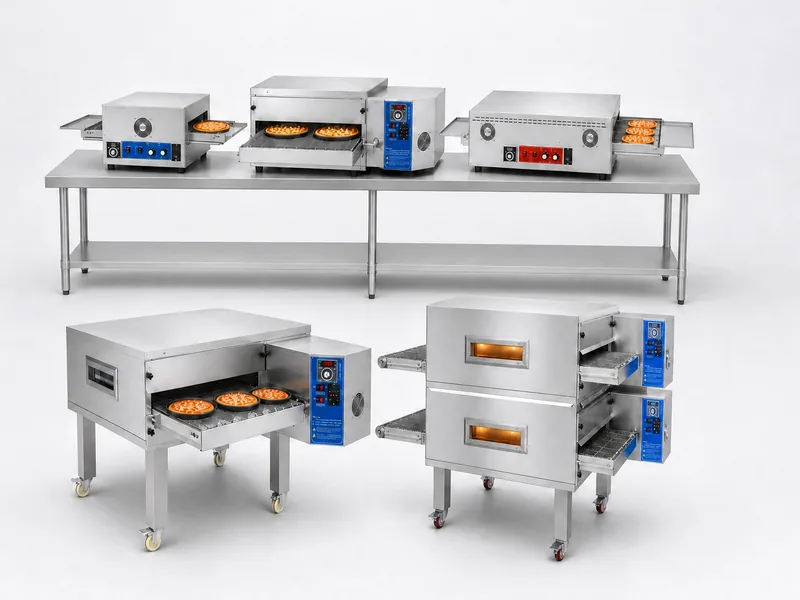
A factory pizza tunnel is different from a compact restaurant conveyor unit. Product diameter, dough hydration, topping load, desired base color and line speed determine the heating profile. In a pizza oven tunnel, the engineering team may combine radiant and circulating heat, with separate top and bottom settings. Buyers searching “tunnel pizza” should send product samples or bake data so R&M can confirm whether this industrial line or a smaller conveyor pizza oven is the correct solution.

Connect the Oven to a Complete Production Line
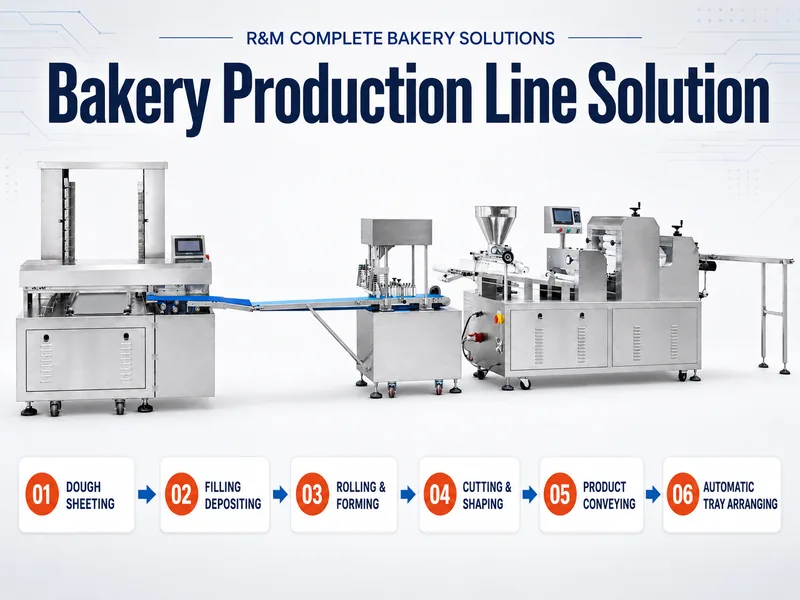
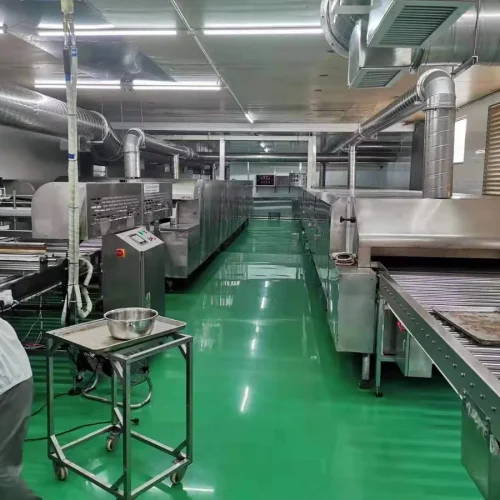
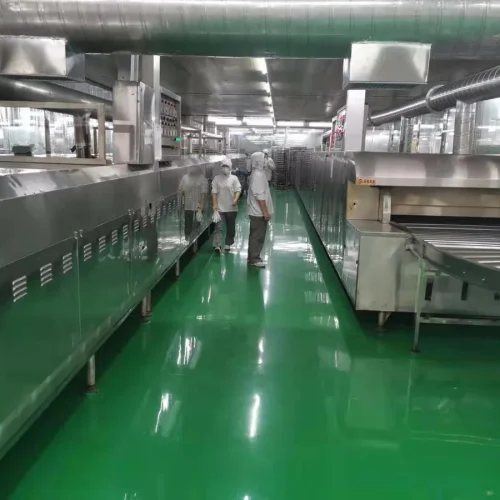
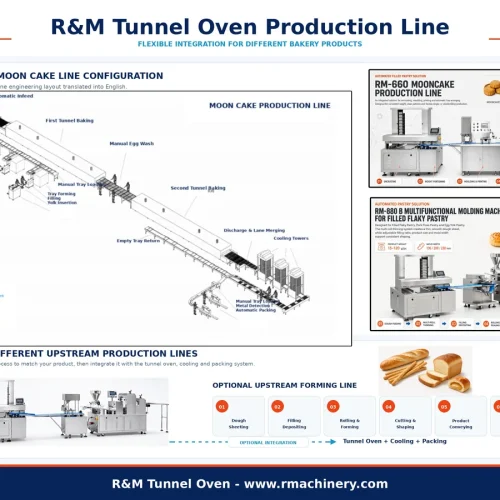
The continuous oven can be supplied as a stand-alone machine or connected to automatic infeed and discharge conveyors, a cooling tower, tray return, metal detection, labeling and packaging equipment. For mooncake production, the layout can include forming, manual or automatic egg wash, first bake, handling, second bake, cooling and packing. The same modular approach applies to continuous process ovens for bread, biscuits and other food products.
Send a simple factory drawing with column positions, doors, utilities and existing machines. R&M can then return a recommended flow direction, oven footprint and connection points for the surrounding equipment.
Which Oven Type Fits Your Operation?
| Oven Type | Best Fit | Decision Factor |
|---|---|---|
| Tunnel oven | Continuous, high-volume products with a repeatable line flow | Highest line integration; custom footprint |
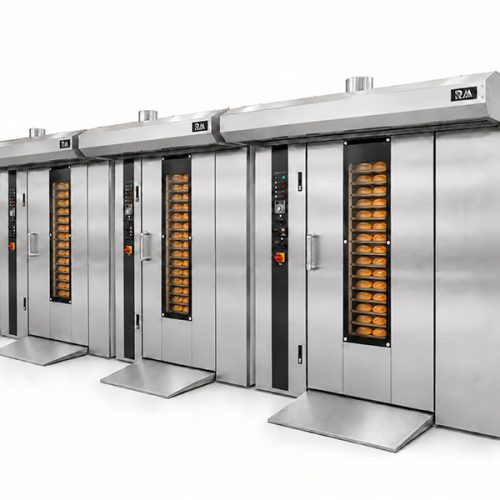
| Rotary Rack Oven | Flexible batch production and multiple recipes | Easier product switching; batch loading |
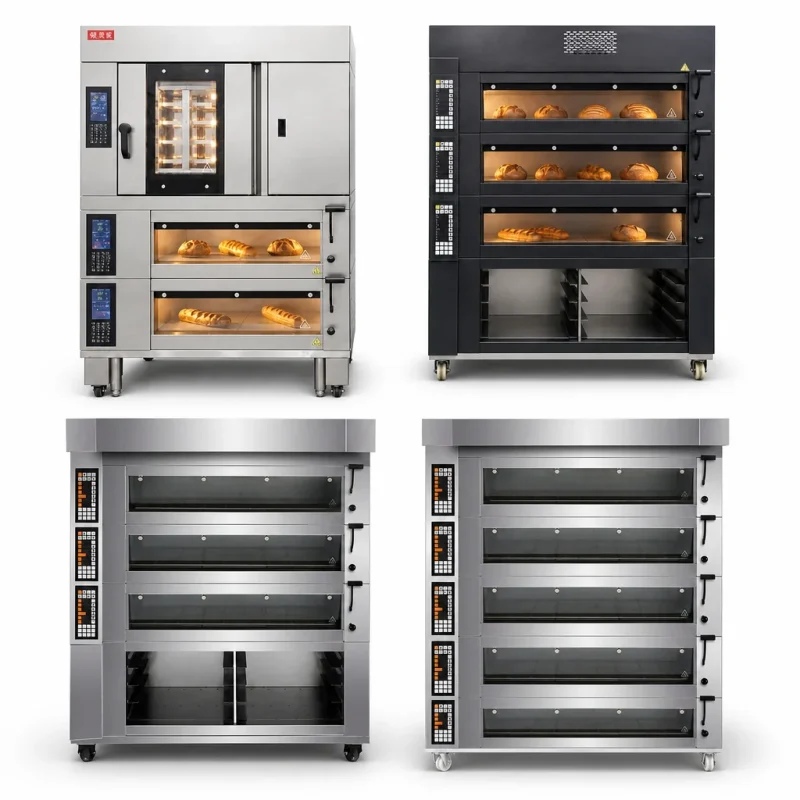
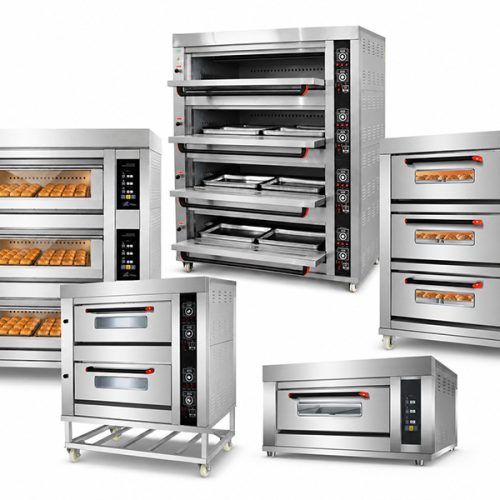
| فرن ذو رفوف | Artisan bread, pizza, pan products and independent deck control | Direct deck heat; manual or semi-batch loading |

Reference Technical Specifications
This is a customizable industrial oven. Values below describe the verified source configuration or the available engineering range; the final technical sheet must be issued for each project.
| Item | Available / Verified Value |
|---|---|
| Product type | Industrial continuous conveyor tunnel oven |
| Heating options | Electric; LPG; LNG |
| Control options | PLC touchscreen or digital temperature control |
| Temperature control | PID; independent upper/lower settings; multiple zones |
| Conveyor speed | Continuously variable by frequency inverter |
| Conveyor options | Chain, tray/chain plate, wire mesh, steel belt |
| Baking width | Approx. 600–2,500 mm (custom) |
| Tunnel/heated length | Custom — based on dwell time and output |
| Reference chamber | 14,000 × 1,280 mm (RMS-16M gas version example only) |
| Reference tray | 400 × 600 mm (example project only) |
| Max. temperature (reference) | Up to approx. 350°C — confirm for final design |
| Reference voltage | 380 V (customizable to destination) |
| Exterior panel | 1.2 mm 201 stainless steel |
| Inner chamber liner | 1.5 mm aluminized steel |
| Insulation | Top 250 mm; sides 200 mm; bottom 120 mm |
| Main frame | 10# channel steel; 100 × 50 × 3 mm and 50 × 50 × 3 mm square tubes |
| Chain / chain plate | 75 mm pitch chain; 2.5 mm A3 steel chain plate (reference option) |
| Infeed/outfeed opening | Manual lift door, height adjustable |
| Rated power / gas use | Calculated after configuration — not a fixed catalogue value |
| Hourly capacity | Calculated from product, belt loading, speed and bake time |
| Overall dimensions / weight | Issued with approved project drawing |
What Determines Tunnel Oven Price?
Tunnel oven price is calculated from the heated length, usable width, heat source, zone count, control system, conveyor, construction materials, exhaust, destination voltage, packing and line-integration scope. A tunnel oven price without the product, output and utility data is usually not comparable.
For a bakery biscuit oven project, biscuit oven price also depends on the belt type, required moisture removal, burner or element layout, cooling section and product changeover needs. Send the following information for a useful quotation:
- Product name, photos, recipe or current baking curve
- Unit weight and dimensions before and after baking
- Required pieces, kilograms or trays per hour
- Current tray size, lane count and product spacing
- Available LPG, LNG or electrical capacity
- Factory floor plan, ceiling height and exhaust conditions
- Destination country, voltage, frequency and applicable compliance requirements
Get a Tunnel Oven Sized for Your Product — Not a Generic Catalogue Number
Tell R&M what you bake, how much you need per hour and which utilities are available. Our engineering team will recommend the heat source, baking width, conveyor, controlled zones and line layout for review before quotation.
REQUEST MY TUNNEL OVEN PROPOSAL →
Talk to R&M about a bread, biscuit, mooncake, pita or industrial pizza line.

الأسئلة المتكررة
What is a tunnel oven?
A tunnel oven is a continuous industrial baking system. Product enters on a conveyor, passes through controlled heating zones and exits ready for cooling or the next production step. It is designed for repeatable high-volume operation rather than separate batch loading.
Which products can this bakery tunnel oven make?
The bakery tunnel oven can be engineered for bread, buns, pita, biscuits, cookies, mooncakes, pastries, selected cakes, snacks and industrial pizza. The belt, heating layout and zone profile must be selected for the specific product.
Should I choose a gas or electric tunnel oven?
Choose according to local energy cost, available utility capacity, temperature response, exhaust requirements and product profile. Electric heating offers direct zone control; LPG or LNG can be practical for plants with a reliable gas supply. R&M can compare both layouts after receiving your factory data.
How do you calculate capacity?
Capacity is calculated from usable belt width, lane count, product pitch, conveyor speed, bake time, product weight and expected utilization. Send your target pieces or kilograms per hour; do not size the oven from belt width alone.
Can R&M build a small tunnel oven?
Yes. The range starts at approximately 600 mm baking width and scales to a multi-lane chamber approaching 2.5 m. The exact width and length are customized to the product and output target.
Can it work as a tunnel oven for bread or pita?
Yes. A tunnel oven for bread is configured around proofed dough size, expansion, humidity release, crust color and bottom bake. Pita additionally needs a rapid heat profile for pocket formation, so samples or current process data are important.
Can it be configured as a tunnel pizza oven?
Yes, for industrial pizza production after engineering review. A pizza tunnel line must account for dough hydration, topping load, product diameter, desired base color and cooling or freezing steps. It is not the same purchasing decision as a compact restaurant conveyor oven.
Which conveyor should I choose?
Use a wire mesh belt for open airflow, trays or chains for pan-baked goods, a chain plate for supported heavy loads, and a steel band for products that need a smooth base. R&M will confirm release, cleaning and belt-load requirements.
How is temperature uniformity controlled?
The design combines multiple heating zones, separate upper and lower settings, PID control, adjustable conveyor speed and a product-specific airflow or radiant layout. Uniformity must be validated during commissioning with the real product and loading pattern.
PLC touchscreen or digital panel — which is better?
Choose PLC control for recipes, monitoring and more complex line integration. Choose digital control for a simpler interface and lower control complexity. Both options must include the required safety interlocks and alarms.
Is this a continuous clean oven for coating or cleanroom processing?
No. The phrase continuous clean oven often describes non-food industrial curing or clean-process equipment. This page covers a food-production continuous oven designed for baking; any special hygiene, validation or atmospheric requirement must be specified separately.
What do “industrial oven bakery” and “industrial oven baking” usually mean?
These search phrases normally describe an industrial oven used by a commercial bakery. R&M’s machine is a purpose-built food conveyor system, not a general-purpose heat-treatment oven.
What does the search term “tunnel bread” mean?
Buyers using “tunnel bread” usually mean bread produced in a tunnel oven. The correct equipment term is tunnel oven for bread or continuous bread production oven.
How long does installation take?
Installation time depends on machine length, shipping sections, gas or electrical work, exhaust, conveyors and site readiness. R&M should review the utilities and layout before confirming the schedule, technician scope and commissioning plan.