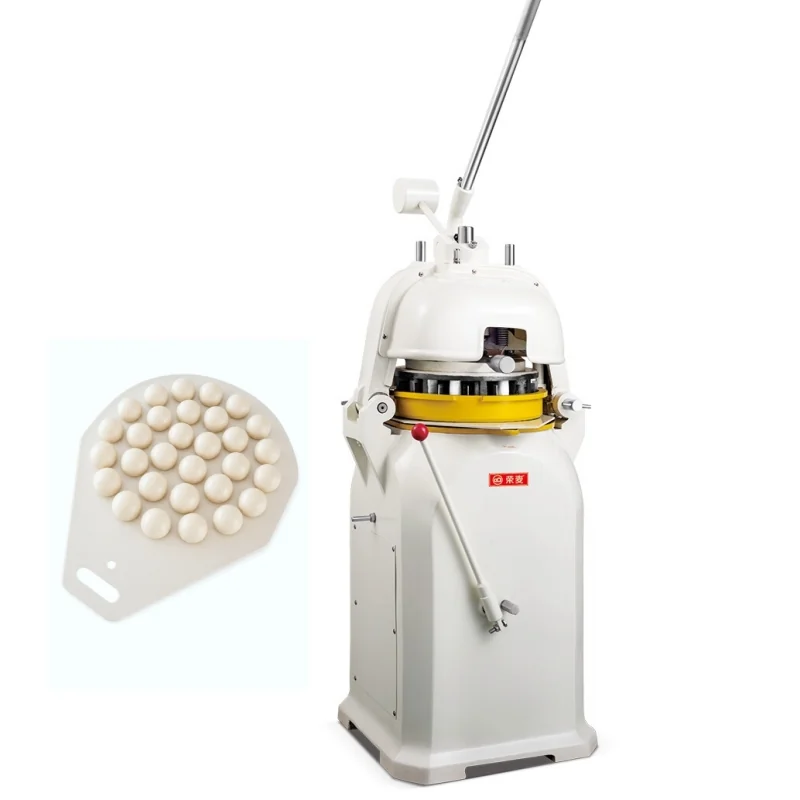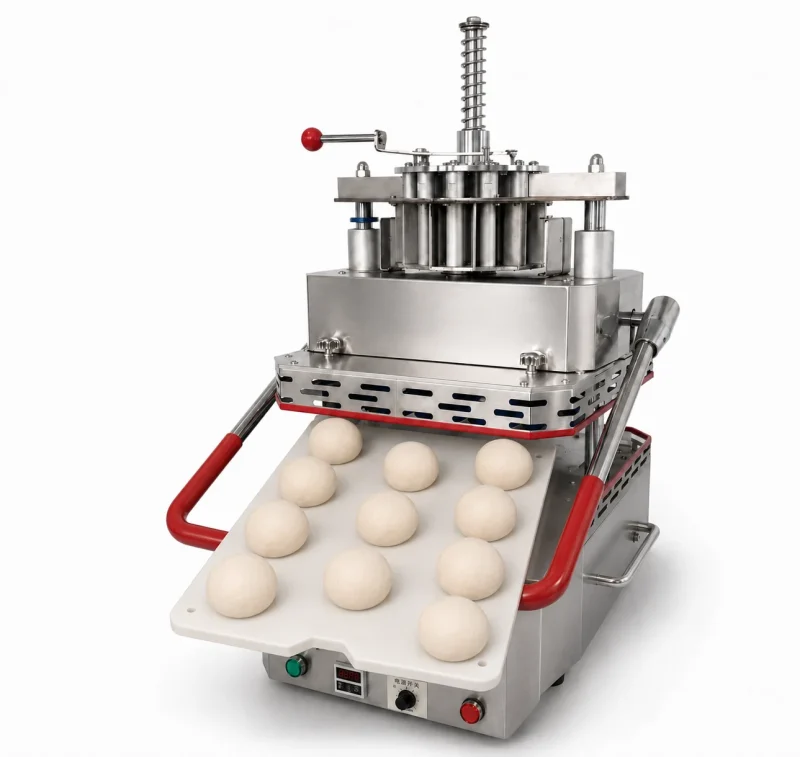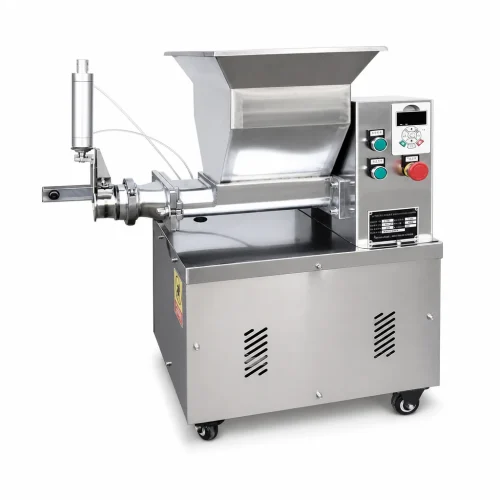




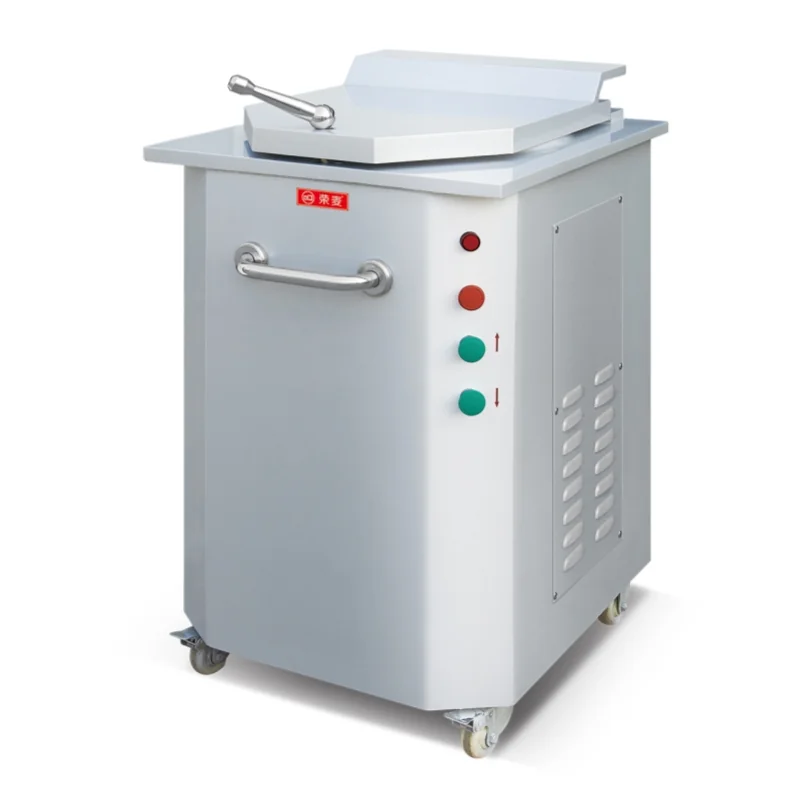
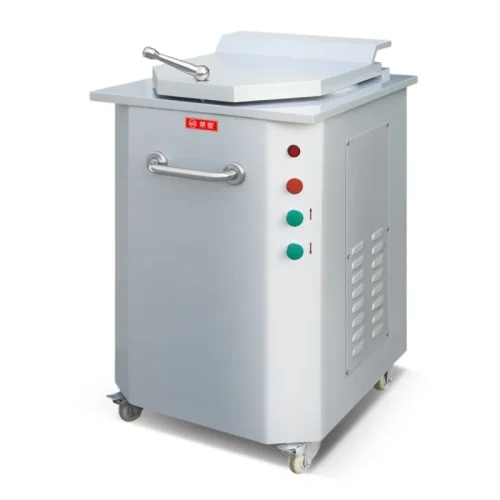
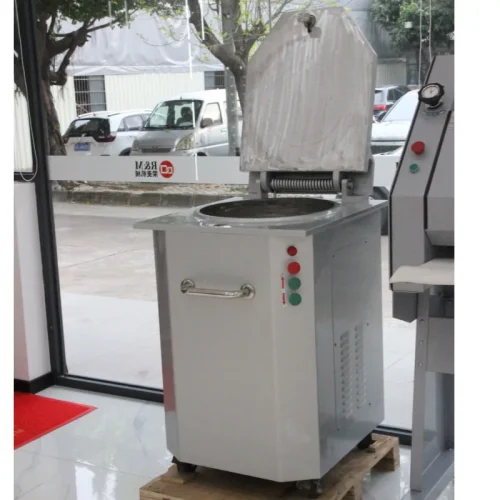
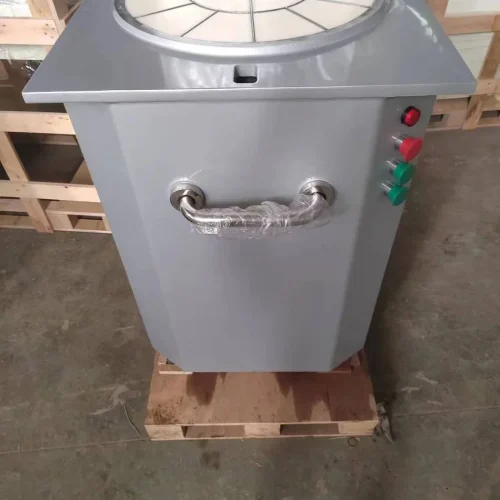
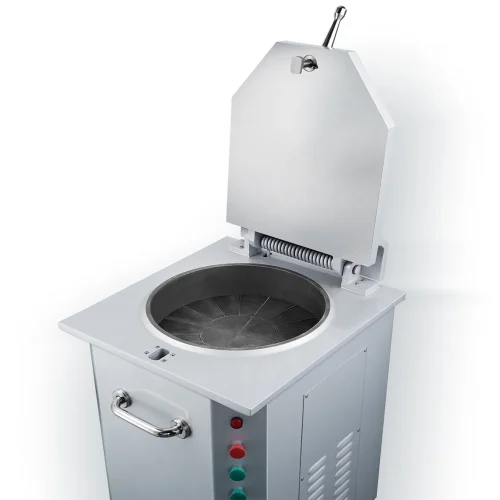
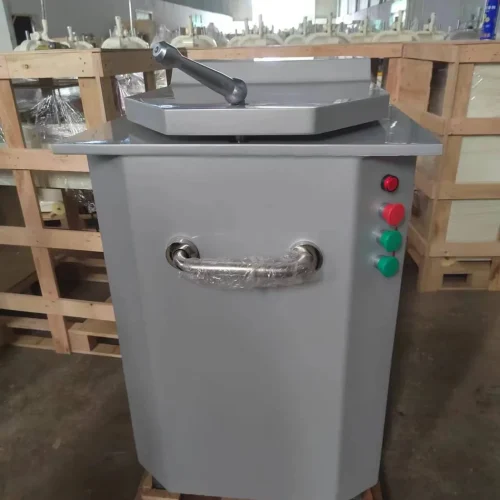
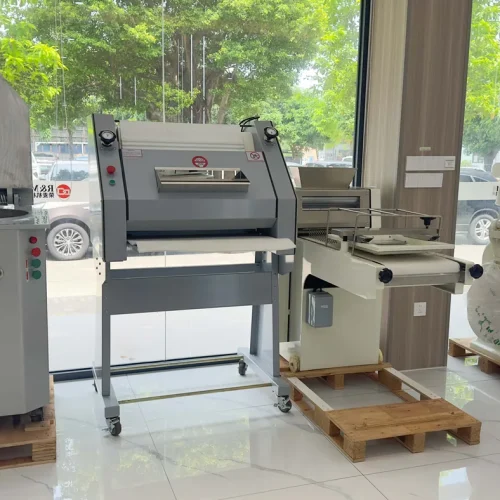
Hydraulic Dough Divider Machine — 16 or 20 Portions, Up to 1000g per Piece
Two heavy-duty hydraulic dough dividers for bakeries working with large, dense, or high-hydration dough. The RMK-16H (16 portions, 125–1000g) and RMK-20H (20 portions, 100–800g) divide heavy dough batches in 10–20 seconds per cycle. Hydraulic pressure delivers consistent cutting force regardless of dough density — suited to sourdough, thick pizza bases, and artisan bread. 1.5KW, 350kg, 220V/380V.
اطلب عرض أسعار
أدخل الكمية التي تحتاجها وأضفها إلى قائمة عروض الأسعار الخاصة بك للاستفسار عن الأسعار.
تفاصيل المنتج
Hydraulic Dough Divider Machine — 16 or 20 Portions, Up to 1000g per Piece
Two heavy-duty hydraulic dough dividers for bakeries working with large, dense, or high-hydration dough. The RMK-16H (16 portions, 125–1000g) and RMK-20H (20 portions, 100–800g) divide heavy dough batches in 10–20 seconds per cycle. Hydraulic pressure delivers consistent cutting force regardless of dough density — suited to sourdough, thick pizza bases, and artisan bread. 1.5KW, 350kg, 220V/380V.
Model Specifications
| الطراز | Portions/Cycle | Cycle Time | Dough Weight Range | Dimensions (mm) | Power | الوزن الصافي | الجهد الكهربائي |
|---|---|---|---|---|---|---|---|
| RMK-16H | 16 | 10–20 sec | 125–1000g | 655 × 785 × 1085 | 1.5 KW | 350 kg | 220V or 380V/50Hz |
| RMK-20H | 20 | 10–20 sec | 100–800g | 655 × 785 × 1085 | 1.5 KW | 350 kg | 220V or 380V/50Hz |
Contact us for wholesale pricing, OEM options, and lead time.

Why Hydraulic for Heavy Dough
Most commercial dough dividers — electric blade-type, semi-auto press, manual lever — work well for standard enriched doughs in the 20–300g range. The mechanism applies a fixed press force, and for dough in that weight and hydration range, the result is clean and consistent.
The problem comes with heavier, denser dough. Thick pizza crust dough at 400–600g, sourdough at 65–75% hydration, large artisan bread portions in the 500–1000g range — these materials resist a fixed-force press differently on different days depending on temperature, rest time, and hydration. A blade-type or spring-loaded divider produces inconsistent cuts when dough density varies. The hydraulic dough divider solves this by adapting its pressing force automatically to the dough’s resistance.
Hydraulic mechanisms work differently. The hydraulic cylinder applies controlled, steady compressive pressure across the full cutting surface. The pressure adjusts to the resistance of the dough — when the dough is denser, the hydraulic system pushes harder. The result is consistent cut quality across different dough densities without manual adjustment.
This matters most for specialty bakers: sourdough workshops, artisan bakeries producing crusty bread, and pizzerias working with thicker dough bases that a standard divider cannot portion reliably.
The 10–20 Second Cycle
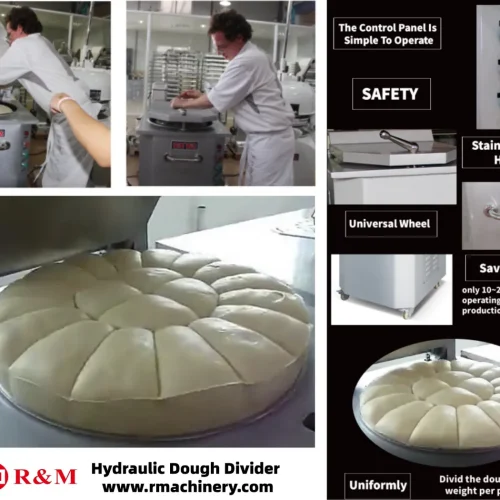
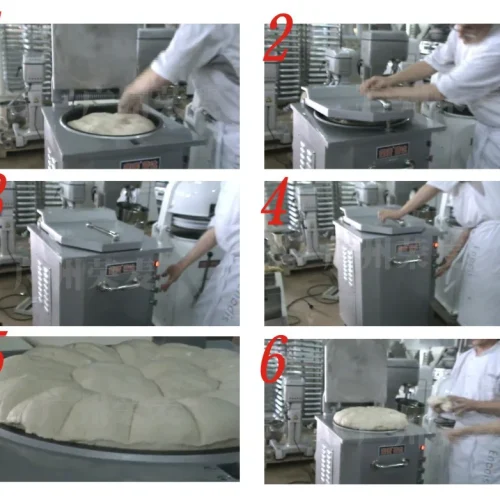
Sixteen or twenty equal portions in 10 to 20 seconds. The actual cycle time within that range depends on dough density and the programmed press speed. Once the operator loads the dough and activates the cycle, the machine completes the division — the operator does not need to manage the press force or monitor the cut.
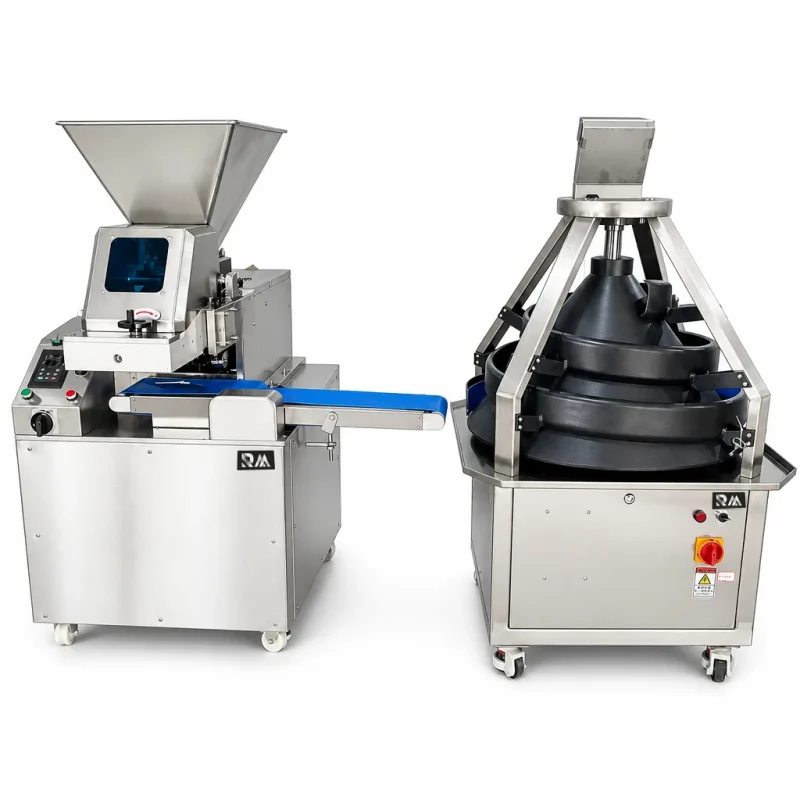
The output is 16 or 20 pre-cut portions ready for rounding. These pair directly with the R&M large dough rounder (200–1000g range) for a complete large-format dividing and rounding line.
Dough Weight Flexibility
One practical advantage of a hydraulic dough divider over mold-based batch dividers: you do not need to change the mold to change the output piece weight. Load a heavier total dough mass, and each of the 16 or 20 portions comes out heavier. Load a lighter mass, smaller portions.
Within the rated range (125–1000g for the RMK-16H; 100–800g for the RMK-20H), the operator adjusts piece weight by scaling the total dough mass loaded — no mold swap, no setup time. This makes the hydraulic divider particularly practical for bakeries running multiple dough weight specifications within the same production session.
Applications
Specialty pizzeria production
A pizzeria making thick-crust or Chicago-style pizza works with dough balls in the 350–600g range. A standard batch divider handles this poorly at the heavy end; the hydraulic RMK-16H cuts 16 portions at this weight reliably and quickly, with consistent results across the batch.
Sourdough and artisan bread bakeries
High-hydration, fermented doughs are sticky and resistant. The hydraulic dough divider manages this better than blade-type dividers because it applies progressive pressure rather than a single impact cut. Less dough tearing, better preservation of the gas structure in sourdough and other artisan bread doughs.
Large baguette and ciabatta pre-portions
Large ciabatta blocks and baguette pre-shapes in the 300–500g range are divided cleanly. The machine handles the length-to-width ratio of elongated dough pieces better than round-mold batch dividers.
Central kitchens supplying multiple outlets
A central kitchen producing bread for multiple locations benefits from the weight flexibility: one machine handles multiple dough weight specifications in a single production session without changing molds.
Hydraulic vs. Electric Dough Divider — Key Differences
| Hydraulic (RMK-16H/20H) | Electric (RMK-36) | |
|---|---|---|
| Operating mechanism | Hydraulic pressure | Electric blade drive |
| Dough weight range | 100–1000g | 30–160g |
| Cycle speed | 10–20 seconds | Single press |
| Weight flexibility | Adjust by scaling input mass | Fixed by mold |
| Best dough type | Dense, heavy, high-hydration | Standard enriched |
| Machine weight | 350kg | — |
| الجهد الكهربائي | 220V or 380V | 220V |
For dough above 160g or high-hydration specialty doughs, the hydraulic divider is the appropriate tool. For standard bun and roll dough in the 30–160g range, the electric dough divider or semi-auto series handles the work more efficiently.
الأسئلة المتكررة
How does a hydraulic dough divider differ from an electric dough divider?
An electric dough divider applies fixed mechanical force through a blade mechanism — effective for standard doughs in the 30–160g range. A hydraulic divider applies adjustable hydraulic pressure, which accommodates denser and heavier doughs (100–1000g) more consistently. For thick pizza dough, sourdough, and large artisan bread portions, the hydraulic mechanism produces cleaner, more consistent results.
Can I change the piece weight without swapping molds?
Yes. Within the rated weight range, you adjust piece weight by changing the total dough mass loaded per cycle. Sixteen portions of a 4kg dough mass gives approximately 250g pieces. Sixteen portions of a 6kg mass gives approximately 375g pieces. No mold change is needed.
What types of dough can this handle?
Standard bread dough, high-hydration sourdough, pizza dough (including thick crust), ciabatta, and other dense or large-format doughs within the rated weight range. Very sticky doughs may benefit from light dusting of the cutting plate.
How does it pair with the large dough rounder?
The hydraulic divider portions the dough; the R&M large dough rounder (200–1000g range) rounds each portion into a tight ball. Together they handle the full large-format dividing and rounding workflow — the divider at 10–20 seconds per cycle feeds portions to the rounder at up to 480 pieces per hour.
What power supply does it need?
1.5KW at either 220V/50Hz single phase or 380V/50Hz three phase. Both voltages deliver the same machine performance.
Lead time, MOQ, and OEM?
Contact us with your model choice, quantity, and destination. OEM options are available. We will respond within one business day.

Get a Quote
Heavy-duty hydraulic dough portioning for dense, large-format, and high-hydration dough. 16 or 20 pieces, 100–1000g.