





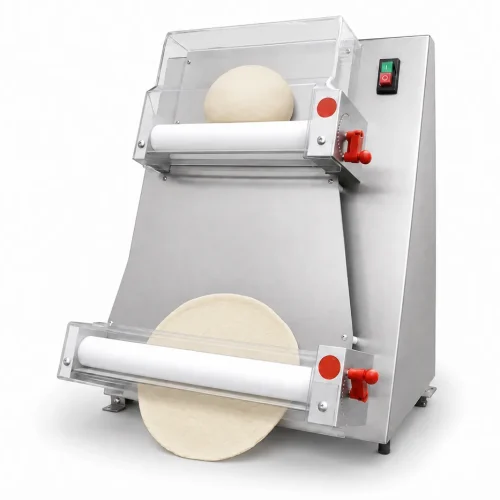
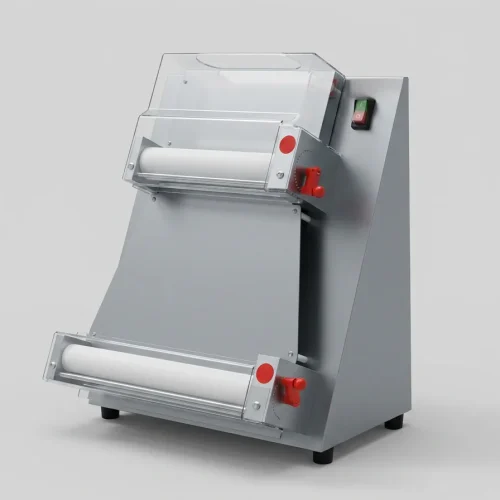
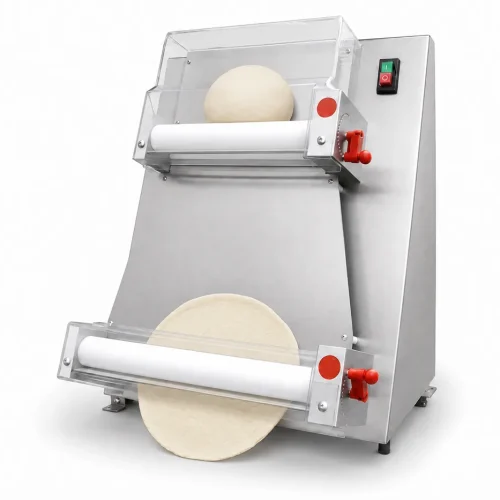
Pizza Dough Roller Machine — Double-Stage Electric, 12 and 16-Inch Pizza
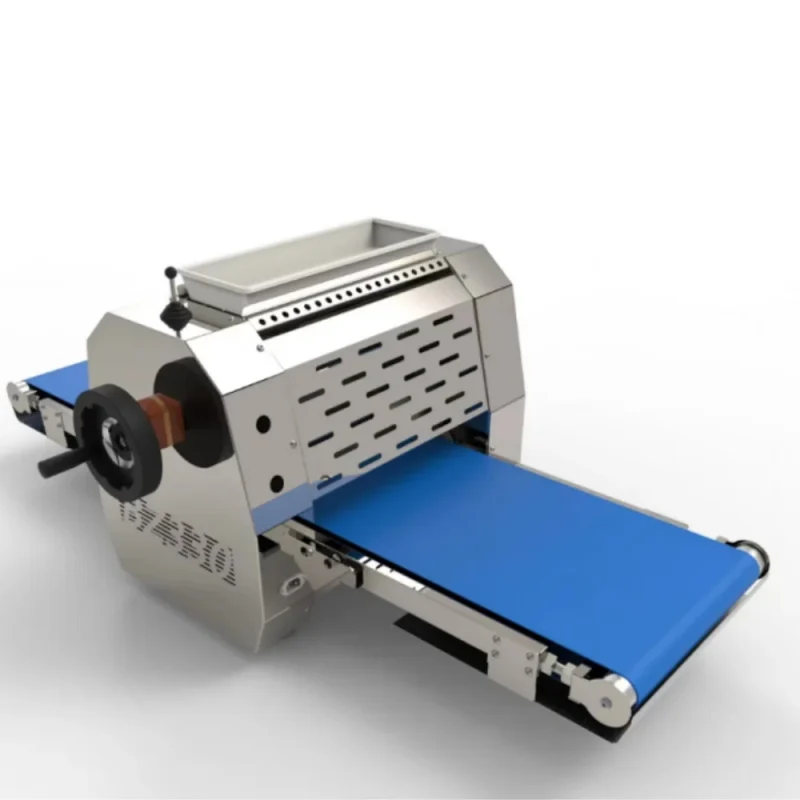
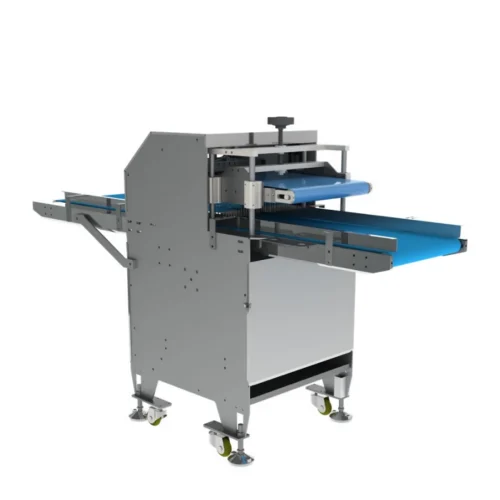
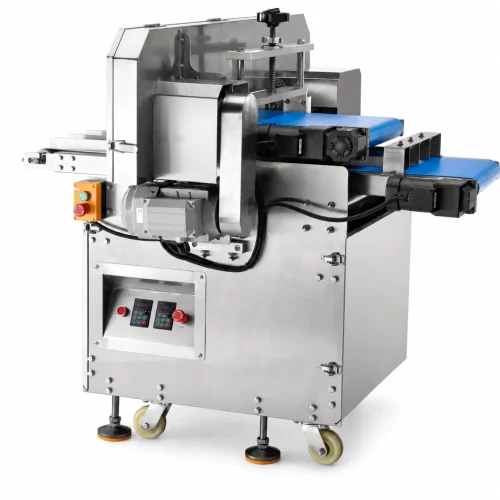
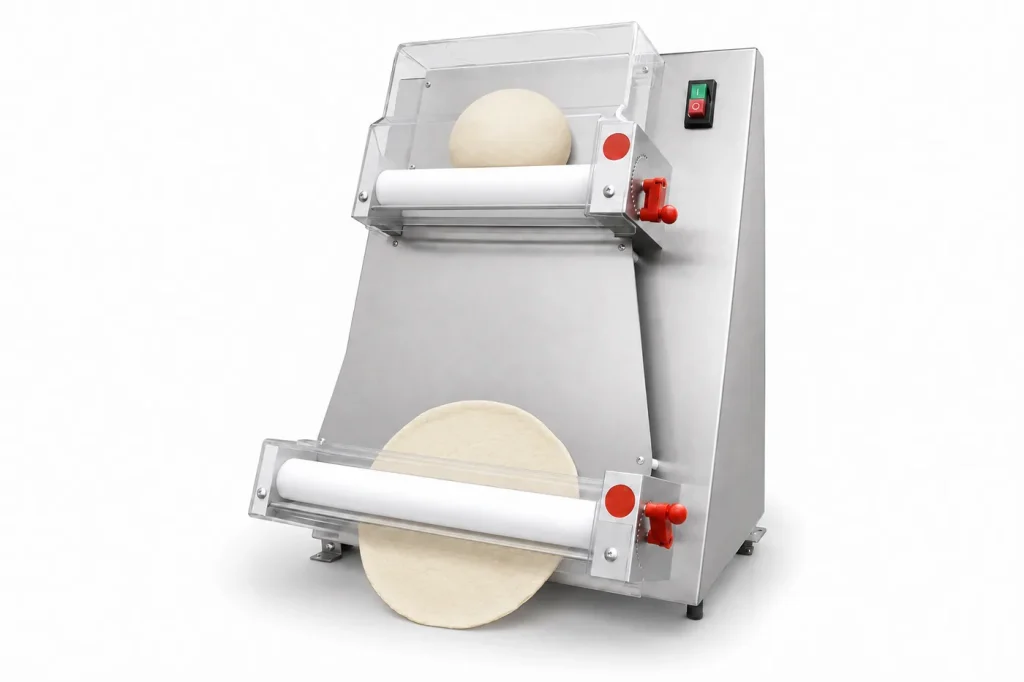
Two double-stage electric pizza dough roller machines for commercial pizza production. The RMPR1 presses pizza bases from 100–300mm at 0.37KW and 35kg. The RMPR2 covers 100–400mm for larger formats. Both use a two-roller stage system that produces more consistent base thickness and shape than a single-pass machine. 220V, 50–500g dough weight range.
Request a Quote
Enter the quantity you need and add to your quote list for pricing inquiries.
Product Details
Pizza Dough Roller Machine — Double-Stage Electric, 12 and 16-Inch Pizza
Two double-stage electric pizza dough roller machines for commercial pizza production. The RMPR1 presses pizza bases from 100–300mm at 0.37KW and 35kg. The RMPR2 covers 100–400mm for larger formats. Both use a two-roller stage system that produces more consistent base thickness and shape than a single-pass machine. 220V, 50–500g dough weight range.

Model Specifications
| Model | Pizza Size | Dough Weight | Thickness Range | Machine Size (mm) | Power | Net Weight | Voltage |
|---|---|---|---|---|---|---|---|
| RMPR1 | 100–300mm (up to 12″) | 50–500g | 0.7–5.4mm | 480×520×620 | 0.37KW | 35kg | 220V/50Hz |
| RMPR2 | 100–400mm (up to 16″) | 50–500g | 0.7–5.4mm | 530×530×645 | 0.37KW | 42kg | 220V/50Hz |
Contact us for wholesale pricing, OEM options, and export lead time.
Why Double-Stage Makes a Difference
A single-roller pizza dough roller passes the dough through once. A double-stage machine passes it through two sequential roller sets, each contributing to the final shape. This two-step process produces a more uniform base — consistent thickness from center to edge — and requires less corrective stretching by the operator before topping.
The practical effect in a pizza service is reduced prep time per base and more consistent pizza diameter across a service. If your kitchen makes 100+ pizzas per day, the consistency and speed advantage of a double-stage machine shows in the output quality and in the time saved per base compared to hand stretching or a single-pass machine.
The RMPR1 and RMPR2 are R&M’s double-stage models — the premium option in the pizza dough roller machine range. For a lower-cost single-stage alternative, see the RMPR3/RMPR4/RMPR6 series.
RMPR1 — Up to 12-Inch Pizza Base
The RMPR1 presses bases from 100mm to 300mm — covering the most common commercial pizza sizes from individual 10-inch to standard 12-inch. At 0.37KW and 35kg, it sits on a prep counter without taking up excessive space.
Dough weight range of 50–500g covers thin-crust portions (100–200g) through to thick-crust and deep-dish styles (300–500g). The 0.7–5.4mm thickness range at the output covers everything from Neapolitan thin bases to thicker American-style crusts.
For pizzerias and restaurant chains where 10- and 12-inch pizzas are the primary format, the RMPR1 is the right match.
RMPR2 — Up to 16-Inch Pizza Base
The RMPR2 extends the maximum pizza diameter to 400mm (approximately 16 inches), accommodating larger pizza formats. Machine weight increases to 42kg; machine footprint is 530×530mm — slightly larger than the RMPR1 but still a countertop installation.
For operations serving large-format pizzas — party sizes, 16-inch thin-crust, large Romana-style bases — the RMPR2 is the appropriate model. Both models share the same 0.7–5.4mm thickness range and 50–500g dough weight capacity.
If your menu includes both standard 12-inch and occasional larger formats, the RMPR2 handles both without machine changes.
What Dough Preparation This Machine Requires
The pizza dough roller works best with dough that has completed its bench rest after portioning. A properly rested dough ball (typically 20–30 minutes at room temperature after dividing from the main batch) relaxes the gluten structure, which allows the roller to press the base without significant springback.
Dough that is not rested will press to a thinner base, then spring back toward the original ball shape after exiting the machine — requiring additional pressing or hand stretching to achieve the final diameter.
For a pizza kitchen using a dough divider and rounder upstream of the roller, the workflow is: divide → round → bench rest → press. The RMPR1 or RMPR2 handles the press step at the end of this chain.
How the Double-Stage Compares to Hand Stretching and Single-Pass
| Double-Stage Roller (RMPR1/RMPR2) | Hand Stretching | Single-Stage Roller (RMPR3-6) | |
|---|---|---|---|
| Base consistency | High — two stages normalize thickness | Variable — operator-dependent | Moderate — single pass |
| Speed per base | 5–10 seconds | 30–60 seconds | 5–10 seconds |
| Operator skill required | Low | High | Low |
| Cost | Higher | Labor cost only | Lower |
| Edge quality | Uniform machine edge | Traditional hand edge | Machine edge |
Hand stretching produces a traditional hand-made appearance and texture that some consumers prefer. For a high-volume pizza kitchen where speed and consistency matter more than hand-stretched appearance, the double-stage roller delivers the better operational outcome. For the background of Neapolitan-style thin bases, see the independent article on pizza.
Pizza Dough Roller Machine Applications
Pizzeria and pizza chain production: Daily high-volume pizza production benefits most from consistent base weight and diameter. The double-stage RMPR1 or RMPR2 delivers the same base quality on every press, regardless of which operator is running the machine — a dependable pizza dough roller machine for chain operations.
Restaurant and food service kitchens with pizza on the menu: Pizza as a secondary menu item — alongside pasta, grill, or other items — benefits from a fast, consistent base preparation step. A press machine removes the need for a dedicated skilled pizza maker and allows any trained kitchen staff member to produce consistent bases.
Hotel and catering production: Catering operations producing large quantities of pizza for buffet or event service need consistent bases at production speed. The RMPR2’s 16-inch capacity covers larger event pizza formats.
Delivery-focused pizza operations: Delivery pizza depends heavily on consistent weight and diameter for portion cost control. A machine-pressed base removes weight variability from the equation.
Frequently Asked Questions
What is the difference between RMPR1 and RMPR2?
Pizza size range: RMPR1 covers 100–300mm (up to 12 inches); RMPR2 covers 100–400mm (up to 16 inches). All other specifications — dough weight, thickness range, power, voltage — are the same. Choose based on the largest pizza size you regularly produce.
How does a double-stage pizza dough roller differ from a single-stage?
A double-stage machine passes the dough through two sequential roller stages, producing more uniform base thickness and diameter than a single-pass machine. The single-stage RMPR3/RMPR4/RMPR6 are simpler and lower cost — appropriate when production volume is moderate and base consistency is less critical.
Can this machine handle thick-crust pizza dough?
Yes. The 0.7–5.4mm output range and up to 500g dough weight cover thick-crust formats. Set the gap to the appropriate thickness for your crust style.
Does the dough need to be at room temperature?
Cold dough presses with more resistance and may not reach target diameter as easily. Room-temperature or slightly warmer dough presses more smoothly. We recommend pressing after the final bench rest with dough at room temperature.
What is the minimum pizza size the machine handles?
100mm — applicable for mini pizza formats, appetizer-size pizzas, and individual deep-dish tins.
Commercial pizza dough roller machine — OEM and export?
Yes. OEM branding is available. Contact us with your quantity and requirements for pricing and lead time.
Get a Quote
Double-stage electric pizza dough roller machine. 12 or 16-inch. Factory-direct pricing. For other flatbread and pizza production equipment, explore the commercial dough sheeter range.
ENQUIRE VIA WHATSAPP / EMAIL →
More Pizza Dough Making Machine Details Please Contact us to view more