



Planetary Mixer Operation: What This Demonstration Video Covers
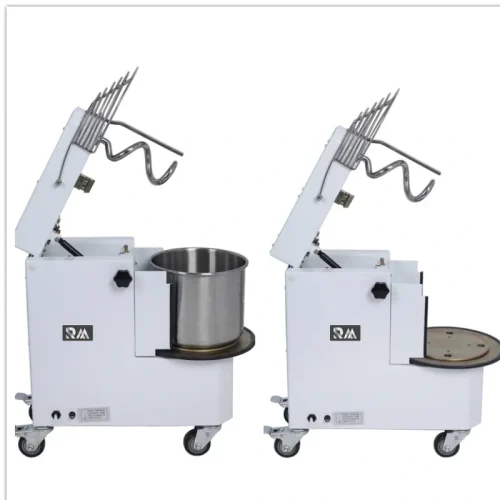
This video from R&M Machinery demonstrates how a commercial planetary mixer operates in a professional bakery environment — showing the three-attachment system in action, speed settings, bowl loading procedure, and practical tips for getting consistent results across different dough, batter and cream applications. Understanding correct planetary mixer operation directly affects output quality, machine lifespan and production efficiency in any commercial kitchen or bakery.
How a Planetary Mixer Works: The Core Mechanism
The planetary mixer takes its name from the way its attachment moves: the beater orbits around the bowl in a planetary motion — rotating on its own axis while simultaneously revolving around the bowl’s central axis. This dual movement ensures the attachment reaches every part of the bowl on each revolution, producing thorough and even mixing without requiring manual intervention.
This mechanism makes the commercial planetary mixer the most versatile mixing machine in a commercial bakery or kitchen — capable of handling light whipping tasks at high speed and heavy dough mixing at low speed using the same machine with different attachments.
3 Standard Attachments and When to Use Each
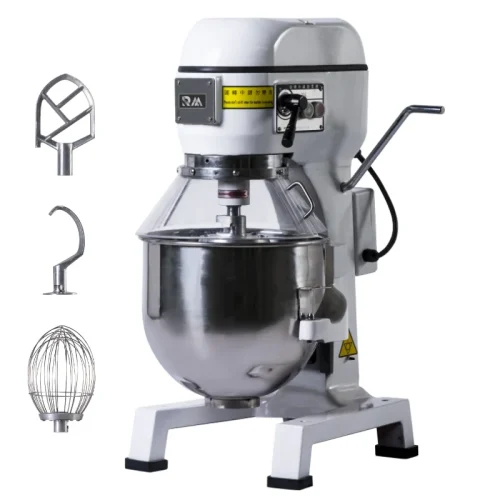
All R&M planetary mixers for bakery come with three standard attachments, each optimised for different mixing tasks:
- Wire Whisk — used at medium to high speed for whipping cream, egg whites, meringue and light aerated batters. Ideal for cake sponges, chiffon cakes and cream-based products. Select this attachment whenever maximum air incorporation is needed.
- Flat Beater (Paddle) — used at medium speed for cake batter, shortcrust pastry, cookie dough and general mixing tasks. The flat beater is the most frequently used attachment in a commercial bakery mixer — it blends without overworking the mix or incorporating excess air.
- Dough Hook — used at low to medium speed for bread dough, pizza dough and other high-gluten mixes. The hook kneads the dough by stretching and folding in a controlled action that develops gluten structure without overheating. For commercial dough mixer machine tasks requiring consistent gluten development, the dough hook is the correct choice.
Speed Settings: How to Use Them Correctly
Most commercial planetary mixers offer between 3 and 6 speed settings. Using the correct speed for each task prevents motor strain, improves mix quality and extends machine life:
- Speed 1 (Low) — initial mixing of dry ingredients, bread and pizza dough kneading, starting heavy batters. Always start on low speed to prevent ingredients from being thrown from the bowl.
- Speed 2–3 (Medium) — cake batter mixing, cookie dough preparation, general creaming of butter and sugar.
- Speed 4–6 (High) — whipping cream, egg whites and meringue; light aerated batters. High speed should only be used with the wire whisk and only after the bowl is partially mixed at lower speed.
Capacity Guide: Matching Planetary Mixer Size to Production Volume
R&M’s commercial planetary mixer range covers a wide capacity spectrum to match different production scales:
- 5–10L planetary mixer — small bakery, café and pastry kitchen scale; suitable for low-volume cream, batter and light dough applications.
- 20L planetary mixer — the most popular mid-range size for commercial bakeries; handles daily bread dough, cake batter and cream production without requiring multiple batches.
- 30L planetary mixer — high-volume commercial bakery and industrial kitchen; handles large batches of heavy dough and batter in a single cycle.
- 40–60L industrial planetary mixer — for large-scale food production, central kitchens and industrial mixer machine for bakery operations requiring continuous high-capacity output.
Planetary Mixer vs Spiral Mixer: Which Should Your Bakery.html Choose?
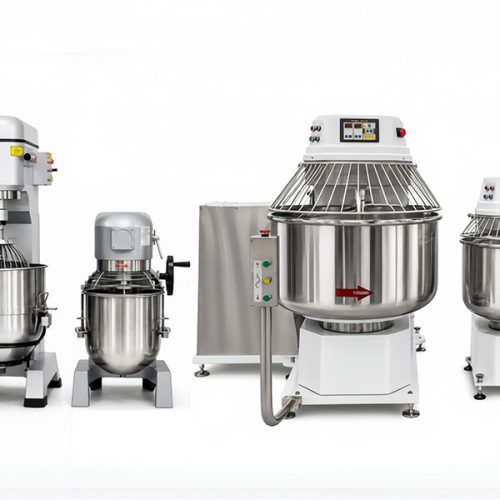
For bakeries choosing between a planetary mixer and a spiral dough mixer, the decision comes down to product range and primary use:
- Planetary mixer — the more versatile option; handles cream, batter, light dough and heavy dough with attachment changes; the best choice for mixed-product bakeries making cakes, bread, pastry and cream-based products.
- Spiral mixer — purpose-built for high-gluten bread and pizza dough; generates less heat during kneading; preferred for artisan bread bakeries and pizza operations where dough quality and gluten development are the primary priority.
Many commercial bakeries and commercial kitchen mixers setups use both: a planetary mixer for cream, batter and general mixing tasks, and a spiral mixer for daily bread and pizza dough production.
Explore R&M Planetary Mixers
Browse our full range of commercial planetary mixers for bakery, restaurant and food production applications — from 5L countertop models to 60L industrial configurations:
- Planetary Mixer Product Range — full specifications, capacity options and configuration details for R&M’s commercial planetary mixer range.
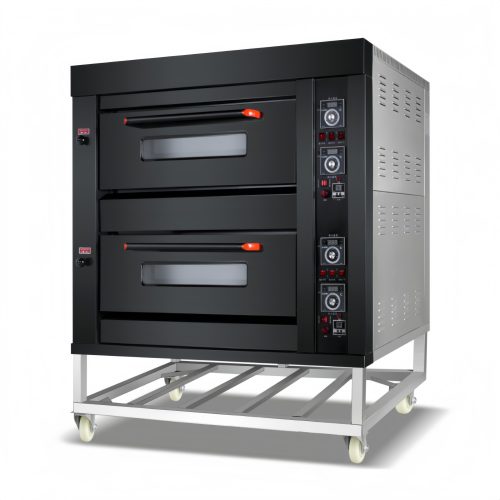
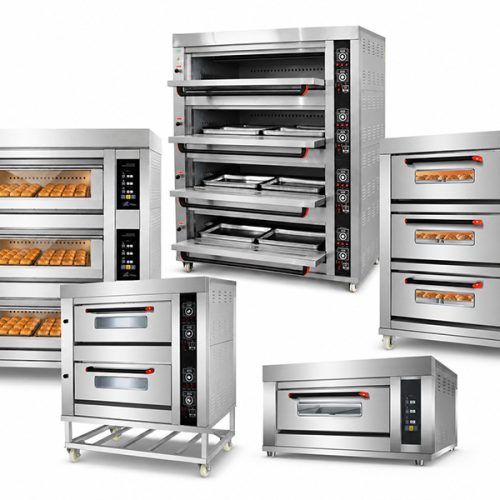
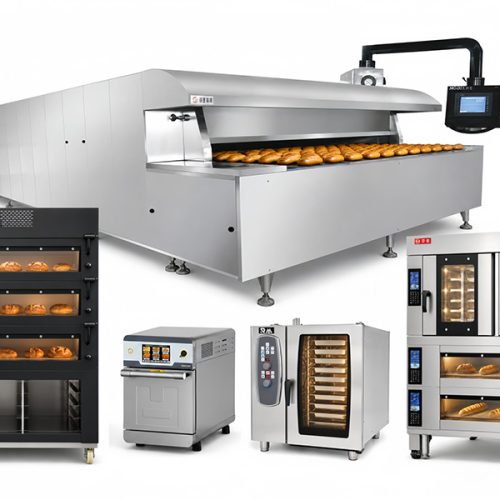
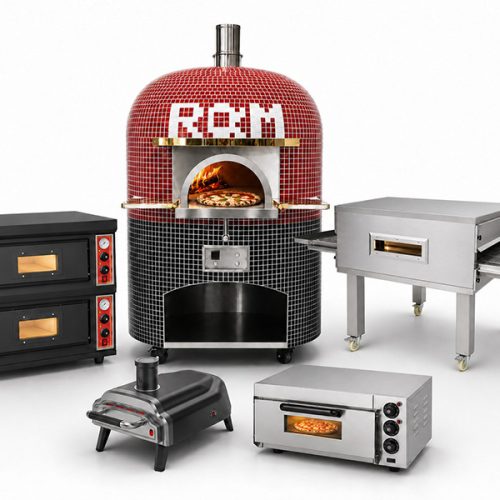
- Commercial Deck Ovens — gas and electric deck ovens commonly paired with planetary mixers in complete bakery setups.
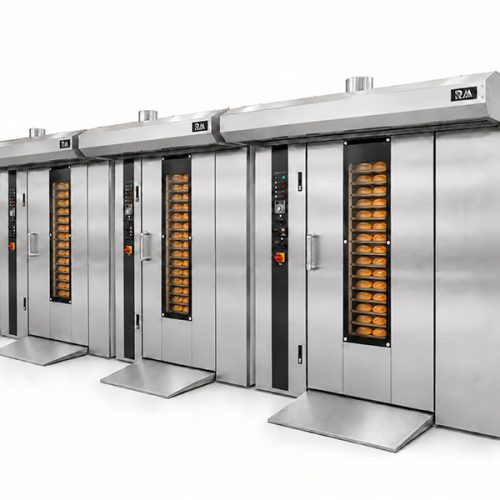
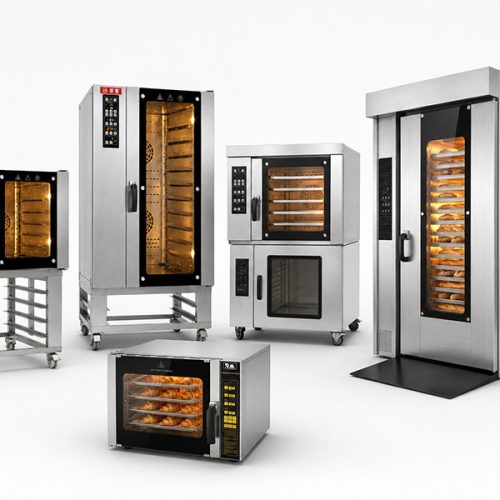
- Hornos de convección profesionales — for baking the cakes, cookies and pastries mixed with a planetary mixer.
- Full Bakery.html Equipment Range — complete bakery production line equipment from R&M Machinery.
Contact R&M Machinery for factory-direct pricing, specifications and OEM/ODM enquiries on our full range of commercial planetary mixers — from 5L to 60L capacity, with standard and custom configurations for bakeries, restaurants, hotels and industrial food production operations. Learn more about commercial food mixers and their applications in professional kitchens.