
Efficiency Challenges
Why Do So Many Construction Site Temporary Facilities Go Up Fast but Still Take Too Long to Become Truly Usable?
In many construction projects, temporary facilities are one of the first things to start and one of the easiest parts to underestimate. On the surface, site temporary works seem simple: set up dormitories, offices, fencing, and a few basic supporting systems so the project can enter the construction stage as quickly as possible.
But anyone with real site experience knows that the problem with many temporary facility systems is not that they are built slowly. The problem is that even when they are built quickly, the site still takes too long to reach a truly usable state. People may be able to move in, but that does not mean they can live comfortably. Offices may exist, but that does not mean management can run smoothly. Fencing may be installed, but that does not mean site order has actually been established.
From that perspective, the real difficulty in construction site temporary facilities is not simply putting the physical items in place first. It is making accommodation, office space, fencing, lighting, and drainage work together as a stable system at the early stage of the project.
Step One: Putting Up Temporary Buildings Does Not Mean People Can Immediately Start Working Efficiently
At the beginning of many construction projects, the first priority is often to get the dormitories and offices in place. That makes sense, because if the project is going to move forward, both management staff and construction teams need space on site first.
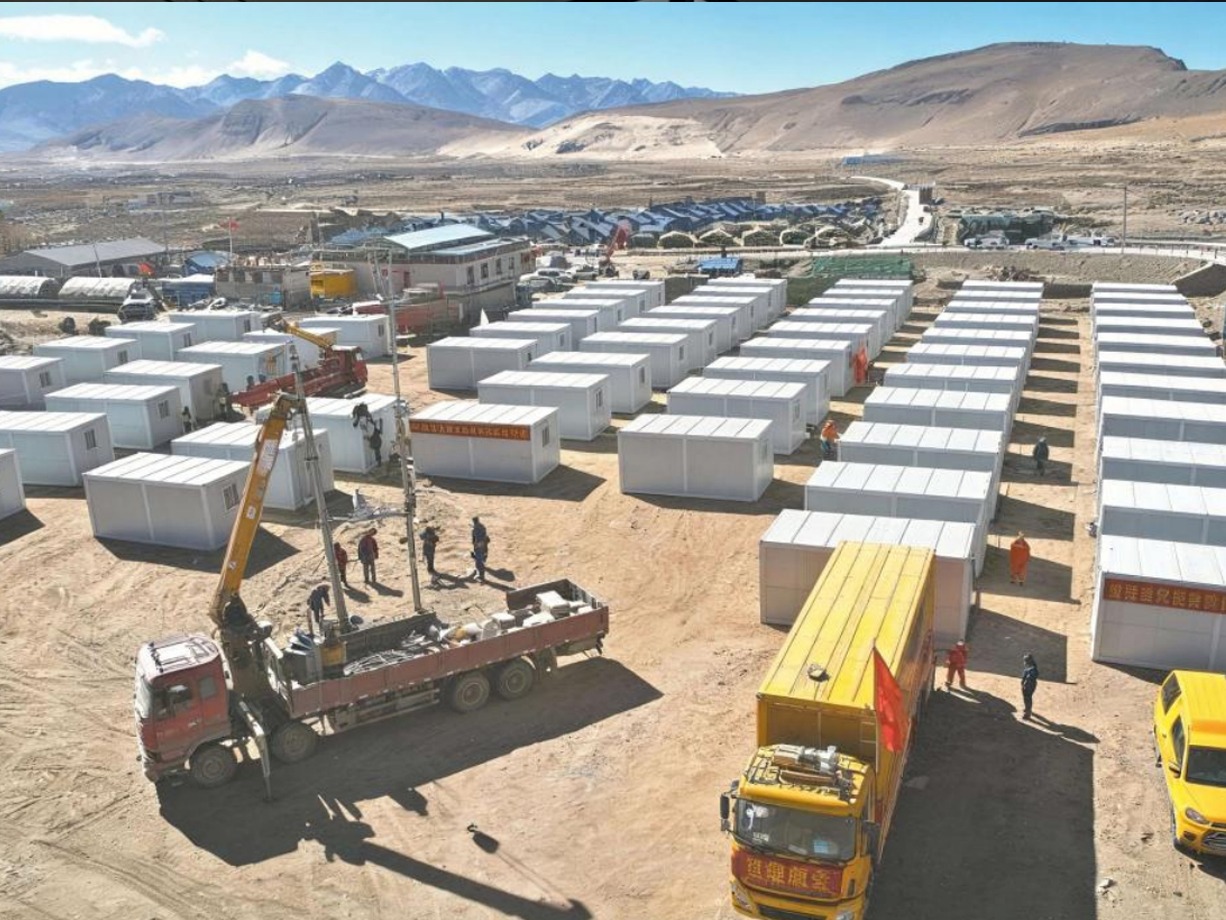
The problem is that in many cases these temporary spaces only exist physically, but have not truly reached a usable condition. The modular units may already be delivered to site, but the internal wiring is not yet organized. People may be able to move in, but lighting, sockets, air-conditioner points, and ventilation conditions are still incomplete. The office may be assembled, but site access and drainage around it have not yet been properly arranged.
That is one reason quick-assembly modular buildings are becoming the preferred core option for temporary dormitory and office areas in more and more projects. Their real value is not only installation speed, but the fact that they make it easier to create space units that can enter service quickly.
Step Two: Temporary Facility Systems Fail When They Are Built First and Corrected Later
Many construction sites fall into the same pattern: in order to save time at the beginning, the most visible parts are built first, while fencing, lighting, drainage, and living support systems are added later as the project goes on.
In the short term, this may look like faster progress. In reality, however, it often creates more disorder later. Once the dormitory zone, office zone, material storage area, and construction routes have already taken shape, trying to add fencing, reroute cables, improve lighting, or correct drainage usually leads to overlapping work, repeated rework, and a more chaotic site environment.
The truly efficient approach to temporary construction facilities is never just to place modular buildings on site first. It is to think through the practical problems people will face after moving in from the very beginning.
Step Three: Fencing Is Not a Formal Requirement — It Is the First Boundary of Site Order
On many construction sites, fencing is often treated as a supporting or compliance item. But from a real site management perspective, its value goes far beyond simply enclosing the area.
As soon as a project starts operating, the site quickly develops different movement lines for people and vehicles, material storage zones, and the need to separate living areas from active work areas. Without a fencing system to create those boundaries, site order can easily become unstable: accommodation and work zones mix together, outside access becomes harder to control, material areas lose definition, and nighttime patrols become more difficult to manage.
That is why in a temporary site facility system, fencing is not an accessory product. It is part of the site management structure itself. It directly affects whether the project starts with a clear and manageable order.
Step Four: If Night Lighting Is Weak, a Site That Can Start Work Is Still Not a Site That Can Run Properly
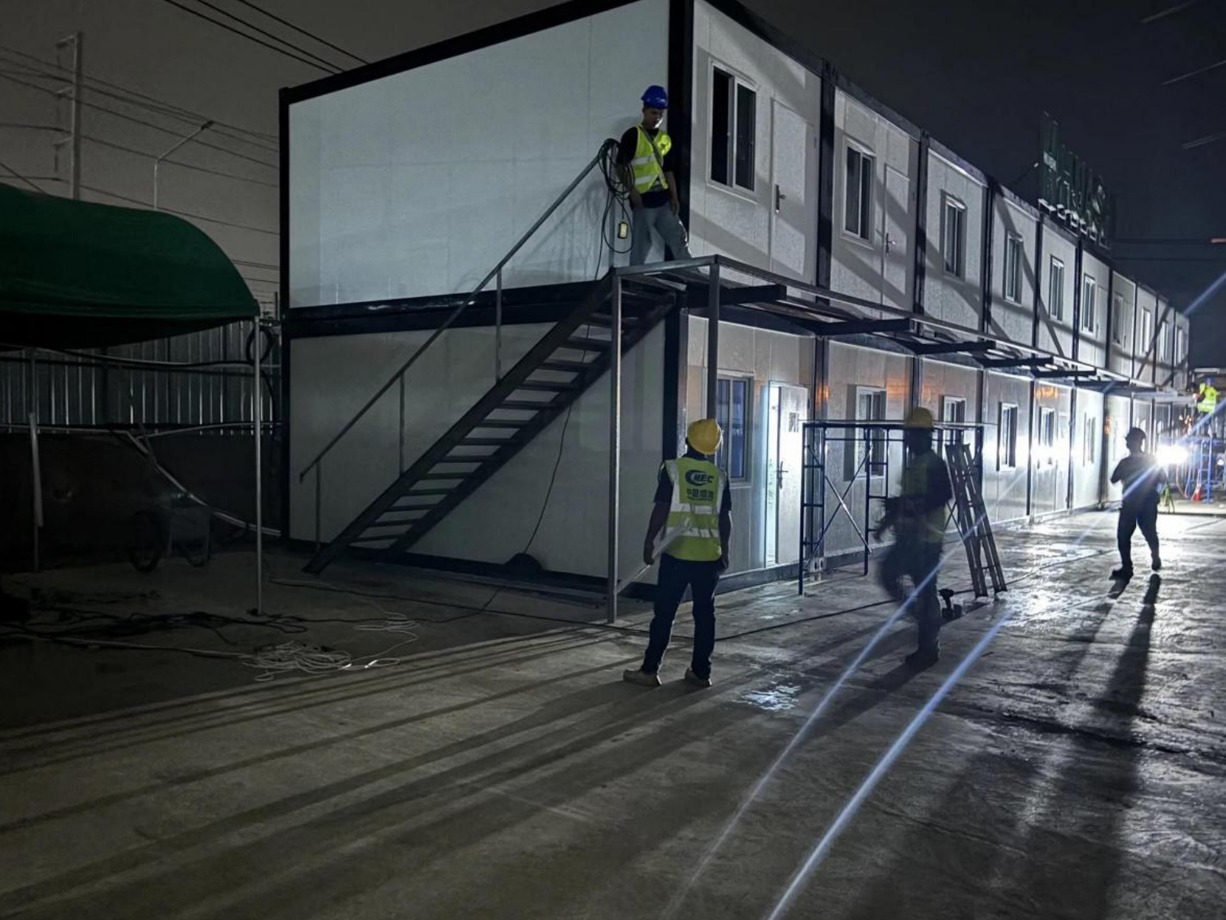
Many projects look complete during the daytime, but the real weakness becomes obvious as soon as night falls. Around dormitory entrances, office passages, fence boundaries, material storage zones, and duty routes, insufficient lighting does not only affect convenience. It directly affects site safety and working rhythm.
That is why in a temporary facility system, lighting is never only about making the site a little more convenient. It is part of determining whether the project can keep operating reliably. For projects with tight schedules, night duty, or nighttime work requirements, street lights and temporary lighting systems usually need to be introduced as soon as the dormitory and office zones are formed.
If solar street lights or other flexible lighting solutions are used, the pressure of temporary wiring can also be reduced, which makes them especially suitable for sites that need to establish a functional lighting system quickly.
Step Five: Drainage Problems Usually Stay Hidden Until It Rains — But Once They Appear, They Become the Most Difficult to Fix
In temporary construction systems, drainage is rarely the first item to receive attention. Dormitories, fencing, and office areas are more visible, while drainage systems often do not seem to show immediate results.
But the real difficulty is that many drainage problems stay invisible until the first heavy rain. Then they all appear at once: standing water around the dormitory area, muddy access around the office zone, water affecting stored materials, and domestic wastewater with no proper discharge path.
And once drainage is delayed until the later stage, fixing it often means re-excavation, route changes, and layout adjustments. The cost of rework becomes high very quickly. That is why drainage pipes, inspection wells, and related support items should not be treated as something to think about at the very end in an efficient temporary facility system.
Step Six: The Value of Quick-Assembly Modular Buildings Is Not Just Providing Buildings — It Is Helping the Site Enter a Usable State Faster
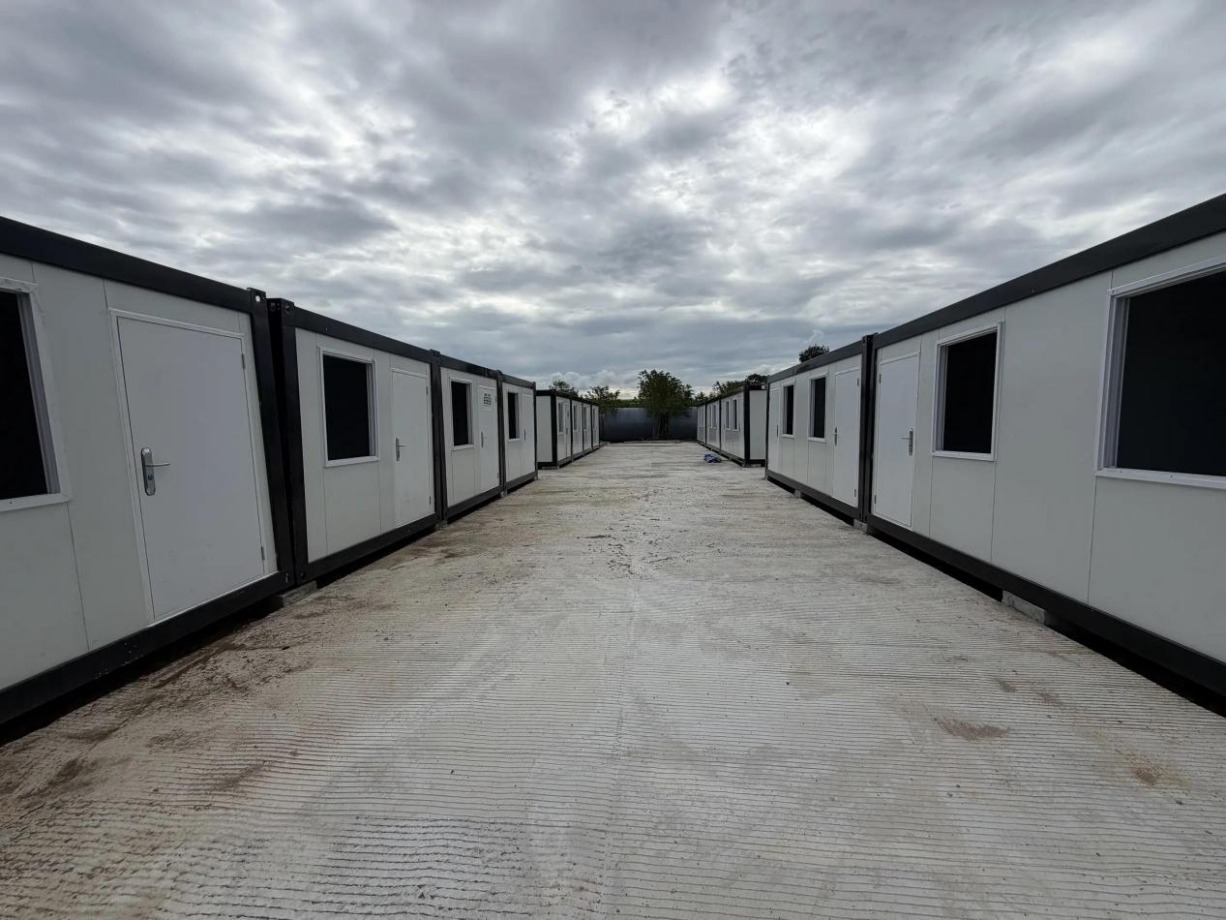
Why are more and more construction site temporary systems choosing quick-assembly modular buildings? The answer is more than simply “fast installation.” What matters more is that they help the project form key spaces such as dormitories, offices, and duty rooms more quickly, while also creating clear anchor points for later lighting, fencing, drainage, and site order planning.
For a construction site, modular buildings are not isolated products. They are the starting point of the temporary facility system. Their location, layout, speed of deployment, and usability directly affect how all the supporting systems can be rolled out afterward.
That is why the real measure of an efficient temporary site facility system is not whether a single product can be installed quickly, but whether the full system can become stable at the early stage of the project.
Conclusion: Temporary Facilities Do Not Just Affect Site Appearance — They Directly Affect Early Project Efficiency
Many people still think of temporary construction facilities as a secondary or supporting part of a project. In reality, however, they directly affect early-stage organization efficiency, site order, management pressure, and the later cost of rework.
27 August, 2024
Logistic Company
Commercial
New York, USA
$20 Million
