
Extreme Environments
In High Heat, Wind, Humidity, and High-Altitude Environments, What Kind of Modular Building Is Truly Suitable for Long-Term Use?
When many buyers choose modular buildings, the first things they notice are size, price, and appearance. But in truly complex use environments, what determines whether a building can remain stable over the long term is often not those surface-level factors, but its ability to adapt to real site conditions.
This becomes especially important in high-temperature regions, Wind-and-Sand, humid environments, high-altitude locations, or places with large day-to-night temperature swings. In such conditions, the real question is no longer whether a modular building is available, but whether it can remain comfortable, stable, and cost-effective to maintain over time.
That is one reason quick-assembly modular buildings are receiving more attention in remote projects. But to understand their real value, it is not enough to focus only on “fast installation” or “easy transport.” The key is to look at the site itself and ask what the materials, structure, and supporting systems are actually solving.
Step One: In Extreme Environments, the Biggest Test Is Never Installation — It Is Long-Term Use
In ordinary environments, the differences between modular buildings may not show up immediately. But once the site moves into high heat, high humidity, wind and sand, high altitude, or other harsh conditions, the strengths and weaknesses of structure and materials are exposed very quickly.
Direct sunlight during the day, cooling temperatures at night, humid air, dust and sand exposure, ground moisture, and long-term occupancy all affect thermal insulation, moisture resistance, sealing performance, comfort, and the difficulty of later maintenance. In other words, the real test in extreme environments is not whether a building can be erected. It is whether it can continue to perform comfortably, stably, and durably after installation.
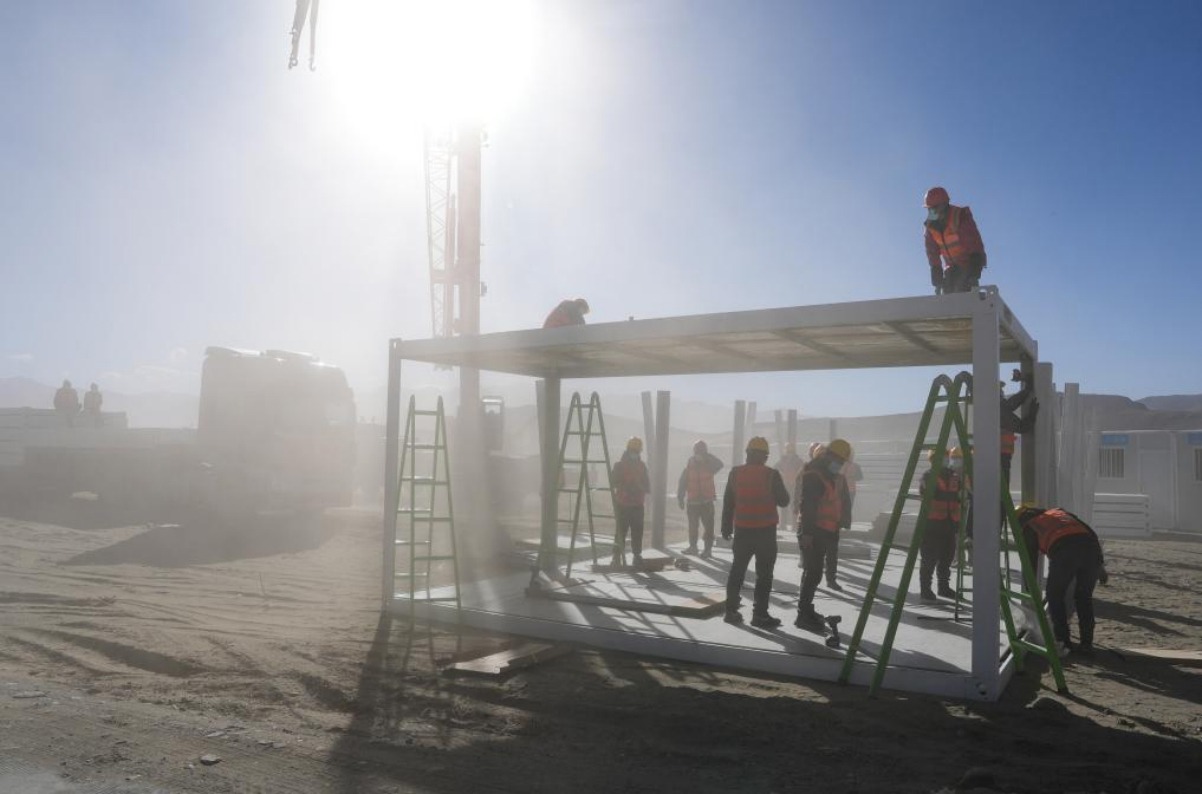
Step Two: Exterior Materials Are Not Just Terms on a Specification Sheet — They Define the Real Living Experience
When many people first see wall and flooring materials, they think of them only as different configuration choices. But in extreme environments, these materials are not simple product notes. They directly determine whether the building can adapt to the site.
For example, if the flooring uses first-grade waterproof and fire-resistant magnesium oxide board, the value is not just a “material upgrade.” It means greater floor stability, better safety, and stronger resistance to moisture and heavy daily use in demanding environments.
If the wall insulation layer uses Class A fire-rated rock wool, its value also goes far beyond fire performance. In regions with intense sun exposure, cold high-altitude climates, or large temperature swings, rock wool directly affects safety, thermal insulation, heat resistance, and long-term living comfort.
That is why in complex environments, buyers should not focus only on the material name itself. What really matters is whether those materials can withstand the site over time.
Step Three: Sealing Method Determines More Than Structural Integrity — It Determines Performance Under Wind, Rain, and Temperature Variation
In harsh environments, the biggest problem for a modular building is often not whether it can be assembled, but whether small operational problems begin to appear after it is in use. Sand entering the interior, water leakage at the joints, unstable insulation performance, and large indoor temperature differences are all issues that may not be visible on installation day, but become clear over time.
That is why an interlocking assembly design has much greater value in difficult environments. Its role is not only to simplify assembly, but to provide more stable sealing, stronger overall integrity, and more reliable insulation performance. In wind-prone, rainy, or temperature-sensitive regions, this directly shapes daily living performance.
In other words, the assembly method may look like a structural detail, but in harsh environments it often determines whether a modular building can remain stable over the long term.
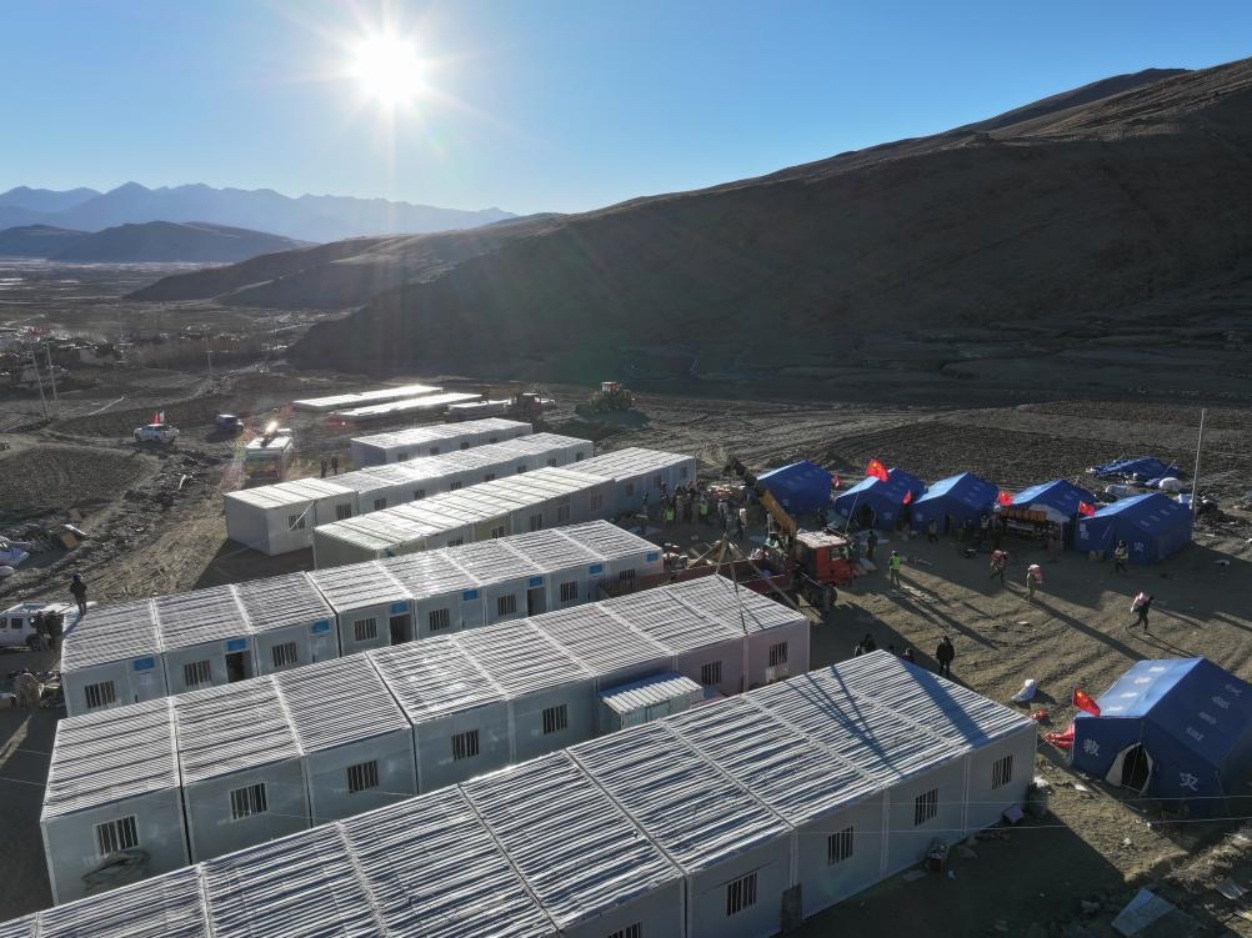
Step Four: Doors, Windows, and Ventilation Details Determine How the Space Actually Feels to Live In
When choosing a modular building, buyers often focus more on the main structure and pay less attention to doors, windows, and ventilation. But once people actually move in, these are often the first things they notice.
For example, secure steel doors and secure PVC windows are not only related to security in remote projects. They also affect environmental sealing. A double-window cross-ventilation design directly affects airflow and daily comfort inside the building.
In hot climates, ventilation strongly affects heat build-up. In humid climates, it influences air quality and long-term interior stability. In sandy environments, door and window sealing determines whether dust and outside impact will keep entering the space.
That is why doors and windows are not minor accessories. In difficult environments, they are one of the key details that determine whether the building can actually be lived in comfortably.
Step Five: Electrical Preparation and Basic Lighting Become Practical Needs Much Earlier in Harsh Environments
In many remote projects, modular buildings are not only used for short breaks. They are often used for accommodation, office work, duty shifts, and basic living needs. As soon as the building enters real use, electrical preparation and lighting become much more important.
5-pin sockets, 3-pin sockets, air-conditioner outlets, leakage protection, and lighting systems may seem like basic features, but in harsh environments they directly affect move-in efficiency and long-term usability. In high-temperature zones, access to air conditioning or fans becomes especially important. In remote regions, nighttime lighting is directly tied to safety and site order.
That is also why systems such as solar street lights and photovoltaic energy storage often become natural extensions of modular building use in complex environments. When external power is unstable or site conditions are demanding, basic space and basic energy systems are difficult to separate.
Step Six: In Extreme Environments, Drainage and Perimeter Support Are Not Optional Add-Ons — They Are Conditions for Stable Operation
In humid, rainy, or otherwise difficult site conditions, drainage problems usually appear much faster than in ordinary projects. Even if the modular building itself is stable, poor site drainage can quickly lead to standing water, ground moisture, muddy access, and unmanaged wastewater, all of which affect the usability of the whole site.
At that point, drainage pipes, inspection wells, septic tanks, and related engineering support systems are no longer things to “add later.” They become key conditions for long-term stable use.
The same logic applies to fencing systems. In open, windy, sandy, or security-sensitive environments, fencing is not only about boundary protection. Together with lighting and circulation, it helps determine whether the project site can maintain clearer order and more stable operation.
Step Seven: What Extreme Environments Really Filter Out Is Not Just a “Usable Building,” but a System That Can Be Used Long Term
Many modular building products may look similar under ordinary conditions. But in high heat, wind and sand, humidity, and high-altitude environments, the solutions that can truly last are usually not the ones with the prettiest single parameter. They are the ones whose full system matches the site more effectively.
That system includes structural stability, material suitability, sealing method, door and window comfort, practical electrical and lighting setup, and the long-term reliability of drainage and perimeter support.
If these elements are considered separately, a modular building is just a product. But when they are evaluated together in the real environment, the building becomes much more than “a house.” It becomes a base unit whose long-term operational stability depends on the whole system.
Conclusion: What Truly Suits Extreme Environments Is Not the Best-Looking Specification Sheet, but a More Site-Adapted System Solution
In high-temperature, sandy, humid, and high-altitude environments, what kind of modular building is truly suitable for long-term use? The answer is not only whether the structure is strong enough. It is whether the materials, joints, doors and windows, electrical setup, lighting, and drainage support can all adapt to the site together.
That system includes structural stability, material suitability, sealing method, door and window comfort, practical electrical and lighting setup, and the long-term reliability of drainage and perimeter support.
If these elements are considered separately, a modular building is just a product. But when they are evaluated together in the real environment, the building becomes much more than “a house.” It becomes a base unit whose long-term operational stability depends on the whole system.
27 August, 2024
Logistic Company
Commercial
New York, USA
$20 Million
