
Modular Buildings
From Relief Tents to Quick-Assembly Modular Buildings: What Is the Real Upgrade in Post-Disaster Shelter?
During the emergency phase after a disaster, tents are usually the fastest shelter option. They can provide immediate protection in a very short time and address the immediate safety needs. But once the response moves into the transitional resettlement stage, the real challenge changes quickly: people no longer need only a place that keeps out the rain. They need a temporary living system that can support the gradual recovery of basic daily life.
That is exactly when the focus of post-disaster resettlement shifts from simply having a place to stay temporarily to restoring a basic living order as quickly as possible. Quick-assembly modular buildings are becoming the preferred core solution in this stage because they are far better suited to transitional shelter than relief tents alone.
Step One: Tents Solve Immediate Shelter, While Modular Buildings Support Transitional Living
The main value of a relief tent is speed. But its function is naturally oriented toward short-term emergency shelter rather than continued daily living. As soon as the resettlement period becomes longer, the limitations appear quickly: weak thermal insulation, poor heat resistance, limited moisture protection, lack of privacy, and stable lighting and basic power supply are also hard to maintain.
By contrast, quick-assembly modular buildings do not just solve the problem of finding somewhere to hide temporarily. They solve the problem of settling in. That difference explains why transitional resettlement increasingly depends on modular shelter systems once the emergency phase begins to stabilize.
In some fast-deployment shelter scenarios, quick-assembly modular buildings can be transported, lifted, unfolded, and anchored within a short period of time. In real applications, a team of nine people working with a crane can complete the installation and final screw anchoring of one unit in just a few minutes. That level of efficiency means living space can be formed rapidly in batches instead of relying on long periods of on-site construction.
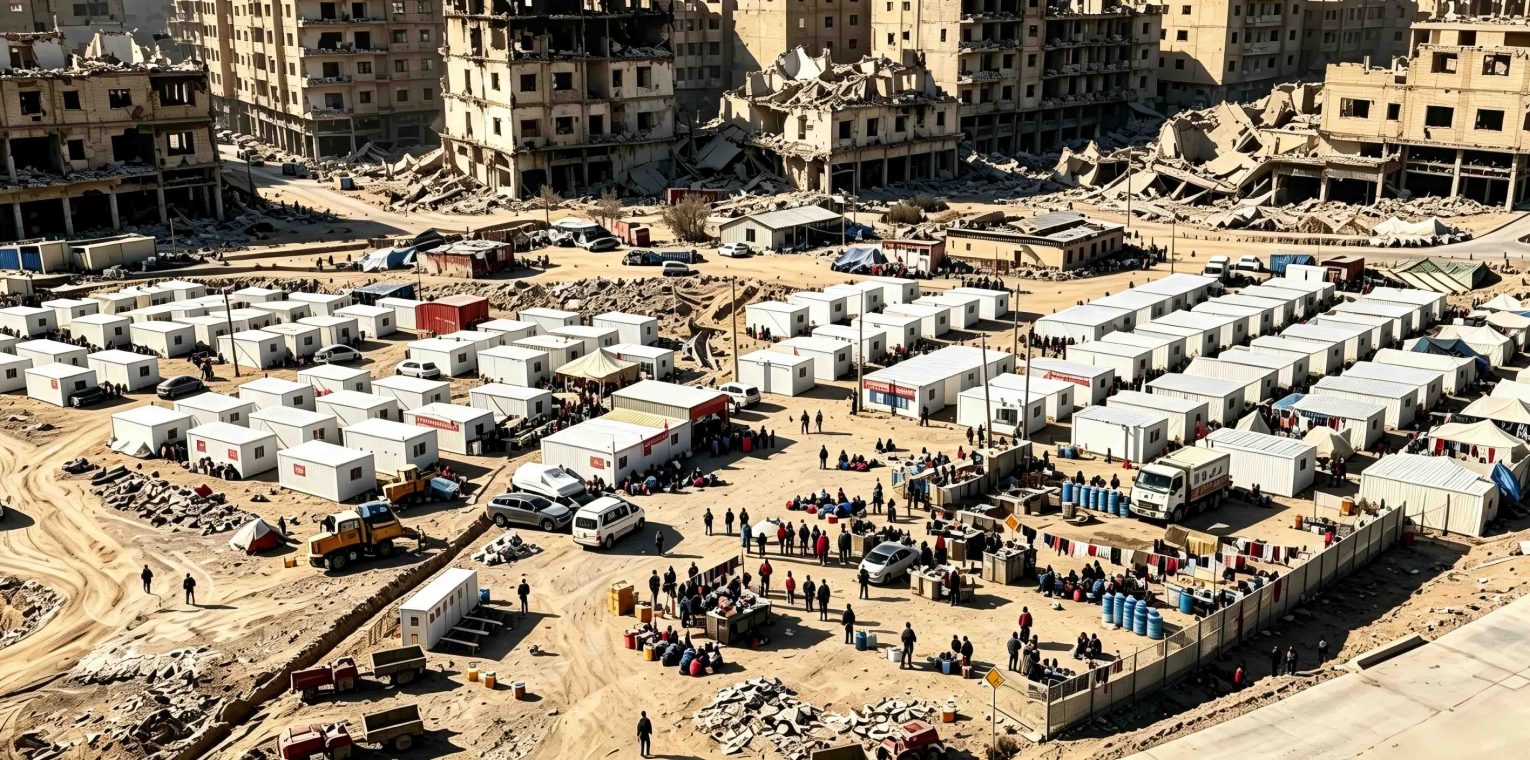
Step Two: The Real Challenge Is Not Putting Up a Building — It Is Making It Livable Fast
Many people assume that resettlement housing only needs to be assembled. But real post-disaster shelter sites do not work that way. Whether a modular unit can be used quickly depends on whether it already meets the most basic occupancy conditions as soon as installation is complete.
That is one reason quick-assembly modular buildings are more effective in transitional shelter scenarios. A standard unit can usually provide around 18 square meters of space and include pre-arranged electrical points for daily life, such as 5-pin sockets, 3-pin sockets, air-conditioner outlets, leakage circuit breaker, and lighting fixtures. As soon as the unit is connected to an external or temporary power source, it can be ready for use very quickly.
At the same time, these buildings are often equipped with secure doors and secure PVC windows, with opposite windows improving ventilation and daylight. Interlocking connections also provide better sealing and thermal performance. These details may not seem like the first priority on paper, but once affected people begin living inside, they directly shape comfort, security, and the overall experience of recovery.
Step Three: Once Daily Life Begins, Power Problems Appear Faster Than Expected
One very practical problem in post-disaster scenarios is that the original power system may already be damaged or unable to recover fully in the short term. That means even if the modular buildings are installed, many everyday functions still cannot truly return without a stable basic power supply.
Night lighting, phone charging, fans or air conditioners, temporary offices, and basic medical point equipment are all directly affected by electricity access. So in post-disaster transitional shelter, housing recovery cannot be judged by space alone. It must also be judged by whether that space has a reliable power foundation.
That is why solar power and energy storage systems are becoming increasingly important in post-disaster shelter projects. They can provide basic electricity support before the external grid is fully restored and help stabilize lighting, daily power use, and essential equipment operation in functional areas of the shelter site.
If quick-assembly modular buildings are the core spatial element of transitional shelter, then solar energy storage is one of the support conditions that makes that space truly usable.
Step Four: Post-Disaster Shelter Is Not Just About Gathering People — It Is About Rebuilding Basic Living Order
Once a shelter site begins to take shape, the situation quickly shifts from concentrated emergency protection to temporary daily living. At that stage, people no longer need only a place to sleep. They need the most basic living structure.
That is why many transitional shelter sites gradually divide space around modular units into functional areas such as accommodation zones, washing areas, medical points, and study areas. Disaster recovery is never only about restoring floor area. It is about restoring the most basic order of daily life.
Quick-assembly modular buildings are well suited to this stage because they do not function as isolated units. They can be arranged rapidly in groups according to site requirements, forming an organized shelter system with clear functional relationships.
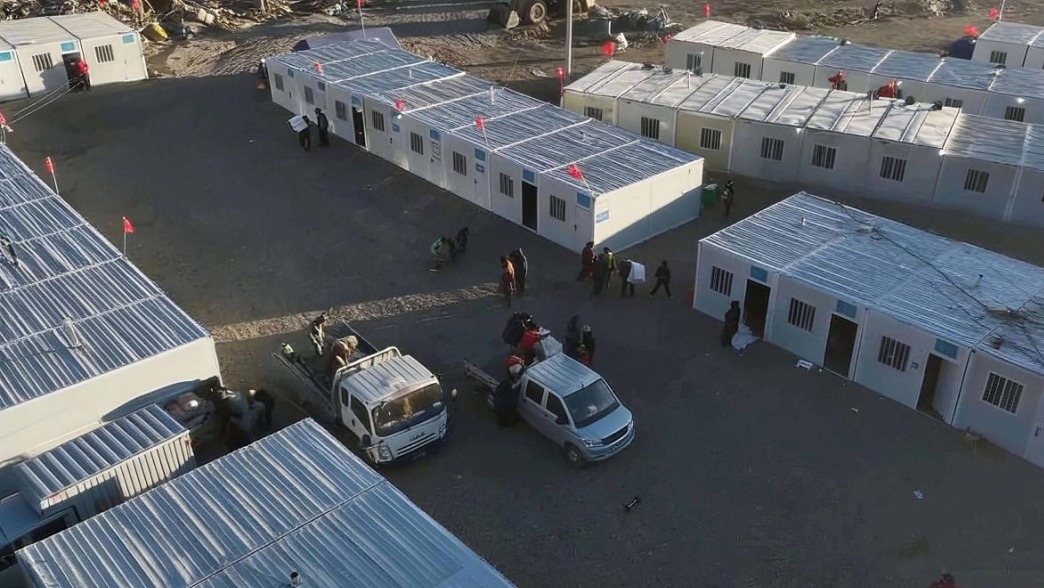
Step Five: Night Lighting and Basic Spatial Boundaries Directly Affect the Sense of Safety
In emergency resettlement sites, the difference between daytime and nighttime conditions is often very large. During the day, modular buildings may look orderly and clearly arranged. But once night comes, if lighting is insufficient, problems in living zones, walkways, entrances, and public activity areas appear immediately.
At that point, fast-deployment lighting systems such as solar street lights become extremely important. They do not rely on complex municipal power networks and are well suited to quickly building a basic nighttime lighting system for shelter sites, improving convenience, safety, and order.
Step Six: Drainage and Wastewater Systems Mark the Difference Between Temporary Setup and Real Daily Life
If a post-disaster shelter site is used only for a very short time, many issues may not appear immediately. But once it enters the transitional living stage, drainage and wastewater quickly become real operational problems.
How daily water is discharged, how washing and sanitation areas are organized, how water accumulation is avoided in rainy periods, and how wastewater is collected and treated all determine whether a shelter site can maintain basic hygiene conditions.
That is why in a truly mature resettlement system, drainage pipes, inspection wells, septic tanks, and related support systems are not items to be added later. They must be considered at the same time as the shelter site moves from the emergency phase into the transitional phase.
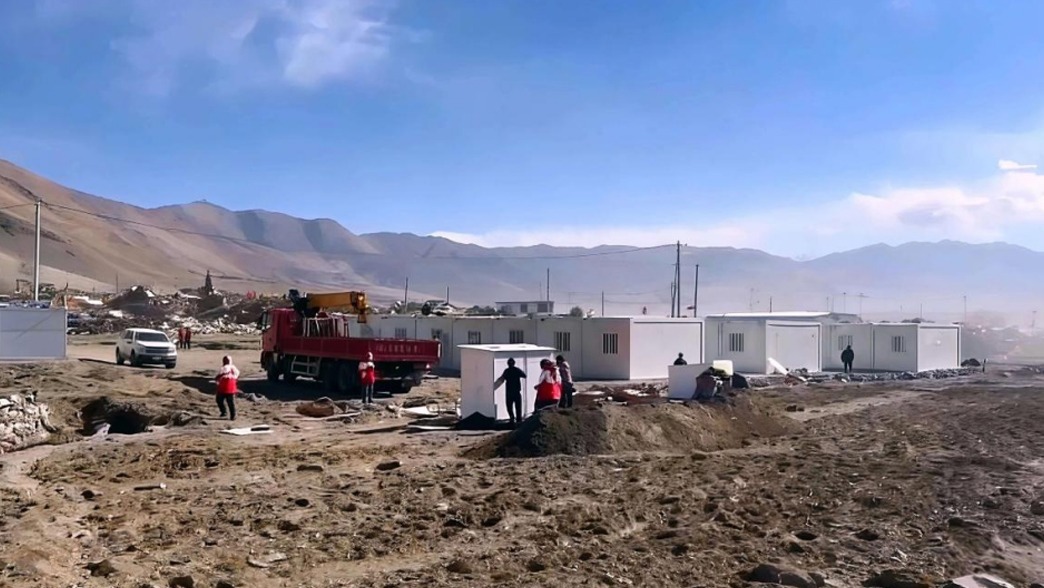
Step Seven: Material Systems Define More Than Specifications — They Shape the Real Living Experience
In post-disaster shelter scenarios, the meaning of materials is never limited to a few terms listed on a specification sheet. They directly affect the real living experience of the people who move in.
For example, first-grade waterproof and fire-resistant magnesium oxide flooring means better stability in humid environments and better suitability for high-frequency use. Class A fire-rated rock wool wall panels improve not only fire safety but also thermal insulation, heat resistance, and long-term living comfort.
Interlocking connection design also offers more stable performance in sealing, insulation, and structural integrity. In ordinary product introductions, these may look like simple configuration points. But in a real post-disaster shelter site, they determine whether the people living there will feel comfortable, safe, and supported over time.
Conclusion: The Real Upgrade in Post-Disaster Shelter Is Not Simply Replacing Tents with Modular Buildings
The real upgrade from relief tents to quick-assembly modular buildings is not only the change in housing form itself. It is the shift in how the entire transitional living system is created.
27 August, 2024
Logistic Company
Commercial
New York, USA
$20 Million
