
Remote Camps
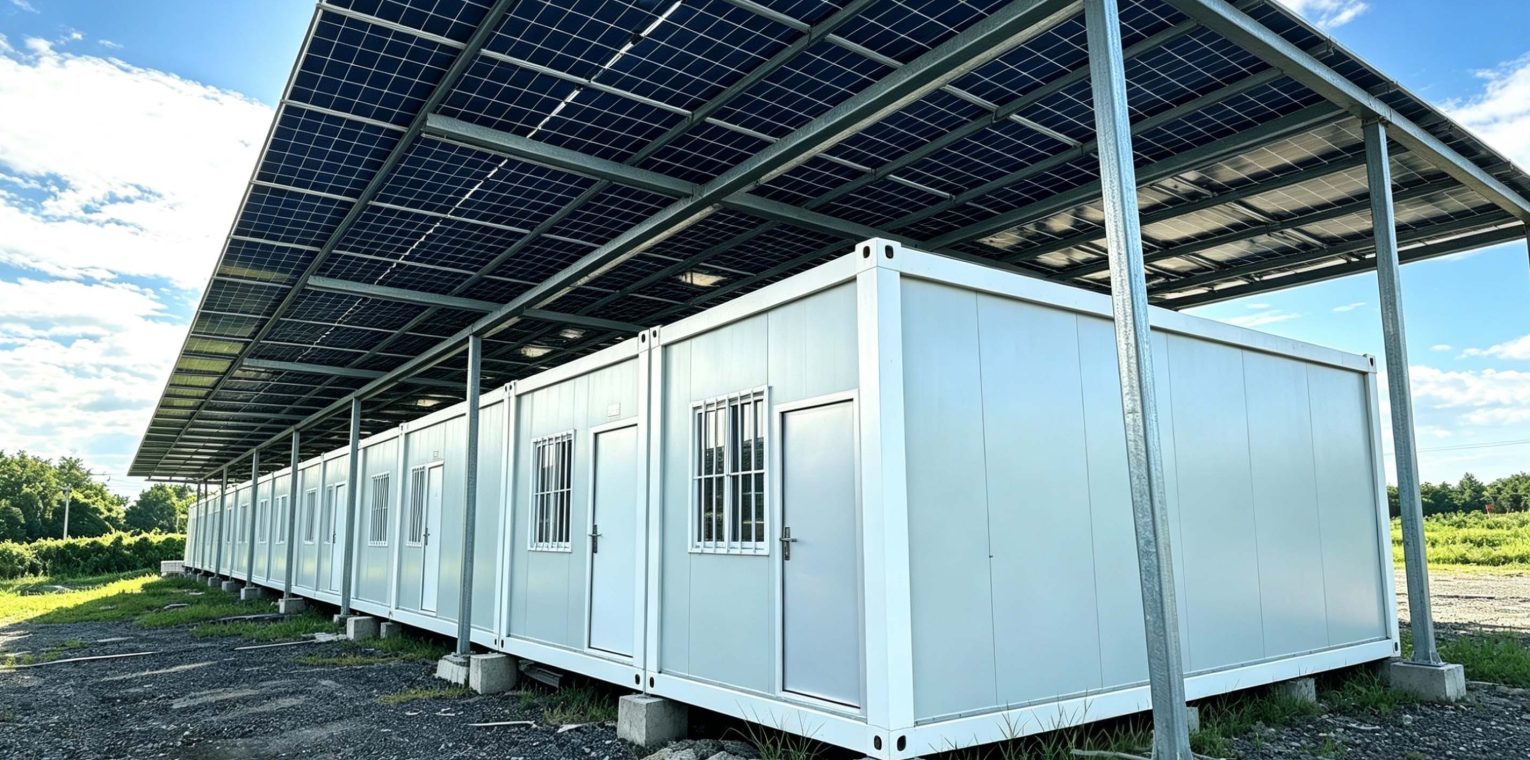
From Empty Land to a Livable Remote Farm Camp: What Must Be Solved On Site?
Many people assume that building in remote areas such as farms, temporary jobsite housing, mining camps, open-field locations, or emergency accommodation sites is simple: put up a few buildings, make sure they are strong enough, leave some room for tools, and people can move in. But anyone with real site experience knows that turning an empty piece of land into a camp that is truly livable, operational, and sustainable involves far more than simply putting up buildings.
This is especially true in Australia, Africa, the Middle East, and other remote regions, where farm and mining projects often face long transport distances, weak infrastructure, high logistics costs, labor organization difficulties, large day-to-night temperature differences, and complex environmental conditions. In that kind of context, building a satisfactory, qualified, and robust camp is really a test of professional judgment. You do not need to know every detail yourself, but you do need the right team to assess the site layout and planning, identify what is missing, prioritize what must be done first, pinpoint where the real risks lie, and how the camp can remain more practical and convenient in long-term use.
That is exactly why modular quick-assembly camp buildings are becoming increasingly important in remote farm applications.
Step One: Solve Where People Will Stay — But a Building Alone Is Not Enough
For remote projects, the first issues to solve are usually accommodation, basic office space, and power supply. At an early stage, many sites need managers stationed on site, workers moving in in phases, basic duty management, material control, simple office functions, and temporary rest areas.
If accommodation and power are not solved first, later construction organization becomes difficult to stabilize. The real issue is that a remote farm camp does not need a building that only looks complete. It needs a space system that can be put into use quickly, adapt to the environment, and still allow expansion later.
That is one reason why quick-assembly modular camp buildings often become the preferred option over more traditional temporary construction methods in remote farm scenarios.
Why are quick-assembly camp buildings easier to deploy first? Because they address the most practical site constraints: construction time cannot be too long, transport cannot consume too much budget, installation cannot depend on large crews or complex equipment, and the completed structure must be ready for use as quickly as possible.
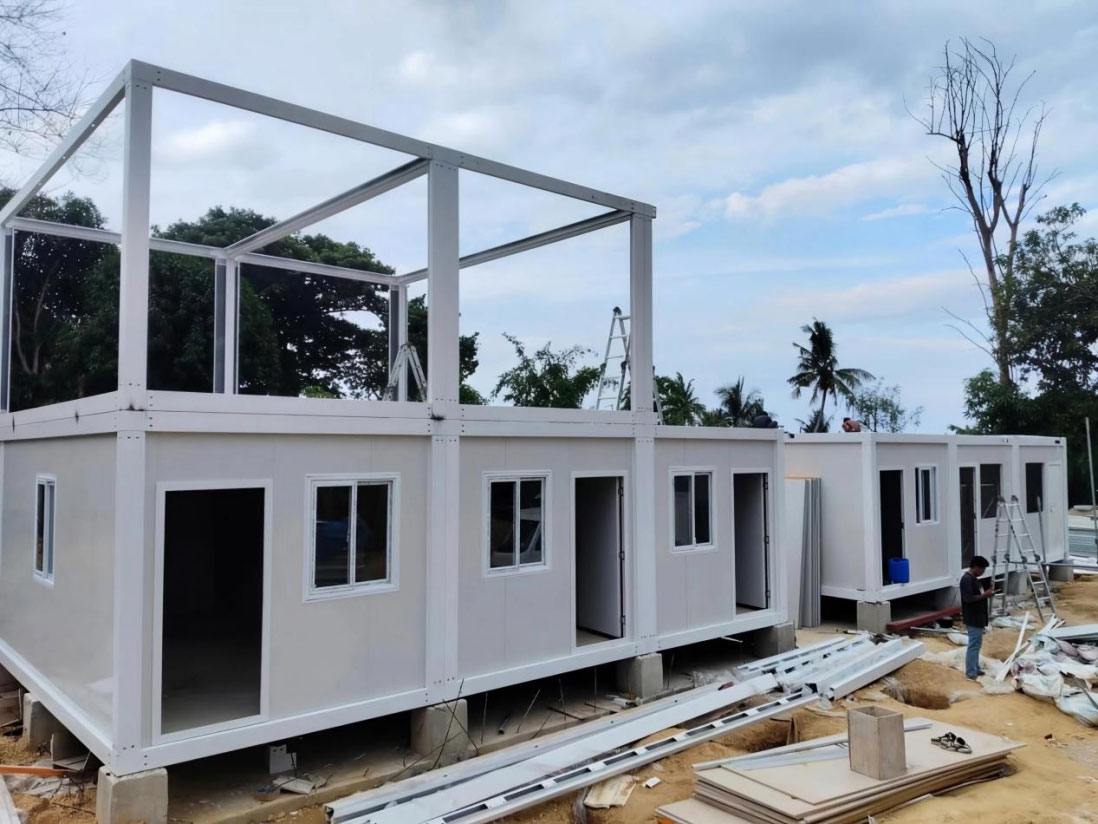
Step Two: Finishing the Building Does Not Mean People Can Move In
On a remote farm site, installing the camp building is only the first step. What really determines whether a camp is livable is whether lighting, outlets, basic power supply, air-conditioner connection, nighttime safety, and washing and drainage conditions are all in place at the same time. In other words, completing the shell does not mean the site is ready for handover.
A building that is truly ready for occupancy should include secure doors, secure PVC windows, cross-ventilation through opposite windows, 5-pin sockets, 3-pin sockets, dedicated air-conditioner outlets, leakage protection, lighting fixtures, and basic wiring reserves. These details may look small on paper, but they are critical on site.
For camp projects, the real value is not just assembling the building. The real value is being able to use it immediately after installation.
Step Three: A Remote Farm Camp Needs More Than Dormitories — It Needs Basic Living Order
A common misunderstanding is to think of a camp as just a few living units placed on the ground. In real projects, once people move in, practical questions appear immediately: how to separate living areas from working areas, how to manage storage zones and people flow, what will provide night lighting, how rainwater will be drained, and how wastewater and daily waste will be handled.
If these issues are not addressed early, the cost of fixing them later is usually much higher. That is why turning an empty piece of land into a camp that is truly livable is not just a building installation task. It is the process of forming a basic but functional camp system.
Step Four: Fencing Is Not an Extra — It Is Part of Camp Boundaries and Order
In remote farm applications, the role of fencing is often underestimated. But once the camp is actually in use, fencing becomes important very quickly. It determines whether living and working areas can be separated, whether equipment and material zones can be managed independently, whether movement boundaries are clear, whether nighttime safety is more controllable, and whether livestock areas will be mixed with living space.
In practice, fencing is rarely something that can simply be left for later. It is often one of the first support systems that proves essential once the camp begins operating.
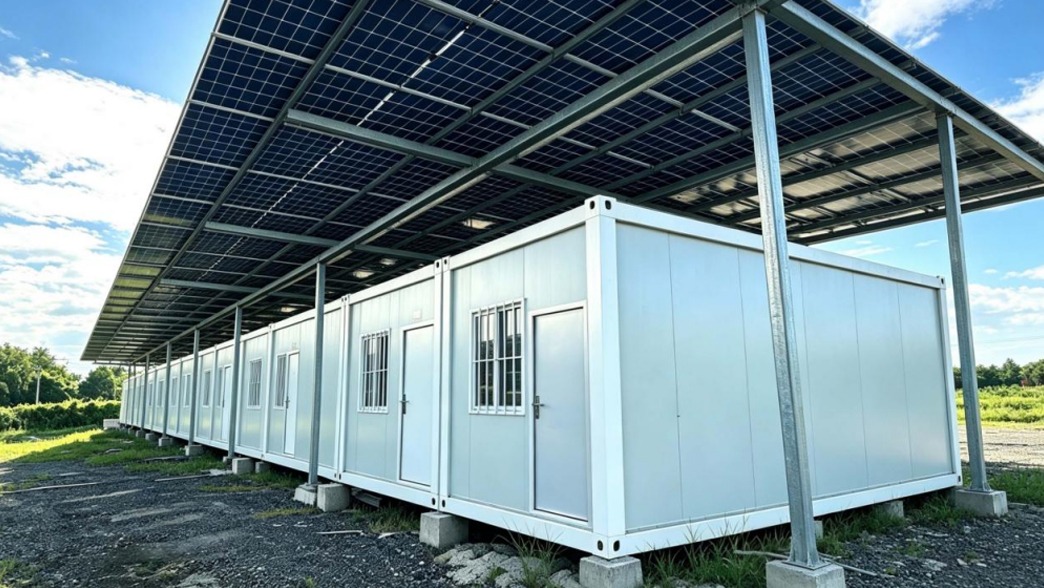
Step Five: Night Lighting Is Not a Bonus — It Is a Basic Requirement
As soon as a remote farm camp enters the operation stage, nighttime lighting becomes a real issue. This is especially true around entrances, internal camp paths, equipment parking areas, fence boundaries, and night-duty zones. If lighting is inadequate, the immediate problem is not appearance — it is unsafe movement at night, lower efficiency for temporary work, and more difficulty with guarding and inspections.
That is why solar street lights become such a natural support choice in many remote scenarios. They do not require large-scale trenching and cabling, they fit better in off-grid or weak-grid environments, and they can be deployed flexibly as the camp grows or changes.
Step Six: Drainage and Wastewater Systems Are Often Delayed — and Become the Most Expensive Rework Later
On many sites, early attention is focused on getting buildings installed, people moved in, and power connected. But once daily use begins, the next questions come quickly: What happens when rainwater accumulates? How will washing water and daily wastewater be discharged? If sewage has no proper outlet, will it affect camp operation? And if the site is occupied long term, how will septic tank servicing and maintenance be handled?
These issues are less visible than accommodation, but they determine whether the camp can continue operating normally. In remote areas, trying to add drainage and wastewater systems later usually costs more and can disrupt a layout that has already been formed.
Step Seven: Materials Are Not Just Words on a Specification Sheet — They Define Comfort and Durability on Site
For example, magnesium oxide flooring is not simply a material upgrade. It usually means better suitability for humid environments, better stability in daily use, improved safety, and lower maintenance pressure over time. Class A fire-rated rock wool wall panels do not only affect fire performance. They also directly influence thermal insulation, living comfort, and long-term safety in use.
If the connection method uses an interlocking design, the main value lies in better sealing, more stable insulation performance, and stronger suitability for long-term use in wind, sand, and rain-prone environments. It also improves the overall integrity of the completed installation.
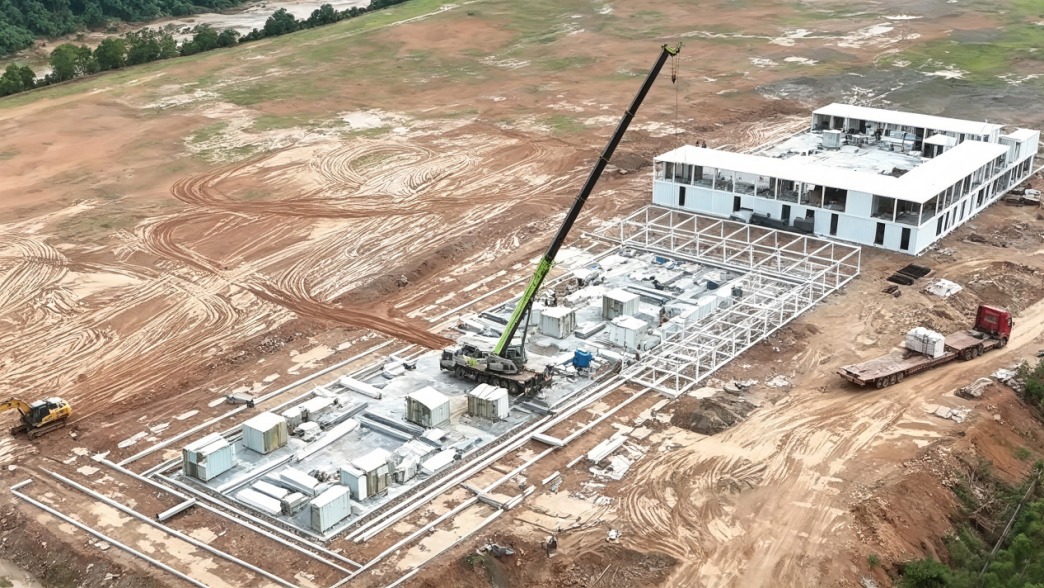
Conclusion: Professional Remote Camp Planning Is Not About One Product — It Is About Solving Site Problems in One Complete System
The biggest risk in a remote farm project is not always a high budget. More often, it is oversimplifying the first setup. A building that goes up quickly does not automatically mean the site is ready for people to live in. If lighting, fencing, drainage, wastewater, and basic living conditions are not in place, the camp may be physically assembled — but it is still not truly usable.
27 August, 2024
Logistic Company
Commercial
New York, USA
$20 Million
