Why Remote Infrastructure Gaps Are Creating New Demand for Integrated Project Solutions
Remote infrastructure demand is no longer being driven by one isolated trend. Across energy access, housing, displacement, mining development, and rural electrification, the same pattern is becoming more visible: buyers increasingly need deployable, coordinated solutions rather than disconnected products.
This shift matters because the market problem is becoming more structural. In many parts of the world, remote projects are being shaped by overlapping shortages in power, housing, labor, and site support capacity. As a result, one-stop infrastructure solutions are becoming more relevant in both commercial and humanitarian markets.
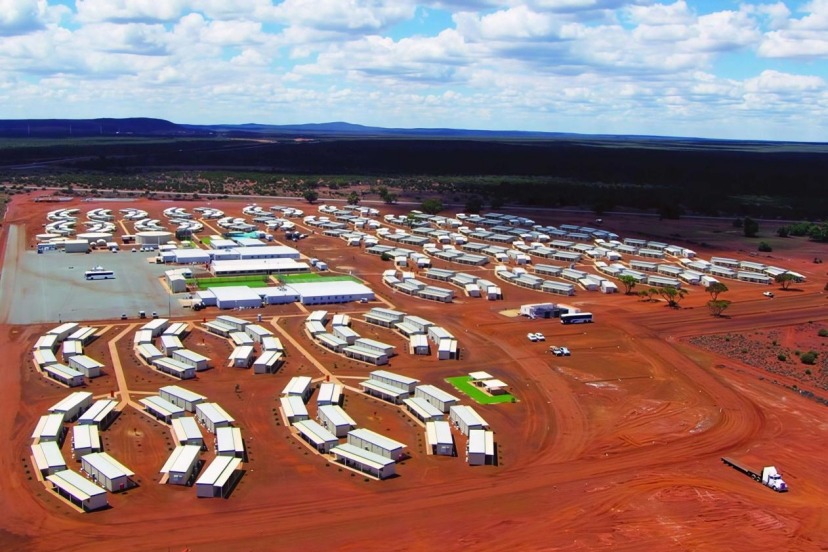
The Global Infrastructure Gap Is Still Very Large
The need for remote infrastructure remains significant at a global level.
According to the Tracking SDG 7: Energy Progress Report 2026, jointly released by the IEA, IRENA, World Bank, and WHO in June 2026, 655 million people worldwide still lacked access to electricity as of 2024, while the global electrification rate remained stalled at 92%.
The pressure is particularly severe in Sub-Saharan Africa, where 560 million people remain without electricity, accounting for more than 85% of the global unelectrified population. At the current pace, the report estimates that 645 million people may still lack electricity access by 2030.
The same report also notes that 970 million people globally still do not have access to clean cooking energy.
This is not only an energy problem. It is an infrastructure delivery problem. Where electricity access remains limited, project demand often extends beyond power alone to include lighting, shelter, storage, fencing, and basic sanitation.
Housing Pressure Is Expanding the Need for Faster Deployment
The global housing shortage is reinforcing the same trend.
According to UN-Habitat’s World Cities Report 2026, the global housing gap has exceeded 268.8 million units, with the largest shortfalls concentrated in developing regions. The report also estimates that 3.0 billion to 3.4 billion people worldwide do not have access to adequate housing, including 1.1 billion people living in informal settlements and slums — the highest level recorded so far.
UN-Habitat data released in 2026 also shows that 44% of households globally spend more than 30% of their income on rent, while the figure rises to 55% in Sub-Saharan Africa.
These figures explain why project buyers are paying more attention to faster and more scalable delivery systems. In many regions, the market is not simply looking for more buildings. It is looking for more practical ways to deploy usable space under difficult budget and labor conditions.
Humanitarian Displacement Is Changing the Shelter Market
Another major driver comes from long-term displacement.
According to UNHCR’s Global Appeal 2026, the number of forcibly displaced or stateless people worldwide is expected to reach 136 million across 128 countries and territories in 2026.
Earlier UNHCR data cited in the 2026 Emergency Shelter Systems Market report showed that the number of displaced people had already reached 117.6 million in 2024, including 35.3 million refugees and 62.6 million internally displaced persons.
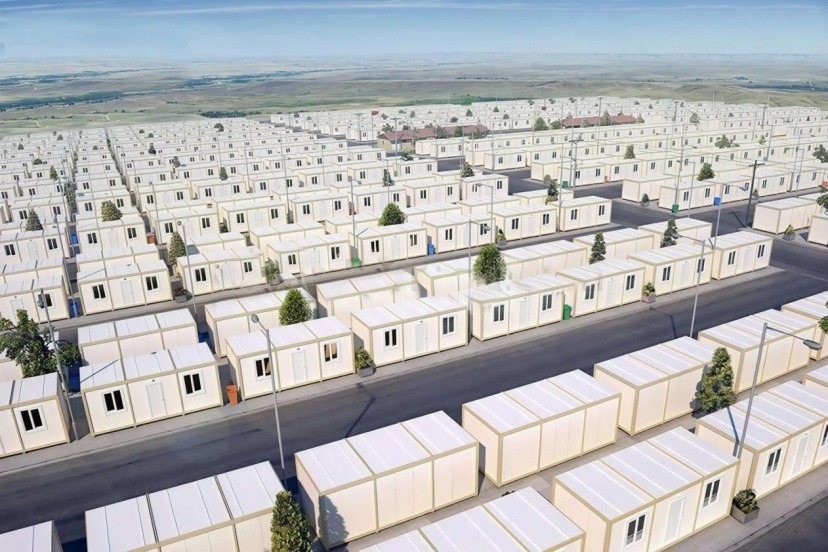
More importantly, the shelter requirement is changing in quality, not just quantity. Dataintelo’s April 2026 emergency shelter analysis notes that the average lifespan of refugee camps has extended to 17 years. That has shifted procurement priorities away from basic short-term tents and toward more durable, semi-permanent modular structures with stronger requirements for safety, sanitation, insulation, and support infrastructure.
The Global Humanitarian Overview 2026 Mid-Year Review from UNOCHA also reported that 252 million people needed urgent humanitarian assistance and protection in the first five months of 2026, an increase of 13 million compared with the end of 2025.
This is an important market signal. The demand is no longer just for emergency shelter. It is increasingly for coordinated, longer-term site infrastructure.
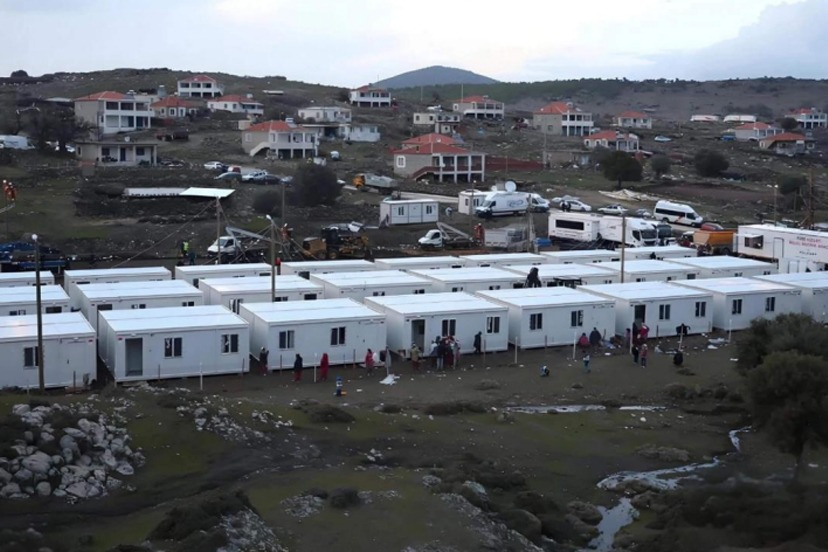
Mining and Remote Industrial Sites Add a Commercial Layer of Demand
Commercial project markets are reinforcing the same direction.
Discovery Alert reported in July 2026 that global major mining company exploration budgets rose by 1% to 2% in 2026 to around USD 6 billion, while over 3,200 junior mining companies allocated a combined USD 1.8 billion to USD 2.4 billion to exploration budgets.
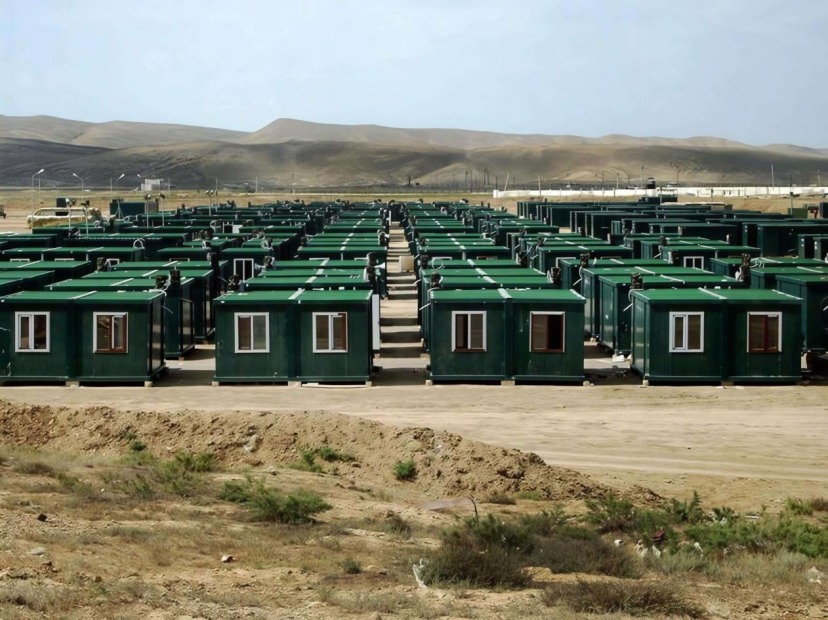
At the same time, research referencing Grand View Research indicates that the Latin American prefabricated housing market is expected to grow at a CAGR of 8.2% from 2025 to 2030, with the market projected to reach USD 2.07 billion by 2028. Scalable container housing is expected to account for nearly 15% of that market, driven in large part by copper and lithium mining camp demand.
This matters because modern mining and industrial camps are no longer limited to basic housing units. Buyers increasingly expect integrated delivery of:
- accommodation
- office space
- dining and washroom facilities
- fencing and site security
- off-grid power
- drainage and sanitation systems
That shift makes integrated procurement much more practical than fragmented sourcing.
Off-Grid Solar Growth Is Closely Connected to Remote Site Infrastructure
Energy system growth is also supporting this trend.
According to Mordor Intelligence’s August 2026 Off-Grid Solar Energy Market report, the global off-grid solar market is expected to reach 14.68 GW in 2026 and expand to 40.02 GW by 2031, representing a 22.21% CAGR from 2026 to 2031.
A separate Dataintelo report published in April 2026 estimates that the global off-grid solar power systems market was worth USD 5.8 billion in 2025 and is projected to reach USD 14.2 billion by 2034, with a 10.5% CAGR during the period.
Regional growth is particularly strong in the Middle East and Africa, where Mordor Intelligence reports a 26.3% CAGR, above the global average.
According to PW Consulting’s June 2026 off-grid photovoltaic systems report:
- Asia-Pacific remains the largest market
- Africa accounts for nearly 32% of global market value
- North America accounts for 8%
- Europe accounts for 5%
- Latin America accounts for 7%
In practice, off-grid energy projects often require much more than a power unit. They are frequently linked to modular housing, lighting, fencing, water access, and drainage support. That is why infrastructure procurement in these markets is increasingly moving toward combined packages rather than single-category purchases.
Why Integrated Solutions Are Gaining Ground
The reason integrated solutions are gaining momentum is straightforward: remote projects usually face multiple constraints at the same time.
These often include:
- limited local construction capacity
- high logistics costs
- difficult installation environments
- multi-category supply chain coordination
- urgent deployment timelines
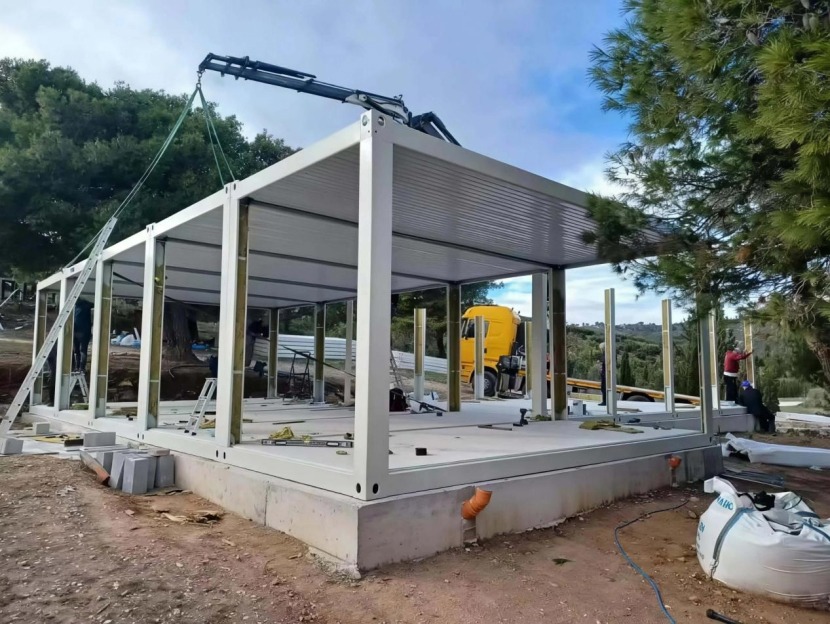
Project survey data cited by China’s Ministry of Housing and Urban-Rural Development and China State Construction Hailong shows that modular construction can reduce project timelines by more than 60%, reduce on-site labor demand by 70%, and cut factory-prefabricated material loss to 3% to 5%, compared with 8% to 12% on traditional sites.
The procurement structure is changing too. Industry supply chain research released in August 2026 shows that infrastructure-related fencing now accounts for 70% of China’s total fence exports, and these products are increasingly purchased together with modular buildings and photovoltaic systems under EPC and integrated infrastructure models.
Similarly, a 2026 industry survey on off-grid storage exports found that 22.5% of China’s 2025 off-grid storage exports were systems above 500 kWh, typically used in island-scale or mining-grade applications. These projects almost always require associated purchases such as modular buildings, solar street lighting, fencing, and drainage systems.
Taken together, these data points suggest that buyers are not simply increasing purchases in separate categories. They are increasingly procuring functioning site systems.
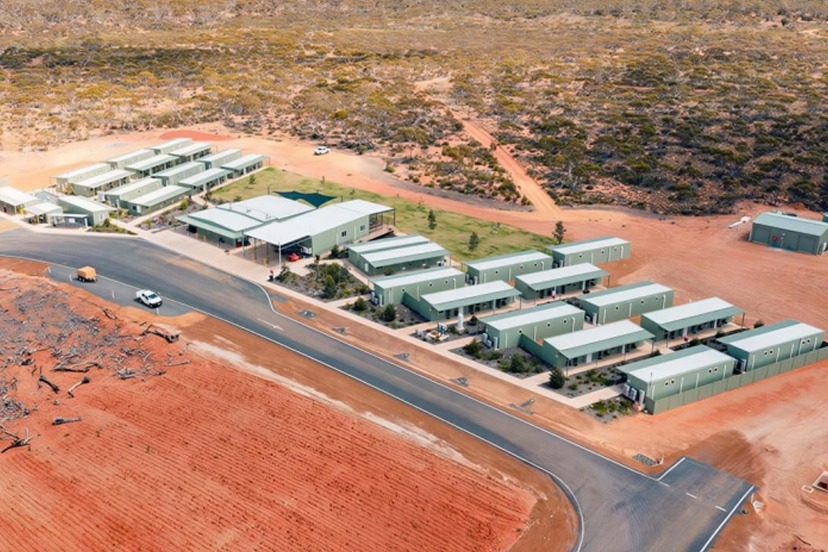
What This Means for Buyers and Suppliers
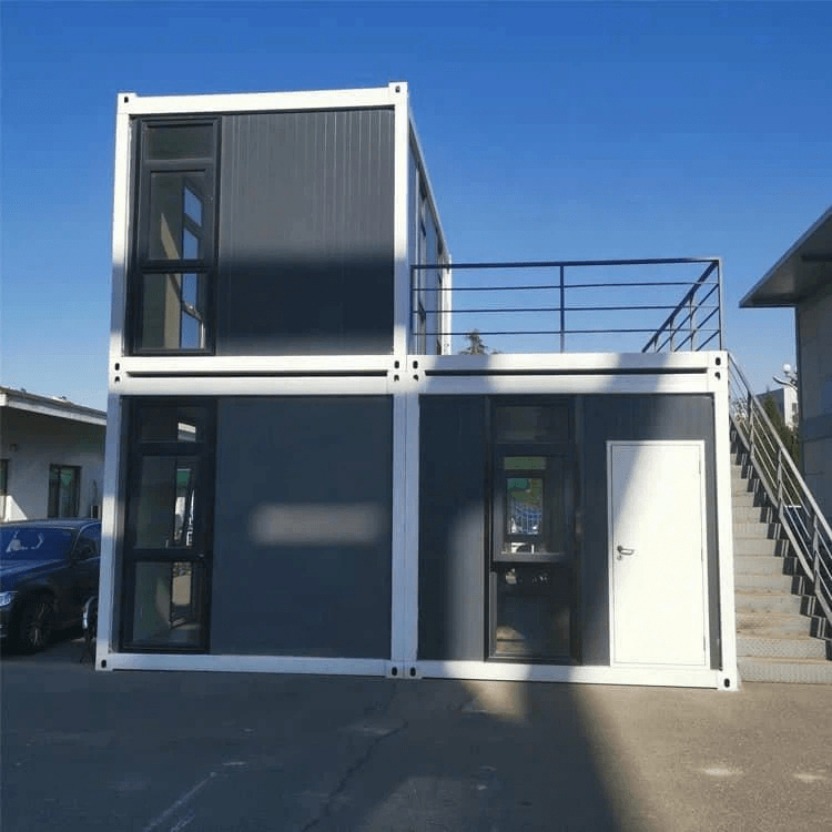
For buyers, this shift means procurement decisions are becoming more system-based. Housing, power, lighting, fencing, sanitation, and drainage are now often part of the same delivery conversation.
For suppliers, this creates a different kind of competitive advantage. The strongest market position no longer comes only from offering a low product price. It increasingly comes from being able to support:
- multi-category matching
- project layout logic
- technical recommendations
- faster deployment planning
- visual and design support
- better coordination across the full site solution
That is why integrated remote infrastructure solutions are becoming more important in both commercial and humanitarian markets.
Conclusion
Global gaps in electricity access, housing, shelter, and remote project delivery are creating stronger demand for integrated infrastructure solutions.
As these needs overlap across mining camps, rural communities, humanitarian sites, and industrial projects, procurement is moving toward models that reduce coordination pressure and improve delivery speed.
For project buyers, the trend is clear: in remote environments, the market increasingly values complete, deployable solutions over disconnected product sourcing.
FAQ
1. Why are remote infrastructure solutions becoming more important?
Because energy access gaps, housing shortages, displacement, and remote industrial development are all increasing demand for faster and more coordinated site delivery.
2. Why is integrated procurement more practical in remote projects?
Because remote projects often require housing, power, lighting, fencing, and drainage at the same time, making fragmented sourcing less efficient.
3. Which markets are driving this trend most strongly?
Key drivers include Sub-Saharan Africa, humanitarian shelter markets, mining and industrial camps, and fast-growing off-grid solar regions.
4. What makes one-stop solutions more attractive than price-only sourcing?
They reduce logistics complexity, coordination risk, installation pressure, and the chance of mismatch across multiple product categories.
Source Notes
- IEA / IRENA / World Bank / WHO, Tracking SDG 7: Energy Progress Report 2026, June 2026
- UN-Habitat, World Cities Report 2026, May 2026
- UNHCR, Global Appeal 2026
- UNOCHA, Global Humanitarian Overview 2026 Mid-Year Review
- Discovery Alert, Mineral Exploration Drilling Budgets 2026, July 2026
- Grand View Research reference on Latin America prefabricated housing market, cited in 2026 industry materials
- Mordor Intelligence, Off-Grid Solar Energy Market, August 2026
- Dataintelo, Off-grid Solar Power Systems Market, April 2026
- PW Consulting, Worldwide Off-grid Photovoltaic Systems Market 2026
- Ministry of Housing and Urban-Rural Development / China State Construction Hailong project survey data
- Industry fencing supply chain research, August 2026
- Off-grid storage industry survey report, May 2026