
Delivery Gap
From Temporary Setup to Stable Operation: What Really Delays Delivery in a Mining Camp?
In the early stage of many mining projects, the most visible task is simply getting people on site. As a result, the first things decision-makers usually focus on are whether dormitories are ready, whether office space is available, and whether a temporary living area can be set up quickly.
But anyone who has worked on real mining projects knows that the hardest part is never just placing a few buildings on site. The real challenge is making the entire camp operate stably under remote conditions, environmental complexity, and long-term intensive use.
This is especially true in high-temperature, dusty, high-altitude, desert, or logistically difficult regions. In these environments, camp construction is not only about accommodation. It is about whether a complete on-site operating system can take shape at the same time. That is one reason why quick-assembly modular buildings are becoming increasingly common in mining projects.
Step One: A Mining Camp Is Not Just a Place to Sleep — It Is an Operational Base
Many people think of a mining camp as a temporary dormitory area, but a real mining camp carries far more than accommodation. As soon as the project starts running, the camp must support staff deployment, duty management, material supervision, on-site office work, and the recovery of basic daily life.
In other words, a mining camp is not simply a few housing units placed on the ground. It is an operational base that must continue supporting the project. Once that base becomes unstable, later management, construction coordination, and living order are all affected.
That is why quick-assembly modular buildings function more like an operating starting point in mining projects than just a temporary construction product. Their first role is to help form dormitory, office, duty, and basic living space as quickly as possible under difficult conditions.
Step Two: The Real Issue Is Not Whether It Can Be Installed — It Is Whether It Can Become Usable Fast
On a mining site, installation and usability are often two different things. A modular building may be assembled, but that does not automatically mean staff can move in smoothly, or that office work, duty tasks, and daily life can begin in a stable way.
The key is not only installation speed. It is whether the camp can meet basic use conditions as soon as installation is completed. That includes practical ventilation, secure doors and windows, complete internal electrical preparation, and whether lighting and sockets can support basic daily operation.
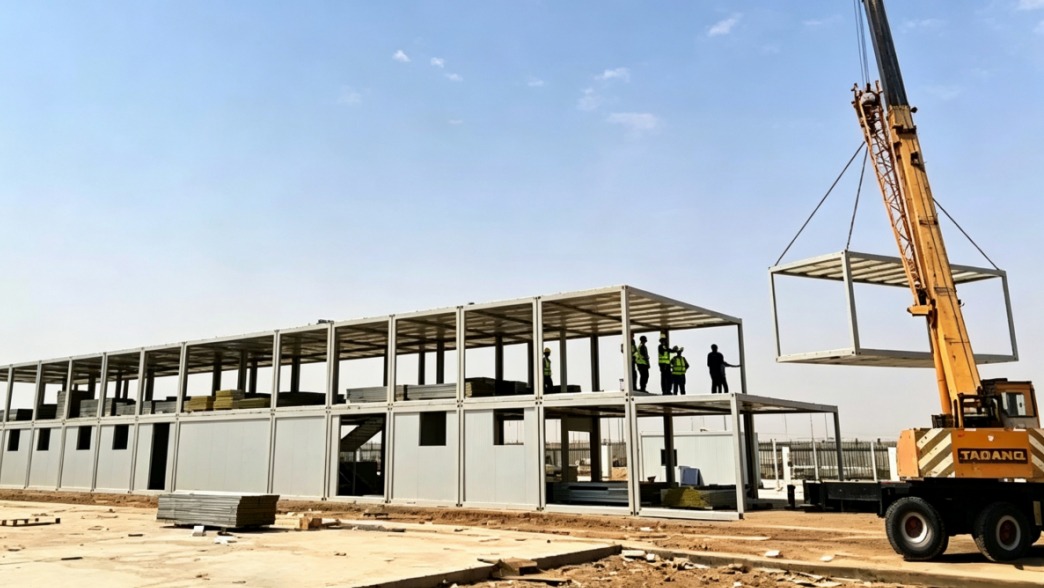
The value of quick-assembly modular buildings in this context is that they make it easier to achieve both fast installation and fast entry into service. Standardized components are prefabricated in the factory, then lifted, unfolded, and anchored on site to form a complete usable space. This is especially suitable for remote mining projects that must first establish living conditions and then gradually improve supporting facilities.
Step Three: The Mining Environment Quickly Magnifies the Difference Between Materials and Structural Choices
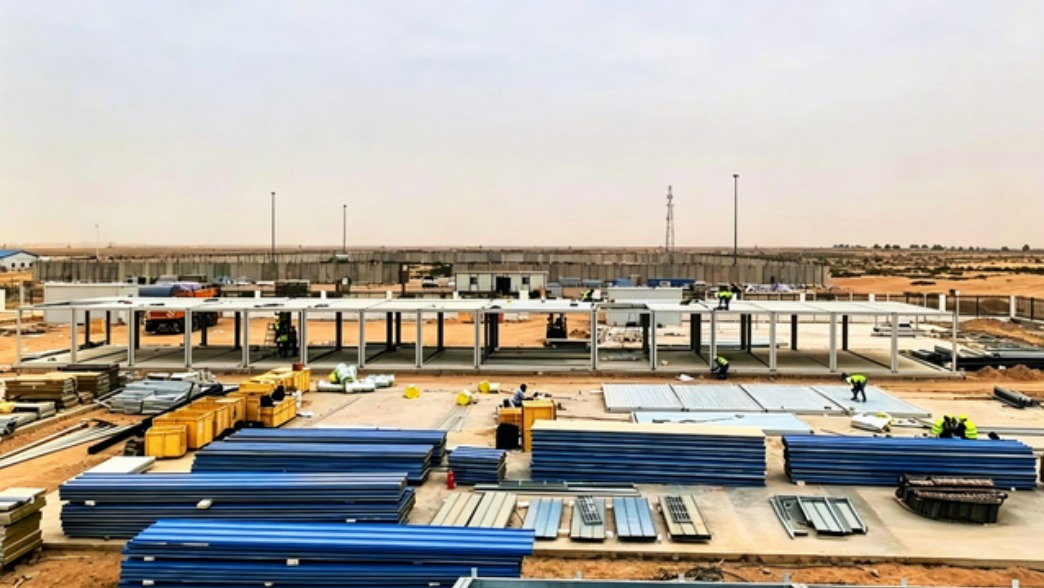
In ordinary scenarios, many material differences may not be noticed immediately. In mining projects, however, high temperature, windblown sand, dust, humidity, and large day-to-night temperature differences can expose material and structural weaknesses very quickly.
That is why mining projects pay much closer attention to enclosure systems and basic materials than ordinary applications. For example, first-grade waterproof and fire-resistant magnesium oxide flooring performs more reliably in humid or high-frequency use environments. Class A fire-rated rock wool wall panels affect not only fire safety, but also insulation, heat resistance, and long-term living comfort.
The value of an interlocking assembly design is not simply the connection method itself. It directly affects sealing performance, thermal insulation, and overall behavior in wind, sand, and rainy conditions. For a mining camp, these are not just attractive words on a specification sheet. They are real differences that people notice soon after moving in.
Step Four: Once the Camp Enters Daily Use, Night Lighting Quickly Stops Being a Convenience and Becomes a Safety Requirement
A mining camp is very different from an ordinary residential area. It usually involves night duty, equipment inspections, rotating shifts, and material supervision. As soon as night begins, lighting around the dormitory area, office area, walkways, equipment zones, and fence boundaries becomes a real operational issue.
If lighting is insufficient, the problem is not simply inconvenience. It means greater movement risk, lower efficiency for on-duty work, weaker boundary control, and more difficulty carrying out nighttime management.
That is why solar street lights are often not an optional extra in remote mining projects. They are a highly practical site configuration. They are better suited to regions without stable municipal infrastructure and can also be added gradually as the camp expands.
Step Five: Without Clear Boundaries, It Is Difficult for a Mining Camp to Form Stable Order
Once a mining camp begins to take shape, the site quickly develops different spaces such as living areas, offices, equipment zones, material zones, vehicle routes, and working boundaries. If these spaces are not clearly separated, site management becomes increasingly difficult.
In a mining camp, the fencing system is not simply external protection. It helps create the most basic order structure on site. It determines which areas belong to living space, which belong to equipment and materials management, and which boundaries must remain clear during night operations and duty supervision.
In other words, fencing is not a later accessory added after the mining camp is formed. It is often part of the transition from temporary placement to organized operation.
Step Six: If Drainage and Wastewater Are Not Considered Early, They Become the Hardest Problems to Correct Later
As soon as a mining camp becomes occupied, it will inevitably face issues related to domestic water use, drainage, and wastewater treatment. These are often pushed aside in the early phase by higher priorities such as getting people moved in and getting work started.
But the reality is that once the camp enters continuous use, these problems emerge quickly and all at once: what happens when rainwater accumulates, where washing and sanitation wastewater should go, and how septic treatment and maintenance will be arranged during long-term occupation.
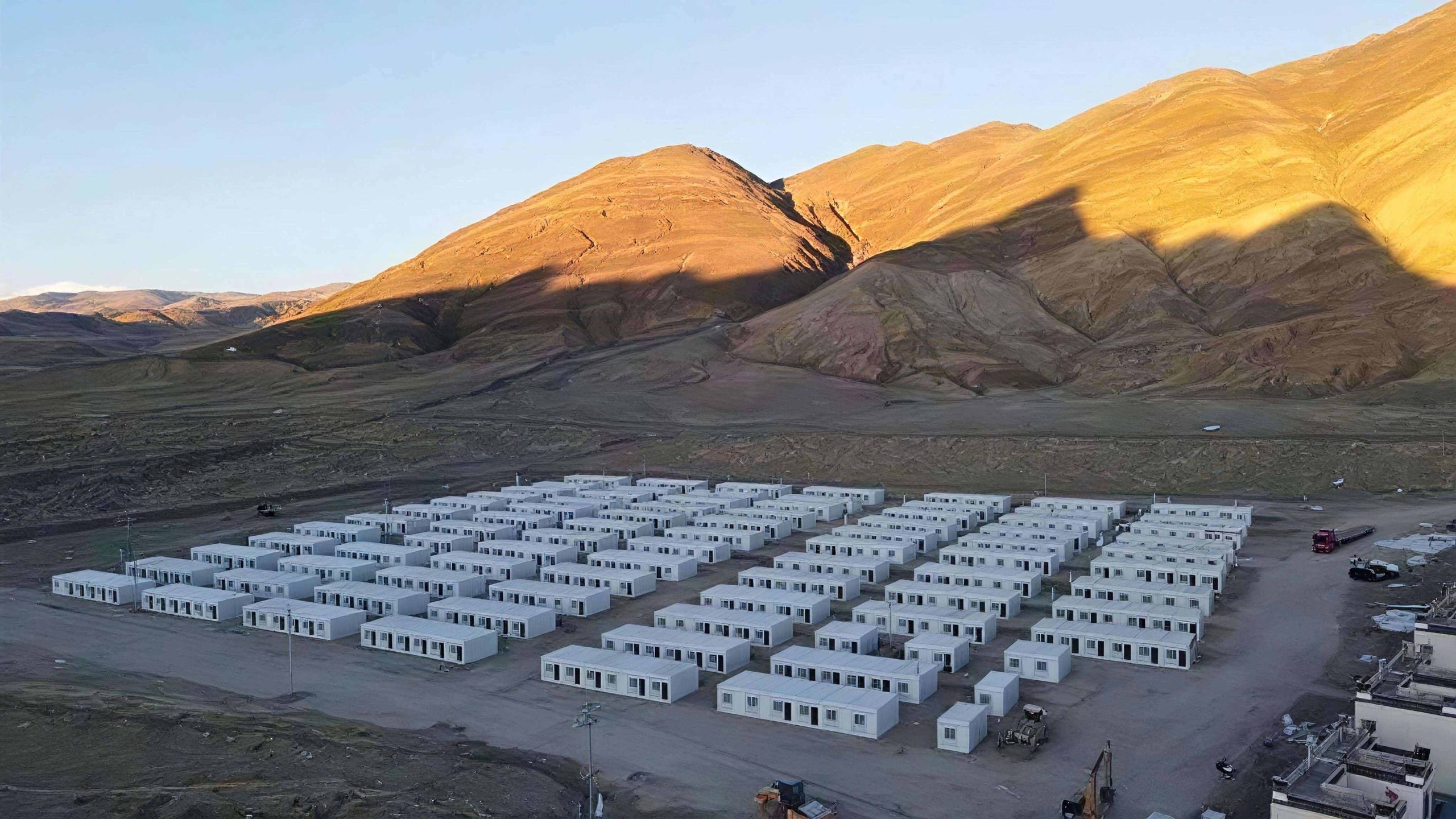
That is why a mature mining camp does not treat drainage pipes, inspection wells, and septic tanks as support items to be considered later. They should be included in the camp layout logic from the beginning. Once they are added afterward, rework is usually expensive and can disrupt the circulation and functional areas that have already been established.
Step Seven: A Mining Camp Cannot Achieve Stable Operation Without Solving Power Supply
In many remote mining areas, external power conditions are unstable, and in the early project phase the camp may not be able to rely fully on the public grid at all. That means even if the camp space is already installed, many basic usage needs are still limited by whether stable electricity is available.
Lighting for dormitories and offices, charging for phones and communication devices, operation of fans or air conditioners, and support for duty equipment and basic office facilities all depend on stable power. That is one reason photovoltaic energy storage systems are becoming more common in mining camp applications.
If quick-assembly modular buildings are the spatial core of a mining camp, then photovoltaic energy storage is the support that allows that space to move from simply being placed on site to actually functioning.
Conclusion: What Really Delays Mining Camp Delivery Is Not One Product — It Is Whether the Site Can Quickly Form a Stable System
For a mining camp moving from temporary setup to stable operation, the biggest delivery bottleneck is usually not whether dormitories exist. It is whether the site can quickly form a complete system that supports accommodation, duty management, lighting, enclosure, wastewater handling, and basic power supply.
27 August, 2024
Logistic Company
Commercial
New York, USA
$20 Million
