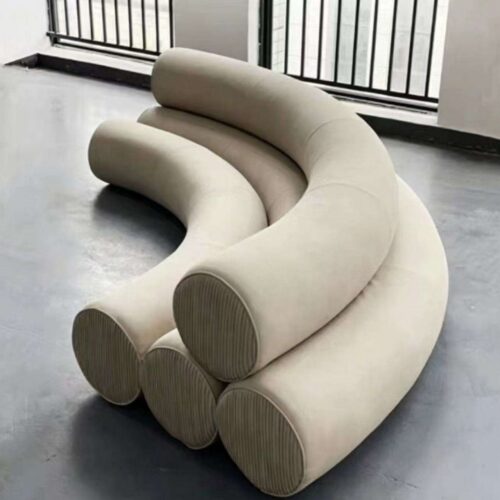

Vacuum compressed sofas — also called vacuum-packed sofas, roll-pack sofas or “box sofas” — are one of the fastest-growing segments in the global furniture industry. By compressing and rolling a sofa into a compact box that ships through standard parcel networks, manufacturers and retailers can dramatically reduce shipping costs, pass savings on to customers, and reach buyers in areas where traditional furniture delivery is impractical.
For furniture importers, e-commerce sellers and DTC brands, adding a vacuum compressed sofa line can be a game-changer. In this guide from QONKA HOME — a Fuzhou Qiankun Manufacturing factory brand — we break down everything you need to know about vacuum compressed sofas in 2026.
1. What Is a Vacuum Compressed Sofa?
A vacuum compressed sofa is a sofa that has been compressed using industrial vacuum equipment, rolled into a compact cylinder, and packaged into a relatively small cardboard box — typically 80-120 cm long and 30-50 cm in diameter. The sofa arrives at the customer doorstep in a box, and once unpacked and unrolled, it gradually expands back to its full size over 24-72 hours.
Also known as: vacuum-packed sofa, roll-up sofa, boxed sofa, sofa-in-a-box, compressed sofa, roll-pack sofa, flat-pack sofa (though technically flat-pack is different — that is IKEA-style assembly).

2. How Does Vacuum Compression Work for Sofas?
The vacuum compression process requires specialized industrial equipment and carefully designed sofa construction. Here is how it works at a typical China furniture factory like QONKA HOME:
- Step 1 — Production. The sofa is fully manufactured as normal — frame, springs, foam, padding, upholstery. The internal structure must be designed to withstand compression without damage.
- Step 2 — Quality check. The finished sofa goes through final QC — structure, upholstery, stitching, dimensions — before compression.
- Step 3 — Compression. The sofa is placed in a heavy-duty plastic bag and loaded into a vacuum compression machine. The machine applies pressure and removes air, compressing the sofa to roughly 20-30% of its original volume.
- Step 4 — Rolling & packaging. The compressed sofa is rolled into a tight cylinder and wrapped in protective packaging. It is then inserted into a custom-sized cardboard box.
- Step 5 — Shipping. The boxed sofa ships via standard parcel or LTL freight — much cheaper than traditional furniture shipping.
- Step 6 — Unboxing & expansion. The customer cuts open the packaging, unrolls the sofa, and it gradually expands to full size over 24-72 hours as air re-enters the foam.
Not all sofas can be vacuum compressed. The frame, foam type, spring system and upholstery must all be designed to handle the compression and expansion cycle without permanent damage.
3. Pros & Cons of Vacuum Compressed Sofas
Advantages for Importers & Retailers
- Dramatically lower shipping costs. Compressed sofas take up 60-75% less container volume than traditional sofas. A 40-HQ container that holds 80-120 regular sofas can hold 250-400+ compressed sofas. Shipping cost per unit drops by 50-70%.
- Easier last-mile delivery. Boxed sofas ship through standard parcel networks, so you can sell to customers in apartments, small towns and remote areas where white-glove furniture delivery is expensive or unavailable.
- Lower warehousing costs. Compressed sofas take up much less warehouse space, reducing storage costs and making it easier to stock more SKUs.
- Better e-commerce fit. DTC and e-commerce brands love boxed sofas because they work with standard fulfillment operations — no special furniture handling needed.
- Higher margins. Lower shipping and logistics costs translate directly into higher margins — or the ability to price more competitively while maintaining margins.
- Faster market entry. With lower minimum order quantities for some models and easier logistics, new brands can launch a sofa line with less upfront risk.
Disadvantages & Challenges
- Quality concerns. Poorly designed compressed sofas can develop permanent indentations, lose shape, or fail to fully expand. Quality of the foam, frame and spring system is critical.
- Customer perception. Some customers worry that a sofa-in-a-box cannot be as comfortable or durable as a traditional sofa. Strong product videos, reviews and clear unboxing guidance help.
- Assembly / expansion effort. Customers have to unbox, unroll and wait for expansion. For some buyers this is part of the fun; for others it is a hassle.
- Limited design range. Very large sofas, heavily structured sofas, and certain frame styles cannot be compressed. The design range is naturally more limited.
- Returns are harder. Once expanded, a sofa cannot easily be re-compressed and re-boxed. Returns logistics are more complex than regular parcel goods.
- Foam odor. Some compressed foam has a temporary “new foam” smell when first unboxed. High-quality foams minimize this, but it is something to prepare customers for.
4. How Much Do You Save on Shipping?
The single biggest advantage of vacuum compressed sofas is the shipping cost savings. Here is a rough comparison for reference:
| Metric | Traditional Sofa | Vacuum Compressed Sofa |
|---|---|---|
| Cubic volume per unit | ~1.2 – 2.5 m³ | ~0.3 – 0.6 m³ |
| Units per 40-HQ container | 80 – 120 pcs | 250 – 400+ pcs |
| Sea freight cost per unit | $40 – $80 | $12 – $25 |
| Last-mile delivery (US/EU) | $80 – $200+ | $20 – $60 |
| Total logistics savings | — | 50 – 75% |
Exact savings depend on sofa size, compression ratio, shipping route and parcel carrier — but the direction is always the same: significantly lower cost per unit. For DTC brands selling online, the last-mile savings alone can be enough to justify switching to compressed sofas.
5. Key Quality Factors to Look For
Not all vacuum compressed sofas are created equal. When sourcing from a China factory, pay special attention to these quality factors:
- Foam quality & density. High-density foam (28-35 kg/m³ for seating) is essential. Low-density foam will not recover properly after compression and will develop sagging. Ask for the foam density specification.
- Spring system. Pocket springs work well for compression because each spring moves independently. Sinuous springs can also work if properly engineered. Avoid low-quality spring systems that can bend during compression.
- Frame construction. The frame must be designed to withstand compression. Plywood and solid hardwood frames work best. Particleboard or cheap MDF frames can crack under pressure.
- Compression ratio. A 3:1 to 5:1 compression ratio is normal. If a factory promises an unusually high compression ratio, be careful — it may mean the foam is too low density or the construction is over-stressed.
- Recovery time. A quality compressed sofa should expand to 90% of its full size within a few hours, and 100% within 72 hours. Slow or incomplete expansion is a red flag.
- Packaging quality. Strong cardboard, corner protection, and proper sealing all affect whether the sofa arrives in perfect condition.
- Certifications and testing. Ask about compression cycle testing, foam durability testing, and any safety or flammability certifications (CA TB117, UK FR, etc.).
6. Types of Sofas That Can Be Vacuum Compressed
Most types of upholstered sofas can be vacuum compressed — as long as they are designed for it. Common styles include:
- Fabric sofas. The most common type — linen, velvet, chenille and most other fabrics all work well for compression.
- PU / faux leather sofas. Also works well — as long as the material is thick enough to withstand compression without creasing.
- Modular / sectional sofas. Each module compresses separately, which is actually very efficient for shipping and assembly.
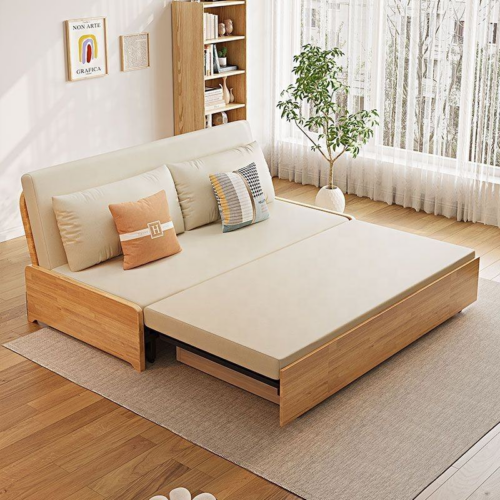
- Sofa beds. Many sofa bed designs can be compressed — especially foam mattress style sofa beds.
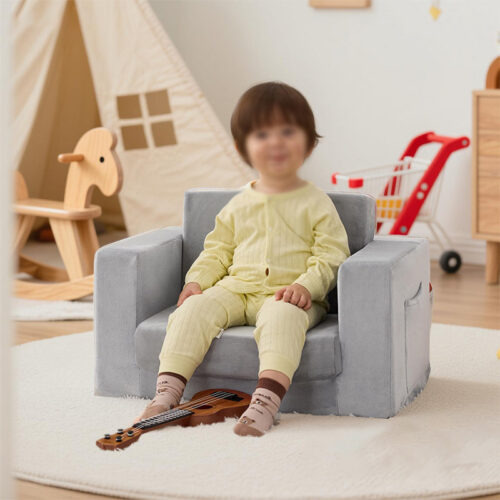
- Accent chairs & armchairs. Smaller pieces compress easily and ship very affordably.
- Loveseats & 2-seater sofas. Smaller sizes are particularly well suited to compression and parcel shipping.
- Bean bags & floor sofas. Very well suited — foam-only constructions compress especially well.
Sofas that generally cannot be compressed: heavy fully-upholstered frames, sofas with complex wooden legs that cannot be removed, and very large or heavily structured designs. Always confirm with the factory whether a specific design can be compressed.
7. Vacuum Compressed Sofa Production at QONKA HOME Factory
At QONKA HOME (Fuzhou Qiankun Manufacturing), we have been producing vacuum compressed sofas for export clients since 2021. Our factory has invested in industrial compression equipment and refined our construction methods to ensure every compressed sofa arrives in perfect condition and expands correctly.
Our Compression Process
- Design for compression. Every compressed sofa model is specifically designed to handle compression — frame, foam, springs and upholstery are all engineered together.
- High-density foam. We use 30-35 kg/m³ high-resilience foam for seat cushions — proven to withstand repeated compression cycles without permanent deformation.
- Industrial vacuum machine. Our factory uses professional heavy-duty vacuum compression equipment for consistent, controlled compression every time.
- QC before and after. Each sofa passes QC before compression, and the compression/packaging process is monitored to ensure proper procedure.
- Custom packaging. Custom-sized boxes with reinforcement for maximum protection during shipping.
- Clear unboxing instructions. Every box includes step-by-step unboxing and expansion instructions in multiple languages, plus tips for speeding up expansion.
Browse our full sofa collection or contact our team to discuss OEM vacuum compressed sofa production for your brand.
8. FAQ for Importers & Retailers
How long does a compressed sofa take to expand?
Most compressed sofas expand to about 80-90% of their final size within the first 2-4 hours after unboxing. Full expansion typically takes 24-72 hours, depending on foam density, room temperature and humidity. Cold temperatures can slow down expansion. Customers can speed up the process by gently patting and massaging the foam, and by placing the sofa in a warm room.
Will a compressed sofa be as comfortable as a regular sofa?
Yes — when it is well-made with quality materials. A high-quality compressed sofa uses the same foam, springs and upholstery as a regular sofa. The only difference is that it has been compressed for shipping. Once fully expanded, the comfort, support and durability should be identical to a non-compressed sofa of the same quality level. The key is working with a factory that designs sofas specifically for compression.
What is the MOQ for vacuum compressed sofas?
At QONKA HOME, our standard MOQ starts at 50 pieces per compressed sofa model, depending on the design and customization level. For mixed-container orders combining multiple compressed sofa SKUs, we can offer more flexible terms. Contact our sales team for a precise quote based on your specific requirements.
Can any sofa be vacuum compressed?
No — the sofa must be specifically designed for vacuum compression. The frame, foam type, spring system and upholstery all have to be engineered to withstand being compressed and rolled without damage. If you have an existing sofa design you would like to convert to compression-ready, our engineering team can help assess and modify it.
How much does vacuum compression add to the production cost?
The additional production cost for vacuum compression is typically 5-15% compared to a standard sofa — mainly for specialized packaging, compression time, and the reinforced construction. However, this small cost increase is usually far outweighed by the 50-70% reduction in shipping costs, making compressed sofas more profitable overall for most buyers.
What is the lead time for compressed sofa production?
Typical lead time is 25-45 days after sample confirmation, similar to regular sofa production. Compression adds a small amount of time per unit at the end of the production line, but it is usually offset by the simpler final packaging process. We always provide a clear production timeline before order confirmation.
Do compressed sofas come with a warranty?
Yes — QONKA HOME offers the same standard warranty on compressed sofas as on all our furniture. Frame warranty, foam warranty and upholstery warranty all apply exactly as they would for non-compressed versions. The compression process does not affect the structural warranty on a well-designed sofa.
9. Is a Vacuum Compressed Sofa Line Right for Your Business?
Vacuum compressed sofas are an excellent fit if you are:
- An e-commerce / DTC brand selling sofas online and shipping direct to consumers
- A furniture retailer looking to reduce shipping costs and improve margins
- A marketplace seller on Amazon, Wayfair, Temu or similar platforms
- A startup or new brand wanting to launch a sofa line with lower upfront logistics risk
- A buyer serving apartments and small-space living where delivery access is limited
They may not be the best fit if you sell exclusively very high-end luxury sofas, extremely large sectional designs, or furniture that requires white-glove delivery as part of the brand experience.
Final Thoughts
Vacuum compressed sofas are more than a pandemic trend — they represent a fundamental shift in how furniture is manufactured, shipped and sold. For importers and retailers, the savings on shipping and logistics are simply too large to ignore. The key to success is working with a factory that truly understands compressed sofa design and quality — not one that simply tries to compress regular sofas and hopes they survive.
Ready to explore vacuum compressed sofas for your brand? Contact QONKA HOME today to discuss your project and get a factory-direct quote. Browse our sofa collection for inspiration, or ask about converting your existing designs into compression-ready models.
QONKA HOME publishes monthly factory-sourcing and trend guides for furniture importers. Follow the blog for more insights on sofa manufacturing, compressed furniture, fabric options and OEM production, and contact us any time for a free factory-direct quote.