Ergonomic office chairs have become one of the fastest-growing furniture categories worldwide. With remote work, hybrid offices and WFH now permanent for millions of people, demand for high-quality ergonomic desk chairs continues to rise year after year.
For furniture importers, office supply retailers and e-commerce sellers, ergonomic office chairs represent a high-margin, high-volume category with strong repeat business potential. In this comprehensive guide from QONKA HOME — a Fuzhou Qiankun Manufacturing factory brand — we cover everything you need to know about sourcing and selling ergonomic office chairs in 2026.
1. What Makes a Chair “Ergonomic”?
An ergonomic chair is designed specifically to support the human body in a healthy, neutral sitting posture. Unlike a basic office chair, an ergonomic chair is fully adjustable and engineered to reduce strain on the spine, neck, shoulders and hips during long hours of sitting.
A truly ergonomic chair should provide:
- Lumbar support that fits the natural curve of the lower spine
- Adjustable seat height so feet rest flat on the floor and knees are at 90°
- Seat depth adjustment to accommodate different body sizes
- Adjustable armrests that support the forearms without hunching
- Backrest recline with tension control and lock positions
- Headrest (optional but recommended) for neck support during recline
- Breathable material (mesh or quality fabric) for temperature comfort
- 5-point base with casters for stable mobility
Not every chair labeled “ergonomic” actually delivers on all these points. The more adjustability and support features a chair has, the more genuinely ergonomic it is.

2. Why the Ergonomic Chair Market Keeps Growing
The global ergonomic office chair market has been expanding steadily and shows no signs of slowing down. Key drivers include:
- WFH is permanent. Hundreds of millions of people now work from home at least part-time, creating a massive market for home office upgrades.
- Health awareness. Consumers are more aware than ever of the health risks of prolonged sitting — back pain, neck strain, poor posture, circulation issues.
- Employer wellness budgets. Companies are investing in ergonomic furniture to reduce workplace injuries, improve productivity and support employee well-being.
- E-commerce accessibility. Online reviews, comparison guides and direct-to-consumer brands have made it easier than ever for customers to research and buy ergonomic chairs.
- Premium pricing power. Customers are willing to pay more for chairs that genuinely improve comfort and health — creating attractive margins for retailers.
- Gaming chair crossover. The gaming chair market has raised consumer awareness of adjustable, supportive seating — many ergonomic chair buyers first considered gaming chairs.
3. Types of Ergonomic Office Chairs
Ergonomic chairs come in several categories, each targeting different users and price points:
| Type | Target User | Key Features | Typical Price Point |
|---|---|---|---|
| Mesh ergonomic chair | Most popular; daily office use | Breathable mesh back, lumbar support, adjustable arms | Mid-range |
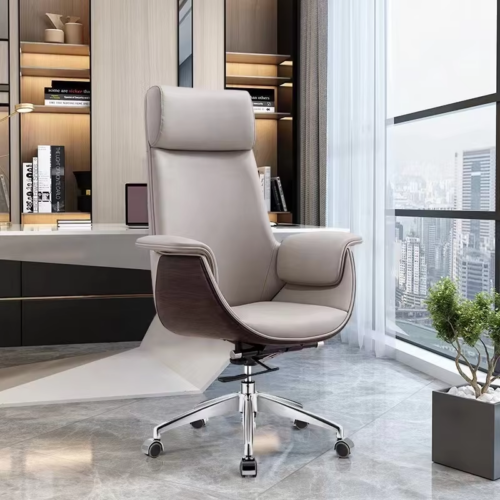
| Executive ergonomic chair | Management / premium offices | Leather or high-end fabric, plush padding, high back | Premium |
| Kneeling chair | Alternative seating; posture focus | Knee pads, angled seat, no backrest | Mid-range (specialty) |
| Ergonomic stool | Sit-stand desk users | Saddle-style or drafting stool height | Entry to mid |
| Gaming-style ergonomic chair | Gamers and younger buyers | Racing style, high back, neck + lumbar pillows | Mid to premium |
| Big & tall ergonomic chair | Larger body types | Reinforced frame, wider seat, 300-500 lb capacity | Mid to premium |
| Task / operator ergonomic chair | Call centers, open offices | Basic adjustability, durable, cost-effective | Entry to mid |
| Drafting chair (standing desk) | Sit-stand desk users | Extra tall gas lift, foot ring | Mid-range |
For most retailers, a high-quality mesh ergonomic chair is the best starting point — it is the most universally popular style and offers the broadest market appeal.
4. Essential Ergonomic Features Checklist
When evaluating or designing an ergonomic office chair, use this checklist of must-have and nice-to-have features:
Must-Have Features
- Gas lift height adjustment — Class 3 or Class 4 gas cylinder (SGS/BIFMA certified)
- Lumbar support — ideally adjustable in both height and depth
- Adjustable armrests — at minimum height-adjustable; ideally 2D, 3D or 4D
- Tilt mechanism — with tension control and position lock
- Seat slide / depth adjustment — critical for tall and short users
- Breathable backrest — mesh or ventilated design for all-day comfort
- 5-point base with casters — stable base for all floor types
Nice-to-Have / Premium Features
- Adjustable headrest — for neck support during recline
- 4D armrests — up/down, forward/back, side-to-side, pivot
- Seat angle adjustment — independent seat pan tilt
- Back angle lock at multiple positions — not just one lock position
- Weight-activated mechanism — auto-adjusts tilt tension to user weight
- Memory foam or molded foam seat — durable, supportive cushioning
- Silent casters — soft PU wheels that don’t scratch floors
- Magnetic or detachable headrest — flexible use cases
- Footrest (for reclining models) — integrated or attachable
5. Materials & Construction: What Goes Into a Quality Ergonomic Chair
The materials used in an ergonomic chair directly affect comfort, durability and price. Here is what to look for:
| Component | Budget Option | Mid-Range Option | Premium Option |
|---|---|---|---|
| Backrest material | Nylon mesh (low density) | Elastic mesh (Korean mesh standard) | Premium elastic mesh (e.g., German Matrex, Italian Net) |
| Seat cushion | Low-density foam + fabric | High-density molded foam + quality fabric | High-resilience cold-cure foam + premium fabric/leather |
| Frame | Nylon / plastic frame | Reinforced nylon + aluminum accents | Aluminum or steel frame throughout |
| Base | Nylon 5-star base | Nylon + glass fiber reinforced | Aluminum die-cast base |
| Gas cylinder | Class 2 (basic) | Class 3 (standard office) | Class 4 (heavy-duty; BIFMA certified) |
| Armrest pads | Hard plastic | PU pad | Memory foam PU or soft silicone |
| Casters | Plastic wheels | PU casters | Silent PU casters / rollerblade style |
| Mechanism | Single-position tilt | Multi-function tilt + tension | Synchro-tilt + seat slide + weight-activated |
For most Western markets, we recommend mid-range construction as the sweet spot — Class 3 or Class 4 gas lift, elastic mesh back, high-density foam seat, and reinforced nylon or aluminum base. This delivers a quality feel and reliable durability at a competitive price.
6. Quality Standards & Certifications
When sourcing ergonomic chairs from China, certifications and quality standards matter — especially for B2B and office supply channels. Key standards to know:
BIFMA Standards
BIFMA (Business and Institutional Furniture Manufacturers Association) sets the global benchmark for office furniture quality and safety. Key BIFMA standards for ergonomic chairs include:
- BIFMA X5.1 — General requirements for office chairs (tests for stability, strength, durability, cycle testing)
- BIFMA X5.4 — Lounge seating (applicable to executive and guest chairs)
- BIFMA e3 / level — Sustainability certification for furniture
- BIFMA G1 — Ergonomics guideline for office seating
Many corporate and government buyers require BIFMA certification. Even for retail/DTC, BIFMA compliance is a strong marketing differentiator and quality signal.
Other Important Certifications
- SGS / TÜV gas lift certification — critical for safety; ensures the gas cylinder won’t fail
- GREENGUARD / GREENGUARD Gold — low chemical emissions; important for health-conscious buyers and office environments
- ISO 9001 — factory quality management system
- ISO 14001 — environmental management system
- CA Prop 65 — California chemical safety compliance (for US market)
- REACH — EU chemical regulation compliance (for European market)
7. How to Source Ergonomic Office Chairs from China
China is the world’s largest manufacturer of ergonomic office chairs, with major production hubs in Zhejiang (Anji), Guangdong (Foshan) and Fujian. Here is how to source effectively:
China Production Hubs
| Region | Specialty | Pros | Cons |
|---|---|---|---|
| Anji, Zhejiang | Office chairs capital of China | Huge range, competitive pricing, specialized supply chain | Quality varies greatly — factory vetting critical |
| Foshan, Guangdong | Premium / design furniture | High-end craftsmanship, strong OEM capability | Higher prices; minimums may be larger |
| Fuzhou / Fujian | Balanced quality/price; mixed furniture | Good quality-to-price ratio; export experience | Smaller chair ecosystem than Anji |
Sourcing Tips for Importers
- Sample first, always. Sit in the chair for at least a few hours before committing to a bulk order. Comfort is subjective and hard to judge from photos.
- Check the gas cylinder. This is the #1 safety concern. Always confirm Class 3 or Class 4 with SGS/TÜV certification. Never source chairs with uncertified gas lifts.
- Test the mechanism. Tilt, lock, height adjustment, armrests — everything should move smoothly and feel solid. No wobbling, no squeaking.
- Confirm MOQ. Office chair factories often have MOQs of 50-200 pieces per model. Some accept mixed containers across models.
- Ask about warranty. Most factories offer 2-5 year warranties on mechanisms and frames, and 1-2 years on upholstery and moving parts.
- Packaging matters. Ergonomic chairs are often shipped knocked-down (KD). Good packaging prevents damage during ocean freight and makes assembly easy for end customers.
- Consider drop-shipping. For DTC brands, some Chinese factories offer white-label drop-shipping — though quality control and shipping times can be challenging.
8. Pricing & Margin Guide
Understanding the pricing structure helps you set competitive retail prices while maintaining healthy margins. Here is a rough guide:
| Chair Tier | FOB China Price Range | Typical Retail Price (US) | Typical Margin |
|---|---|---|---|
| Entry-level ergonomic | $40 – $80 | $99 – $199 | 40-55% |
| Mid-range ergonomic (most popular) | $80 – $150 | $199 – $399 | 50-60% |
| Premium / executive ergonomic | $150 – $300 | $399 – $799 | 55-65% |
| High-end / designer ergonomic | $300 – $600+ | $799 – $1,500+ | 60-70% |
These are ballpark figures — actual margins depend on shipping costs, tariffs, marketing spend, and your sales channel. Mid-range ergonomic chairs ($80-150 FOB) are typically the sweet spot for most retailers — they deliver quality that justifies the price while keeping costs manageable.
9. QONKA HOME: Your Ergonomic Chair Manufacturing Partner
QONKA HOME (Fuzhou Qiankun Furniture Manufacturing Co., Ltd.) manufactures ergonomic office chairs for global brands, retailers and e-commerce sellers. Our ergonomic chair collection combines thoughtful design, quality materials and reliable construction — at competitive prices.
Our Ergonomic Chair Capabilities
- Full OEM service — produce ergonomic chairs from your designs, sketches or reference samples
- Ready-to-order models — established ergonomic chair designs that can be branded and shipped quickly
- Customization options — choose mesh type, foam density, fabric/color, base material, mechanism type, caster style
- Certified components — SGS-certified gas cylinders (Class 3/4), BIFMA-compliant mechanisms, quality mesh and foam
- Flexible MOQs — we work with both growing DTC brands and established office supply retailers
- Quality control — incoming inspection → production line QC → final pre-shipment inspection with detailed reports
- Private label / white label — your brand, your packaging — we handle manufacturing
- Global shipping — FOB Fuzhou/Xiamen, with CIF and DDP options available
Browse our ergonomic office chair collection, or contact us to discuss your specific ergonomic chair requirements — whether you need 100 chairs or 10,000.
10. FAQ — Ergonomic Office Chairs
Q: What is the most important feature in an ergonomic chair?
A: Lumbar support is widely considered the single most important ergonomic feature — it supports the natural inward curve of the lower spine and prevents slouching. Height-adjustable lumbar support is better than fixed because people have different spine shapes.
Q: How long do ergonomic office chairs last?
A: A well-made ergonomic office chair typically lasts 7-15 years with proper use. Budget chairs may need replacement after 3-5 years. Warranty coverage is a good indicator of expected lifespan — look for at least a 5-year warranty on the frame and mechanism.
Q: Are mesh or fabric chairs better?
A: It depends on use case. Mesh chairs are breathable and better for warm climates or people who run hot. Fabric chairs can be softer and offer more cushioning. For most office environments, mesh ergonomic chairs are the most popular choice due to their all-day comfort and modern look.
Q: What does BIFMA certified mean?
A: BIFMA certification means a chair has been tested against industry standards for safety, durability, stability and performance. BIFMA X5.1 is the standard for office chairs, testing everything from the strength of the base to the durability of the tilt mechanism through tens of thousands of cycles.
Q: Can ergonomic chairs help with back pain?
A: Yes — a properly fitted ergonomic chair can significantly reduce or prevent back pain by supporting the natural curvature of the spine, encouraging good posture, and reducing pressure on the lumbar spine. However, no chair replaces the importance of taking regular breaks and moving throughout the day.
Q: What is the difference between a task chair and an ergonomic chair?
A: A task chair is a basic office chair designed for general use — typically with basic height adjustment and a simple tilt. An ergonomic chair has more comprehensive adjustability (lumbar support, seat depth, armrest adjustments, tilt tension) and is specifically engineered for posture support during extended sitting. Some task chairs are ergonomic, but not all.
Q: What is the typical MOQ for ergonomic chairs from China?
A: MOQs vary by factory and model. Standard designs often have MOQs of 50-100 pieces. Fully custom designs may require 200-500 pieces. Some factories accept mixed-container orders (multiple models in one container) to help buyers reach shipping minimums without overstocking a single SKU.
Q: Does QONKA HOME provide ergonomic chair samples?
A: Yes — we provide samples for all our ergonomic chair models. Sample lead times are typically 7-15 days depending on customization. Sample fees are charged upfront and credited toward your first bulk order. Contact us to request samples.
Conclusion
Ergonomic office chairs are a high-growth, high-margin furniture category that every furniture retailer, office supply brand and e-commerce seller should consider adding to their lineup. With WFH trends driving sustained demand and consumers willing to pay premium prices for quality and comfort, the opportunity is significant.
Success in the ergonomic chair market depends on finding the right balance of quality, features and price — and partnering with a reliable manufacturer that can deliver consistent quality at scale. QONKA HOME brings years of furniture manufacturing experience, certified components and flexible OEM capabilities to help you build a winning ergonomic chair collection.